
Japan
Duesen Bayern

Built since 2001, Duesen Bayern is a Japanese replica car manufacturer headquartered in Nagoya
History
Ever since Tetsuya Nagayama was founded, it has been producing its own retro style creations time and again. Currently, three models are produced under their own brand name. The manufacturer has also produced replicas of the BMW Isetta 250, Chevrolet Corvette C1, Ferrari 288 GTO, Nissan Skyline 2000 GT-R and Toyota 2000GT models since 2009. In small numbers, the Duesen-Bayern models are also exported to Europe. Often, the brand is also abbreviated DB, which often stands for Daimler-Benz in Germany.
The Mystar is the first model of the brand. With its exclusive interior from the BMW Z3, it is the top model of the brand. The exterior, however, had a Mercedes-Benz 190 SL as a model. At first glance, these are indistinguishable. However, if the counterpart is wrong, the different dimensions are obvious. The body is made of fiberglass. The front end consists of one part and can be fully opened. There is a choice of four- and six-cylinder BMW four-valve engines with outputs between 103 kW (140 hp) and 170 kW (231 hp) as well as right-hand or left-hand steering. The Mystar is produced since February 2002.
The Ritz is a small car that looks like the older Fiat Nuova 500 from the front. From the rear, however, he deviates far from the original with a large engine compartment. Technically it is based on the Nissan March. The vehicle will be available from € 15,500 to the Japanese dealers. The Ritz is produced since June 2002.
The Agnes is the last developed model and contains the same technical equipment as the Mystar. The interior is the same. The body was modified slightly sportier starting from the Mystar. The model Agnes is produced since May 2007.
Chiyoda TGE Tōkyō gas
Minato , Japan

Tōkyō Gas KK is an early Japanese company headquartered in Minato, Tokyo. To build bus and trucks also Automobiles. The brand names as TGE and Chiyoda.
History
The company, founded on October 1, 1885, is active in the natural gas sector. and is the main supplier of natural gas in Japan. From the 1910s there was a department for vehicle construction.1917 began the production of trucks a four-ton truck with 2 tons of payload and the TGE Model A. in 1922 was followed by the TGE Model G 1927 TGE Model GP 1930 TGE Model L and TGE Model N and 1933, the TX 40.
The brand name was first TGE 1931 Chiyoda. 1932, a few automobiles were added. 1935 their production ended.1937 it came to the merger of the department with Jidōsha Kōgyō Co. Ltd. and Kyodo Kokusan KK The new company was Tokyo Automobile Industries Co., Ltd. in 1941 was renamed Diesel Motor Industry Co. Ltd. and 1949 in Isuzu. The plant in Hino was split off in 1942, resulting in Hino Jidōsha. From 1930 there was a bus that Chiyoda Model MA and Chiyoda Model MP and, from 1935, the Chiyoda Model ST as a bus with a trailer.
The cars were large vehicles including a six-wheel model above. The H was similar to the then models of Pontiac. A six-cylinder engine with 4 litres capacity drove the vehicles. sedans and touring cars. The six-wheeled HS was seven-seater touring cars. Hino calls the car models Chiyoda Model HS with six wheels from 1933, Chiyoda Model HA from 1934 and a small prototype called Hoya starting in 1934.
Toyota Motor Corporation History
Toyota, Japan
The Toyota Motor Corporation is a multinational and one of the largest automobile manufacturers in the world.
History
Toyota has its headquarters in Toyota, Japan the 1937 by Kiichiro Toyoda and Eiji Toyoda Founded and took over. The Toyota Motor Corporation is based in the Japanese city of Toyota (up to 1959 Koroma), and neighbouring Nagoya and Bunkyō (Tokyo) and in 1937 became an independent company.
The history of Toyota began in 1894 later Sakichi's son Kiichiro Toyoda had completed a mechanical engineering degree at Tokyo University. Together with Kiichirō Sakichi 1924 completed his "automated loom" For production and marketing, he founded Toyoda Automatic Loom Inc. When Sakichi Toyoda noticed that automobiles were gaining in importance, he sent his son Kiichiro Toyoda to Britain in 1929 to sell the patent rights to his automated weaving machine of the British company Platt Brothers and use the proceeds to build an automobile production. Kiichiro Toyoda used this capital to start building a car business.
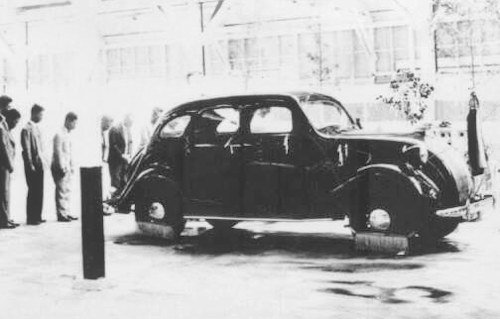
1934, the first machine was produced, which from 1935 for the production car the model Toyota A1 and the GG Trucks. Production start for the car model AA was 1936. On August 28, 1937 Kiichiro Toyoda founded together with his cousin the Toyota Motor Corporation, into which the automotive division was incorporated.
During the Pacific War from 1937 to 1945 the truck production was used by the Japanese military. By the late 1950s the American automotive industry underestimated the Asian competition in Japan apparently dealt with the development of three-wheeled, non-full-size compact cars with two-stroke engine. The vehicle industry was generally poorly developed. But Japan caught up quickly. The situation on the world market changed accordingly after the first oil crisis (1973/74), as global demand for smaller, fuel-efficient cars increased and Japanese car companies met that need. Also, the Japanese companies had now higher quality standards could continue to offer their cars cheap. The standard equipment was often more extensive than that of cars from other countries.

In the 1980s, European and American companies began to copy methods from Toyota and other Japanese automakers, tending to lower the Japanese price. The logo of the Toyota brand consists of three interconnected ellipses. It was first introduced in 1989 to standardize the global brand identity and to differentiate the Toyota brand more clearly from the Lexus premium brand introduced in the same year. The two small ellipses represent the initial letter "T" and symbolize the heart of the car and the heart of the customer. All three ellipses together symbolize the company philosophy of Toyota: the pursuit of customer satisfaction, the pursuit of innovation and the combination of creativity and quality. They also shifted to quality and reliability Toyota was particularly successful in the US market. In 1989, Toyota introduced the luxury brand Lexus for the US and European markets, which became America's best-selling luxury car brand.

In 2011 the new Toyota factory in Ohira, near Sendai, Miyagi Prefecture was hit by the 2011 Tōhoku earthquake. The factory remained closed for a long time, although it was only slightly damaged. Due to the aftermath of the earthquake and tsunami in Japan, Toyota had to contend with further declines in production. In the month following the disaster, Toyota's global production decreased by 48.1% in April 2011, while production decline in Japan itself is estimated at 74.5%. In addition to the Toyota brand, the Toyota Motor Company also includes the automotive premium Lexus brand and the Scion brand, which was designed specifically for the under 25-year-old North American market. The Toyota Group also includes the small car manufacturer Daihatsu and the truck and bus manufacturer Hino Motors.

Takuri (タ ク リ) Tōkyō Jidōsha Seisakusho
Tokyo , Japan

KK Tōkyō Jidōsha Seisakusho 東京 自動 製作, (Tokyo Motor Vehicle Works) was an early manufacturer of motor vehicles from Japan. The brand names were Takuri ( タ ク リ ) and Yoshida.
History
Shintaro Yoshida had made in the US automotive experience. 1902 he founded together with Komanosuke Uchiyama the company in Tokyo. First, a bus was created. 1907 began the production of passenger cars with imported parts, the water-cooled engine was twin-cylinder with displacement of 1837 cc imported from the United States with 12 hp powered the cars with a 2-forward speed, 1 reverse gearbox. The body could accommodate up to five people chassis was assembled from the Ford Model A. with a large single headlight fitted on the front of the vehicle.
In 1909 the production ended. A total of 17 car emerged an order came from a branch of the Imperial family of Japan. in 1911 the collaboration with Kunisue Jidosha Seisakusho under the brand name Tokyo. The twelve-seat bus was sold to a taxi company in Hiroshima. Its engine developed 18 hp.
Nissan Shatai Co., Ltd. History
Hiratsuka , Kanagawa Prefecture Japan
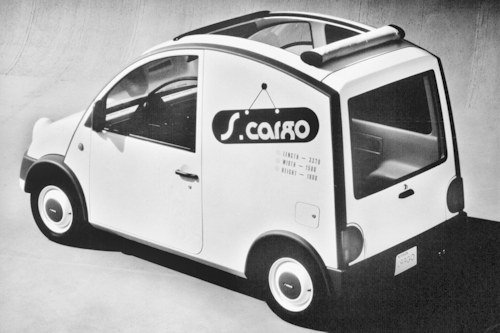
Nissan Shatai Co., Ltd. is a car and now commercial vehicle manufacturer based in Hiratsuka , in which the Japanese company Nissan holds a 50.01% stake.
History
In May 1937, the company was named Nippon Kouku Kogyo Co., Ltd. founded. In July 1941, it merged with Kokusai Kogyo Co., Ltd. (founded in November 1939) to Nippon Kokusai Aircraft Co., Ltd. In February 1946, it was renamed Nikkoku Kogyo Co., Ltd. while the business was expanded to the production of rail vehicles and automobile bodies. The first bus body is manufactured in November 1946. Three years later, the atwo activities were outsourced and incorporated into Shin Nikkoku Kogyo Co., Ltd.
In 1951, initial ties were established with Nissan to begin production of the Nissan Patrol at the Hiratsuka mill. Since October 1961, the company is listed on the Tokyo Stock Exchange By 1962 Further renaming of the company followed in January 1962 ( Nissan Shatai Koki Co., Ltd. ) . The company subsequently stopped producing bus bodies, and automotive parts and other products in order to focus exclusively on the assembly of motor vehicles In April 1970, the millionth copy was produced in June 1971 now as Nissan Shatai Co., Ltd.
By August 1980, five million vehicles were manufactured. Twelve years later (June 1992) it was already 10 million units. In October 2007, a total production of 15 million vehicles was achieved.In March 2001, the large-scale production was transferred from the Kyoto plant to the Shonan plant and the end of vehicle production at Auto Works Kyoto Co., Ltd., which decided to specialize in vehicle conversion business, By 2022 Nissan Shatai is engaged in processes from development to production, with a focus on manufacturing Nissan LCV and MPV.
Nissan Shatai has had several subsidiaries:
- Nissan Shatai Manufacturing Co., Ltd. (Manufacture of auto parts, founded in 1956)
- Auto Works Kyoto Co., Ltd. (Production of buses, trucks and special vehicles, 2001)
- Nissan Shatai Kyushu Co., Ltd. (Vehicle manufacturing, founded in 2007, start of production in 2010)

