
Italy
Soleil Motors
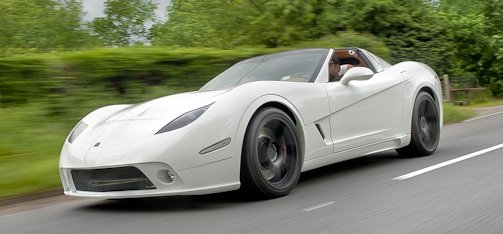
The Italian car manufacturer Soleil Motors makes sports super cars since 2013.
History
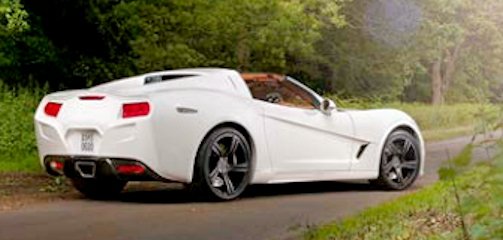
The Anadi is a limited production luxury super car that is designed for everyday use. Each car allows the owners to truly create a reflection of their personality with their options. With Italian automotive heritage and craftsmanship envisioned and designed to provide a full luxury driving experience without compromising on power and speed as a bespoke super car. The handcrafted production model is available since 2013. Since April 2014, the vehicle in North America in the market.
The sports car comes with manual detachable roof with the option for the hard top in the winter that fits in the trunk. is equipped with the 6.2-liter V8 gasoline engine from the Corvette C7, which provides 479 kW (651 hp) and has a maximum torque of 774 Nm. It has rear-wheel drive and accelerates to 100 km / h in 3.2 seconds.
MECHANICAL
• Engine, 6.2 Liter V-8 651 hpw
• Transmission, 6 speed automatic
• Active handling
• Traction control system
• 4-wheel independent suspension system
• Power speed sensitive variable ratio rack & pinion steering
• Differential, limited slip
• Oil life monitoring system
The top speed is 325 km / h. Pirelli P Zero Corsa tires. 19" Front 20" Rears. to handle the Anadi's 200+ MPH speed. Along with the Stopping power needed for this it comes standard with Brembo Ceramic brakes. With large 6 pistons in the front, 4 pistons in the rear and three different style wheels.
SAFETY & SECURITY
• Airbags, frontal and side- impact with passenger sensing system
• Keyless access with push button start
• Theft deterrent sys & alarm
• Antilock brake system
EXTERIOR
• Headlamps, xenon, high intensity discharge
• Front and rear fog lamps
• Light weight fibre glass exterior body panels
• Exterior colour 2 stage pearl gloss finish
Inside the Anadi is crafted with wood including options of ebony and rose wood. The wood treatment process takes two weeks and built and shaped by hand. The interior dyed leather Cutting, stitching and fitting is always done in house to ensure quality.
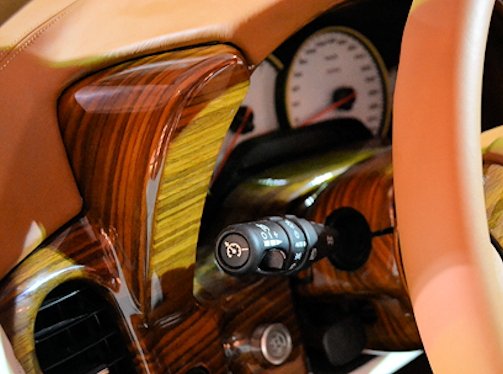
INTERIOR TRIM
Leather covered interior with choice of:Collney leather.Thick leather Steering wheel Leather Partial wood trim.Speedometer face plate: designed plate with white color background.Leather Seats with diamond stitching (single to two tone color leather).Center console with Lipstick holder or cigar holder
INTERIOR
• Kenwood 6.95 inch screen navigation with Bluetooth and radio
• Premium audio system
• Auto dual zone air conditioning
• Floor mats, carpeted
• Inside rearview mirror, auto dimming, compass
• Cruise control with resume
• Windshield wipers, intermittent
• Seats, bucket, leather seating surfaces
• Power seat adjust-driver, 6-way
• Leather/wood wrap steering wheel
• Power door locks & windows
• Remote trunk & fuel door opener
• Power hatch pull down
• Power telescoping steering wheel
• Heated seats
• Memory driver seat
• Power driver seat
• Power passenger seat
Mazzanti Automobili History
Pontederia, Italy Since 2002
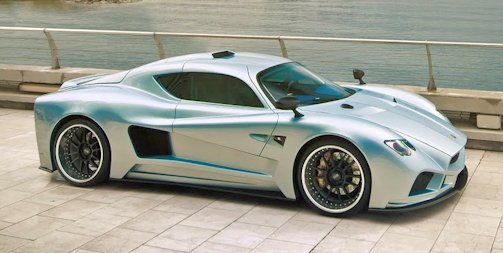
Faralli & Mazzanti, since 2011 Mazzanti Automobili, is an Italian manufacturer of super sports cars Production began in 2006. The brand name is Mazzanti.
History
The company was founded in 2002 by Luca Mazzanti and Walter Faralli in Pontedera, Italy. Co-founder Mazzanti worked as a body mechanic in the family-owned workshop since the 1980s and participated in international races with specially restored historic sports cars. According to own data ordered vehicles are manufactured to a large extent by hand.
Examples of models from the House of Mazzanti are the Evantra or the Antas.
The Mazzanti Evantra first seen at the Top Marques 2013 in Monaco by Prince Albert II. The first time the public was presented. Every year, only five vehicles are produced in Pontedera.
The Evantra is equipped with a seven-Liter V8 naturally aspirated engine, which produces 552 kW (751 hp) and has a maximum torque of 860 Nm. It has a sequential 6-speed transmission and accelerates to 100 km / h in three seconds. The top speed is 360 km / h. In June 2016, limited to 25 copies EV Millecavalli was presented in Turin. The aspirated engine from the Evantra was replaced by a twin-turbo version with a displacement of 7.2 litres. As a result, the power increases to 735 kW (1000 hp), which makes it the strongest production vehicle in Italy before the Ferrari LaFerrari. The maximum torque is 1200 Nm. The acceleration to 100 km / h takes place in 2.7 seconds, the top speed of the sports car is over 400 km /h. At the Bologna Motor Show in December 2016 Mazzanti presented the Evantra 771. The special model delivers 15 kW (20 hp) more than the Evantra V8 and receives a special finish in blue and gold. The Evantra 771 is available since spring 2017 at prices from 850,000 euros.
E Cantono
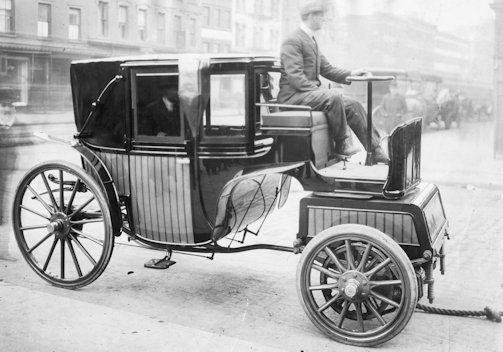
Commercial vehicle manufacturer Rome, Italy from 1900 to 1906
E Cantono (Eugenio Cantono) in Rome, developed an early 4-battery-electric conversion for horse-drawn wagons using 44 battery cells and two series-wound motors. A French sale
office was then established in 1902, the Cantono Electric Tractor Co was also formed in New York to licence-build Avant-Trains according to an Italian patent model for the American market as like many other manufactures from the time Avant-Trains were available with combustion, steam or electric engines.
By 1905, the company was also offering rear-wheel drive trolleybuses and 3-ton vans were re-named SA Ligure-Romana Vetture by the end of
the year and moved to Genoa in 1906.
After this the company was known as Fabbrica Rotabili Avan-Motori and all subsequent vehicles marketed as FRAM.
Cizeta Automobili SpA
Automotive manufacturer of Modena;Italy from 1988 to 1995.

Cizeta Automobili SpA , previously Cizeta Moroder Motors Srl , was an Italian manufacturer of super sports automobiles .
History
Claudio Zampolli and Giorgio Moroder founded the company Cizeta Moroder Motors Srl in Modena in 1988 and started to develop automobiles that would be marketed as Cizeta Moroder . The name part Cizeta refers to the initials C and Z of Claudio Zampolli.As Giorgio Moroder left the company, followed by a name change to Cizeta SpA . In 1995, the production ended after only 17 built including eight manufactured copies.
Claudio Zampolli went to the end of production in Italy in the US , founded in California, the new company Cizeta Automobili USA and since then manufactures new vehicles on behalf of customers.
Cizeta V16T
The only model was the Cizeta V16T. This was a supercar designed by Marcello Gandini . The drive was provided by a sixteen-cylinder 6.0 liter engine .
Initiator of the project was the Italian engineer Claudio Zampolli. This formerly worked in the development department of Lamborghini and took over in the 1980s in Los Angeles, the agencies for Lamborghini and Ferrari . In 1985 he started working on a supercar project. One and a half years later, when the development of the car was already quite advanced, the composer and Grammy winner Giorgio Moroder took part in the project - thereby ensuring its realization. The aim of the two was to set up an incomparable supercar, which should put everything in the shade so far. As a designer wasMarcello Gandini , who had already designed the Lamborghini Countach and at about the same time worked on the design of the successor model, the Lamborghini Diablo . In this regard, there were some obvious similarities between the Diablo and the Cizeta Moroder. There are rumors that Gandinis Cizeta draft should actually be for the Diablo and the then Lamborghini owners Chrysler felt the design as too brutal.
The roadworthy prototype was presented after a development period of three years at the 1988 Geneva Motor Show. Even before the Cizeta Moroder started mass production, Giorgio Moroder left the company and left Claudio Campolli sole lead. The only model still made under the name Cizeta Moroder V16T was a prototype and remained in the possession of Moroder when he left the company in 1990. This pre-series model excelled in various tests and driving reports, especially by its sheer power of 399 kW (542 hp), which led the trade press to consider the V16T as the super sports car, which was superior to the entire competition this time.
But the actual production start was extremely difficult, the targeted date proved untenable. Due to the delay caused by a renewed revision of the optics, the sponsors jumped off and had to be replaced by new donors. The previously planned target of 40 units per year was last corrected to 10 models, which should leave the plant in Modena annually. But even this number turned out to be utopian in retrospect.
Cizeta is derived from the Italian initials of Claudio Zampolli: C = ci , Z = zeta ; so CiZeta . V16T points to the 16 V-shaped cylinders. The T stands for "trasversale", which means that the engine is transversely mounted.
The demand for the approximately 300,000 US dollars Between 1991 and the company's bankruptcy in 1995, including the prototype, only eight vehicles were built, two of which belonged to Hassanal Bolkiah , the sultan of Brunei . One of these two V16T is now in the Marconi Automotive Museum in Tustin , California . The plan was to finish a maximum of one vehicle per week, so if necessary 52 pieces per year.
After the bankruptcy of the company Zampolli moved in the 1990s to the US , where he waits exotic cars and on request also builds the Cizeta V16T. So far, three more Cizeta V16T were completed: two coupes (the first in 1999), and the first and still the only Cizeta V16T Spyder (yellow, 2003). The three new vehicles have a slightly different front and side air intake design than previous models and the Moroder prototype. According to unconfirmed data, two incomplete vehicles were stored in containers at the end of the 1990s. Where exactly these are, is currently unknown.
The list price (excluding taxes and delivery) is $ 649,000 or $ 849,000 for the V16T Spyder TTJ, with a down payment of $ 100,000 payable on signing.

Engine
The Cizeta V16T has some technical features. The super sports car nominally offered the best conditions to surpass the fastest models of Ferrari and Co. The body was extremely wide, made of light metal and excitingly styled. The heart of this car, however, was the engine. Its 16-cylinder 6.0-liter engine was the only one of its kind for a long time until the Bugatti Veyron appeared, and is also installed across the car with the power tap in the middle of the engine. This construction also explains the enormous width of the Cizeta Moroder. There was such a drive recently in the American luxury cars Cadillac V16 , the times of the Great DepressionThis would rather hurt their sale, but could enormously increase the prestige of the Cadillac brand for years. For years V12 engines were the absolute engine for sports cars, Cizeta broke this rule with a V16, which made six liters of displacement up to 399 kW (542 hp) and whose performance was sufficient to accelerate the car to 325 km / h top speed ,
The engine's designer, Oliviero Pedrazzi, had been employed by Lamborghini just like Zampolli in previous years . So he engineered the engine based on the 90 ° -V eight-cylinder engine from the Lamborghini Urraco P300 . However, not just two Lamborghini V8 were welded together, because to ensure the performance decrease in the middle of the two eight-cylinder, some technical effort was needed. In addition, the machine was tilted 15 degrees forward to allow for a lower center of gravity. Two large radiators dissipate the heat, a 120-liter tank provides the engine with fuel .
The engine is followed by a synchronized ZF five-speed gearbox. It is also interesting that early vehicles have a Bosch K-Jetronic injection system, while later a system was installed, which supplied an external company from Bologna with former employees of Weber Marelli .
In addition to the steel roof, the entire outer skin of the V16T is made of aluminum . The Cizeta tires at the front with 245 mm and the rear with 335 mm wide Pirelli -P Zero on two-piece 17-inch OZ rims. The brake discs, like the rest of Brembo's brake system , are 12 inches in diameter. An anti-lock system is just as ineligible as ESP or ASR . The simple cockpit is equipped with audio and air conditioning, leather trim is also standard. However, there are no more comprehensive comfort features.
The brand Cizeta or Cizeta-Moroder and the V16T fell into relative oblivion for many years. However, the design of the car was used as a basis for various vehicles in computer games.In 1990, the Cizeta appeared in the computer game Super Cars released for the Amiga 500 - but under the name "Retron Parsec Turbo". Other appearances had the car in 2005 in the computer game Gran Turismo 4 and 2010 in Gran Turismo 5 , as well as in Gran Turismo 6 , where the player can drive this car.

Alenia Aermacchi SpA
Vehicles manufacturer Varese Italy. From 1945 to 1970

Alenia Aermacchi was an Italian aircraft and after the second world war a small vehicle manufacturer based in Venegono Superiore near Varese Italy.
History
Aermacchi, formerly known only as Macchi, was active in aircraft construction for around 100 years. Alenia Aeronautica emerged from the also traditional aircraft industry of Fiat , which merged in 1969 with other companies in the state-owned company Aeritalia and after another merger became Alenia.The Fiat aircraft division was created in 1908, when it developed engines for racing cars, a first aircraft engine. In this tradition stands today the company Avio Aero . In 1916, Fiat founded the company Società Italiana Aviazione , which among other things built licensed aircraft.Aeritalia was founded in 1969 in Naples , when the aircraft manufacturers from Fiat merged with Aerfer and Salmoiraghi to form a new group. In 1976, Aeritalia was 100% state-owned. In 1990, Finmeccanica (now Leonardo ) Aeritalia merged with the defense electronics company Selenia to Alenia. This created Italy's leading aerospace and defense group .
The brothers Giovanni and Agostino Macchi built carriages in the second half of the 19th century . Their descendants remained connected to the road: Giovanni, Giuseppe, Enrico and Giulio Macchi founded on June 19, 1905, the corporation Società Anonima Fratelli Macchi . The company was initially primarily active in railway construction , from 1948 to 1960 Macchi also built motorcycles and commercials Three-wheeled Known as Aermacchi or Macchi went into production in the Soc Commerciale Aeronautica Macchi SpA aircraft factory at Varese, comprising both light- and mediumweight models. Using a tubular
backbone chassis and shaft-drive, the most popular model had a 750cc flat-twin engine and an 8 forward and 2 reverse gearbox. A 4-wheeled version, with front wheel-drive and torsion-bar independent suspension, appeared in the followed in 1957 by a new 3-wheeler with 18bhp 973cc 2-cyl air-cooled diesel engine. The company was acquired by Harley- Davidson in 1960, being re-named Aermacchi Harley-Davidson SpA, but in 1969 Harley-Davidson was itself taken over and the firm re-named AMF-Harley-Davidson Varese SpA. Later, manufacturing rights were acquired by Fratelli Brenna who sold the design as the Bremach.
In October 1912, the Italian Ministry of War issued a tender for new military aircraft . Giulio Macchi then founded together with the French Société Anonyme des Etablissements Nieuport on 1 May 1913 in Varese in Milan the company Società Anonima Nieuport-Macchi , which then in Aeronautica Macchi has been renamed. During the First World War Macchi specialized in flying boats . One of the best known types of this time was the Macchi M.5 . In addition, land aircraft were manufactured, especially under license, including the Nieuport 11 .
Shortly after the war, Macchi converted military aircraft into civilian types that could be used for passenger or cargo transportation. Also began with the production of record airplanes. The development ended in 1931 with the Macchi MC.72 , at that time the fastest aircraft, which reached over 700 km / h. Chief developer was Mario Castoldi , to which the type designation MC goes back. During the Second World War Aermacchi built the fighter planes.In the mid-1950s, the turn to the jet aircraft was ushered in with the Aermacchi MB 326 .Aermacchi took over the program of SIAI-Marchetti and thus also the successful type SF.260
Aermacchi Motorcycle, distributed by Harley-Davidson in the USA.In 1948, Giulio Macchi began producing motorcycles at a branch in Milan . The first model was a simple one with a 123 cc two-stroke engine , soon followed by new engines with OHV engines. In the 1960s, the motorcycle division of Aermacchi went into the possession of Harley-Davidson over. The further development of racing bikes with twin-cylinder engines for the 250 cm², 350 cm³ and 500 cm³ classes was very successful. Walter Villa became motorcycle world champion in the 250 cm² class on such a machine in 1973 and 1974 . In 1978, the plant was sold to Cagiva .
The company began in 1946 for a short time with the production of three-wheelers , in which the single wheel was in front. For the drive provided a two-cylinder engine with 750 cc displacement , which was operated with naphtha and 25 hp (18.4 kW) made. The Macchi MB1 was available as a passenger and van; later there were also diesel versions. From 1963 presented model Gabry emerged only prototypes . First, an air-cooled two-stroke engine with 150 cc was used; which was later replaced by a two-cylinder engine. The engine was mounted in the rear. The body was made of plasticand had sliding doors .
Macchi
The Macchi MB1 or Macchitre is a motor tricycle extending from Ermanno Bazzochi constructed and from 1945 by Aeronautica Macchi , Italy , was built. The same trucks also provided Bremach at Brescia as motocarro Bremach.
The Macchi MB1 was Aermacchi's first road vehicle and the only one until the launch of the scooter Cigno in 1951. This had a driver's cab for two people and a dump truck. The vehicle was mainly used for freight and passenger transport over short distances. The good ride comfort, which was due to the derived from the aircraft construction front suspension, made the truck very popular. The suspension was the same as that of the aircraft carts. A four-stroke engine with 750 cc capacity, an output of 25 hp (18.4 kW) and naphtha drove the car as a fuel. The vehicle weighed 1175 kg empty. and had a payload of 1500 kg.
The Macchi MB1 was used for both civilian and military purposes. The manufacturer installed several components of his military aircraft, which he adapted for the new purpose accordingly. The vehicle was easy to maintain and equipped with a wheel guard that could be easily removed for repair. In 1957, the production of the Macchi MB1 was also licensed to Ing. Negri & CSpA , who also built the truck in a smaller version with a maximum payload of 790 kg. The original version was switched to diesel operation in 1955 and received an engine with 1000 cc displacement.
In the following years, Harley-Davidson bought Aermacchi and marketed the products under the name Aermacchi-Harley-Davidson. In 1978, the company went to the brand Cagiva . In 1971, the production of the truck was transferred to a small company called Fratelli BRENNA , which sold it under the brand BREMACH .
As soon as the Macchi MB1 was offered as Bremach, its classic round lines were changed with the round headlights . The new version was more modern and angular and the headlights were rectangular. The Bremach was built until the late 1990s; then the project was resold cheaply to Aerdiesel in Vicenza .

