
Wheels & Brakes
- Details
- Parent Category: Tech Guide
- Category: Wheels & Brakes
- Hits: 39
How to use a one man' brake bleeding kit

Here we explain how to use a one man' brake bleeding kit and the different types available and cheaply maintain your car yourself .
Types and use
There are several low-price alternative kits for one man' bleeding, but they all work in a similar way, by providing a non-return valve at the bleed nipple so that fluid cannot re-enter the system once it is expelled.

Basic one man bleeding kit
The valve is usually in a tube which you attach to each nipple in turn, but you can also buy. Nipples with built-in valves which you fit in place of the normal ones supplied on the car by the manufacturers.The advantage of these kits is that you can pump the brake pedal yourself, release it. then go round to see whether there was any air expelled which is still in the tube.
You do not need a helper, but the job is still time consuming and is easier with two people. If you are using non-return nipples, you will still need a plastic tube, and with either kit you will need a jar unless supplied, though it does not need to contain fluid when you begin due to how it works.
With either system, connect the tube to a nipple, and slacken the nipple by half a turn. ideally using a tight ring spanner as they can round off.
Pump the brake pedal keeping an eye on the fluid level in the reservoir as you do so. When air bubbles no longer emerge with the fluid expelled you can tighten up the bleed nipple, being careful not to overtighten it.
Do not be misled by tiny bubbles coming from the joint between the nipple and the tube. If you have a helper, it is easy to distinguish between these and air genuinely being bled from the system. This difficulty is overcome.

Brake bleed kit which is pressurized by air from a car tyre
With more expensive kits in which the job of pumping the fluid through the brake pipes and keeping the reservoir topped up is done automatically This system uses a second reservoir of brake fluid which is pressurized by air from a car tyre. This pressure forces fluid from the second reservoir into the main reservoir through a lightly fitting screw cap, and keeps the whole system under pressure A tube with non-return valve is supplied, as in the simpler kit. but you will still need a jar to catch the old fluid if not suppled as remember Brake fluid is very corrosive take care not to spill any on paintwork when topping up the reservoir. If you do spill any. wipe it away promptly or it will damage any surface if left.

More expensive Brake bleed kit self pressurized
If you have no spare wheel there are more expensive self-pressurised kits but if you not going to be using the kit much don’t spend too much money on one as the cheaper kits will work just as well you can use jack to take the weight of a fitted wheel and use this but note only if the fittings will reach to all wheels.
To use the kit, you must first let your spare tyre down if the car has one to a lower pressure of around 10 psi measured with a tyre gauge. Then connect the second reservoir. which should be full of brake fluid. to the main. reservoir using one of the various caps supplied for different types of fittings. The partially deflated tyre to the second reservoir with the appropriate connector supplied.The system is now under pressure, and any leaks at the connectors should be attended to if necessary.
Now go round to each wheel in turn, connect the non-return tube and slacken off the nipple as usual. The pressure will force fluid through the tube and into the jar. and you can watch for bubbles as this happens. Go round each nipple in turn repeating the procedure. There is no need to touch the brake pedal at all.
This method has its advantages. and some manufacturers recommend the pressure method for their cars. But unless the connections are good you may be plagued with bursts Which let air in at the main reservoir. The only way to avoid this is to deflate your spare tyre further, reducing the operating pressure.
Notes.
- Check for leaks
- Tighten Nipples
- Empty and clean unit and store in dust free container for further use.
- Remember to re inflate you spare tyre before relocating to the spare wheel of if the car has no spare re-inflate the one used.
- Details
- Parent Category: Tech Guide
- Category: Wheels & Brakes
- Hits: 27
When the brakes feel spongy or pedal travels to far
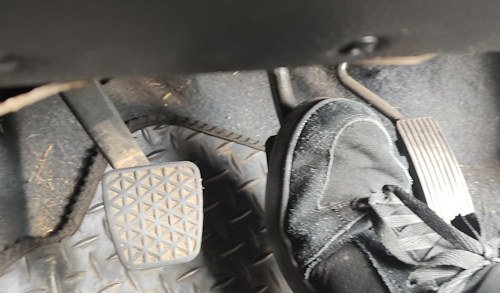
How to remove Air and check brake faults when the car or van brakes are not sharp or feel spongy under braking.
When to do this job?
If the brake pedal feels spongy and the brakes do not feel very efficient.?
If the pedal travel before the brake operates is unusually long.?
A car that has soft brakes is not as safe as it should be. When to perform this task, brake pads replace, or there may be a leak in the system. For this reason, you should make a periodic check for leaks throughout the system and, if necessary, bleed the brakes to remove all air from the hydraulic system. If the system is faulty, though, there is no point bleeding it until the cause of the problem has been found so you must check all brake parts for signs of fluid leakage.
Bleeding them will restore full braking power Air in the braking system will give you a lack of braking efficiency and a spongy, slack feeling when you press the brake pedal. If it gets really bad, you might find yourself having to pump the brake pedal to stop at all obviously a very dangerous situation. There are many ways that air can get into the braking system.
What this job involves
Finding the nipples and the fluid reservoir.
Bleeding the brakes. Points to watch If your car has dual circuit brakes, the makers sometimes lay down a special way to operate the brake pedal while you are bleeding.
To do this job Tools: Jar; flexible tube; spanner for bleed nipples, one man bleeding kit (see article)
Time: About an hour
Degree of difficulty: Really needs two people. Can be time consuming if the air in the system is hard to find
Modern cars the brake reservoir should be clearly marked but this is not always the case with older classic and vintage cars.The fluid reservoir can be either cylindrical or flat older types are metal with a small or plastic screw-tap, while more modern ones are made of translucent plastic so you can see the fluid level without removing the cap.
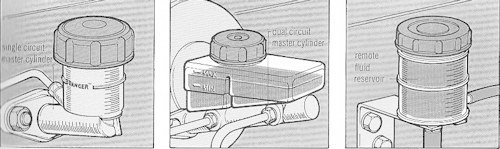
The reservoir normally attached to the master cylinder which is almost mounted on the front bulkhead inside the engine compartment just above the driver's feet, as the piston operated by the brake pedal is connected to. Some types of cars have the reservoir remotely mounted somewhere else in the engine compartment and attached to the master cylinder by a piece of flexible or metal pipe.
Cars hydraulic clutches will have two master cylinders.one for the clutch and one far the brake. normally each with its own reservoir. Older cars might only have one reservoir, shared between the two if the car has two or more reservoirs, one may be for the power steering (if fitted) and one for the clutch, to find out which is which, you could begin bleeding the brakes and then see in which reservoir the fluid level drops. However, if you want to make absolutely sure is which before you start the job, the only way is t0 follow the pipes down from the reservoirs and see whether they go to the brakes or the clutch Pipes from clutch reservoirs will end up at the gearbox, while steering ones will finish at the steering rack.
It is possible that, having identified all the other systems you find you still have two reservoirs left over do not worry as this may be part or a dual circuit braking system. However, whatever type or how many reservoirs you have, the same rules apply, that is, you should keep an eye on the fluid level during bleeding and top It up.
Most cars now have the plastic type of reservoir so you can check the fluid level easily. There should be 'max' and min markings on the side of the reservoir or simply a line marked 'danger' below which you must not let the fluid drop. The reservoir has no markings or is of the metal type then the correct fluid level will be half an inch or so (10-15mm) from the top of the reservoir. With the metal ones you have to take off the cap to check the level; you might need a torch as very little light gets into the reservoir, making it difficult to check the level accurately.
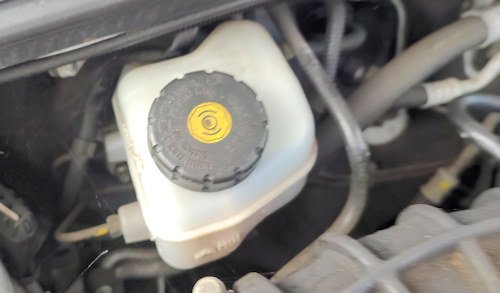
Clean the reservoir cap with a rag before you remove it to top up the fluid even the tiniest speck of dirt in the hydraulic system can damage the various
rubber seals and cause leaks. Use only proper brake fluid from a new can, The colour may vary from that already in the system, but this does not matter,
Only a few cars such as Citroens — do not use the now standard universal hydraulic fluid. Do not shake the tin this will produce air bubbles in the new fluid.
If you see that the fluid does contain tiny bubbles, stand it overnight in a dry place.
Brake fluid is very corrosive take care not to spill any on paintwork when topping up the reservoir. If you do spill any. wipe it away promptly. Should you get any fluid in your eyes. bath them in running water as soon as possible and see your doctor.
To allow you to remove air from the system, bleed nipples are fitted at the end of each brake line, normally at the brake unit itself, on the back of the brake backplate. When you loosen the nipple slightly it allows brake fluid to pass out of the system through the central hole, taking any air bubbles with it. The nipples should have small rubber dust caps fitted but these may have been lost. The nipple is small, with a tiny nozzle at its end and a hexagon locknut fitting just behind. Sometimes you might confuse a bleed nipple with a drum brake adjuster but, whereas the adjuster is normally mounted at the bottom of the brake unit. the nipple is almost always at the top. Bleed nipples are very easy to spot on disc brake callipers as, apart from the brake hose. they will be the only things sticking out from the callipers.
Some cars with a solid rear axle may have only one bleed nipple at one side to bleed both rear brakes at once, so do not worry if you only find one nipple at the back of the car. Check to see if your car has a brake servo. This will be a black silver drum-shaped unit about the size of a medium saucepan normally mounted behind the master cylinder You may however. find the servo remotely mounted elsewhere with larger engines or small engine bay the engine compartment with brake pipes running to it larger brake servos, especially remotely mounted ones, might have a bleed nipple fitted though this is rare and if there is one fitted it will be easy to spot on the servo body.
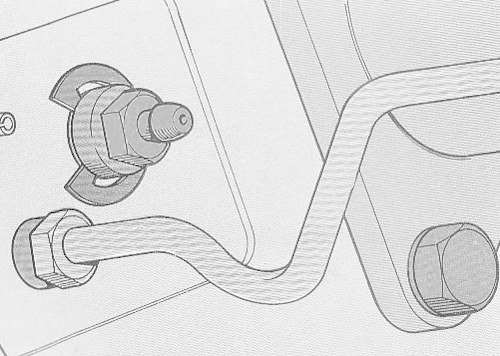
Once you know where all the brake nipples are. it is worth checking that they are all free to move Clean the area around the nipple with a wire brush if very dirty then give the area a good squirt of penetrating oil. Leave the oil to soak in for a while, then try to move each nipple using a good fitting ring spanner.
Once the nipple is free, do not open it more than a fraction or more air will get into the braking system. Now go to Step 4 for the procedure for bleeding the brakes.
For convenience and speed, at least two people will be needed for best results one to pump the brake pedal. the other to open and close the bleed nipples. A third person would come in handy to check and top up the fluid level in the reservoir, otherwise one person should check the level every few pumps. You can do the job yourself if you use an 'auto-Matic' bleed tube.(See article) But this means getting from under the car to pump the brakes and to top up the cylinder. You should bleed each of the brakes in turn; if you have to bleed the servo, do this first there are arguments as to whether you should start from the front or the back but which end you start from first does not really matter. The thing to remember is to do both brakes at one end before moving to the other two, instead of doing one side at a time. If you are in any doubt, check in your manual to see if a particular sequence is recommended.
You will probably be able to reach the bleed nipples from under the car, but if not, jack the car up and support it on ramps or axle stands Remember to chock the wheels at the other end Remove the rubber dust caps, if fitted, and slide the tube on to the nipple. The other end of the tube must be submerged in at least an inch (25 mm) of brake fluid in a clean jar. The end of the tube must not be allowed to come out of the fluid while the bleed nipple is open, otherwise air will be sucked back into the system. You can use old fluid in the jar if you have any, but you must not pour old fluid back into the reservoir.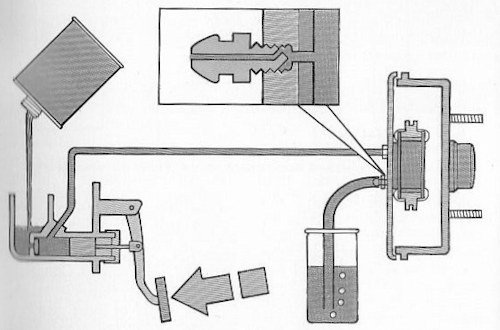
Slacken the bleed nipple about half a turn with the correct size of spanner, it best to use a ring spanner as the flats on the nipple are quite delicate and easy to burr. If the nipple is seized you might be able to bleed the brakes by slackening off the flexible hose where it is screwed into the back plate or the calliper, though you should only try thus as a last resort, With the bleed nipple slackened. shout to your helper to push the brake pedal to the floor slowly, hold it there for a couple of seconds, then release it do not pump quickly. The first shot of fluid from the tube will be full of air which you will see bubbling through the fluid in the jar. After a couple more seconds have the pedal pressed again. Keep an eye on the fluid level in the reservoir about every half dozen pump and keep it fully topped up. Repeat this until no more bubbles come out of the tube, just clean brake fluid, Finally, get your helper to push the pedal slowly to the floor once more and tighten the nipple while the pedal is down, Do not overtighten the nipple or you may never get it undone again it is sufficient to tighten it without force with short spanner, Remove the tube, refit the dust cap and move on to the next brake and so on until you have bled every one If the brake pedal still feels very spongy after you have tightened up the last nipple then you have probably got air in the system by using the wrong technique.
If the car has dual circuit brakes there may be more parts to bleed. depending on the system: but as long as you have bled clear fluid from each nipple the system should be free from air Your car may have a warning switch in the master cylinder to Illuminate a dashboard light if there is a pressure drop in one part of a dual system. This switch may need to be held in a centralized position during bleeding for it to function properly. If in doubt. check your handbook for details. If the sensor unit is at fault, renew it at once.
When you have completely the bleed of the system press the brake pedal. It should feel firm and with no sponginess, even When you leave it for a while. There may be a little free play in the mechanical linkage, but alter this the pedal should not move noticeably, no matter-how hard you press. If you have to pump up the brake pedal to make the brakes Work better than this clearly confirms that there is still air in the system and have to be bled again. If the pedal feels firm but goes spongy again a few days later there must actually be a leak in the system If your car has a brake servo check the results of bleeding it by pressing on the brake pedal and starting the engine. The pedal should Sink by about an Inch (23mm) as soon as the engine fires.
Wipe all the brake fluid away from the bleed nipples and get someone else to press hard on the brake pedal. Check all the nipples, pipes and unions for seepage. If they are leaking only slightly, tighten them up a bit and see if this cures the problem. If the leak continues you will have to recheck the system before' you bleed it again or air Will get in once more.
To Check on completion.
Does the brake pedal feel firm? Can you find any fluid leaks? Does the car stop any better? Does it pull up without veering to one side?
- Details
- Parent Category: Tech Guide
- Category: Wheels & Brakes
- Hits: 575
BMW tyre pressures chart

This chart should be used as a guideline only.
|
Model |
Year-(MY) |
Torque (NM) |
Tyre Size |
Pressure Front (PSI) |
Pressure Rear (PSI) |
|
1 Series (E81/82/87/88) |
04 – 13 |
120 |
185/60R16 |
31 |
35 |
|
1 Series (E81/82/87/88) |
04 – 13 |
120 |
195/55R16 |
31 |
35 |
|
1 Series (E81/82/87/88) |
04 – 13 |
120 |
205/55R16 |
29 |
30 |
|
1 Series (E81/82/87/88) |
04 – 13 |
120 |
205/50R17 |
29 |
33 |
|
1 Series (F20) |
11 – 13 |
140 |
195/55R16 |
31 |
35 |
|
1 Series (F20) |
11 – 13 |
140 |
205/50R17 |
31 |
35 |
|
1 Series 20D (F20) |
11 – 13 |
140 |
195/55R16 |
35 |
35 |
|
1 Series 20D (F20) |
11 – 13 |
140 |
205/50R17 |
35 |
35 |
|
3 Series/Compact (E46) |
98 – 05 |
120 |
195/65R15 |
26 |
31 |
|
3 Series/Compact (E46) |
98 – 05 |
120 |
205/60R15 |
26 |
31 |
|
3 Series/Compact (E46) |
98 – 05 |
120 |
205/55R16 |
26 |
31 |
|
3 Series/Compact (E46) |
98 – 05 |
120 |
225/50R16 |
31 |
37 |
|
3 Series/Compact (E46) |
98 – 05 |
120 |
225/45R17 |
31 |
37 |
|
320I (E46) |
98 – 07 |
120 |
195/65R15 |
29 |
34 |
|
320I (E46) |
98 – 07 |
120 |
205/60R15 |
29 |
34 |
|
323I/328I (E46) |
98 – 01 |
120 |
195/65R15 |
29 |
34 |
|
323I/328I (E46) |
98 – 01 |
120 |
205/60R15 |
31 |
37 |
|
3 Series/Touring (E90/91) |
05 – 13 |
120 |
205/55R16 |
32 |
38 |
|
3 Series/Touring (E90/91) |
05 – 13 |
120 |
225/45R17 |
32 |
38 |
|
3 Series Coupe/Cab (E92/93) |
05 – 13 |
120 |
225/45R17 |
30 |
33 |
|
3 Series Coupe/Cab (E92/93) |
05 – 13 |
120 |
225/40R18 |
35 |
39 |
|
5 Series (E39) |
96 – 03 |
120 |
205/65R15 |
29 |
31 |
|
5 Series (E39) |
96 – 03 |
120 |
225/60R15 |
29 |
31 |
|
5 Series (E39) |
96 – 03 |
120 |
205/65R15 |
31 |
34 |
|
5 Series (E39) |
96 – 03 |
120 |
235/40R18 |
27 |
33 |
|
5 Series (E39) |
96 – 03 |
120 |
265/35R18 |
33 |
39 |
|
535I (E39) |
96 – 03 |
120 |
225/60R15 |
31 |
36 |
|
535I (E39) |
96 – 03 |
120 |
225/55R16 |
31 |
36 |
|
540I (E39) |
96 – 03 |
120 |
225/55R16 |
33 |
38 |
|
535I (E39) |
96 – 03 |
120 |
235/45R17 |
36 |
39 |
|
5 Series Touring (E39) |
97 – 03 |
120 |
205/65R15 |
29 |
34 |
|
5 Series Touring (E39) |
97 – 03 |
120 |
225/55R16 |
29 |
34 |
|
5 Series Touring 540I (E39) |
97 – 03 |
120 |
225/60R15 |
32 |
38 |
|
5 Series Touring 540I (E39) |
97 – 03 |
120 |
225/55R16 |
34 |
39 |
|
5 Series (E60/61) |
04 – 10 |
120 |
225/50R17 |
32 |
38 |
|
5 Series (E60/61) |
04 – 10 |
120 |
245/45R17 |
29 |
34 |
|
5 Series (E60/61) |
04 – 10 |
120 |
245/40R18 |
27 |
33 |
|
5 Series (E60/61) |
04 – 10 |
120 |
275/35R18 |
- |
37 |
|
5 Series (F10) |
10 – 13 |
140 |
225/55R17 |
33 |
36 |
|
5 Series (F10) |
10 – 13 |
140 |
245/45R18 |
29 |
33 |
|
5 Series GT (F07) |
09 – 13 |
140 |
245/50R18 |
30 |
35 |
|
5 Series GT (F07) |
09 – 13 |
140 |
275/40R19 |
- |
35 |
|
6 Series (E63/64) |
03 – 11 |
120 |
245/40R18 |
32 |
35 |
|
6 Series (E63/64) |
03 – 11 |
120 |
245/40R19 |
32 |
- |
|
6 Series (E63/64) |
03 – 11 |
120 |
275/35R19 |
- |
35 |
|
6 Series (E63/64) |
03 – 11 |
120 |
275/40R18 |
- |
35 |
|
6 Series (E63/64) |
02 – 08 |
140 |
245/55R17 |
33 |
36 |
|
6 Series (E63/64) |
02 – 08 |
140 |
245/55R18 |
33 |
36 |
|
6 Series (E63/64) |
02 – 08 |
140 |
245/45R19 |
33 |
36 |
|
6 Series (E63/64) |
02 – 08 |
140 |
245/40R20 |
33 |
- |
|
6 Series (E63/64) |
02 – 08 |
140 |
275/35R20 |
- |
36 |
|
6 Series (F12/13) |
11 – 13 |
140 |
245/45R18 |
35 |
38 |
|
7 Series (E65/66) |
02 – 08 |
140 |
225/60R17 |
33 |
36 |
|
7 Series (F01/02/04) |
08 – 13 |
140 |
245/45R19 |
35 |
35 |
|
7 Series (F01/02/04) |
08 – 13 |
140 |
275/35R20 |
35 |
35 |
|
7 Series (F01/02/04) |
08 – 13 |
140 |
275/40R19 |
32 |
32 |
|
7 Series (F01/02/04) |
08 – 13 |
140 |
275/30R20 |
33 |
36 |
|
Z31.8/1.9 (E36) |
96 – 03 |
120 |
205/60R15 |
26 |
29 |
|
Z31.8/1.9 (E36) |
96 – 03 |
120 |
225/50R16 |
28 |
31 |
|
Z3 2.0/2.8/3.0/3.2 (E36) |
98 – 03 |
120 |
225/50R16 |
29 |
29 |
|
Z31.8/1.9 (E36) |
98 – 03 |
120 |
225/45R17 |
28 |
29 |
|
Z4 2.5 (E85/86) |
03 – 09 |
120 |
225/50R16 |
30 |
33 |
|
Z4 2.5 (E85/86) |
03 – 09 |
120 |
225/45R17 |
30 |
33 |
|
Z4 3.0 (E85/86) |
03 – 09 |
120 |
225/45R17 |
33 |
36 |
|
Z4 3.0 (E85/86) |
03 – 09 |
120 |
245/40R17 |
- |
36 |
|
Z4 (E89) |
09 – 13 |
120 |
225/45R17 |
35 |
42 |
|
Z4 (E89) |
09 – 13 |
120 |
255/35R18 |
- |
45 |
|
X1 (E84) |
09 – 13 |
120 |
225/50R17 |
32 |
38 |
|
X1 (E84) |
09 – 13 |
120 |
225/45R18 |
35 |
39 |
|
X3 (E83) |
04 – 10 |
140 |
215/60R17 |
32 |
35 |
|
X3 (E83) |
04 – 10 |
140 |
235/55R17 |
29 |
32 |
|
X3 (E83) |
04 – 10 |
140 |
235/50R18 |
32 |
- |
|
X3 (E83) |
04 – 10 |
140 |
255/45R18 |
- |
32 |
|
X3 (E83) |
04 – 10 |
140 |
235/45R19 |
32 |
- |
|
X3 (E83) |
04 – 10 |
140 |
255/40R19 |
- |
35 |
|
X5 (E53) |
00 – 07 |
140 |
235/65R17 |
31 |
31 |
|
X5 (E53) |
00 – 07 |
140 |
255/55R18 |
31 |
31 |
|
X5 (E70) |
07 – 13 |
140 |
255/55R18 |
30 |
33 |
|
X5 (E70) |
07 – 13 |
140 |
255/50R19 |
30 |
36 |
|
X6 (E71) |
08 – 13 |
140 |
255/50R19 |
28 |
31 |
|
X6 (E71) |
08 – 13 |
140 |
315/35R20 |
32 |
32 |
|
Model |
Year |
Torque (NM) |
Tyre Size |
Pressure Front |
Pressure Rear |
- Details
- Parent Category: Tech Guide
- Category: Wheels & Brakes
- Hits: 179
Volkswagen Wheel Fitment Sizes Guide PCD & Offsets

|
Model |
|
P.C.D. |
ET |
Bore |
|
Volkswagen Bora |
|
5 x 100 |
32...38 |
57 |
|
Volkswagen Caddy |
|
4 x 100 |
32...38 |
57 |
|
Volkswagen Caravelle (upto 1990) |
|
5 x 112 |
|
68 |
|
Volkswagen Caravelle (after 1990) |
|
5 x 112 |
35...40 |
57 |
|
Volkswagen Corrado |
|
4 x 100 |
32...38 |
57 |
|
Volkswagen Corrado VR6 |
|
5 x 100 |
32...38 |
57 |
|
Volkswagen Derby |
|
4 x 100 |
32...38 |
57 |
|
Volkswagen Golf |
|
4 x 100 |
32...38 |
57 |
|
Volkswagen Golf Mk 3 GTi |
|
5 x 100 |
32...38 |
57 |
|
Volkswagen Golf Mk 3 VR6 |
|
5 x 100 |
32...38 |
57 |
|
Volkswagen Golf Mk 4 |
|
5 x 100 |
32...38 |
57 |
|
Volkswagen Jetta |
|
4 x 100 |
32...38 |
57 |
|
Volkswagen Kafer |
|
4 x 130 |
|
78.6 |
|
Volkswagen L 80 |
|
6 x 205 |
|
161 |
|
Volkswagen LT 28, LT 31 |
|
5 x 160 |
|
95 |
|
Volkswagen LT 35 (up to 1997) |
|
6 x 205 |
|
161 |
|
Volkswagen LT 35 (after 1997) |
|
5 x 130 |
|
83 |
|
Volkswagen LT 55 |
|
6 x 205 |
|
161 |
|
Volkswagen Lupo |
|
4 x 100 |
32...38 |
57 |
|
Volkswagen New Beetle |
|
5 x 100 |
32...38 |
57 |
|
Volkswagen Passat (up to 1996) |
|
4 x 100 |
32...38 |
57 |
|
Volkswagen Passat (after 1996) |
|
5 x 112 |
35...40 |
57 |
|
Volkswagen Passat VR6 |
|
5 x 100 |
32...38 |
57 |
|
Volkswagen Polo |
|
4 x 100 |
32...38 |
57 |
|
Volkswagen Santana |
|
4 x 100 |
32...38 |
57 |
|
Volkswagen Scirocco |
|
4 x 100 |
32...38 |
57 |
|
Volkswagen Sharan |
|
5 x 112 |
35...40 |
57 |
|
Volkswagen T1, T4 |
|
5 x 112 |
35...40 |
57 |
|
Volkswagen T2, T3 |
|
5 x 112 |
|
68 |
|
Volkswagen Taro |
|
5 x 114.3 |
|
67 |
|
Volkswagen Taro 4x4 |
|
6 x 139.7 |
|
107 |
|
Volkswagen Vento |
|
4 x 100 |
32...38 |
57 |
|
Volkswagen Vento VR6 |
|
5 x 100 |
32...38 |
57 |
|
Corrado 4 Stud |
83 to 93 |
4x100 |
35 to 42 |
57.1 |
|
Corrado 5 Stud |
92 to 98 |
5x100 |
35 to 42 |
57.1 |
|
Golf I / Cabrio |
76 to 98 |
4x100 |
35 to 42 |
57.1 |
|
Golf II & III / Ventro |
84 to 98 |
4x100 |
35 to 42 |
57.1 |
|
Golf III 5 Stud |
92 to 98 |
5x100 |
35 to 42 |
57.1 |
|
Golf IV / Bora |
98 to 03 |
5x100 |
35 to 42 |
57.1 |
|
Lupo |
97> |
4x100 |
35 to 42 |
57.1 |
|
New Beetle |
98> |
5x100 |
35 to 42 |
57.1 |
|
New Golf V |
03> |
5x112 |
40 to 45 |
57.1 |
|
Passat |
00> |
5x112 |
35 to 42 |
57.1 |
|
Passat 4 Stud |
88 to 97 |
4x100 |
35 to 42 |
57.1 |
|
Passat 5 Stud |
97 to 00 |
5x112 |
35 to 42 |
57.1 |
|
Passat W8 |
02> |
5x112 |
35 to 42 |
57.1 |
|
Phaeton |
02> |
5x112 |
35 to 42 |
57.1 |
|
Polo |
95 to 01 |
4x100 |
35 to 42 |
57.1 |
|
Sharan |
96> |
5x112 |
35 to 45 |
57.1 |
|
Touareg |
03> |
5x130 |
50 |
71.6 |
|
Touareg 2.5 Tdi |
03> |
5x120 |
50 |
71.6 |
|
Touran |
03> |
5x112 |
40 to 45 |
57.1 |
|
Transporter |
90> |
5x112 |
25 to 42 |
57.1 |
The bolt circle diameter (BCD), also called the pitch circle diameter (PCD).
A general guide to common bolt patterns by manufacturer:
BMW: 5x120 mm
Dodge: 5x100 mm, 5x114.3 mm
Ford: 4x108 mm, 5x114.3 mm, 5X135 mm, 5X139.7 mm
GM (Chevy, Pontiac, etc):5x100mm, 5x115 mm, 5x120.7 mm, 6X139.7 mm
Honda/Acura: 5x114.3 mm, 4x100 mm, 4x114.3 mm
Jeep Wrangler JK 07-UP 17"&18" 5x127mm 5x5in
Mazda: 5x114.3 mm, 4x100 mm
Nissan/Infiniti: 5x114.3 mm, 4x114.3 mm
Peugeot/Citroen: 4x108mm
Renault: 5x108 mm, 4x100 mm
Subaru: 5x100mm, 5x114.3mm
Toyota/Lexus/Scion: 5x114.3 mm, 5x100 mm
VW/Seat/Audi:5x100mm, 5x112 mm
- Details
- Parent Category: Tech Guide
- Category: Wheels & Brakes
- Hits: 65
Vauxhall Wheel Fitment Sizes Guide PCD & Offsets

| Model | Year | PCD | Offset | Bore |
| Astra 4 Stud | 84 to 98 | 4×100 | 35 to 45 | 56.6 |
| Astra 4 Stud | 98 to 03 | 4×100 | 35 to 45 | 56.6 |
| Astra 5 Stud | 98 to 03 | 5×110 | 35 to 45 | 65.1 |
| Astra Coupe | 98 on | 5×110 | 35 to 45 | 65.1 |
| Astravan | 98 on | 5×110 | 35 to 45 | 65.1 |
| Calibra 4 Stud | 90 to 02 | 4×100 | 35 to 45 | 56.6 |
| Calibra 5 Stud | 92 to 02 | 5×110 | 35 to 45 | 56.1 |
| Carlson | 90 on | 5×110 | 35 to 45 | 65.1 |
| Cavalier 4 Stud | 81 on | 4×100 | 35 to 45 | 56.6 |
| Cavalier 5 Stud | 88 on | 5×110 | 35 to 45 | 65.1 |
| Corsa | 96 on | 4×100 | 35 to 45 | 56.6 |
| Corsa | 00 on | 4×100 | 35 to 45 | 56.6 |
| Corsa 1.7 CDTi | 03 on | 5×110 | 38 to 45 | 65.1 |
| Combo/Van | 96 on | 4×100 | 37 to 45 | 56.6 |
| Frontera | 95 on | 6×139 | 0 to 15 | 108 |
| Insignia | 08 on | 5×120 | 35 to 45 | 72.6 |
| Kadet 4 Stud | 84 to 98 | 4×100 | 35 to 45 | 56.6 |
| Kadet 5 Stud | 03 on | 5×110 | 38 to 45 | 65.1 |
| Meriva | 03 on | 4×100 | 35 to 45 | 56.6 |
| Meriva | 03 on | 5×110 | 38 to 45 | 65.1 |
| Montery | 01 on | 6×139 | 10 to 20 | 100 |
| Nova | 84 on | 4×100 | 40 to 45 | 56.6 |
| Omega | 94 on | 5×110 | 35 to 45 | 65.1 |
| Sintra | 97 to 99 | 5×115 | 35 to 45 | 70.3 |
| Tigra | 94 to 00 | 4×100 | 35 to 45 | 56.6 |
| Tigra | 04 on | 4×100 | 35 to 45 | 56.6 |
| Vectra 4 Stud | 90 to 02 | 4×100 | 35 to 45 | 56.6 |
| Vectra 5 Stud | 92 to 02 | 5×110 | 35 to 45 | 65.1 |
| Vectra/Signum | 02 on | 5×110 | 35 to 45 | 65.1 |
| Vivaro | 01 on | 5×118 | 40 to 45 | 71.2 |
| Zafira | 98 on | 5×110 | 35 to 45 | 65.1 |
The bolt circle diameter (BCD), also called the pitch circle diameter (PCD)
A general guide to common bolt patterns by manufacturer:
BMW: 5x120 mm
Dodge: 5x100 mm, 5x114.3 mm
Ford: 4x108 mm, 5x114.3 mm, 5X135 mm, 5X139.7 mm
GM (Chevy, Pontiac, etc):5x100mm, 5x115 mm, 5x120.7 mm, 6X139.7 mm
Honda/Acura: 5x114.3 mm, 4x100 mm, 4x114.3 mm
Jeep Wrangler JK 07-UP 17"&18" 5x127mm 5x5in
Mazda: 5x114.3 mm, 4x100 mm
Nissan/Infiniti: 5x114.3 mm, 4x114.3 mm
Peugeot/Citroen: 4x108mm
Renault: 5x108 mm, 4x100 mm
Subaru: 5x100mm, 5x114.3mm
Toyota/Lexus/Scion: 5x114.3 mm, 5x100 mm
VW/Seat/Audi:5x100mm, 5x112 mm

