
Mitsubishi Engines
- Details
- Parent Category: Engines Makes
- Category: Mitsubishi Engines
- Hits: 141
Mitsubishi 4M4 Diesel engine
 |
|
|
Make |
Mitsubishi Motors Corporation |
|
manufacturing period |
1993 to present |
|
type |
inline 4 cylinder |
|
Displacement |
2.8-3.2L |
|
Fuel |
Diesel |
|
Cooling |
Water-cooled |
The Mitsubishi 4M4 engine is an in -line 4-cylinder diesel engine available only at first as 2835 cc intercooled turbo, detail improvements in 1996 and a larger 3200 cc and later a 3.0L. Manufactured by Mitsubishi Motors for SUVs, and was first installed in the second-generation Mitsubishi Pajero. The 4M4 type was developed to update the predecessor 4D5 type.
The original 4M40 model had a 2.8L intercooler turbo with a cast iron cylinder block. It was improved in 1996, and a 3.2L engine with a larger displacement appeared SOHC, DOHC in 1999, improving output, torque, fuel efficiency, and exhaust gas concentration.

4M40
Naturally aspirated
- Engine type — in-line 4-cylinder SOHC
- Displacement — 2835 cc
- Inner diameter — 95 mm
- Stroke — 100 mm
- Fuel — light oil
Turbo
- Compression ratio — 21:1
- Power — 92 kW (125 PS) / 4000 rpm
- Torque —294 N m (217 lb ft) / 2000 rpm
Intercooler turbo
- Fuel system — electronic or mechanical distribution injection pump
- Compression ratio — 21:1
- Power — 103 kW (140 PS) / 4000 rpm
- Torque —314 N m (232 lb ft) / 2000 rpm
Naturally aspirated
- Fuel System — Distributor Injection Pump
- Compression ratio — 21:1
- Power — 59 kW (80 PS) / 4000 rpm
- Torque —198 N m (146 lb ft) / 2000 rpm

4M41
- Engine type — in-line 4-cylinder DOHC 16 valves
- Displacement — 3200 cc
- Inner diameter — 98.5 mm
- Stroke — 105.0 mm
- Fuel — light oil
Intercooler turbo
- Fuel system — electronically controlled distributed injection pump or common rail direct injection
- Compression ratio — 17:1
- Power — 121 kW (165 PS) / 4000 rpm
- Torque —351 N m (259 lb ft) / 2000-3000 rpm
1st generation intercooler variable nozzle turbo
- Fuel System — Common Rail Direct Injection
- Compression ratios — 17:1, 16.0:1
- Power — 129 kW (175 PS) / 3800 rpm
- Torque —382 N m (282 lb ft) / 2000 rpm
2nd generation intercooler variable nozzle turbo
- Fuel System — Common Rail Direct Injection
- Compression ratios — 17:1, 16.0:1
- Power —147 kW (200 PS) / 3800 rpm
- Torque —450 N m (330 lb ft) / 2000 rpm
Installed vehicles:
- 1999-2006 Mitsubishi Pajero
- 1999-2009 Mitsubishi Colt LDV 4x4
- 2005-2011 Mitsubishi Triton/L200 / Mitsubishi Strada
- 1994-2006 L400 Delica
- 2006-2007 Mitsubishi Pajero (Philippine Spec)
- 2008-2011 Mitsubishi Pajero Sport / Montero Sport
- 2010–present Mitsubishi Pajero

4M42
Naturally aspirated
- Engine type — in-line 4-cylinder DOHC 16 valves
- Displacement — 2977 cc
- Inner diameter — 95.0 mm
- Stroke — 105.0 mm
- Fuel — light oil
Intercooler Variable Nozzle Turbo (T1)
- Fuel System — Common Rail Direct Injection
- Compression ratio—
- Power — 81 kW (110 PS) / 3200 rpm
- Torque —255 N m (188 lb ft) / 1700 rpm
Intercooler Variable Nozzle Turbo (T2)
- Fuel System — Common Rail Direct Injection
- Compression ratio—
- Power — 92 kW (125 PS) / 3200 rpm
- Torque —294 N m (216 lb ft) / 1700 rpm
Intercooler Variable Nozzle Turbo (T3)
- Fuel System — Common Rail Direct Injection
- Compression ratio—
- Power — 96 kW (131 PS) / 3200 rpm
- Torque —294 N m (216 lb ft) / 1700 rpm
Installed vehicle:
- 2006-2011 Mitsubishi Fuso Canter
- 2005-2006 Mitsubishi Fuso Canter
- Details
- Parent Category: Engines Makes
- Category: Mitsubishi Engines
- Hits: 45
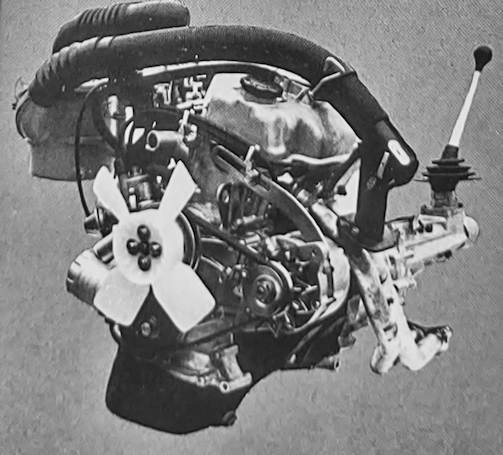
Mitsubishi 2G2 359cc series engine
 |
|
|
Make |
Mitsubishi Motors Corporation |
|
manufacturing period |
1972 to 1976 |
|
type |
In-line 2-cylinder SOHC |
|
Displacement |
0.36L |
|
Cooling |
Water |
The Mitsubishi 2G2 series engine is a series of water- cooled in -line 2-cylinder gasoline engines for the company's light vehicles manufactured by Mitsubishi Motors and Mazda Porter Cab (550cc model) . It is a 4-stroke version of the company's 2G1 series engine for mini vehicles .
History
Commonly known as " Vulcan Engine" . The valve drive system uses SOHC , and the number of valves is 2 valves per cylinder with 1 intake and 1 exhaust. Except for the early model of 2G21 (Mujirushi Vulcan), all are equipped with a silent shaft . Initially, a timing chain was used to drive the camshaft, but a timing belt was used in the later model G23B, which will be described later . At the end of the series, the class's first turbo specification and the class's first air-cooled intercooler turbo specification were also added.
The successor is the 3G8 series , which was produced from 1987 to 2013 .
Variations
2G21 (Mujirushi Vulcan)
The first engine to appear, without a silent shaft. The MCA (Mitsubishi Clean Air) system is adopted to clear exhaust gas regulations . There was also a sports series engine equipped with a twin carburetor, which was installed in the Minica GS / GSL and Minica Skipper IV in place of the previous 2G10 engine.
- Production period : 1972-1974
- Displacement: 0.36L (359cc)
- Number of cylinders: 2
- Bore x Stroke: 62.0mm x 59.6mm
- Maximum output: 24 kW (32 PS) at 8,000 rpm (single carb) / 26 kW (36 PS) at 8,500 rpm (twin carb)
- Maximum torque: 3.0 kg m (29.4 N m) at 5,500 rpm (single carb) / 3.2 kg m (31.4 N m) at 6,500 rpm (twin carb)
Installed vehicles
Minica F4 (A103A, early model, 1972-1976)
Mitsubishi Minica Skipper IV (1972-1974)
2G21 (Vulcan S)
Appeared at the end of 1974. The silent shaft is adopted for the first time and the MCA-II system is adopted.
- Production period : 1974-1976
- Displacement: 0.36L (359cc)
- Number of cylinders: 2
- Bore x Stroke: 62.0mm x 59.6mm
- Maximum output: 22 kW (30 PS) at 6,000 rpm
- max power (DIN): 32 hp at 8,000 rpm
- max torque (DIN): 22 1b ft, 3 kg m at 5,500 rpm
- max engine rpm: 8,700; 88.9 hp/l
- max speeds: (I) 20 mph, 32 km/h; (II) 32 mph, 51 km/h; (III) 48 mph, 78 km/h; (IV) 71 mph, 115 km/h
- power-weight ratio: 34.8 lb/hp, 15.8 kg/hp
Installed vehicles:
Minica F4 (A103A, late model)
- Details
- Parent Category: Engines Makes
- Category: Mitsubishi Engines
- Hits: 177
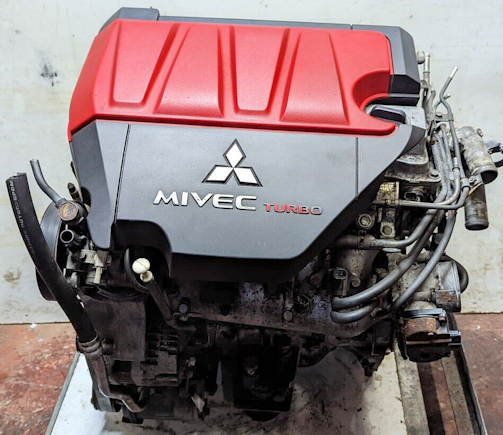
Mitsubishi 4B1 engine
|
Make |
Mitsubishi Motors Corporation |
|
manufacturing period |
September 2005- Present |
|
type |
Inline 4-cylinder DOHC 16 valves |
|
fuel |
petrol |
|
Displacement |
|
The Mitsubishi 4B1 engine is a series name of a 4-stroke in-line 4-cylinder petrol engine for automobiles developed and manufactured by Mitsubishi Motors Corporation.
History
The 4B10 , 4B11 , and 4B12 were all developed as " world engines " , although their displacement and performance differed, so if there is no need to distinguish between each type, we will refer to them as the 4B1 engine or simply the 4B1.The world engine that became the prototype of this series is Mitsubishi Motors Corporation of Japan, Hyundai Motor of South Korea, Daimler Chrysler of Germany and the United States (as of 2021, the current situation as a DC company is Daimler AG , but it is completely It was designed by the Global Engine Alliance, co - founded by Stellatis in this Chrysler-leaning topic . As such, engines similarly inherited from the World Engine design exist not only in Mitsubishi (4B10, 4B11, 4B12), but also in Hyundai Kia (see Hyundai Theta Engine) and Chrysler.
Originally, the purpose of the world engine was to reduce development costs and production line maintenance costs through joint development and sharing of parts, but sharing everything was not considered. Only the basic parts of the engine were shared, leaving room for each company to freely determine engine performance in response to market demand. Mitsubishi manufactures the intake and exhaust valves for DaimlerChrysler's world engines.
As of 2019, all manufacturing in Japan is done at the Shiga factory of Kyoto Seisakusho in Konan City, Shiga Prefecture. This engine series is also supplied to Malaysia 's Proton, and 4B10 and 4B11 are adopted for Proton Inspira Lancer.
4B10 Mitsubishi engine
It is a short stroke engine with a shorter stroke than the bore.
In Japan, 4B10 was installed for the first time in Galant Fortis, which underwent a minor change in December 2009, but overseas it has been installed in Lancer since before that.
Applications
- 2007-2017 Mitsubishi Lancer
- 2010 Mitsubishi RVR (Japan)
- 2010-2015 Proton Inspira
|
cylinder arrangement |
In-line 4-cylinder DOHC 16-valve MIVEC |
|
Displacement |
1,798cc |
|
boa |
86 mm (3.39 in) |
|
stroke |
77.4 mm (3.05 in) |
|
compression ratio |
10.5:1 |
|
fuel injector |
ECI-MULTI (Electronically Controlled Fuel Injection) |
|
Maximum output |
102 kW (139 PS) / 6,000 rpm |
|
torque |
172 NM (17.5 kgf⋅m) / 4,200 rpm |
4B11 Mitsubishi engine

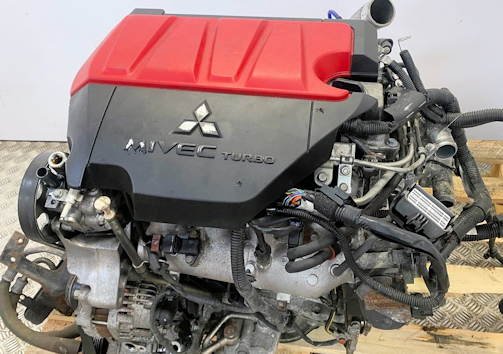
4B11 is a naturally aspirated (NA) model installed in Galant Fortis (export name: Lancer), Lancer Evolution X, Lancer Evolution Final Edition, Galant Fortis Ralliart (export name: Lancer Ralliart), Galant Fortis Sportback. There is a turbo model installed in Ralliart.
The NA model 4B11 and 4B11 turbo look almost the same, but the turbo model had to meet the performance requirements of the Lancer Evolution, so many of the parts used have different designs and construction methods, resulting in lighter weight and it is highly rigid, and there is a difference that can be said to be a different thing from the naturally aspirated one.
However, the 4B11 turbo installed in the Galant Fortis and Sportback Ralliart grades is the same as the engine installed in the Lancer Evolution X, but the turbocharger is changed from twin scroll to single scroll, radiator and air cleaner, the shape and size of the intercooler have been optimized. The 4B11 turbo for the Lancer Evolution, compared to the 4G63 installed in the previous Lancer Evo, had the same maximum output of 206 kW, but increased torque and improved response, and the engine itself weighed 12.5 kg. and the low centre of gravity of the engine.
Applications: NA
- 2007-2017 Mitsubishi Lancer/Galant Fortis
- 2007–2012 Peugeot 4007
- 2012-2017 Peugeot 4008
- 2009 Mitsubishi Outlander (Facelift Europe)
- 2012 Mitsubishi Outlander Sport
- 2013 Mitsubishi Outlander PHEV
- 2010 Mitsubishi ASX, Mitsubishi RVR (Canada)
- 2010-2015 Proton Inspira
- 2007-now Mitsubishi Delica
- 2018-now Mitsubishi Eclipse Cross
Applications: Turbo
- 2007-2016 Mitsubishi Lancer Evolution X
- 2008-2015 Mitsubishi Lancer/Galant Fortis Ralliart
- 2023 Mitsubishi Outlander PHEV
|
Presence of turbocharger |
NA |
|
cylinder arrangement |
In-line 4-cylinder DOHC 16-valve MIVEC |
|
Displacement |
1,998cc |
|
boa |
86mm |
|
stroke |
86mm |
|
compression ratio |
|
|
fuel injector |
ECI-MULTI |
|
Maximum output |
|
|
torque |
|
|
Presence of turbocharger |
turbo |
|
cylinder arrangement |
In-line 4-cylinder DOHC 16-valve MIVEC |
|
Displacement |
1,998cc |
|
boa |
86mm |
|
stroke |
86mm |
|
compression ratio |
9:1 |
|
fuel injector |
ECI-MULTI |
|
Maximum output |
|
|
torque |
|
4B12 Mitsubishi engine
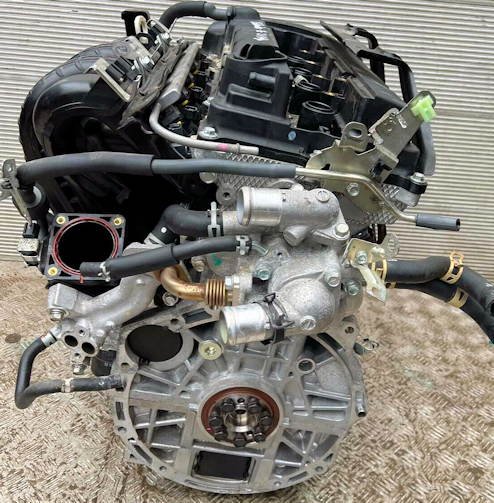
It was the first 4B1 engine to be released, and it was installed in the 2.4 L model of the Outlander and the Delica D:5. The bore is 2mm wider than 4B10 and 4B11, making it a long-stroke engine with a long stroke. The 4B11 and 4B10 are based on this engine, with reduced bore and stroke.
The Outlander PHEV, which underwent a minor change in 2018, was equipped with the Atkinson cycle 4B12. It is a rare specification that emphasizes power generation capacity and has the same maximum rotation speed for output and torque (4,500 rpm).
Applications:
- Mitsubishi Outlander
- Mitsubishi Delica
|
cylinder arrangement |
In-line 4-cylinder DOHC 16-valve MIVEC |
|
Displacement |
2,359cc |
|
boa |
88mm |
|
stroke |
97mm |
|
compression ratio |
|
|
fuel injector |
ECI-MULTI |
|
Maximum output |
|
|
torque |
|
- Details
- Parent Category: Engines Makes
- Category: Mitsubishi Engines
- Hits: 42
Mitsubishi 2G10 Engine
 |
|
|
production |
Mitsubishi Motors Corporation |
|
manufacturing period |
1968 to 1976 |
|
type |
2-stroke, straight 2-piston reed valve |
|
fuel |
petrol |
|
Displacement |
0.36L (359cc) |
|
Inner Diameter x Stroke |
59.6mm x 62.0mm |
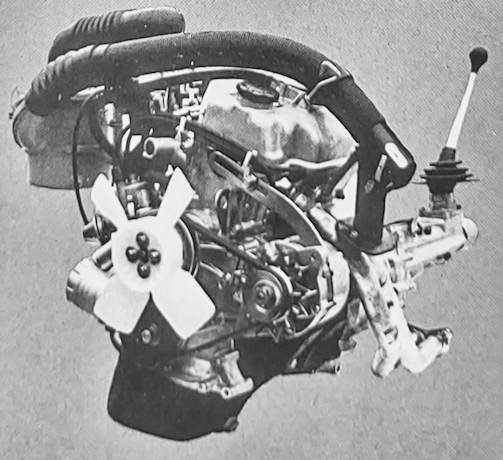
The Mitsubishi 2G10 is a water- cooled 2-stroke in-line 2-cylinder gasoline engine for the company's mini vehicles manufactured by Mitsubishi Motors (originally Mitsubishi Heavy Industries ) .
It is a liquid-cooled engine with a cast -iron cylinder block and crankcase , developed to replace the air-cooled ME24 engine . It was first installed in the company's first Minica (late model, LA23) in 1968 , and later installed in the company's Minica Skipper and the second generation Minicab truck (late model). , Furthermore, it continued to be produced for a long time after the change to yellow number.
The reason why the name changed from the ME24 type is that in 1967 the engine naming convention in Mitsubishi cars was changed . 2G1 indicates the first series of two -cylinder petrol engines , and 2G10 0 indicates that it was the first engine developed in the series . In addition, the 2G10 type indicated that there were various variations by adding a hyphen and a number after the model name (2G10 -5 as an example).
The 2G10 type did not officially have name , but the air cleaner box was painted in a different color depending on the model it was installed on, and it was nicknamed the red engine or gold engine .
The successor is the 2G2 series , a 4-stroke version of the 2G10 type that appeared in September 1972. The shift to 4-stroke was in anticipation of tightening automobile exhaust gas regulations , and was positioned as the decisive blow for the Mitsubishi Clean Air System (MCA) for mini vehicles. However, the 2G10 continued to be manufactured as a low-end engine until the standard for light vehicles was expanded to 550 cc in January 1976 .
PERFORMANCE: Standard
max power (DIN): 32 hp at 8,000 rpm
max torque (DIN): 22 1b ft, 3 kg m at 5,500 rpm
max engine rpm: 8,700; 88.9 hp/l
max speeds: (I) 20 mph, 32 km/h; (II) 32 mph, 51 km/h; (III) 48 mph, 78 km/h; (IV) 71 mph, 115 km/h
power-weight ratio: 34.8 lb/hp, 15.8 kg/hp
De Luxe, Skipper,FL Coupé
max power (DIN): 36 hp at 8,500 rpm
max torque (DIN): 23 1b ft, 3.2 kg m at 6,500 rpm
max engine rpm: 9,000; 100.3 hp/l.
max speeds: (I) 21 mph, 33 km/h; (II) 33 mph, 53 km/h; (III) 50 mph, 80 km/h; (IV) 75 mph, 120 km/h
power-weight ratio: 31.9 lb/hp, 14.4 kg/hp.
Used in
- 1968-1969 Mitsubishi Minica Model LA23
- 1969-1976 Minica Model A101/101V
- 1971-1972 Mitsubishi Minica Skipper A101
- 1972-1976 Mitsubishi Minicab W T131
- Details
- Parent Category: Engines Makes
- Category: Mitsubishi Engines
- Hits: 160
Mitsubishi 4A9 engine
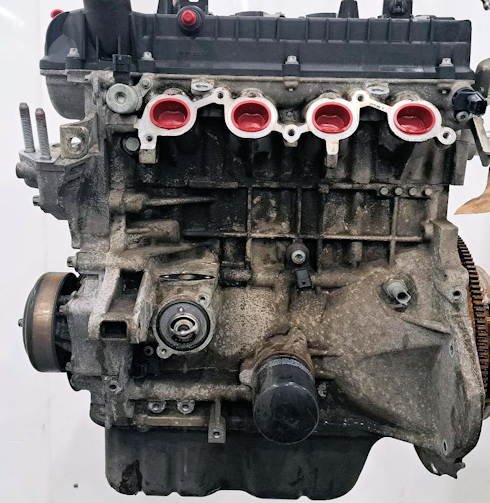
The Mitsubishi 4A9 engine is a line of in-line 4-cylinder gasoline engines with 1.3L, 1.5L and 1.6L from Mitsubishi Motors. First installed in the Mitsubishi Colt in 2004.
History
The 4A9 project began as a joint effort between Mitsubishi Motors and Daimler Chrysler (now Daimler), with Mitsubishi Motors responsible for engine development. Manufactured at MDC Power GmbH in Germany, a Daimler subsidiary (formerly a joint venture with Mitsubishi Motors), it is now at Mitsubishi Motors Powertrain Factory in Kyoto. The model in Mercedes-Benz of 4A9 type is M135, 4A90 is M135 E13, 4A91 is M135 E15.
The 4A9 is the first Mitsubishi Motors in-line 4-engine series to adopt a high-pressure die-cast aluminium alloy cylinder block. In addition, it uses an aluminium alloy cylinder head, DOHC 4 valve structure and (intake side only) MIVEC variable valve mechanism the cylinder-head cover and intake manifold are made of plastic. In addition, the camshaft is driven by a timing chain instead of the conventional 4G1 type timing belt.
Variations
4A90 (1.3L)
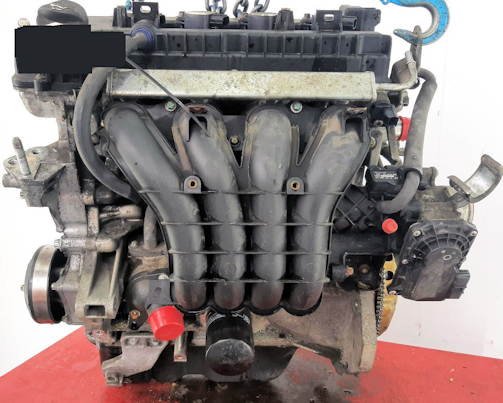
- Type: DOHC 16 valve MIVEC
- Displacement: 1,332cc
- Bore pitch: 83.0mm
- Bore: 75.0mm
- Stroke: 75.4mm
- Maximum output: 70kW (95PS) / 6,000rpm
- Maximum torque: 125N m (92 kg m) / 4,000 rpm
Installed vehicle
- 2004-2012 Mitsubishi Colt, Colt Plus
- 2004-2006 Smart Forfour
- DFM Joyear X3
- Zotye Z200
- BAIC Up
- Haima 2
4A91 (1.5L)
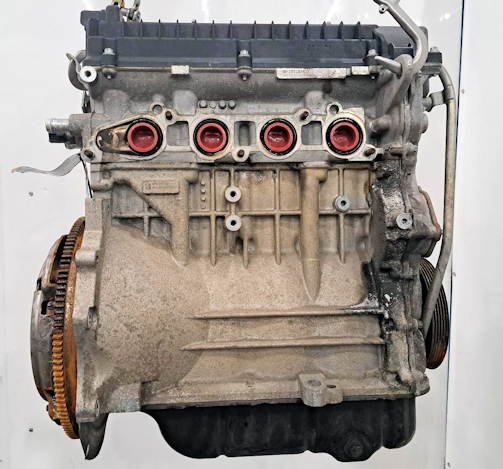
- Type: DOHC 16 valve MIVEC
- Displacement: 1,499cc 1.5 L
- Bore pitch: 83.0mm
- Bore: 75.0mm
- Stroke: 84.8mm
- Compression ratio: 10.0:1
- Maximum output: 80kW (109PS) 109 hp / 6,000rpm
- Maximum Torque: 145N m (107 ft lb) / 4,000 rpm
Installed vehicle
- 2004-2012 Mitsubishi Colt, Colt Plus
- 2007-2015 Mitsubishi Lancer
- 2004-2006 Smart Forfour
- BAIC BJ20
- Brilliance FSV
- Brilliance V5
- Haima 2
- Soueast Motor V5
- Soueast Motor V-cross (turbo spec)
- Soueast Motor V3 (series Lancer)
- Soueast DX3
- Soueast DX7
- Senova D20
- Senova D50
- Senova X55
- Mitsubishi Xpander
- Nissan Livina
- Yema T70 SUV
- Zotye Z300
- Zotye SR7
The Smart Forfour 1.5 Sports Style (limited to 500 units, not yet introduced in Japan) was equipped with an engine tuned by Brabus. At the same time, an SB3 kit that tunes the existing 1.5 engine to similar specifications was also sold. The main contents are changes in the camshaft and ECU, and the output is as follows.
- Maximum output: 90kW (122PS) / 6,250rpm
- Maximum Torque: 160N m / 3,800rpm
4A92 (1.6L)
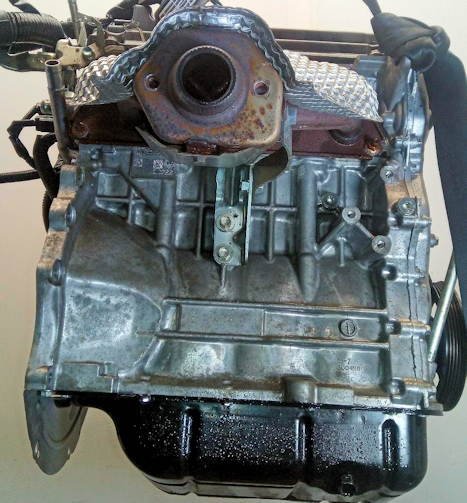
- Type: DOHC 16 valve MIVEC
- Displacement: 1,590cc 1.6L
- Bore: 75.0mm
- Stroke: 90.0mm
- Compression ratio: 11.0:1
- Maximum output: 86kW (117PS) 115 hp / 6,000rpm
- Maximum Torque: 154N m (114 ft lbf) / 4,000 rpm
Installed vehicle
- 2010- Mitsubishi ASX
- 2011 -Mitsubishi Lancer (European spec)
- Brilliance H530
- Brilliance V5
- DFM Joyear X3

