
Wolseley
Wolseley 4/44
 |
|
|
Manufacturer |
BMC |
|
Production |
1953 to 1956 |
|
Class |
Motor car |
|
Produced |
29,845 |
|
Designer |
Gerald Palmer |
|
Body style |
4-door saloon |
|
Engine |
Morris 1250 cc in-line 4 |
|
Wheelbase |
102 in (2,600 mm) |
|
Length |
168 inches (4267 mm) |
|
Width |
61 in (1,500 mm) |
The Wolseley four forty-four (4/44) was a Motor car built in the 1950s.
History
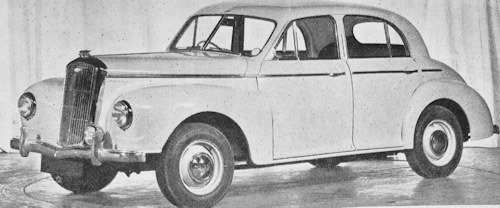
The Wolseley Four Forty-Four made its first public appearance on the opening day of the Earl's Court Motor Show. It was originally designed under the Nuffield Organisation but by the time it was released in 1953 Wolseley was part of BMC. Much of the design was shared with the MG Magnette ZA which came out later in the same year.
Unlike the MG, the 4/44 used the well-tried Nuffield design,1250 cc XPAW engine a version of the XPAG engine previously seen in the later MG T-type series of cars but detuned developing some 46 b.h.p. with a three-bearing counter-weighted crankshaft and an S.B. ratio of 1.35:1. Having pushrod-operated overhead valves and unlike the MG a single S.U. carburettor it will readily reach 5,000 r.p.m and produces maximum torque at 2,400 r.p.m. The engine is supported on two tubes of about 21-in. diameter which run forward from the scuttle and these in effect are unstressed torsional. The four-speed manual transmission has a column change, the clutch is of a single dry plate type, 8 in, in diameter, and the gearbox a four-speed unit having ratios of 1.5, 2.53, and 3.8:1,
The construction was monocoque, front-end stiffness is further increased by a rectangular box-section approximately 31 in. deep and 4 in. wide with independent suspension at the front by coil springs and a live rear axle. by using the tunnel as a stressed member so that the car can in some respects be thought of as having a backbone frame built into it the deep and stressed tunnel Contributes materially to the beam stiffness of the car its value in respect of torsional Stiffness. The rear springs are anchored to the narrow-section side members with the rear spring eye slightly higher than the front so as to give an inbuilt understeer characteristic which increases with roll angle.
For the steering at the front of the car the two half-track rods are placed ahead of the front wheels and connect with a transversely mounted rack-and-pinion steering gear, there being, therefore, only four ball joints in the entire steering linkage.
The car had upmarket trim with wooden dashboard and leather Dunlopillo seats the front seat is bench type, but now tailored for two separate persons although three can be carried. For heating Behind the screen are two wide slots to provide de-misting or de-frosting air received from a Smiths 33-kW heater centrally mounted on the engine side of the scuttle. The heater control unit is placed immediately below the panel, provision as standard of a large-diameter clock in addition to clock and
speedometer, the instruments comprise oil pressure gauge, water thermometer, and fuel tank indicator. finely-veneered wooden fillet, similar material being provided for the window capping. The three-spoke steering wheel has the gear lever immediately beneath it and a corresponding three-spoke horn ring immediately above it. Along with a traditional Wolseley radiator grille with illuminated badge but was expensive at £997 on the home market. It was replaced in 1956 by the similar Wolseley 15/50.
- Top speed of 73 mph (117 km/h)
- Engine Performance: 46 BHP 4,800 r.p.m.
- Acceleration from 0-60 mph (97 km/h) in 29.9 seconds
- Fuel consumption of 27.6 miles per imperial gallon (10.2 L/100 km; 23.0 mpg-US)

Wolseley 4/5
 |
|
| Overview | |
|---|---|
| Production | 1948-1953 8925 built |
| Body style | 4-door saloon |
| Class | Motor car |
| Total built | 8925 |
| Engine | 1.5 L Morris I4 |
| Wheelbase | 102 inches (2591 mm) |
| Length | 170 inches (4267 mm) |
| Width | 66 inches (1676 mm) |
| Height | 63 in (1,600 mm) |
| Successor | Wolseley 4/44 |
The Wolseley 4/50 was a post-war automobile from Wolseley Motors built from 1948 to 1953.
History
The Wolseley 4/50 was the first post-war automobile models for ten years. Similar to the Six-Eighty and are almost alike in outward appearance but differ widely in power The 4-cylinder 4/50 used a 1476 cc 50 hp (37 kW) version of the 6/80 engine, while the 6/80 used a 2215 cc 72 hp (54 kW) straight-6 single overhead cam. Changes to a lesser degree, in length of body and wheelbase. They were rushed into production in 1948 and were based on the Morris Oxford MO and the Morris Six MS respectively.
These models were built at Morris's Cowley factory alongside the 'Oxford'. They were replaced in 1953 and 1954 by the Wolseley 4/44 and 6/90. The cars The Saloon, is in the
distinctive Wolseley style and is built on integral chassis-body lines, and well equipped, with an upright Wolseley grille different from the 6/80 and often used by the Police at the time with colour schemes such as maroon, black or moonstone grey, with duo-tone leather upholstery in mole brown and grey.
Other features such as warning light on instrument panel becomes illuminated when lamps are switched on Foot dipping and reversing lamp mounted on lid of luggage compartment. fog lamp automatic switch rear doors. An auxiliary lamp and rear light provided inside lid of luggage compartment. illuminated name badge. Dual arm, switch-operated screen wipers. Wind tone horns. in centre pillars Panel. Inside Smith's electric clock, Smith's speedometer with trip, Lucas ammeter, Smith's fuel gauge, Smith's lock. lamp switches, mixture control, panel light switch, ignition warning light, lamp warning light, heater switch.

This integral chassis gives great strength and rigidity, comprises the body shell, floor, dash, frame members and wing valances and important saving in weight.featuring the " paratorsion "independent front wheel suspension system. by the Wolseley. Sales for the more upmarket car were less than the larger engine 6/80 version.
Bodv Equiprnent .Includes Triplex toughened glass all round. Leather upholstery. Dunlopillo cushions and squabs- Pile carpets.Rear blind with control in roof. Hinged ventilator panels in front doors pull-out type door handles. Centre and side arm-rests to rear seat. One-piece seat in front, adjustable fore and aft. Two glove boxes in facia and parcel tray beneath. Smith's car heater fitted centrally under parcel shelf, automobile radio fitted as an optional extra. Demisting air ducts built in below windscreen and connected to the Bevelift Jack.

Performance: Wolseley 4/50
- Engine type: 1.5-litres
- Top speed 70.7 mph (113.8 km/h)
- Maximum bhp.: 51 at 4,400 r.p.m.
- Acceleration from 0-60 mph (97 km/h) in 30.3 seconds.
- A fuel consumption of 27.0 miles per imperial gallon (10.5 L/100 km; 22.5 mpg-US)

Wolseley Hornet Mark III
 |
|
|
Production period: |
1966 to 1970 |
|
Class: |
Motor car |
|
Engines: |
1.0 litre |
|
Length: |
130.30 in, 3,310 mm |
|
Width: |
55.50 in, 1,410 mm |
|
Height: |
53 in, 1,346 mm |
|
wheelbase: |
80.15 in, 2,036 mm |
|
Dry weight: |
1,412 1b, 640 kg |
|
Price new: |
From £535 |
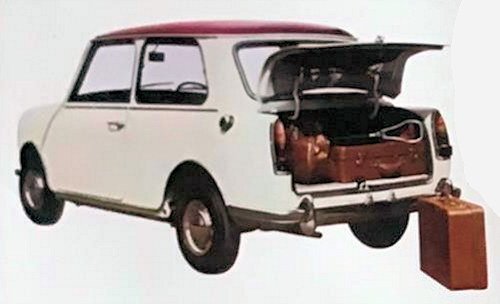
In 1966 the new Wolseley Hornet Mark III appeared and was built untill 1970.
History
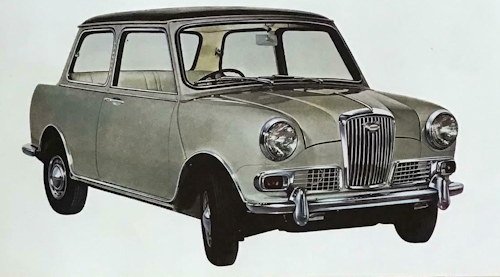
The Wolseley Hornet Mark III came with front wheel drive and independent suspension. They had the same mechanics as their predecessors, but Hydromantic suspensions (rubber springs and hydraulic anti-tilt). This model was the same as the Riley Elf Mark III. The Riley Elf was discontinued in 1969, and the Riley name disappeared from the circle of automakers. The Wolseley Hornet was built until 1970.
The name "Wolseley Hornet" was first used on 1930s saloon, coupé, sports and racing cars, The Mark III facelift of 1966 The mono-construction body incorporates the body shell, floor, bulkhead, and wing valances. Full-width bumpers with over-riders front and rear. Deep, well-sprung leather upholstery with leathercloth on non-wearing parts. Large luggage compartment. The updates to the Mark III Wolseley were more substantial: Wind-down windows to each door. hidden door hinges, an improved ventilation fresh-air fascia vents system the fresh-air type heater and windscreen-demisting equipment (optional for Export markets). Adjustable fresh-air vents. option for reclining backrests heated rear window, an improved manual transmission and the availability, on request, of a 4-speed automatic gearbox with hydraulic torque convertor with 2 conic bevel gears (twin concentric differential-like gear clusters).with 4 ratios (1st 3.628, 2nd 2.172, 3rd 1.412, 4th 1, rev 3.628), operated by 3 brake bands and 2 multi-disc clutches. The gear selecting mechanism was updated to the "Cooper" type, (which also gave an increase in engine location due to the remote housing extension being directly bolted onto the back of the differential housing as seen on Mini 1000 cars of the time. Full-four synchromesh gearing was eventually introduced during 1968.
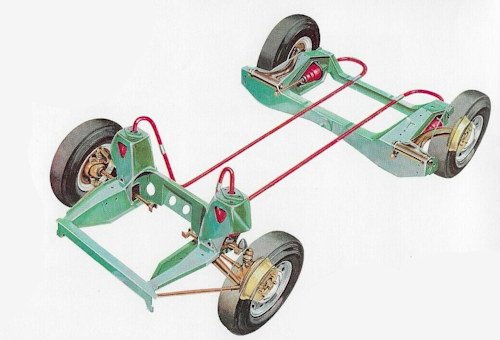
The A series 998 cu cm engine with Three-bearing crankshaft, came fitted with a single SU type HS 2 semi-downdraught carburettor with compression ratio of 8:3. Remote control gear change. Combined transmission casing and oil sump below engine crankcase. Transversely mounted power unit with main-shaft in constant mesh with differential assembly mounted on side of transmission casing.
PERFORMANCE :Wolseley Hornet 998 cc
- Engine capacity: 60.90 cu in, 998 cu cm
- Fuel consumption: 40.3 m/imp gal, 33.6 m/US gal, 7 1 x 100 km
- Max speed: 76 mph, 122.4 km/h
- Max power (SAE) 41hp at 5,7250 rpm
- Specific power: 41.1 hp/l
- Power- weight ratio: 34.4 lb/hp, 15.6 kg/hp
- Acceleration: standing 1/4 mile 22.5 sec, 0—50 mph (0—80 km/h) 14.7 sec
ELECTRICAL EQUIPMENT: double dipping headlamps with prefocused bulbs: foot dipping switch; side lamps; twin stop and tail lamps; rear reflectors, rear number-plate lamps ; instrument lighting; roof lamp with courtesy switches operated by doors ; dual-arm windscreen wipers ; Windtone horn flashing direction indicators with automatic cancelling. control: ignition, oil filter, headlamp main-beam, and flashing signal warning lights.
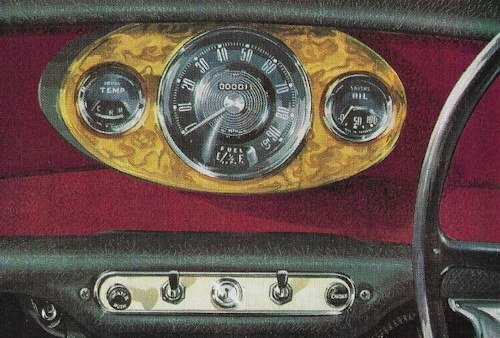
INSTRUMENTS: Speedometer with total mileage recorder; fuel gauge: oil pressure gauge; water temperature gauge.
CONTROLS: Heater switch; windscreen wiper switch;combined ignition and Starter switch on fascia; lighting switch ; mixture control ; windscreen washer control ; panel light switch.
BASIC EQUIPMENT: Safety glass all round; large curved windscreen and rear window ; safety driving-mirror ; windscreen washer; pile carpet floor covering with extra-heavy underfelt; separate front seats; large parcel trays in front compartment and behind rear squab; large pockets in each door; companion box at each side f rear seat with ashtray; washable headlining; hinged quarter-lights; road wheel trims; bright sill finishers; 2 crushable sun visors; ashtray with lid above fascia ; extensive sound insulation to body, including bonnet insulation provision for fitting radio and BMC seat belts.
30,912 Riley Elf’s and 28,455 Wolseley Hornets were built. Production of both models ceased in late 1969.The Riley Elf was discontinued in 1969, and the Riley name disappeared from the circle of automakers. The Wolseley Hornet was built until 1970. A luxury version of the mini also modified aesthetically capable of taking the place of the discontinued Hornet and Elf was introduced for 1970.
Front-end which incorporated each marque's traditional upright grille design the Hornet's grille with a lit "Wolseley" badge and additional chrome accents, bumper overriders and wood-veneer dashboards The full-width dashboard was a differentiator between the Elf and Hornet. Wolseley Hornet's bodies were built at Fisher & Ludlow under their "Fisholow" brand name. Plates in the engine compartment on the right-side fitch plate bear evidence of this speciality.
Vehicle identification serial number code:
- First prefix letter – W-Wolseley
- Second prefix letter – engine type: A
- Third prefix letter – body type: 2S – 2-door Saloon
- Fourth prefix – series of model: 3 – 3rd series
- Fifth prefix (used to denote cars different from standard right-hand drive): L – left hand drive
Wolseley 16/45 and Viper car history
 |
|
|
Make |
Wolseley |
|
Production period: |
1927 to 1933 |
|
Body versions : |
Touring car , limousine |
|
Engines: |
Petrol :2.0 liters |
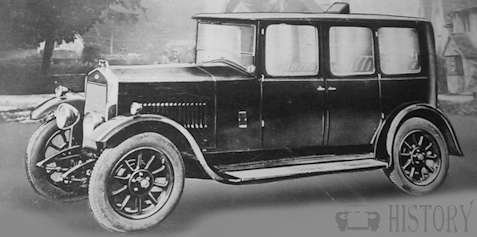
The Wolseley 16/45 was a mid- size car, the Wolseley 1927 brought out as the first six-cylinder car with overhead camshaft.and later a uprated version called the Viper.
Its six-cylinder inline engine had a displacement of 2,025 cc with bore and stroke of 65 x 101mm. The car had a wheelbase of 2,972 mm. Its structure was 4,445 mm long, 1,791 mm wide and its chassis (without body) weighed 914 kg. Its top speed was 95 km / h.
Only in the model year 1931 was there a stronger version of the 16/45 hp called Wolseley Viper . The otherwise identical car was equipped with two SU carburetors, while the 16/45 hp had only one.
1933 replaced the almost identical Sixteen the 16/45 hp.
Wolseley 16/45 details
Body versions : Touring car , limousine
Engines: Gasoline engine straight six :2.0 liters
Length: 4445 mm
Width: 1791 mm
Wheelbase : 2972 mm
Curb weight : Chassis: 914 kg
Successor: Wolseley Sixteen
Wolseley 6/99
| 1959-1961 | |
|---|---|
 |
|
| Overview | |
| Manufacturer | BMC |
| Production | 1959-1961 |
| Produced | 13,108. |
| Assembly | Cowley, Oxfordshire, England |
| Powertrain | |
| Engine | 2.9 L C-Series I6 |
| Transmission | 3 speed manual automatic option |
| Dimensions | |
| Wheelbase | 108 in (2,700 mm) |
| Length | 188 in (4,800 mm) |
| Width | 68 in (1,700 mm) |
| Height | 60 in (1,500 mm) |
The Wolseley 6/99 was the final large Wolseley car. Styled by Pinin Farina with additions by BMC staff sylists, the basic vehicle was also sold under two of BMC's other marques as the Austin A99 Westminster and Vanden Plas Princess 3-Litre. Production began in 1959 and the cars were updated and renamed for 1961.
The first generation of the large Farinas was introduced with the Austin A99 Westminster, with the Wolseley 6/99 following shortly after in 1959 to replace the 6/90. It used the same 2.9 L (2912 cc) C-Series straight-6, 102 bhp (76 kW), twin SU carburettor engine from the Austin-Healey 3000.With a Genuine roominess and luxurious seating, together with quietly impressive performance, and Externally there is integral-construction steel body with Farina styling,
The suspension was the conventional BMC arrangement of coil springs and wishbones at the front with a live axle and semi elliptic leaf springs at the rear. An anti-roll bar was fitted at the front. Lockheed 10.75 in (273 mm) discs brakes were fitted at the front with 10 in (250 mm) drums at the rear and vacuum servo assistance.Power comes from an enlarged version of the well-known six-cylinder engine, which has also been strengthened to ensure continued durability, power is transmitted through a completely new gearbox and
overdrive assembly. The 2.9-litre six-cylinder engine which propels this luxurious is well able to provide good performance with low-speed torque.A new gearbox has been designed to go with this engine, having only three forward ratios on all of which synchromesh is provided. with a Borg-Warner over-drive, Stopping power assisted disc brakes on the front wheels in conjunction with pressure-controlled 10-in. drum rear brakes.
The interior was finished in luxurious style to distance the Wolseley from its Austin stable mate. The dashboard was polished wood as were the door cappings. Leather upholstery was used on the two front seats and rear bench seat which had a fold down central arm rest. A choice of single or duo tone colour schemes was offered interior is furnished in the luxurious manner expected of a Wolseley,Within overall dimensions of 15 ft. 8 in. length and 5 ft. 8 in width, able to seat six people: The individual front seats can be set
level with one another to form a bench and the twin central arm-rests folded away; In the rear compartment there is comfortable seat, which can be divided centrally by a folding arm-rest. with plenty of footroom. a facia of polished wood which is matched on doors carpets with taped edges big lockable glove-box lid opens to reveal a locker Slim map pockets are provided behind the front seats.
The comprehensive set of instruments in front of the driver,which include five tumbler switches. A partial horn ring and the turn indicator switch above the steering wheel the standardized fresh-air heating system using two multi-position control knobs to get cool, warm or hot air on to the windscreen or interior a lare rear luggage locker has a flat carpeted floor,.Glove box and luggage locker. Interior lights: 2 on centre body pillars; switches on lamps and courtesy switches on front doors.
Interior heater: Smiths 3.9 Kw fresh-air heater and screen de-mister fitted as standard.Glove lockers Map pockets.Behind front seat backrests Parcel shelves Below facia and behind rear seat Ashtrays 2 in front doors, 2 behind front seats.Cigar lighters 1 on facia .
Instruments: Speedometer with decimal trip and total distance recorder, fuel contents gauge, oil pressure gauge, coolant thermometer. ammeter, clock. Warning lights; Dynamo charge, headlamp main beam, turn indicators, brake servo vacuum.
Locks : With ignition key: Ignition/starter switch. either front door, petrol filler cap.With other key.
Optional extras
Car radio (Radiomobile) Automatic transmission (Borg-Warner), radio, two-colour paintworks Upholstery Leather Floor covering Carpets,Exterior colours standardized: Six single colours, six duotone colour schemes.


