
Volkswagen
- Details
- Parent Category: V
- Category: Volkswagen
- Hits: 131
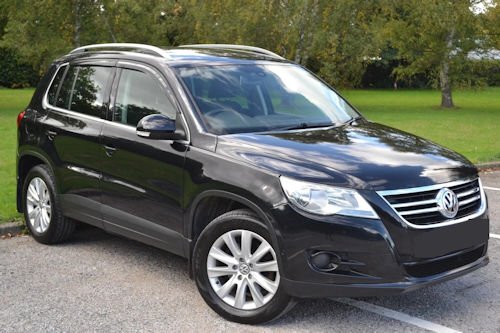
VW Tiguan first generation
 |
|
|
Production |
2007 to 2018 |
|
Assembly |
Germany, China, Russia, Vietnam |
|
Class |
Compact crossover SUV |
|
Body style |
5-door SUV |
|
Platform |
Volkswagen A6 |
|
Engine |
|
|
Transmission |
6-speed manual |
|
Wheelbase |
2,604–2,684 mm (102.5–105.7 in) |
|
Length |
4,427–4,432 mm (174.3–174.5 in) |
|
Width |
1,809 mm (71.2 in) |
|
Height |
1,666–1,686 mm (65.6–66.4 in) |
The VW Tiguan first generation is a vehicle model of the German car manufacturer Volkswagen in the market segment of the sport utility vehicles , which was sold between August 2007 and January 2016.
History
At the beginning of December 2006, Volkswagen presented at the Los Angeles Auto Show a design study by its chief designer Murat Günak for a compact SUV, which already had great similarities with the later Tiguan. The production version was officially presented at the IAA 2007 in Frankfurt .
The vehicle takes over numerous modules of the model series VW Golf and VW Passat , including the 4MOTION - all-wheel drive with Haldex clutch and the self-steering parking aid . Visually, the Tiguan is based on the VW Touareg ; Interior and dimensions are based on the VW Golf Plus . The trunk volume is between 360 (with intermediate floor and emergency wheel) and 470 and 1510 liters (without spare wheel with folded rear seats).In China, the Tiguan is offered since 2010 as a long version (wheelbase 8 cm larger, total length 4.54 m).
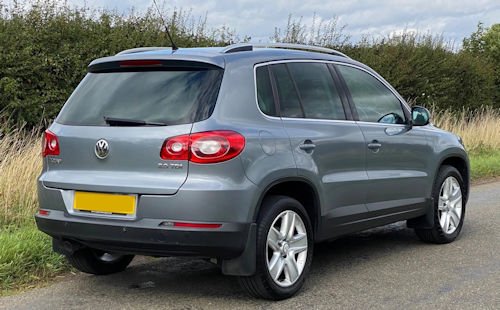
In July 2011, the Tiguan was revised ('facelift'). External differences are the less curved headlights, modified front and rear aprons and modified tail lights.
Technical innovations concerned the two gasoline engines:
At the beginning of 2011 1.4 TSI with 110 kW (150 hp) was replaced to facelift by a motor with 118 kW (160 hp).The 2.0 TSI with 147 kW (200 hp) received under the facelift a more fuel-efficient engine with 155 kW (210 hp).Half a year before the model update, the small 2.0 TSI version with 125 kW (170 hp) was canceled. The successor was a displacement engine with 130 kW (177 hp).
In the Euro NCAP crash test, the Tiguan achieved five out of five stars in occupant protection , four stars in child safety and two out of four stars in pedestrian protection .
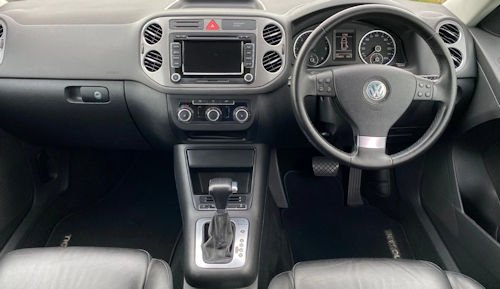
Technical data
The internal name of the Tiguan at Volkswagen is "Type 5N". The engines are four gasoline engines from 90 to 147 kW (122-200 hp) and three diesel engines from 81 to 125 kW (110-170 hp) power offered. Completely new developments are the 2.0-liter TDI engines with common-rail injection , which are equipped with particulate filters as standard and since April 2009 the e Euro 5 emission standard. For previously sold vehicles, which also fell below the required emission limits, but were delivered before the entry into force of the Euro 5 standard, Volkswagen offers an update of the engine control software; after that they can be rewritten to the Euro 5 standard, entry-level engine for gasoline engines is a 1.4-liter TSI engine with 90 kW (122 hp) power, the diesel engines, a 2.0-liter TDI engine with 81 kW (110 hp).
At its launch, the Tiguan was initially available only with the all-wheel drive 4Motion . Meanwhile, models can be ordered with the 1.4-liter TSI engine with 110 kW and the 2.0-liter TDI engine with 81 kW with front-wheel drive . The 103 kW diesel engine and the two 125 kW and 147 kW gasoline engines are available with a choice of 7-speed dual-clutch transmissions (up to June 2010 with 6 -speed automatic transmissions ).
Diesel engines
The widely used EA189 engines came in 2015 as part of the VW exhaust emissions scandal worldwide in the headlines. The district court in Cologne ruled in December 2017 to VW had deceived its customers insofar fraudulently.
- Details
- Parent Category: V
- Category: Volkswagen
- Hits: 126
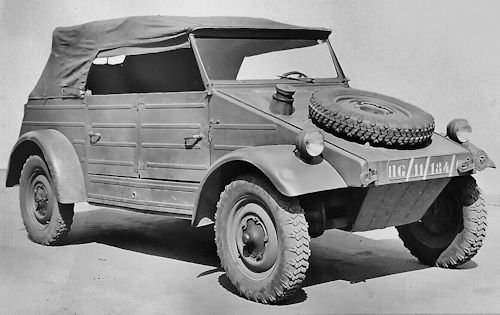
VW Kübelwagen Type 82
 |
|
|
Model: |
Kübelwagen |
|
Production period: |
1940 to 1945 |
|
Class : |
Military |
|
Body versions : |
Various |
|
Engines: |
Gasoline: 1.0-1.1 liters (17,5-18 kW) |
|
Length: |
3740 mm |
|
Width: |
1600 mm |
|
Height: |
1110-1650 mm |
|
Wheelbase : |
2400 mm |
|
Curb weight : |
715-1160 kg |
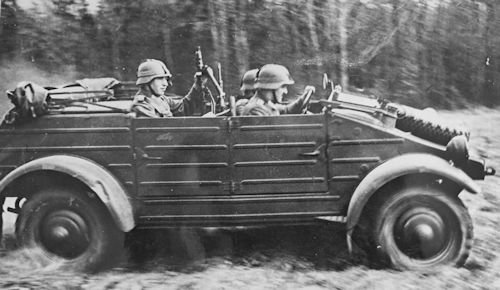
The as Kübelwagen designated VW type 82 is based on the KDF-carriage constructed motor vehicle of the armed forces . From August 1940 to April 1945, the Volkswagen factory at Fallersleben produced 50,788 pieces in various designs. After the end of the war, the Type 82 was for a short time unchanged as Type 21 referred to remaining parts.
History
After the outbreak of World War II and the concomitant reorientation of the economy in the National Socialist German Reich on the production of military equipment derived from the KdF car off-road vehicle was built. The Type 82 was with total of pieces 50,788 built from 1940 to 1945 unnecessarily with minor changes. The Type 82 is an open, edgy car with fabric top and front windable windshield. It has four doors and can accommodate four people. The spare wheel is located on the sloping front end, in which there is also an accessible compartment for a jerrycan. The trunk is between the rear seats and the engine
At the suggestion of the Army Weapons Office , Porsche KG began in 1938 with the further development of the KdF car for military purposes. The Army Weapons Office laid down the following requirements: open body, total weight 950 kg (vehicle 550 kg + 400 kg for three men with equipment), low height, possibility of large-scale production with the lowest possible development costs. Furthermore, emphasis was placed on minimum material and production costs. At the end of 1939, the first prototypes of the new off-road vehicle with the angular body were the Type 62 completed. The production of civilian "KdF cars", originally planned for hundreds of thousands of Germans through a savings contract, was abandoned: the use of the Volkswagen plant for armaments production due to the outbreak of war meant the end of the plans for production of the civilian version of the car. The serial production of the VW beetle began only after the war.
After further test drives and modifications to the Type 62, which included a shaft for higher ground clearance and greater wheel torque, the Wehrmacht High Command (OKW) was satisfied with the vehicle and the final vehicle was designated Type 82 . After the first cars were manufactured until the end of June 1940 at Porsche in Stuttgart, began on 3 August 1940, the series production in the Volkswagen factory. The bodies VW did not build itself, but they were delivered in Ambi-Budd from Berlin and painted in the factory. Since the foundry was not yet operational, VW took the castings from the company Rautenbach (Rautal-Werke GmbH) in Wernigerode . At the same time started the development of a version with all-wheel drive , the later type 87 .
In the field, the benefits of the type 82 showed its low weight and the 23.5 hp were with 985 cc displacement engine. Even without four-wheel drive, this was able to drive through difficult terrain. Other advantages were the air cooling , with the car was not dependent on replenishment of water and (in winter) antifreeze. During the course of the war, it became apparent that it could also be used under extreme climatic conditions, such as in North Africa in the Afrika Korps or in Russian winter. In 1943, the 985 cc engine for a stronger type 166 Schwimmwagen further developed 1131 cc engine with 24.5 hp replaced the smaller version. On the basis of the type 82, several variants, modifications and combinations of individual models were developed and built, for example the type 92 flatbed, the type 174 storm boat with VW engine and the type 287 command car. The top speed was about 80 km / h. The production of the wagon ended on April 10, 1945; in the following days American troops occupied the factory.
- Details
- Parent Category: V
- Category: Volkswagen
- Hits: 235
VW Touareg First generation
 |
|
|
Production |
2002 to 2010 |
|
Platform |
Volkswagen PL71 platform |
|
Related |
Porsche Cayenne, Audi Q7 |
|
Engine |
|
|
Transmission |
|
|
Wheelbase |
2,855 mm (112.4 in) |
|
Length |
4,754 mm (187.2 in) |
|
Width |
1,928 mm (75.9 in) |
|
Height |
1,726 mm (68.0 in) |
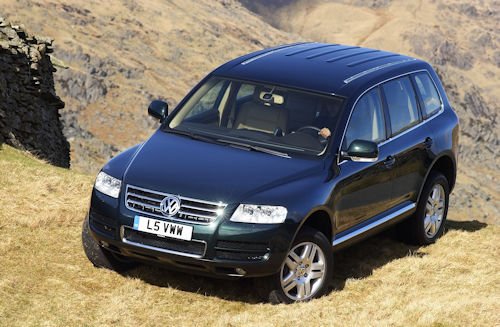
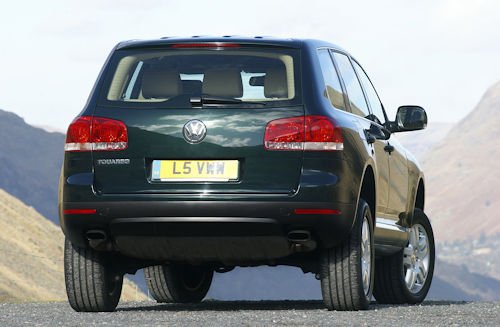
The VW Touareg (type 7L) is a sport utility vehicle of Volkswagen , was named from the African Sahara people Tuareg and came in the fall of 2002 on the market.
Unveiled at the Paris Motor Show in 2002 the Touareg is Volkswagen’s first venture into the luxury 4x4 market, and is one of the most sophisticated vehicles in its segment. It is an off-road vehicle with the comfort and refinement of a luxury saloon.
The platform of the Touareg was developed jointly with Porsche and therefore also forms the basis for the simultaneously presented Porsche Cayenne and since autumn 2005 for the Audi Q7 .
The Touareg was built at the Bratislava plant of Volkswagen Slovakia . Further productions are taking place in Kaluga at Volkswagen Group Rus and in Bosnia-Herzegovina at Volkswagen Sarajevo .The majority of the Touareg’s body parts are manufactured from high-grade fully galvanised steel. The fully galvanised construction of the Touareg’s body results in high static and dynamic rigidity. Torsional rigidity is evenly distributed throughout the body, resulting in the solid functioning of doors, bonnet and boot lid, as well as tight panel gaps.
In autumn 2006, the Touareg was subjected to a facelift , which stands out visually especially by the brand-typical "crest grill". Technically, some equipment has been added and over 2000 components replaced or improved.
History
In October 2002, the Touareg was introduced as a V6 with 162 kW (220 hp) and as a V10 TDI with 230 kW (313 hp). Later, two more engine variants were added: a R5 diesel with 128 kW (174 hp) and a V8 petrol engine with 228 kW (310 hp). The V10 TDI is highly specified. Additional standard equipment includes Continuous Damping Control (CDC) air suspension; bi-Xenon headlights; a keyless access and engine-start system; electrical adjustment and memory for seat belt height, steering column, door mirrors and front seats; parking distance control; and an enhanced sound system with an eight channel amplifier and 11 speakers. The V10 TDI also features front fog lights, 18 inch alloy wheels and a chrome air intake and roof rack gutters.
In November 2004, the performance of the V6 was increased to 177 kW (241 hp) and it was added to a V6 TDI with 165 kW (224 hp). In August, VW presented the top model W12 with 331 kW (450 hp). In October 2005, the V6 got a new 3.6-liter engine with FSI 206 kW (280 hp). The V8 with 228 kW was replaced in June 2006 by the V8 FSI with 257 kW (350 hp).]
As part of the facelift in November 2006, the front end and the rear lights have been changed. In addition, all models got new seats and a few extra extras.
In the summer of 2007, the most powerful diesel variant was the R50 with 258 kW. The V6 TDI was also revised in November 2007 and now produced 177 kW (240 hp).
In November 2009, the model range shrank to a V6 petrol engine and a V6 diesel in three trim levels. On February 10, 2010, the second generation was then introduced.
Interior
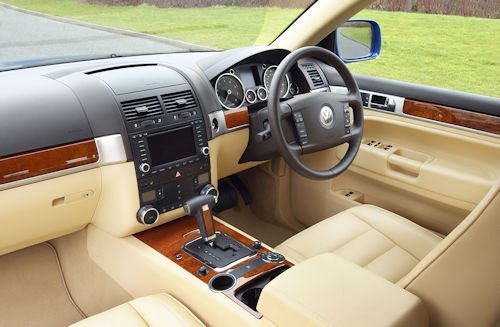
The Touareg’s interior design combines the ruggedness of a highly capable off-road vehicle with the elegance of a luxury saloon. There are wood inlays in the dash panel, centre console, door trim and gear knob. Leather seat upholstery is standard equipment on the V8 and V10 TDI models.
instruments feature round analogue displays with chrome surrounds with anti-reflection mineral glass. The 2.5 TDI, V6 and V8 models feature a three-inch monochrome multi-function display panel in the centre of the dashboard; the V10 TDI’s display is in colour and is five inches wide.
The centre console air vents are located behind a lockable storage compartment and audio system controls. Below these are the 2 Zone Climatronic controls. The horizontal portion of the centre console contains the switch for deactivating the front-passenger airbag, the engine start button for models equipped with keyless access, and the controllers for the four-wheel drive and running gear. The armrest storage compartment for a one litre drinks bottle and a further, illuminated stowage compartment.
All models feature a leather steering wheel equipped with controls for the multifunction computer, cruise control and sound system. Tiptronic gearchange steering column controls are an option.
All models in the range are well appointed and equipped, and there is a comprehensive array of optional luxury equipment.
• permanent 4XMOTION four-wheel drive transmission
• off-road features include low ratio transfer gearbox incorporating 2.7:1 reduction; electronic traction control on all wheels linked to the auto-locking centre differential; optional, selectable, mechanical front and rear differential locks; hill start and descent assist.
- climate control
- two front and two front-seat side airbags, plus curtain airbags
- ESP (Electronic Stabilisation Programme)
- ABS; cruise control
- CD player with ten speakers
- multifunction steering wheel
- multifunction computer
- separate opening rear screen
- alarm with interior protection
- central locking
- alloy wheels
- three year/60,000 mile warranty
Options include
- CDC (Continuous Damping Control)
- air suspension on the 2.5 TDI, V6 and V8
- six-disc CD autochanger
- satellite navigation system with colour screen
- keyless entry and start
- memory pack for seats,steering column, seat belt height and mirrors
- park distance control
- power closing boot lid
Special models
Touareg W12
The with the W12 engine from the VW Phaeton . This was initially in August 2004 (for model year 2005) under the name W12 Sport as limited to 500 copies model included in the offer, produced until November 2005 and offered from November 2005 instead in the variants W12 Sport Edition and W12 Executive .
With the facelift in November 2006, both variants as W12 Individual and the W12 R-Line . Common to all variants is the standard air suspension and an exhaust system with two round double tailpipes. This is for the comfort variants W12 Executive and W12 Individual the only external distinguishing feature compared to other Touareg. The sport versions W12 Sport Edition , W12 Sport and W12 R-Line also have different bumpers, widened wheel arches (not W12 R-Line ), 20 "wheels and a sports seat system.
SAFETY
Frontal collision The Touareg has been designed with very high frontal energy absorption characteristics and with an extremely rigid passenger cell, in line with both Euro NCAP and US-NCAP crash requirements. Among the special protective measures adopted are additional strengthening bars in the sills, extremely rigid A, B, C and D-pillars and the use of high quality steels in the construction, along with laser welding.
For Side collision doors are integrated with the car’s crash protection structure, and are designed to afford passengers the maximum protection in the event of a side impact. Safety system featuring crash sensors which can judge the severity of an impact and react accordingly, triggering either a low-level response from the driver and front passenger airbags or a full-intensity response.
All models in the range feature driver and front passenger airbags, front side airbags and curtain airbags which cover the entire window surface between the A and C pillars to protect the heads and upper torsos of the window-seat passengers.Also features electrically activated seat belt pre-tensioners to restrict passenger movement in an impact. All models feature five three-point harnesses as standard. The electronic safety system continues to work even after it has activated the airbags, automatically unlocking all the doors, isolating the battery, shutting down the fuel supply and all high-power electrical units, as well as switching on the hazard warning lights.
For the models 3.2 V6, 2.5 TDI and V6 TDI the automatic transmission was optionally available, for all other models it belonged to the standard equipment. All diesel engines sold in Europe since the model year 2007 were equipped with a diesel particulate filter as standard , while models without catalyst were also available abroad. Up to the model year 2007, it was possible to retrofit with a combined City Kat / DPF system (without catalytic converter / DPF additive) to obtain the green inner-city emissions.
Technical data
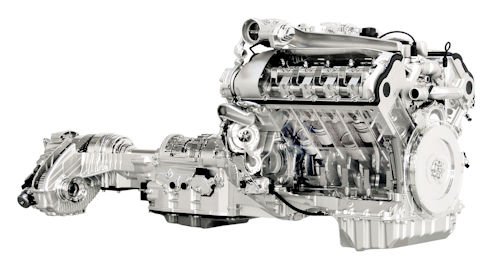
All variants of the Touareg I was equipped with a permanent four-wheel drive and variable power distribution, electronically controlled central differential and an additional reduction gear (reduction stage). In normal operation, the central differential automatically distributes the engine power to both axles (4XMOTION) by means of a louver lock, and to the front axle via a transfer case. The gear reduction stage (reduction) for driving off-road, snow, o. Ä., By the driver via a switch and manually switchable. It allows maximum driving force, off-road or off-road at lower speeds. In addition, the central / centre differential can be permanently locked, resulting in a fixed drive distribution (50:50). Optionally (until 11/2009) there was another, Lockable rear differential and electrical stabilizer (coupling rod). This increases the propulsion in particular with caravan or boat, or on unpaved surfaces The Touareg may tow a braked trailer of up to 3500 kg; rigid and detachable towbars are available as an option. Also, until 11/2009, the Touareg I was still up to about 590 mm (factory specification for air suspension) wading depth waterproof (intake channel height 900 mm), thanks to double-lip door rubbers and higher air intake duct in the engine compartment.
BlueMotion Technology
From April to November 2009, the Touareg, in conjunction with the 165 kW (225 hp) V6-3.0 TDI engine, now had BlueMotion technology Package offered. To reduce emissions and fuel consumption, some modifications have been made here. These include, among other things, an adapted engine management, other shift points of the automatic transmission, a longer axle ratio, an efficiency-enhanced alternator and aerodynamic measures in the form of a sports suspension with about 25 millimetres lowering of the body. In addition, rolling resistance-optimized tires and electronic energy management (e.g. the vehicle battery is charged to relieve the engine only in overrun phases) are used. The DIN consumption (combined) could be lowered according to factory specification compared to the Touareg variant with 176 kW (240 hp) by about one Liter per 100 kilometres.
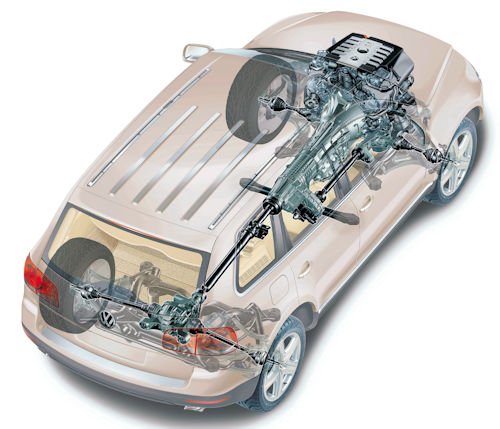
4XMOTION four-wheel drive system
The Touareg is equipped with a continuous 4XMOTION four-wheel-drive system.The 4XMOTION system delivers its power to the front and rear axles via a transfer box and a central differential, featuring a continuously adjustable and automatically operated multi-disc clutch, which performs the differential lock function. How much of the engine’s power is delivered to the front and rear axles is dependant on conditions – up to 100 per cent of the drive force can be transmitted to either of the two axles if required. The differential lock is automatically regulated by engine torque and wheel slippage, with the driver having manual override via a console mounted switch. Manually lockable front and rear axle differentials are optional items.
4XMOTION allows optimum levels of off-road grip and traction, such as the ability to tackle a lateral inclination of up to 35 degrees, and a climbing angle of 45 degrees. When faced with demanding terrain, the driver activates ‘low range’ transmission via an electrical switch on the centre console. Moving the ‘Auto Diff’ switch from the fast ‘High’ mode towards ‘Low’ results in activation of the automatic central differential lock, which continuously checks for loss of traction and adjusts front/rear power distribution accordingly.If desired the differential lock can be activated manually by the driver, up to 100 per cent, via a dashboard rotary switch. The same principle applies to the (optional) lockable axle differentials.
Those Touaregs with automatic gearboxes also have a hill-starting assistant which, via an electronic function in the gearbox, prevents downhill movement before moving off, an automatic downhill assistant cuts in when speeds are below 20km/h (with ESP switched on) to maintain steady and safe downhill progress.
Acoustic characteristics
• The sealing of all body-frame openings to the interior
• A three-part sealing system for doors, windows and luggage compartment
• Engine compartment encapsulation
• Maximum absorption in drive assembly, drive tunnel and damping systems
• Selective use of aluminium-sandwich sound deadening materials
• Optimised wheel-housing liners
• Specially absorbent materials in the roof lining, luggage compartment, pillar trim and dashboard
Suspension
There are two different suspension systems available: a steel double-wishbone system is found as standard on the 2.5 TDI, V6 and V8 models, while on the V10 TDI model the technologically advanced Continuous Damping Control (CDC) air suspension system.
The independent steel suspension features, at the front, double wishbones with aluminium upper suspension and steel lower links. At the rear, double wishbones with forged aluminium upper links and steel lower wishbones are used. With this suspension, the Touareg possesses a maximum ground clearance of 237 mm.
Continuous Damping Control (CDC) air suspension system
CDC, standard equipment on the V10 TDI, is an option on all other models. CDC maintains the Touareg at a constant ride height. Four sensors continuously monitor the space between axle and body; when a deviation from the required position is sensed it is corrected by means of solenoid valves, a compressor and two accumulators. The Touareg’s four air-spring dampers consist essentially of air-spring bellows, a roller piston and the regulated hydraulic damper unit.
The damping system sensors assess the vehicle’s speed and the driving conditions and compensates for them with automatic adjustment of the dampers. The system reacts to the slightest unevenness in the road and can minimise roll and pitch in the event of sudden extreme acceleration or braking. Console-mounted rotary switches give the driver control of the Touareg’s air suspension settings and the degree of damping. There are three driver-selectable suspension settings: Comfort, Sport and Auto.
Variable ground clearance
The Touareg’s air suspension system raises and lowers the vehicle automatically depending on the speed at which the car is being driven. At 125 km/h (78 mph), for example, the ride height drops from 215 mm to 190 mm, and at 180 km/h (112 mph) it is further reduced to 180 mm. The driver can override the system and set other levels if desired.
- Loading level: 160 mm ground clearance (up to 5 km/h)
- Street level: 215 mm (0-125 km/h)
- High speed I: 190 mm (125-180 km/h)
- High speed II: 180 mm (from 180 km/h)
- Off-road level: 240 mm (up to 70 km/h)
- X’tra level: 300 mm (up to 20 km/h)
- Details
- Parent Category: V
- Category: Volkswagen
- Hits: 85
VW Touareg Second generation
 |
|
|
Production period: |
2010 to 2018 |
|
Class : |
SUV |
|
Body versions : |
station wagon |
|
Engines: |
Gasoline engines : 3.6-4.2 Liters(183-265 kW) |
|
Length: |
4795-4801 mm |
|
Width: |
1940 mm |
|
Height: |
1709 mm |
|
Wheelbase : |
2893 mm |
|
Curb weight : |
2103-2315 kg |
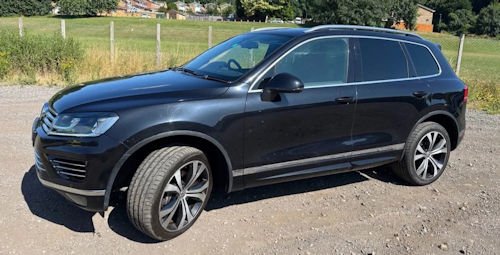
The VW Touareg (Type 7P) is the second generation of the Touareg SUV from Volkswagen and was first presented to the public on 10 February 2010. Market launch was in April 2010. This shares the platform with the second generation of the Porsche Cayenne.
The Touareg has grown compared to its predecessor in both the length and the wheelbase by about four centimetres. In addition, the body was aerodynamically optimized, which is why the height was reduced by about two centimetres. The vehicle is around 200 kg lighter than its predecessor. Constructive lightweight construction, the use of high-strength steels with smaller cross sections, the use of light materials and omission of the heavy transfer case with reduction and lock in basic version made this possible. The body stiffness increased by five percent. Depending on the engine, the vehicle has a gradeability of 31 to 45 °.
October 2014 , the Touareg came in revised form to the market. Its front has been adapted to the current family design and thus refers to the shortly thereafter published VW Passat B8 . Furthermore, there are xenon headlights as standard since the facelift. In the interior, only subtle changes took place. As part of the facelift, the models with V6 TDI engines were adapted to the emission standard Euro 6, modified the stop-start system and provided the 8-speed automatic transmission.
Engines
The engine range of the Touareg has been revised compared to its predecessor. Only the two V6 engines were taken over from the predecessor, but are significantly more economical than in the previous version due to the reduced weight and the integrated thermal management. New are a 4.2-liter V8 TDI from Audi and a hybrid based on a 3-liter TSI hybrid.
A hybrid version is also available on the Touareg C2. It consists of a V6 TSI supercharged engine with 245 kW (333 hp) and a 34-kW electric motor with an 80 kg nickel-metal hydride battery . As a hybrid variant, they have chosen a full-hybrid drive in parallel design, in this drive concept are the combustion engine, the electric motor and the gearbox on a shaft. The electric motor working as a generator in this drive concept wins during braking due to the so-called recuperation kinetic energy cached in the battery. The individual outputs of the electric motor and the internal combustion engine add up to a total system output of 279 kW. At speeds of up to 50 km / h, it is possible to drive purely electrically. In this case, the deactivated V6 TSI is decoupled from the eight-speed automatic via a separating clutch to avoid drag torque losses . According to VW, consumption is around 8.2 l / 100 km. This has a trailer load of up to 3500 kg. All engine versions are coupled with a permanent four-wheel drive.
Equipment
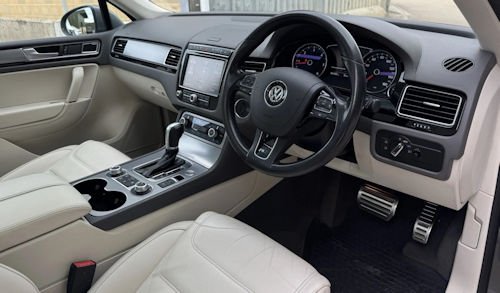
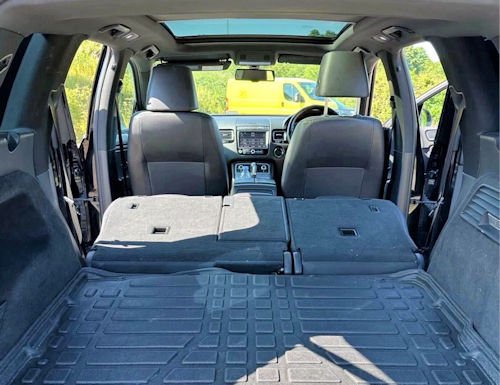
Features include a CD sound system with touch screen , on-board computer with info screen, cruise control , multifunction leather steering wheel, 17-inch alloy wheels and dual-zone air conditioning . In addition, there are new and improved assistance systems such as the optional Lane Assist , a lane assistant , which warns the driver when the car leaves the lane without a flashing signal. Other systems are the radar-controlled ACC distance control and the so-called area view which uses cameras in the grille, exterior mirrors and tailgate to image the entire vehicle environment on the info screen. Furthermore, there is on request an electrically operated tailgate, which also opens with an extra charge with Easy Open by foot kick, and a panoramic sunroof. In addition to more headroom, the knee freedom has grown from 68 to 104 millimetres. The rear seat can be moved longitudinally by 160 millimetres. The rear compartment has a volume of 580 to 1642 Liters.
Volkswagen has the new Touareg adaptive beam assistant developed and presented a world first ( Dynamic Light Assist , the so-called " anti-glare high beam " or " vertical cut-off line " ), which is capable of traveling ahead or to hide oncoming vehicles.
Exhaust scandal
In the course of the exhaust gas scandal of the automotive industry, which has been ongoing since September 2015, announced that vehicles of the type VW Touareg 3.0 V6 TDI from the 2014 to 2017 production period have a shutdown device which was not specified in the type approval and which the exhaust aftertreatment in the Road operation reduced or completely switched off.
- Details
- Parent Category: V
- Category: Volkswagen
- Hits: 57
VW Polo II
 |
|
|
Production period: |
1981 to 1994 |
|
Class : |
Motor car |
|
Body versions : |
sedan , combo coupe |
|
Engines: |
|
|
Length: |
3655 or 3725 mm |
|
Width: |
1570 mm |
|
Height: |
1325-1350 mm |
|
Wheelbase : |
2335 mm |
|
Curb weight : |
725-830 kg |
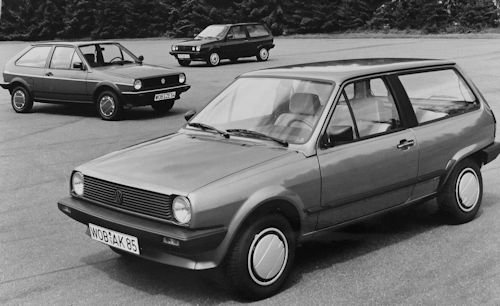
The Polo II is a vehicle model from Volkswagen , which was manufactured from September 1981 to July 1994.
Bult in the factories Wolfsburg , Moselle and Pamplona (Spain) in total about 1.7 million made. It was only three-door with steep or hatchback (coupe), with four- or five-speed manual, front-wheel drive and front transverse engine installed. There was a choice of gasoline engines from 29 kW (40 hp) to 85 kW (115 hp) or diesel engines with 33 kW (45 hp) and 35 kW (48 hp). Characteristic of the Polo II are especially the front triangle windows, which did not fall away (as after a revision of the Golf II in the summer of 1987).
The second-generation Polo models have made a name for themselves as cheap and robust small cars, especially for novice drivers and minimalists. The safety equipment was at the end of construction no longer up to date and the comfort equipment was usually kept economical.
History
The Polo 86C was built for a total of 13 years - almost as long as the predecessor 86 and the successor 6N together. The Polo went through in addition to the large facelift in October 1990, several small "lifts".
The first Polos had partly thin partially chrome-plated plastic strips - if they had any - relatively high above the entire length of the vehicle. Later, there were only plastic bumpers between the wheel arches at the height of the bumper. The first polos also include the large steering wheels with bony thin steering wheel rim. Over time, all polos got smaller, thick foam wheels. The reversing lights were also changed: The first models had only a small illuminated area with red frame, while later a completely white diffuser was introduced.
In October 1981, VW introduced the successor to the first Polo generation, which was initially available only with hatchback . With a generous trunk for this class, which can be increased by flipping the back seat, can even transport goods the size of a washing machine. The first vehicle left on 17 September 1981, the Wolfsburg factory.
At the beginning there was the Polo in the equipment versions C , CL and GL with the following engines:1.05 l - 29 kW (40 hp)1.1 l - 37 kW (50 hp)1.3 l - 44 kW (60 hp) Formula E with higher compression , rear tread edge and economy indicator based on the 50 hp engine
In February 1982, followed by the new edition of the notchback variant Derby . The third body variant, the Polo Coupé followed in August 1982. It differs from the hatchback by a shallow sloping rear window and was designed from the outset rather on sportiness. Therefore, the newly developed 1.3-l 55 kW engine (75 hp) for the time being was only available for the coupe in the new trim variant GT , also there was the coupe as CL and GL . Even today, the coupe is the most popular body variant of all polos.
In August 1983 replaced a new 1.3-liter engine ( VW EA111 ) with 40 kW (54 hp), the previous engines with 50 and 60 hp.
In March 1984, the production of the Polo began in Seat -Werk Pamplona (Spain), which was later acquired by Volkswagen AG. In August 1984, the upscale GL version disappeared. In return, the CL equipment was upgraded. From now on, the Polo Coupé was also available with the 29-kW engine and the GT equipment was now also available with the 40-kW engine. At the same time, Volkswagen introduced the new car radio generations alpha , beta and gamma .
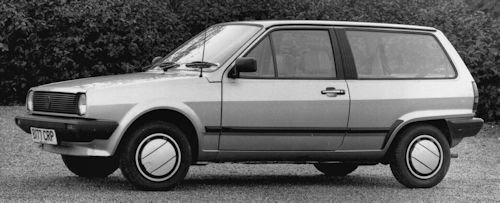
In January 1985, the derby was renamed Polo notchback . At the same time this got round headlights.
From August 1985, one could order the city delivery van with truck registration. For this one got a hatchback without back seat, but with unglazed side walls, luggage compartment linings and divider behind the front seats. Especially small craft shops or retailers should be addressed. In addition, you could now order the coupe in the C equipment.
In the same month, the 1.05-liter 29 kW (40 hp) engine was replaced by a new 1.05-l-33 kW (45 hp) engine. In addition, the coupe was presented as a top model GT G40 .
In July 1986, VW introduced a 1.3-liter diesel engine with 33 kW (45 hp) for the Polo. A month later, in August 1986, accounted for the equipment variant C .
From August 1987, limited to the Polo on three trim levels - Fox , CL and GT . The CL variant was slimmed down a bit, the GT was upgraded slightly. The Fox was created as a new base model out of a former special edition. The 1.3-l 55 kW engine (75 hp) was now also available for the hatchback .
In August 1989, VW upgraded all model variants.
As the last modification of the model program before the big facelift was from April 1990, an electric folding sunroof available as an optional extra. From May 21, 1990, the Polo was also assembled in Mosel : First of the IFA.
1990-1994: Polo 86C "2F"
In October 1990, a comprehensive facelift of the Polo. In the interior, a new dashboard with more shelves, raised radio shaft, knobs for heating and ventilation and redesigned instruments space. In addition, with the facelift new steering wheels, fully panelled doors and rear side walls, new pitman arm and for the first time two front speaker shafts were installed.
Outside, the Polo was also revised. The bumpers have been designed larger area to make them less sensitive for small damage. The front end and the rear end were redesigned, which caused a change of the side parts in the connection area to the car's rear. Larger square headlights provide up to 50% higher road illumination and larger rear lights for more active safety. The front turn signals were mounted with the 86C "2F" next to the headlights, so that they were also recognizable from the side. The c w value of the Polo 86C improved by 10% in 1990. This was the rear window at the hatchback and coupe glued flush and the front end was rounded. Therefore, it is often referred to as Polo 2F ( Facelift).
The introduction of the Polo 86C successor, the Polo 6N (or the real Polo 3) was planned by VW earlier than in 1994, but due to the enormous success of the Polo 2F, the plans were postponed several times. Particularly diverse special models such as the Polo "Genesis" with a particularly sporty special equipment ex works and special colours in the interior ensured high sales figures. Other attractive special models included Polo Boulevard, Universal, Style, Scot and GT Extra.
On September 12, 1991, the installation of the Polo was reinstated in Mosel. Since May 1990, a total of 17,978 polos has been produced in Moselle.
In August 1991, the equipment variants Fox , CL , GT & G40 were upgraded. All Polo's got stiffeners in the doors to protect them from side impact, as well as automatic three-point belts on the outer rear seats and side flashing lights.
Further equipment enhancements were: Fixed luggage compartment cover and passenger sun visors with make-up mirror for the Fox interior adjustable exterior mirrors for Fox and CL, side luggage compartment trim and three-spoke steering wheel for CL. From CL equipment there is a holder for first aid box and warning triangle; in the GT the driver's seat is height adjustable. In the Polo G40 fog lights, white flashing lights front and partially darkened rear lights are installed as standard, also received the model a leather cover on the steering wheel and shifter. The electric folding sunroof was taken from the model program with model year 1992 (from August 1991).
In July 1994, the last Polo 86C rolled off the line . Successor was the Polo 6N .
G40
The most powerful variant of the Polo Coupé was presented in August 1985, the 'G40' with 85 kW (115 hp) at 6000 / min and with a torque of 148 Nm at 3600 / min based on the 1.3-l engine. The extra power is built up by a scroll compressor , which acts as a compressor . The intake air is compressed by the belt-driven G-charger, allowing more fuel to be injected without greasing the mixture. The G-charger is contrary to the statements of the manufacturer not maintenance free. Depending on engine speed and mileage, various components may wear due to their design, which can lead to limited function or destruction of the G-charger. However, the function of the G-charger can be backed up regularly by regular moderate revisions with suitable spare parts to several hundred thousand kilometres.
During development, an upper limit was set. In order not to exceed the load capacity of the standard 5-speed gearbox, the engine was not allowed to deliver more than 150 Nm of torque, because the redevelopment of a more powerful gearbox would have been too expensive. To get the performance on the road, the intercooled GT G40 has a custom chassis with a 30/20 mm (VA / HA) lowered body, ventilated front disc brakes and 175/60 R 13 tires on aluminium wheels. Furthermore, the front axle has been improved by UniBall bearings on the control arms and tie rods.
In May 1987 left for the first time a special series of 500 black Polo Coupe GT G40 based on the "old" Polo 86C factory. He received a speedometer to 240 km / h with a trip meter. The vehicle key number was 719. One year later, due to the high demand, 1500 vehicles were produced, of which 500 were delivered to France. The Coupé was now also available in the colours white, tornado red, traffic purple, blue (Helios blue metallic) and black. Only in January 1991, the Polo G40 , as he has since been called only, based on the Polo 2F included in the regular model program. The car initially cost 25,690 DM . The performance shrank due to the catalyst from 85 kW (115 hp) to 83 kW (113 hp). Identification marks of the G40 were BBS aluminium wheels in the size 5½ J × 13, and fenders, a roof antenna, red trim strips in the bumpers, G40 emblems in the grille and on the tailgate, sports seats with checkered Le Mans covers and a speedometer up 240 km / h. From August 1991, additional fog lights and white turn signals, partially darkened taillights, and leather steering wheel and leather gear knob were standard. The vehicle key number was 844.
Eco-Polo
Also was the experimental vehicle called Eco-Polo . Of the series production series of the 86C created in 1988 of 70 planned copies exactly 50 pieces that have been tested by public institutions (public order, charities) in everyday life. This variant was always delivered in the colour alpine white with rainbow stripes on the sides; The eco-Polo was aerodynamically optimized only by a small front spoiler. Inside, except for the missing clutch pedal and the boost pressure display everything is the same as in the production version, only some special instruments indicate the special technique. The model was designed for maximum economy and had a diesel engine with 860 cc displacement. The two-cylinder direct injection was calmed with a balance shaft and counterweights on the crankshaft in the barrel. The G-Charger from the G40 switched on when needed electrically and raised the power from 27 hp to 40 hp. So, the Polo reached a top speed of 138 km / h. With semi-automatic 5-speed gearbox from the Spar Golf The eco-Polo could reach a standard consumption of 3.6 Liters. On a test drive of the car magazine Auto Motor and Sport , the slow pace (about 60 km / h on average) from Wolfsburg the vehicle consumed only 1.7 Liters per 100 kilometres. This was also achieved by the first use of an electronic start-stop system, which shut down the engine in coasting and at traffic lights. Furthermore, VW tested in the eco-Polo a soot particulate filter, which was self-cleaning with additives in the fuel, as well as an exhaust gas recirculation to reduce NOx emissions. The additive was needed because the small engine did not develop enough heat in city and short-haul operation to dissipate the particulates in the exhaust filter itself. Despite successful tests, the car was never built in series, since the economy was not given by the then low fuel price. However, some knowledge for the later following 3L-Lupo , and the Golf III Ecomatic used.

