
Pontiac
Pontiac GTO Fifth generation
 |
|
|
Class |
Sports Car |
|
Also called |
|
|
Production |
2003 to 2006 |
|
Assembly |
Australia |
|
Body style |
2-door coupé |
|
Platform |
V-body/GMX281 |
|
Engine |
|
|
Power output |
|
|
Transmission |
|
|
Wheelbase |
109.8 in (2,789 mm) |
|
Length |
189.8 in (4,821 mm) |
|
Width |
72.5 in (1,842 mm) |
|
Height |
54.9 in (1,394 mm) |
|
Curb weight |
3,725 lb (1,690 kg) |
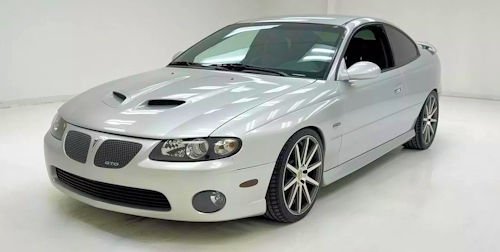
The Pontiac GTO is a four-seat coupe produced in Australia for the US market from autumn 2003 to summer 2006, based on the platform of the Holden Monaro .
For the 2004 model year Pontiac revived the traditional name GTO and began importing the modified Holden Monaro to the United States. After just under three years, the GTO, which sold poorly, was withdrawn from the market in the summer of 2006. The reborn GTO shares a basic underskin design with the V6 Cadillac Catera sedan from 1997-2001.
History
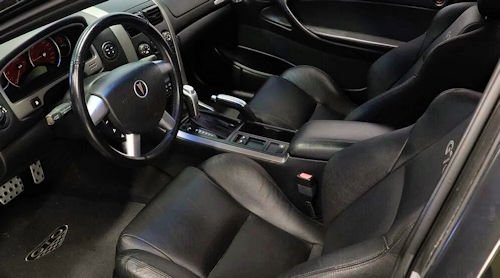
In late 2003, the new Pontiac GTO was released in the US, the first in nearly 30 years. That the coupe came from Australia, caused in some fan circles for displeasure, which would have liked an independent, native model as a modern reincarnation of the classic muscle car .Inside four leather bucket type seats, an premium audio with CD changer built in-dash, with and remote keyless entry.
Behind the GTO was General Motors manager Robert A. Lutz , who had been shown a Monaro during a visit to Australia. Then he decided to sell the coupe in the US, but not without the planned GTO to make some technical changes on the way. For example, unlike the Monaro, the GTO sits in a better protected position in front of the rear axle.
2004
In the first model year, the GTO was powered by a 5.7-liter V8 from the Chevrolet Corvette ; for the power transmission provided either a six-speed transmission or a four-speed automatic transmission.17-inch wheels and performance tires Antilock 4-wheel disc brakes, traction control, and limited-slip differential are standard.
Already in the first model year, the sales in the US with 12,000 copies far behind the planned 30,000 pieces. Only in the 2004 model year was the GTO with Pulse Red package with red livery and red inserts on the seat covers. The Pulse Red created 800 copies.
Except in the US, the Holden Monaro was sold as Chevrolet in the Middle East and in the UK as Vauxhall Monaro .
Active safety features
- Antilock brakes - Standard
Traction control - Standard
Daytime running lights - Standard
Tire-pressure monitor - option - Safety belts
Pretensioners, front - Standard
Pretensioners, rear - no - Air bags
Side bags, front - Standard
Accident-alert system - option
2005
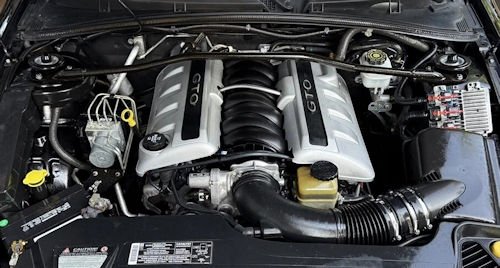
For the 2005 model year, the GTO has undergone several changes and improvements.
In detail:
- New six-liter V8 (type LS2) with 299 kW (406 hp) and 538 Nm of torque
- Bigger brakes with red lacquered saddles and GTO lettering
- Air scoops on the hood
- Double exhaust and modified rear apron
- 18-inch alloy wheels (surcharge)
- Footrest for the coupling foot
- Instruments with new graphic
- Extended range of extras
- Two new paint colors ("Cyclone Gray" Metallic and "Midnight Blue" Metallic)
- Paint colors "Barbados Blue" Metallic and "Cosmos Purple" Metallic are eliminated
- Interior color "Dark Purple" is omitted.
2006
For the last model year, there were some minor changes.
- Central locking switch on the center console
- Dark tinted taillights
- Radio control knobs in the steering wheel with lighting
- When painted in brazen orange scales of the instruments in orange, decorative stitching on seats, gear knob, steering wheel and armrests in orange
- Two new paint colors ("Brazen Orange" and "Spice Red")
- Elimination of two paint colors ("Yellow" and "Midnight Blue" Metallic)
The last Pontiac GTO was launched in Australia on June 14, 2006. However, this was not due to the weak sales figures, but rather because the factory had planned from the outset with a production period of only three years of construction.
Pontiac Ventura II (Second generation)
 |
|
|
Model years |
1971 to 1977 |
|
Assembly |
U.S.A |
|
Class |
Motor Car |
|
Body style |
2-door coupe |
|
Platform |
X-body |
|
Engine |
|
|
Transmission |
2-3 speed automatic |
|
Wheelbase |
2,814 mm (110.8 in) |
|
Length |
4,940 mm (194.5 in) |
|
Width |
1,839 mm (72.4 in) |
|
Height |
1,334 mm (52.5 in) |
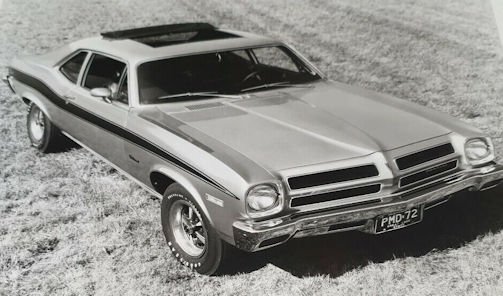
In March 1971 Pontiac presented a new Ventura (until 1972 officially called Ventura II) with their new X-body chassis. This vehicle represented the Pontiac version of the end of 1967 introduced second generation of the Chevrolet Nova, making it the sister model of the Buick Apollo and the Oldsmobile Omega. The differences to the Nova were limited to modified rear lights and a Pontiac typical split central grille. The choice was a two-door hatchback coupe, from 1973 also available with tailgate, and a four-door notchback sedan. With many engine options the engine side were a 4.1-liter inline six-cylinder (initially 108 kW / 147 SAE PS) and a five-Liter V8, from 1973, a 5.7-liter V8 available.
From 1971 to 1975 there was on the basis of the two-door models, coupe a Ventura Sprint called version in sporty presentation, but with unchanged technology. The "II" suffix was no longer used after 1972,
Only in the 1974 model year was the Pontiac GTO based on the Ventura; 7058 pieces were made from this last "classic" GTO version.
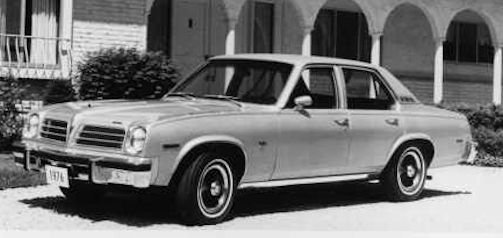
For model year 1975, the Ventura received a comprehensive facelift with lower waistline and larger window areas. The five-Litre engine was replaced by a 4.2-liter V8, the six-cylinder and the 5.7-liter were still on offer the Ventura name now from the Lemans line of cars used, improved fuel economy and new front design are featured in Pontiac' compact Ventura and Ventura SJ models for 1976. New interior trims and a full range of optional equipment, including Cruise Control available on all Venturas, including the
Ventura SJ four—door sedan. The Ventura SJ two—door coupe is available With the landau option Which includes formal rear window and blacked-out grille.
1977 accounted for the small eight-cylinder in favour of a 4.9-liter V8 unit.
In the spring of 1977, the Ventura was revised again and sold from then on under the name Pontiac Phoenix. From Ventura emerged in six years, a total of about 520,000 pieces.
Pontiac Grand Am Second generation
 |
|
|
Production period: |
1977 to 1980 |
|
Body versions : |
Sedan , coupe |
|
Engines: |
Gasoline : 3.8-5.0 liters (78-112 kW) |
|
Length: |
5060 mm |
|
Width: |
1839 mm |
|
Height: |
1359 mm |
|
Curb weight : |
1395-1494 kg |
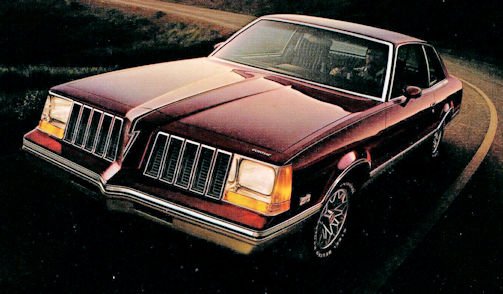
With the appearance of the shrunken in its dimensions new Le Mans in the fall of 1977, the Grand Am moved back into the offer. Again Coupé and sedan in sporty presentation to the election, but now powered by a five-liter V8 with double or quadruple carburetor (142 or 152 hp or 104 or 112 kW). Only in 1979 there was the Grand Am also with a 3.8-liter V-6 (106 hp / 78 kW). The bow section, which was different from that of the Le Mans, was again made of plastic.
In 1980, the Grand Am was offered only as a coupe and deleted at the end of the model year due to weak demand from the program.
Numbers (model years):
- 1978: 10.608
- 1979: 5886
- 1980: 1647
Pontiac Chieftain Second generation
 |
|
|
Class |
Motor Car |
|
Model years |
1955 to 1957 |
|
Body style |
2-4 door sedan |
|
Layout |
FR layout |
|
Platform |
GM A platform |
|
Engine |
1955: 287.2 cu in (4.7 L) V8 |
|
Transmission |
3-speed manual |
|
Wheelbase |
122 in (3,099 mm) |
|
Length |
1955: 203.2 in (5,161 mm) |
|
Width |
75.1 in (1,908 mm) |
|
Height |
60.5 in (1,537 mm) |
|
Curb weight |
3,179–3,966 lb (1,442–1,799 kg) |
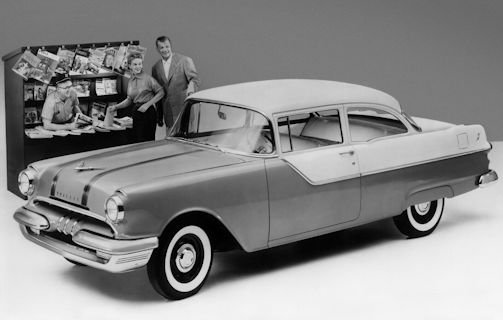
In 1955 a completely revised Chieftain was introduced. The cars were much slimmer and lower; the moulded rear fenders had disappeared as well as tapered alligator shape of the hood. What remained was the shark's mouth and the car grew small tail fins. Also new were the panoramic windscreens. To the known from the previous body forms a 3-door station wagon came. The special versions were called Chieftain 860, the deluxe versions Chieftain 870. The biggest change, however, was he old, side-mounted in-line engines had been dropped and replaced by a new V8 engine with OHV Valve control replaced. The 4,706-cc large engine delivered 173 bhp (127 kW) at 4400 rpm or 180 hp (132 kW) at 4600 rpm
1956 were the cars rocket-shaped inserts on the front bumpers and there was an additional body shape a 4-door hardtop sedan. the drive V8 was enlarged to 5.2 L t All vehicles got a larger V8 engine, which delivered an output of 192-205 bhp (141-151 kW) at 5,188 cc.
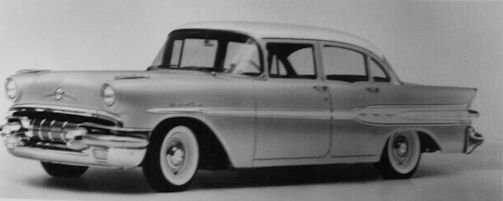
In 1957, the design was slightly revised again: the cars were larger tail fins and a contrasting side strip, which was widened in the tail fins. This design called Pontiac "Star Flight". Also, a larger engine was installed. The V8 now 5.7L made 227-252 bhp (167-185 kW) and had a displacement of 5,686 cc. The Pontiac was assembled in Australia by Holden, badged as the Pontiac Super Chief model.
Pontiac Vibe First Generation
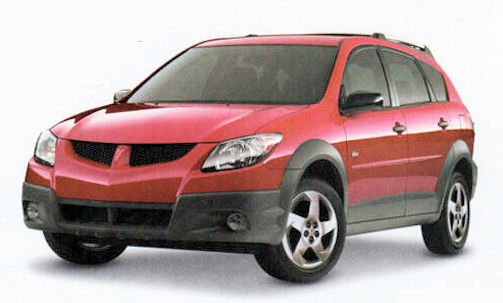 |
|
|
Production period: |
2002 to 2008 |
|
Class: |
Motor Car |
|
Body versions: |
station wagon |
|
Engines: |
Gasoline :1.8 litres(88-135 kW) |
|
Length: |
4351 mm |
|
Width: |
1775 mm |
|
Height: |
1539 mm |
|
Wheelbase: |
2601 mm |
|
Curb weight: |
1255 kg |
The Pontiac Vibe was a from 2002 to 2009 by the US automaker Pontiac sold passenger car model of the compact class.
History
The Vibe was produced by NUMMI in California along with its sister models Toyota Matrix and Toyota Voltz (2002-2004). This joint venture has been between General Motors and Toyota since the 1980s. Technically, the Vibe and the parallel models are based on the E-platform of the Toyota Corolla.
Prototypes of the first Vibe generation were shown at the Motor Show in Detroit in January 2000. The series versions appeared in autumn 2002 for the model year 2003.
From 2002 to 2006, the Vibe was offered as a base model, as a more powerful GT and as an all-wheel drive model. For the model year 2007, the model range limited to the base model, as the four-wheel drive and GT models in the US, the newly adopted emission standards no longer met.
In the Vibe 16-valve four-cylinder in-line engines with 1.8-liter displacement of Toyota were used in the basic model (with manual or automatic) 94-97 kW (128-132 hp), in the four-wheel drive version (only with automatic) 88-94 kW (120-128 hp) and in the GT (only with six-speed manual gearbox) 122-135 kW (167-183 hp) made. In its basic version, the Vibe was (2007) the most fuel-efficient model of General Motors in North America.
End of 2004 was a light facelift with a modified grille, which was similar to that of the Pontiac Solstice, while the previous grille was based on the design of the now discontinued Pontiac Aztek.

