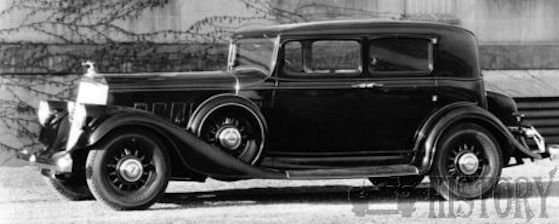
Pierce Arrow
- Details
- Parent Category: P
- Category: Pierce Arrow
- Hits: 41
Pierce-Arrow Car Model timeline
From 1901 to 1937

| model year | model | cylinders | power | wheelbase |
|---|---|---|---|---|
| 1901 | motorette | 1 | 2.75 bhp | |
| motorette | 1 | 3.75 bhp | ||
| 1902 | 3 1/2 hp | 1 | 3.5 bhp | 1473 mm |
| 1903 | runabout | 1 | 5 bhp | |
| Stanhope | 1 | 6.5 bhp | ||
| Touring | 2 | 15 bhp | ||
| 1904 | Stanhope | 1 | 8 bhp | 1,778 mm |
| Great Arrow | 4 | 24/28 bhp | 2,362 mm | |
| 1905 | Stanhope | 1 | 8 bhp | 1,778 mm |
| Great Arrow | 4 | 24/28 bhp | 2,540 mm | |
| Great Arrow | 4 | 24/28 bhp | 2,641 mm | |
| Great Arrow | 4 | 28/32 bhp | 2,641 mm | |
| 1906 | motorette | 1 | 8 hp | 1,778 mm |
| Great Arrow | 4 | 28/32 bhp | 2,718 mm | |
| Great Arrow | 4 | 40/45 bhp | 2,769 mm | |
| 1907 | Great Arrow | 4 | 28/32 bhp | 2,844 mm |
| Great Arrow | 4 | 40/45 bhp | 3,150 mm | |
| Great Arrow | 6 | 65 bhp | 3,429 mm | |
| 1908 | Great Arrow | 4 | 30 bhp | 2,845 mm |
| Great Arrow | 4 | 40 bhp | 3,150 mm | |
| Great Arrow | 6 | 40 bhp | 3,302 mm | |
| Great Arrow | 6 | 60 bhp | 3,429 mm | |
| 1909 | Model 24 | 4 | 24 bhp | 2,832 mm |
| Model 36 | 6 | 36 bhp | 3,023 mm | |
| Model 40 | 4 | 40 bhp | 3,150 mm | |
| Model 48 | 6 | 48 bhp | 3,302 mm | |
| Model 60 | 6 | 60 bhp | 3,429 mm | |
| 1910 | Model 36 | 6 | 36 bhp | 3,175 mm |
| Model 48 | 6 | 48 bhp | 3,416 mm | |
| Model 66 | 6 | 66 bhp | 3,556 mm | |
| 1911 | Model 36T | 6 | 38 bhp | 3,175 mm |
| Model 48T | 6 | 48 bhp | 3,416 mm | |
| Model 66T | 6 | 66 bhp | 3,556 mm | |
| 1912 | Model 36T | 6 | 36 bhp | 3,239 mm |
| Model 48 | 6 | 48 bhp | 3,416 mm | |
| Model 66 | 6 | 66 bhp | 3,556 mm | |
| 1913 | Model 38-C | 6 | 38.4 bhp | 3,023 mm |
| Model 48-B | 6 | 48.6 bhp | 3,416 mm | |
| Model 66-A | 6 | 60 bhp | 3,747 mm | |
| 1914 | Model 38-C | 6 | 38.4 bhp | 3,353 mm |
| Model 48-B | 6 | 48.6 bhp | 3,607 mm | |
| Model 66-A | 6 | 60 bhp | 3,747 mm | |
| 1915 | Model 38-C | 6 | 38.4 bhp | 3,404 mm |
| Model 48-B | 6 | 48.6 bhp | 3,607 mm | |
| Model 66-A | 6 | 60 bhp | 3,747 mm | |
| 1916 | Model 38-C | 6 | 38.4 bhp | 3,404 mm |
| Model 48-B | 6 | 48.6 bhp | 3,607 mm | |
| Model 66-A | 6 | 60 bhp | 3,747 mm | |
| 1917 | Model 38 | 6 | 38.4 bhp | 3,404 mm |
| Model 48 | 6 | 48.6 bhp | 3,607 mm | |
| Model 66 | 6 | 60 bhp | 3,747 mm | |
| 1918 | Model 38 | 6 | 38.4 bhp | 3,404 mm |
| Model 48 | 6 | 48.6 bhp | 3,607 mm | |
| Model 66 | 6 | 60 bhp | 3,747 mm | |
| 1919 | Model 48-B | 6 | 48.6 bhp | 3,607 mm |
| 1920 | Model 38 | 6 | 38 bhp | 3,404 mm |
| Model 48 | 6 | 48 bhp | 3,607 mm | |
| 1921 | Model 32 | 6 | 38 bhp | 3,505 mm |
| 1922 | Model 33 | 6 | 38 bhp | 3,505 mm |
| 1923 | Model 33 | 6 | 38 bhp | 3,505 mm |
| 1924 | Model 33 | 6 | 38 bhp | 3,505 mm |
| 1925 | Model 80 | 6 | 3,302 mm | |
| Model 33 | 6 | 38 bhp | 3,505 mm | |
| 1926 | Model 80 | 6 | 70 bhp | 3,302 mm |
| Model 33 | 6 | 100 bhp | 3,505 mm | |
| 1927 | Model 80 | 6 | 70 bhp | 3,302 mm |
| Model 36 | 6 | 100 bhp | 3,505 mm | |
| 1928 | Model 81 | 6 | 75 bhp | 3,302 mm |
| Model 36 | 6 | 100 bhp | 3,505 mm | |
| 1929 | Model 125 | 6 | 125 bhp | 3,378 mm |
| Model 126 | 6 | 125 bhp | 3,632 mm | |
| 1930 | Model C | 8th | 115 bhp | 3,353 mm |
| Model B | 8th | 125 bhp | 3,404 mm | |
| Model B | 8th | 125 bhp | 3,531 mm | |
| Model A | 8th | 132 bhp | 3,658 mm | |
| 1931 | Model 43 | 8th | 125 bhp | 3,404 mm |
| Model 43 | 8th | 125 bhp | 3,480 mm | |
| Model 42 | 8th | 132 bhp | 3,607 mm | |
| Model 41 | 8th | 132 bhp | 3,734 mm | |
| 1932 | Model 54 | 8th | 125 bhp | 3,480 mm |
| Model 54 | 8th | 125 bhp | 3,607 mm | |
| Model 53 | 12 | 140 bhp | 3,480 mm | |
| Model 53 | 12 | 140 bhp | 3,607 mm | |
| Model 51 | 12 | 150 bhp | 3,734 mm | |
| 1933 | Model 836 | 8th | 135 bhp | 3,454 mm |
| Model 1236 | 12 | 160 bhp | 3,454 mm | |
| Model 1242 | 12 | 175 bhp | 3,480 mm | |
| Model 1247 | 12 | 175 bhp | 3,607 mm | |
| 1934 | Model 840A | 8th | 125 bhp | 3,531 mm |
| Model 840A | 8th | 125 bhp | 3,658 mm | |
| Model 1240A | 12 | 160 bhp | 3,531 mm | |
| Model 1240A | 12 | 160 bhp | 3,658 mm | |
| Model 1248A | 12 | 175 bhp | 3,734 mm | |
| 1935 | Model 845 | 8th | 140 bhp | 3,505 mm |
| Model 845 | 8th | 140 bhp | 3,658 mm | |
| Model 1245 | 12 | 175 bhp | 3,505 mm | |
| Model 1245 | 12 | 175 bhp | 3,658 mm | |
| Model 1255 | 12 | 175 bhp | 3,734 mm | |
| 1936 | Deluxe 8 | 8th | 150 bhp | 3,531 mm |
| Deluxe 8 | 8th | 150 bhp | 3,658 mm | |
| Salon Twelve | 12 | 185 bhp | 3,531 mm | |
| Salon Twelve | 12 | 185 bhp | 3,658 mm | |
| 1937 | 8th | 8th | 150 bhp | 3,505 mm |
1932 Pierce Arrow 53 Convertible

- Details
- Parent Category: P
- Category: Pierce Arrow
- Hits: 115
Pierce-Arrow Motor Car Company History
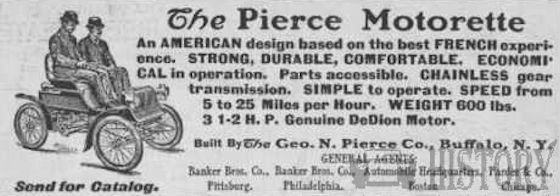
Pierce-Arrow Motor Car Company was an American automobile manufacturer based in Buffalo, New York, which was active from 1901 to 1938. Although best known for its expensive luxury cars, Pierce-Arrow also manufactured commercial trucks, fire trucks, camp trailers, motorcycles, and bicycles.
Early history
The forerunner of Pierce-Arrow was established in 1865 by 1901 had built its first single-cylinder, two-speed, no-reverse Motorette. In 1903, it produced a two-cylinder car, the Arrow.
In 1904 Pierce decided to concentrate on making a larger, more luxurious car for the upscale market, the Great Arrow. This became Pierce's most successful product. The solidly built, four-cylinder car won the Glidden Tour in 1905, an endurance run to determine and celebrate the most reliable car. Thirty-three cars entered the 1100-mile race from New York City to Bretton Woods, New Hampshire; the race was won by Percy Pierce in a Great Arrow.

1905 Pierce Great Arrow
The noted industrial architect Albert Kahn designed the Pierce Arrow Factory Complex at Elmwood Avenue and Great Arrow Avenue in about 1906. It was listed on the National Register of Historic Places in 1974. Pierce sold all rights in the company in 1907, and he died three years later. In 1908, Pierce Motor Company was renamed The Pierce-Arrow Motor Car Company.
The Pierce-Arrow's engine displacement started at a massive 11.7 L and was increased later to 13.5 L, at the time making it by far the largest engine offered in any production automobile in the world. In 1910 Pierce dropped its other 4-cylinder models and focused exclusively on 6-cylinder cars. The model 6-36, 6-48, and 6-66 continued for the next decade. Starting in 1918, Pierce-Arrow adopted a four-valve per cylinder T-head inline-six engine (Dual Valve Six), one of the few, if only, multi-valve flathead design engines ever made.
In 1910 George N. Pierce died. In 1912 Herbert M. Dawley (later a Broadway actor-director) joined Pierce-Arrow, and designed almost every model until 1938. Until 1914, Pierce-Arrow also made a line of motorcycles including the Pierce Four.
In 1914 Pierce-Arrow adopted its most enduring styling hallmark when its headlights were moved from a traditional placement at the radiator's sides, into flared housings molded into the front fenders of the car. This gave the car an immediately visible distinction in front or side views. At night, the car appeared to have a wider stance. Pierce patented this placement, which endured until the final model of 1938, although Pierce always offered the customer the option of conventional headlamps. Only a minority ordered the option. A restored 1919 Pierce-Arrow is on display at the Woodrow Wilson Presidential Library. An open-bodied Pierce-Arrow carried Woodrow Wilson and Warren G. Harding to Harding's 1921 inauguration.
The Pierce-Arrow was a status symbol, owned by many Hollywood stars and tycoons. Most of the royalty of the world had at least one Pierce-Arrow in its collection. Some have described Pierce and two of its rivals among American luxury cars, Peerless and Packard, as the "Three P's of Motordom."Industrial efficiency expert Frank Gilbreth extolled the virtues of Pierce-Arrow, in both quality and in its ability to safely transport his large family. Its wheelbase was 12 ft 3 in (3.73 m). The transmission was a four speed manual in 1919. Actor Sessue Hayakawa (Bridge on the River Kwai) famously drove a custom-ordered gold-plated Pierce-Arrow.
Pierce-Arrow advertisements were artistic and understated. Unusual for car advertising, the image of the car was in the background rather than the foreground of the picture. Usually only part of the car was visible. The Pierce-Arrow was typically depicted in elegant and fashionable settings. Some advertisements featured the car in places a car would not normally go, such as the West and other rural settings, a testament to the car's ruggedness and quality.
Several second-hand Pierce-Arrow cars were bought by fire departments, stripped down to the chassis and engine, the wheelbase lengthened, and built back into fire engines. Some of these fire engines were in service for up to 20 years.
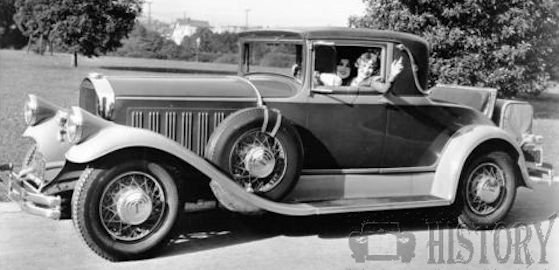
1929 Pierce Arrow Model 133 Coupe
1928–1933
In 1928, the Studebaker Corporation of South Bend, Indiana, gained control of the Buffalo firm. The association was to last for five years, with moderate benefits to both companies' engineering departments, which continued to function as separate entities. Pierce-Arrow also gained a dealer network, as the cars were sold through Studebaker dealerships. Under Studebaker's ownership, Pierce-Arrow retired the venerable 6-cylinder engine and in 1929 introduced an L-head straight-eight engine, which displaced 366 cubic inches.
In 1933, Pierce-Arrow unveiled the radically streamlined Silver Arrow in a final attempt to appeal to the wealthy at the New York Auto Show. The car was well received by the public and the motoring press, being announced with the slogan "Suddenly it's 1940!" Pierce sold five examples but, since it was priced at $10,000 during the worst of the Depression, the rich were hesitant to spend so much. The bodies were built at Studebaker, which subsequently assisted in rolling out a lower-priced production model. This, however, lacked many luxury features of the show car and still failed to generate enough sales.
Starting in 1936 Pierce-Arrow produced a line of camper-trailers, the Pierce-Arrow Travelodge. They also produced a new V-12 sedan that was redesigned and considered the safest and most luxurious sedan of its day.
The Rio Grande Southern Railroad converted five Pierce-Arrow automobiles (and a couple of Buicks) into motorized railcars, effectively buses and trucks on rail wheels. The nickname Galloping Goose was soon applied to these vehicles, reportedly based on their waddling motion and honking horn. Most of these conversions still survive.
Pierce was the only luxury brand that did not field a lower-priced car (e.g., the Packard 120) to provide cash flow, and without sales or funds for development, the company declared insolvency in 1938 and closed its doors. The final Pierce-Arrow assembled was built by Karl Wise, the firm's chief engineer, from parts secured from the company's receivers. Pierce's remaining assets (which probably would include the forty Arrows made in October 1938) were sold at auction on a Friday, 13 May 1938.
The factory equipment used to make Pierce-Arrow V-12 engines was bought by Seagrave Fire Apparatus, which used it to make engines for fire engines.
1933 Pierce Arrow 836 Club