Opel
Opel Kaptain A
 |
|
|
Production period: |
1964 to 1968 |
|
Class: |
Luxury Car |
|
Body versions: |
Sedan, coupe |
|
Engines: |
Gasoline: 2.6-5.4 Liters |
|
Length: |
4948 mm |
|
Width: |
1902 mm |
|
Height: |
1494-1510 mm |
|
Wheelbase: |
2845 mm |
|
Curb weight: |
1350-1610 kg |
|
previous model |
Opel Captain P 2,6 |
|
successor |
Opel KAD Series B |
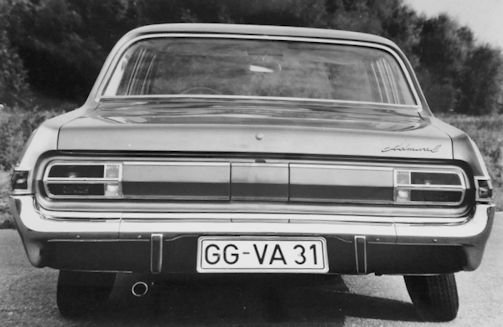
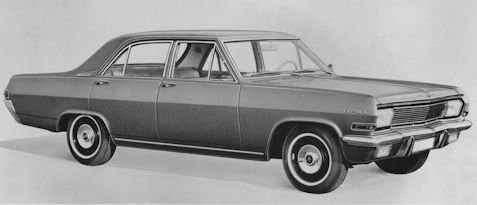
The Opel Kaptain was built from spring 1964 to autumn 1968 at the Adam Opel AG in Rüsselsheim the mid luxury class model Kaptain Part of the Kaptain, Admiral and Diplomat, line up short for: Opel KAD A, successor to the previous Captain P 2.6, all had the same newly developed body with a straight shape and offer more interior space than the earlier Admiral with 316 cm, and at 484.5 cm in length. This was the Cheapest model in the line. The Kaptain A had a horizontally accented grille and chrome trim less, than the other two models.
Opel again now offered engine with eight cylinders in the program first since the 1920's. The V8 engine was derived from the Chevrolet - Division of parent company General Motors.Initially, it was offered with a 2.6-liter inline six-cylinder engine and a power output of 74 kW (100 hp). In September 1965, this was replaced by the newly designed inline engine Opel CIH with six cylinders, 2.8 Liters displacement and 92 kW (125 hp). The new litre six-cylinder engine which develops 140 HP at 5200 r.p.m. The engine features an extremely short stroke (69,8 mm (2.75 in.) and a 92 mm (3.62 in.) bore), overhead camshaft, wedge-type combustion chambers, valves in slanted position, crankshaft with 7 main bearings, twin barrel carburetor with automatic choke. Acceleration from 0-100 km/h (0-62 MPH) in 13,9 seconds, top speed about 170 km/h (106 MPH).
In addition, there was from September 1965 the " Kaptain A V8 " with a 4.6-liter Chevrolet V8 engine with 140 kW (190 hp). From this version only 113 vehicles were built.
For tax purposes, the Austrian market also had a 2.5-liter version with 82 kW (112 hp). It was also possible to choose between 92 kW variant (S engine) or the more expensive 103 kW HL engine (HL for high performance) with two Zenith carburettors from 1967 onwards. In the 2.8-liter six-cylinder engines Opel first used hydraulic tappets, which made a control and adjustment of the valve clearance unnecessary. All models were equipped with a standard four-speed manual transmission.
Inside, in addition to three levers (fresh air/air blower, temperature, air distribution), there are six further controls for heating and ventilation: two fresh air flaps for the footwell, two air vents for the side windows, and two knobs for separate regulation of the footwell heating. This results in a large number of possibilities, but it is almost too much of a good thing to have to regulate the heating and ventilation in nine different places but the system's performance as a heater is excellent; for ventilation. The other switches and instruments are clearly arranged; a clock, trip odometer, and reading light are included. A center armrest is available for the rear passengers, and a rear-window defroster fan can be installed upon request. The precise, quiet closing action of the doors and trunk lid deserves praise; the owner's manual quite rightly points out that there is no need to slam the doors shut. As is typical for Opel, the front doors can be locked from the outside without a key by pressing the button while closing them. Only a single key is provided; the doors cannot be opened from the inside when the locking buttons are depressed. The size of the trunk is beyond reproach.
Kaptain was equipped as standard with 4-speed transmission for a surcharge was a middle shift or the two-speed Powerglide automatic with shift lever on the steering wheel. This automatic from General Motors was standard in the Diplomat A, with centre selector lever Power steering is available option.
A total of 24,249 copies were built from February 1964 to November 1968, of which alone 15,030 models with the 2.6-liter engine until August 1965. The trio was replaced in the spring of 1969 by the KAD B series, whose bodies were a little smaller and smooth-surfaced.
Vauxhall Opel Agila 1st generation
 |
|
|
Production period: |
2000 to 2007 |
|
Class: |
Motor Car |
|
Body versions: |
4 door station wagon |
|
Engines: |
|
|
Length: |
3540 mm |
|
Width: |
1620 mm |
|
Height: |
1670 mm |
|
Wheelbase: |
2360 mm |
|
Curb weight: |
1040-1130 kg |
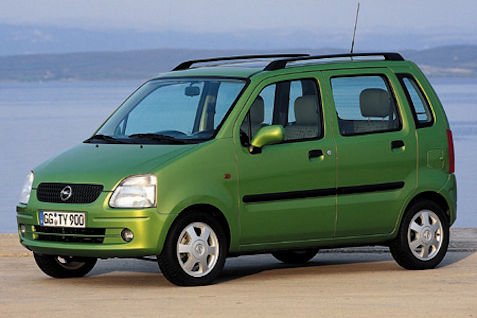
The Opel Agila is a small Microvan model and the smallest series of the manufacturer Opel. The Agila is much shorter than the Corsa its world debut at the 70th Geneva Motor Show from March 2000.,
The model is offered with right-hand drive as Vauxhall Agila .The 3.5 m long minivan Agila A resembled the previous Suzuki Wagon R + except for the gasoline engines and the suspension tuning and was built in Gliwice. The basis for the Agila was the Concept-A study from 1999. The production vehicle was launched on the market in August 2000.In August 2003, the Agila received a slight overhaul (e.g. a chrome strut in the grille). In addition, the performance of the two gasoline engines was raised and a 1.3-liter diesel engine complemented the selection.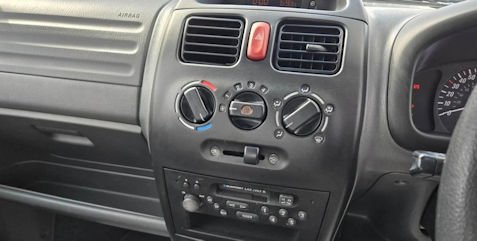
The first generation of Agila (Agila A) was manufactured from summer 2000 to fall 2007. Despite its overall length of only 3.50 meters, the Agila features a spacious and versatile interior. It converts quickly from a comfortable four-seater to a two-seater with a flat floor and 598 liters of luggage space provided by four doors and a large rear hatch.From launch the entry-level model is equipped with electric power steering, the split rear seat, a triple info-display, electrically adjustable exterior mirrors, a carpet-lined trunk, along with a radio installation kit including a roof-mounted antenna and loudspeakers.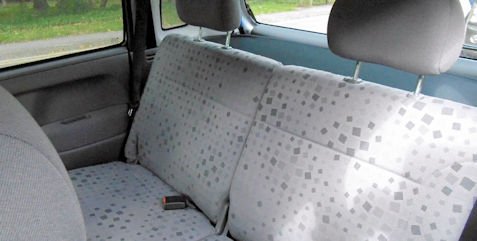
The front-wheel drive Agila is powered by at first with an choice of 1.0 and 1.2 ECOTEC gasoline engines with 43 kW/58 hp and 55 kW/75 hp respectively. Both four-valve power with the Euro IV exhaust emission standard. 1.2-liter, four-cylinder engine takes the Agila from a standing start to 100 km/h in only 13.5 seconds and on to a top speed of 155 km/h. Maximum torque is 110 Nm at 4000 rpm and fuel consumption is only 6.5 liters per 100 km (MVEG standard). Powered by the 1-0-liter, three-cylinder engine, the Agila has top speed of 142 km/h and consumes only 6.3 liters of fuel per 100 kilometers (MVEG standard). Maximum torque of 85 Nm is available at 3800 rpm.The ECOTEC engines are coupled to a five-speed manual gearbox with ”drive by wire” (electronic throttle control) and a micro-hybrid electronic engine control unit.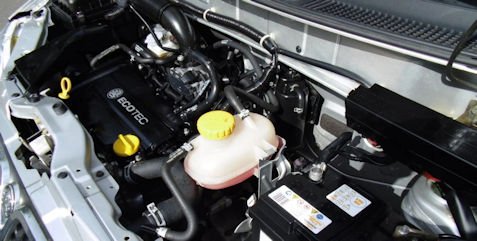
Performance: 1.0 12V Z10XE
Top speed (km/h): 142
Acceleration 0-100 km/h (sec): 18
Acceleration 0-400/0-1000 m (sec): 20.5 / 39
Acc. 80-120 km/h in 5th gear (sec): 29.5
Fuel: unleaded premium
CO2 emission (g/km): 151
Emission class: Euro 4
Developed jointly by Opel and its Japanese partner, Suzuki, the new microvan features numerous opportunities for storing a variety of objects. Inside Its compact exterior (length 3.50 m / width 1.62 m / height 1.66 m) with full-scale seating for four adults, copious headroom and a load area that holds 248 liters enlarging to 598 liters (measured to lower edge of windows) as required. The rear seat cushion and the 50:50 split rear seat back can be folded together quickly and easily, in a single operation, by means of a mechanism. Thanks to the tall, wide tailgate and the low sill (655 mm), makes sure large can be loaded with ease.
There are integrated compartments in the instrument panel, drawers under both front seats, cup holders and pockets in the front and rear doors as well as in the front seat backs. The high seating position and the large glass area (including a third, C-pillar window) enhance the light, friendly, atmosphere of the interior, giving the driver and passengers an excellent view of the car´s surrounding traffic.
For safety Agila comes with side impact protection beams in the doors, driver airbag, as well as seatbelt tensioners and belt-force limiters for the front seats. The rear seats are equipped with Opel Fix anchor points to install the corresponding child seats. There are child safety locks on the rear doors. Optional extras includes a passenger airbag and a safety net between the load area and the rear seats.
With a wheelbase of 2.36 m and correspondingly short overhangs, the Agila has a turning circle of only 9.95 meters and Electric Power-Assisted Steering and offers good maneuverability, The Agila is the only microvan to have 14-inch wheels (with 155/65 R 14 tires), which contribute further to its stability. The latest Bosch anti-lock braking system is installed and the brakes achieve excellent rates of deceleration for a vehicle in this class. The Agila is built at Opel´s newest plant in Gliwice, Poland. This modern facility, which was opened in fall 1998, is modeled on Opel´s highly efficient Eisenach factory (in eastern Germany) and employs state-of-the-art production processes to ensure similarly high standards of quality, which are reflected in the 12-year anti-perforation warranty. During the first full year of production, Opel plans to build 100,000 of its spacious new microvans.
The second generation, the Agila B, which due to the significantly reduced height-length ratio can only be described as a limited Van or Microvan, arrived in the spring of 2008 to the dealers. In autumn 2014 the production ended. The successor is since mid-2015, the microcar Opel Karl, which is called Vauxhall Viva in the UK.The successor (Agila B) is identical to the Suzuki Splash.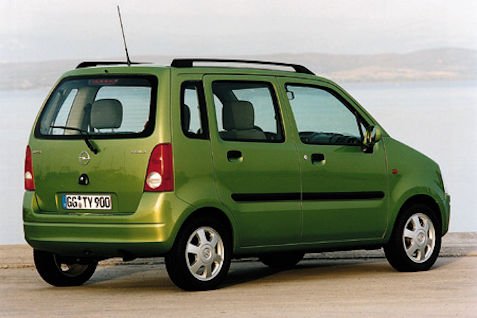
Opel Ascona A
|
|
|
|
Production period: |
1970 to 1975 |
|
Class: |
Motor Car |
|
Body versions: |
Saloon, station wagon |
|
Engines: |
|
|
Length: |
4124-4180 mm |
|
Width: |
1630 mm |
|
Height: |
1385-1400 mm |
|
Wheelbase: |
2430 mm |
|
Curb weight: |
870-1025 kg |
|
successor |
Opel Ascona B |
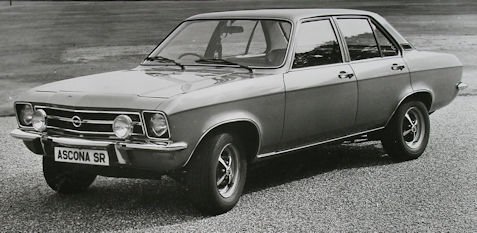
The Opel Ascona A is a car built from November 1970 to July 1975 from Opel. It was in the manufacturer's range between the cadet and record, replacing the Opel Olympia A. The car has an independent body and is equipped with normal cadet or record type engines.
In five years, a total of around 690,000 Ascona A cars were built. The Ascona A was built in the Opel factory Bochum Under the working title "Project 1450" was developed in the late 1960s at Opel a rival model for the end of 1968 introduced Ford Capri. The Successor was the very successful Ascona B. The 1970 Opel Manta A is the coupe version also built on the same Ascona platform.
Originally, the Ascona A become a Cadet C but they them decided by GM and Opel as a completely new model series.
The Ascona was from the beginning as a two and four-door sedan, a standard or luxury version and a three-door station wagon. Its luxurious variant "Voyage" had on the vehicle flank a glued wood decor. The standard model of the station wagon called Opel CarAVan, traditional name for the station wagons, which was used to differentiate from other manufacturers in other Opel models such as the record.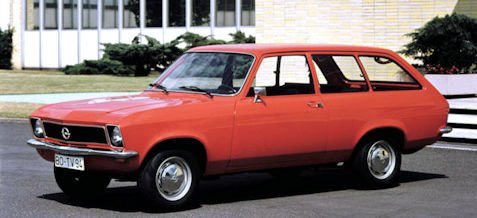
The Ascona was available in three different body versions:
- two-door notchback sedan
- four-door notchback sedan
- three-door station wagon
From March 1971, there was the Ascona A in a sporty SR version with firmer tuned suspension and 1.6-liter S-engine with 80 hp (59 kW) or 1.9-liter S-engine with 90 hp (66 kW). They were equipped with sports steering wheel, tachometer, wood veneer on the instrument panel, a console for additional instruments with clock, ammeter and oil pressure gauge, double side strips on the body edges, chromed exhaust tailpipe and steel racing wheels without hubcaps. In March 1972 was introduced as the new cheapest variant of the 1.2-liter engine. The power was 60 hp (44 kW).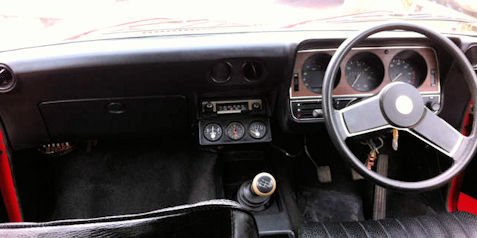
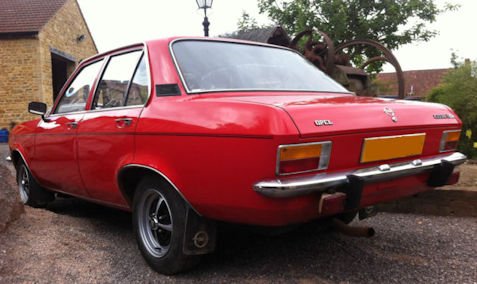
The first models had an aluminium grille, the square headlight trims were made of bright polished aluminium, in the hood was only a washer integrated and the dashboard had two air jets. From August 1971, the headlight trim panels were black. The grille was also painted black, but retained an aluminium-coloured frame and an aluminium centre bar.
In August 1973, the Ascona A was slightly revised with a black plastic grill with a large Opel emblem. Instead of the previously round mirrors now became square. All vehicles were equipped with windscreen wiper switches on the turn signal lever, a new centre console and two additional fresh air nozzles, two windscreen washer nozzles on the bonnet and an instrument panel with wood trim. For additional charge, a headlight wiper-washing system was available on request in some markets. From October 1970 to July 1975, the Ascona was sold under the name Opel 1900 in the United States. Offered were two- and four-door sedan (the latter only until autumn 1973) and the three-door station wagon, each powered by the 1.9-liter four-cylinder, here at a compression of 7.6: 1 76 DIN horsepower (56 kW) made. In total, around 170,000 units of the 1900 series (including Manta A) were sold in the USA.
At the beginning of 1975 new Gasoline Lead Law came into force. Opel adapted its engines to the new directive. The performance was reduced in the 1.6-liter N from 68 hp (50 kW) to 60 hp, in the 1.6-liter S from 80 to 75 hp (55 kW), and the 1.9-liter engine from 90 hp to 88 hp (65 kW). The 1.2-liter engine retained its previous performance. From June 1975, however, the performance of the 1.9-liter engine was increased again with a downdraft Zenith INAT 35/40 to 90 hp. The older, higher horsepower engines needed to avoid damaging knocking at high-speed Lead substitute additive to be added with each tank filling.
The Engines used all in-line four-cylinder:
The 1.2-liter engine based on the Kadett B with side camshaft and the larger on the CIH -Motor of the record C.
Performance 1.2L
max speed: 88 mph, 142 km/h
power-weight ratio: 33.6 lb/hp, 15.2 kg
acceleration: standing 1/4 mile 21 sec, 0-50 mph (0-80 km/h) 12 sec
consumption: 35.8 m/ imp gal, 29.8 m/US gal, 7.9 1x100 km.
max power (DIN): 60 hp at 5,400 rpm
max torque (DIN): 65 1b ft, 9 kg m at 2,600-3,400 rpm
max engine rpm: 5,800; 50.2 hp/l
The following types were available since introduction:
- 1.2-liter S with 44 kW (60 hp)
- 1.6-liter N with 50 kW (68 hp)
- 1.6-liter S with 59 kW (80 hp)
- 1.9-liter S with 66 kW (90 hp)
Opel Manta B
 |
|
|
Production period: |
1975 to 1988 |
|
Body versions : |
Coupé , Hatch Combi-Coupé |
|
Engines: |
|
|
Length: |
4450 mm |
|
Width: |
1670-1700 mm |
|
Height: |
1330 mm |
|
Wheelbase : |
2520 mm |
|
Curb weight : |
1000-1065 kg |
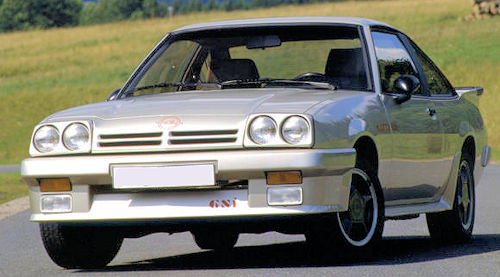
In August 1975, the Manta B was ready.Like its predecessor, this was again the coupe variant of the simultaneously presented Opel Ascona B and was technically largely the same. Both models were based on the ground group of their predecessors, the GM-H platform, which was redesigned for this generation of vehicles.
History
The Body Integral all-steel chassis/body now as a Hatch and Coupe versions with low belt line and deep glass areas. Impact absorbing front and rear sections. Curved front, rear and side screens. Body was fully-corrosion treated but this later proved of litle use . All windows of toughened safety glass. Metallic and singal body colours available. With Matt black bonnet and side stripes optional on Manta SR.
The Interior built as a Five seater sports car with 10.9 cubic feet boot. Reclinable full-foam Seats, body contoured and shaped to give lateral location. Head rests on front seats. Comprehensive facia padding with flush-mounted control switches. Instrument panel with non-reflective instruments including speedometer, water temperature and
fuel gauge. Warning lights for low oil pressure, ignition, hand- brake, main beam and turn indicators. Slide levers to control infinitely variable heater/fresh air system. Two speed axial blower. Four facia vents With 360 ddegree mobility. Direct air vents to lower section of car.
Facia mounted ashtray with cigarette lighter, electric clock and glove box. Centre console with oddments tray. Steering column lock. Column mounted lever controls, headlight flashers, main beam, indicators, windshield washers with wiper contact and two-speed wipers. All models amply supplied with ashtrays, grab handles and coat hooks.
Additional Standard Equipment.Large square headlights. Twin reversing Four-way emergency flashers. Convenience lamps in boot, glove-box and under bonnet. Dipping rear view mirror. full width bumpers with rubber facings, exterior brightwork, heated rear window side with PVC inserts. sports wheels with 5" rims. on the SR .Additional instrumentation including tachometer, oil pressure gauge and voltmeter. Halogen headlights. Hinged rear quarter windows. Sports steering wheel. Four-spoke sports road wheels with 51/2" rims.
On the Berlinetta Instrurnents as Deluxe model. Sports steering wheel. Velour seat trim with colour co-ordinated carpets - door pocket on driver's door. Halogen headlights with headlamp wash/wipe system. Black vinyl roof cover. Sports road wheels with rims.
Independent front suspension of unequal length wishbones and coil Springs. Direct-acting telescopic shock absorbers. Torsion bar stabiliser. Central link rear axle with progressive rate coil springs located by twin trailing arms and lateral track bar. Vertically mounted telescopic shock absorbers. Torsion bar stabiliser. Rack and pinion steering. Energy absorbing steering column. Dual circuit servo-assisted brakes. Disc front, drums rear. Mechanical handbrake to rear brakes. 165SR 13 tubeless radial tyres on 5J x 13 sports Wheels (Deluxe models). 185/70 HR 13 tubeless radial ply tyres on 5hJ x 13 sports wheels on Manta SR and Berlinetta — optional on Deluxe.
The Manta B had a longer wheelbase and a more elongated shape, large rectangular headlights and a built-in roll bar in the body. First there were the versions Manta, Manta L, Manta Berlinetta, Manta SR and Manta GT / E. Engine ratings ranged from 40 kW (55 hp) in the 1.2 N to 77 kW (105 hp) in the 1.9 E of the GT / E. External features of the GT / E were again the standard front spoiler, the matt black painted bonnet and black window surrounds. He had a sporty chassis with gas pressure shock absorbers. There was a sports steering wheel and additional instruments. In the Manta SR only the middle part of the bonnet was painted black.
For the model year 1978, the 1.9-S and 1.9-E engines were replaced by 2.0-liter engines. These engines were also in the Ascona and record, the injection engine in the Kadett C Coupé. The power ranged from 66 kW (90 hp) in the 2.0 N over 74 kW (100 hp) in the 2.0 S up to 81 kW (110 hp) in the 2.0 E. The latter was until the end of production of the Manta B. By far the most ordered engine by far and delighted the testers at its appearance with performance that matched or surpassed the nominally stronger Capri 2.3 S. The new engines had hydraulic tappets , which made the adjustment of the valve clearance unnecessary.
In October 1978, the Manta CC (Combi-Coupé) came with a large tailgate as Opel Monza. This was in the same equipment and with the same engines as the notchback Manta. The CC hatch was more expensive than the corresponding notchback variant.
In April 1979, the new engines with overhead camshaft also arrived in the Manta series . These engines had Opel for the 1979 Opel Kadett D presenteddeveloped. Feature of the new generation of engines were cross-flow cylinder heads made of light metal with overhead camshaft, the engine block was still made of gray cast iron.
The Manta initially offered a 1.3-liter engine with 44 kW (60 hp) and 55 kW (75 hp). The 1.6N, 1.9N and 2.0N 66 kW (90 hp) engines also remained in the program. Also on offer were the 2.0 S and the 2.0 E. New entry model was now the Manta GT-J. Externally, he corresponded largely to the GT / E, he also had a standard front spoiler, black window surrounds and could optionally be ordered with a matte black hood. In the interior there was a sports steering wheel and in addition tachometer, oil pressure gauge and voltmeter. The GT-J also had a sporty suspension, but without the gas pressure shock absorbers of the GT / E. The GT-J was recognizable by the corresponding lettering and characteristic side stripes. It was available with either the 1.3-S (55 kW, 75 hp) or the 2.0-S engine (74 kW, 100 hp).
The spring of 1980 brought a little facelift with it. Externally, the new models differed by black, plastic-coated bumpers from its predecessors with chrome bumpers. The Manta 2.0 S SR with 74 kW (100 hp) received on the rear panel a matte black paint, which extended between and around the taillights. The engine with intake manifold injection was now available not only in the Manta GT / E, but also in the "civilian" versions (Manta E).
For model year 1981, the offered range of engines for the Manta was very extensive: 1.3 N OHC (60 hp), 1.3 S OHC (75 hp), 1.6 N (60 hp), 1.9 N (75 hp) , 2.0 N (90 hp), 2.0 S (100 hp) and 2.0 E (110 hp). But as of May 1981, the Manta was only available with 1.3-S, 2.0 S or 2.0 E engine. The cheapest model was the GT-J 1.3 S with 75 hp, the most expensive model of the Manta CC Berlinetta 2.0 E with 110 hp .
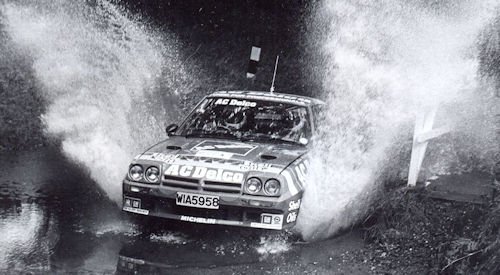
At the Geneva Motor Show in March 1981, the Manta 400 was introduced, this was the successor to the successful rally vehicle Ascona 400, in which Walter Röhrl 1982 driver world champion. The Manta 400 was actually a pure competition vehicle, which due to motor sport regulations of the then group Bbut in a quantity of at least 200 vehicles also in the normal market had to be offered. The Manta 400 was powered by a 2.4-liter engine with light metal cylinder head, four valves per cylinder and two overhead camshafts. As standard, the 960 kg rally car produced 106 kW (144 hp), but depending on the level of expansion, it could also be up to 200 kW (about 275 hp). Disc brakes on all wheels (ventilated in front) and a limited slip differential were included. By 1984, 245 copies of the Manta 400 were made. The buyer could choose between the so-called "narrow" body or the rally wide version with a wider GRPFront fenders and fender flares also made of GRP at the rear wheel arches. It also had wider tires: on the rear axle up to 285 mm wide tires on 15-inch Ronal wheels, on the front there were 225 mm wide tires. These tires, as well as the fender flares, made the vehicle look beefier. In addition, a prototype of the Manta 400 was built on the basis of the CC, which looked similar to the Irmscher i2800 and had the complete technology of the Manta 400.
The Manta 400 was presented at the Geneva Motor Show in March 1981. It was the successor to the successful Ascona 400 rally vehicle, with which Walter Röhrl became world driver champion in 1982. The Manta 400 was actually a pure competition vehicle, but due to the motorsport regulations of the then Group B it had to be produced in a quantity of at least 200 vehicles. To carry the homologation special' theme one stage further, Opel launched the Manta 400 In 1981, though its homologated rallying career (as a Group B car) did not begin untilmid-1983. The mainstream Manta was a two-door coupé version of the Ascona. built on the same platform, chassis and running gear: the Manta 400. therefore, was really a coupé version of the Ascona 400 and used the same 16-valve 2.4-litre engine and five-speed gearbox. Compared with the Ascona 400, the Manta 400 was lighter, and had a slightly better aerodynamic shape. Like the Ascona 400, it was never meant to be other than the for a rally car (for which more than 270 bhp was available), and only 238 were built.
The Manta 400 was powered by a 2.4 Liter engine with a light alloy cylinder head, four valves per cylinder and two overhead camshafts. As standard, the 960 kg rally car had an output of 106 kW (144 hp), but depending on the level of expansion it could also be up to 200 kW (272 hp). The 2.4-litre engine was based on the cylinder block of the Opel diesel, but had a new aluminium head with twin overhead camshafts and four valves per cylinder. Although the original head had been designed in Germany. Britain's Cosworth concern got the job of making it work properly, and of machining and assembling all the cylinder heads. Road cars had Bosch fuel injection and 140 bhp, though rally car engines (with Weber carbs) produced much more.To match the engine there was a heavy-duty five-speed Getrag gearbox,
Disc brakes on all wheels (ventilated at the front) and a limited slip differential were included. 245 copies of the Manta 400 were built by 1984. The buyer could choose between the so-called narrow body or the wide-body rally version with wider GRP fenders at the front and fender flares as well made of GRP on the rear wheel arches. It also had wider tires: tires up to 285 mm wide on the rear axle on 15-inch Ronal wheels, and 225 mm wide on the front axle. These tires and the fender flares made the vehicle appear beefier. In addition, a prototype of the Manta 400 was built based on the CC, which looked similar to the Irmscher i2800 and had all the technology of the Manta 400.
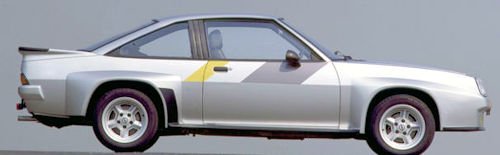
Opel Manta B2
In May 1982, the "new Manta" was at the dealers. Behind it hid only a facelift, with elements of the rally version of the Manta 400. There were now four cooling air openings instead of two. The spoiler bumper front and rear bumper were made of plastic and painted in the body color. The taillight housings were now black, not reddish brown.
On the GT / E side plastic skirts and a painted rear spoiler were added. The days of black hoods and rally stripes were over, chrome parts were sought on the new models now in vain. There were also new-design wheels and a slightly redesigned interior. Since spring 1981, Recaro sports seats were standard on the GT / E.Manta and Manta CC could in versions GT / J , Berlinetta and GT / E are ordered. The following engines were available: 1.3 S OHC (75 hp), a new 1.8-S OHC engine (90 hp).
From autumn 1982, a five-speed gearbox was available, which was standard in the GT / E. The 2.0 E engine was from then on equipped with the Bosch LE-Jetronic, electronic ignition and fuel cut. From autumn 1983, only the Manta GT and the Manta GT / E were on offer. The Manta GT replaced the previous GT / J and was now the entry level model. The 2.0 S engine was eliminated.
In autumn 1984, the name of the Manta GT / E was changed as before with the cadet GSi to Manta GSi . Also on offer was the Manta GT, the engine range remained unchanged. Cheapest offer was the Manta GT 1.3 S with 75 HP at the upper end of the offer was the Manta CC GSI.
From April 1985, the Manta GSi Exclusiv was available, which was not available as a CC. This special model refined by Irmscher had special upholstery in the interior as well as a three-spoke leather steering wheel. The front was decorated with round twin headlights. Initially only the finishes Monacoblau or Dakargold were available. The alloy wheels had a special design (anthracite with silver edge) and a three-piece painted rear spoiler was standard. Between the taillights was a black bezel, and the license plate was integrated into the rear bumper. For a surcharge, a rear apron was available.In the summer of 1985 new upholstery fabrics were introduced, otherwise there were no changes.
From autumn 1986 accounted for the 1.3-S engine. Now only the Manta GT 1.8 S with 90 hp and the Manta GSi with 110 hp was on offer. From the summer of 1987 onwards, it was finally only possible to order the Manta GSI with 81 kW (110 hp), as well as the CC. Only the special model Exclusiv was still in the program as a further equipment variant. Optionally, the 2.0-E engine was also available with unregulated catalyst (Euronorm E1), This then made 107 hp.
The i models
In the meantime, some other special models were on offer, all of which were refined by the company Irmscher and some of which were also available through the Opel dealers. So the Manta i200 , which was available in white or astral silver paint with blue-red side stripes (Rothmans decor) and large rear wing . Built according to Irmscher 3074 copies. He was equipped with a slightly tuned 2.0-E engine, which made 92 kW (125 hp).
In addition, there were still exotic Irmscher special models, such as the Manta i240 with a 2.4-liter engine, of which only just under 600 vehicles were made. Particularly rare is the Manta i300 with the 3.0-liter six-cylinder from the Senator / Monza, of which only 27 copies originated.
In August 1988, the production of the Manta was finally discontinued after a total of 1,056,436 copies. With 13 years of production, the Manta B was the longest produced Opel model so far.Was succeeded at the IAA presented in 1989 and sold June 1990 Opel Calibra , which on the midsize sedan Vectra A based.
In motorsport , a Manta B achieved cult status, which since 23 April 1994 regularly participates in the 24-hour race at the Nürburgring . It is a vehicle of the model year 1981 due to the parts made of carbon fiber reinforced plastic blank weighs 930 kg, and by increasing the cubic capacity of 1.8 to 2 liters, and further engine tuning about 165 kW (225 hp). Another feature of the car piloted by owner Hans-Olaf Beckmann and former DTM driver Volker Strycek is the foxtail on the roof antenna.
As in August 1988, the last Manta B off the line, his technique was outdated with the originating from the Kadett B of 1967 rigid axle ( central joint axis ) and produced since 1965 CIH engines, although he in the last years with unregulated catalystand 5 -Gang- transmission was fitted. For Opel, the Manta was a success: from both model series together 1,056,436 cars were built.

Opel Admiral A
 |
|
|
Production period: |
1964 to 1968 |
|
Class : |
Luxury Car |
|
Body versions : |
Sedan |
|
Engines: |
Petrol :2.6–5.4 litres |
|
Length: |
4948mm |
|
Width: |
1902mm |
|
Height: |
1494-1510mm |
|
Wheelbase : |
2845mm |
|
Curb weight : |
1350-1610kg |
The Opel Admiral A was built from 1964 to 1968 in Germany.
History
Only in April 1964, after the captain had been the Opel top model for more than 15 years, was offered with the Opel Admiral again as the model of this name. It had the same rectilinear body as the Opel Kapitan A and also newly built top models Opel Diplomat A with V8 engine .The Admiral was a more upper-class models that were built from spring 1964 to autumn 1968 by Adam Opel AG in Rüsselsheim , which at the time belonged to the US automobile group General Motors (GM) as can be seen by the style . The A indicates that this is the first version of the model series. The cheapest model was the Captain, the Admiral model as the successor to the Captain P 2.6 had better equipment and the top was the Diplomat with reinforced chassis, standard V8 engines and further improved equipment. The KAD A series was replaced in the spring of 1969 by the KAD B series, whose bodies were somewhat smaller and smoother
The Admiral A was a version of the Captain A that had been upgraded in various details, essentially the “L” model like the Captain P “L” before it. The name was adopted from the pre-war Admiral model, which was built from spring 1937 to autumn 1939.The Admiral A had a grid-shaped radiator grille. While the Captain A only had chrome-decorated door sills, the Admiral A had chrome-lined wheel cutouts. From September 1967 there was also a chrome-plated side protection strip.With the start of the 1966 model year, the Opel lettering on the front fenders was eliminated in September 1965, and at the same time the Opel name appeared in the radiator grille. In September 1967, the Admiral lettering was moved from the rear roof posts to the front fenders. The Admiral A was produced in 55,876 units from April 1964 to November 1968, of which 31,318 units were the 2.6 Liter engine offered until August 1965, the best-selling model in the KAD A series.
The new self-supporting body was essentially identical and its design was based on the Chevrolet Nova . The striking rectangular headlights with prismatically edged lenses and the wide-beam fog lights under the bumper, which are available as optional accessories, gave the KAD-A series an independent, harmonious appearance. Overall, however, the design of the KAD-A series in Germany was often perceived as too American.The new body was connected to a conventional chassis, consisting of a rear rigid axle with long, longitudinal two-leaf springs and independent front wheel suspension with coil springs , wishbones and internal shock absorbers . All KAD models had a dual-circuit brake system with front disc brakes and a brake booster .
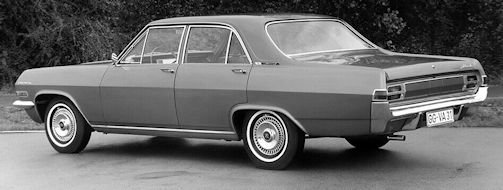
The range of engines corresponded to that of the captain A. From March 1965, the Admiral V8 was also offered with the 140 kW (190 hp) 4.6 Liter Chevrolet V8 engine, which powered the car, which weighed over 1.5 tons, in just under 10 Accelerated from 0 to 100 km/h in seconds and reached 200 km/h. However, only 623 copies of this model were delivered, which was much more expensive than the Admiral with a six-cylinder engine.
The new litre six-cylinder engine developing 140 HP at 5200 r.p.m. With its extremely short stroke, precise timing of the slanted-position valves in the wedge type combustion chamber, crankshaft with 7 main bearings, and twin barrel carburetor (with automatic choke) the new power plant shows all design features of an elastic high performance engine. The car comes with standard front disc brakes, dual circuit power brake system, and accelerates from 0—100 km/h (0—62 MPH) in 13,9 seconds, top speed is about 170 km/h
(106 MPH). The 2.6 Liter six-cylinder in-line engine with a four-bearing crankshaft and side camshaft from the previous captain was improved and now achieved 73.5 kW (100 hp) at 4600 rpm and 181 Nm at 2400 rpm. For the first time, Opel used maintenance-free hydraulic lifters , which made checking and adjusting the valve clearance unnecessary. However, this engine soon no longer met the rapidly increasing demands in the luxury class, so in September 1965 the newly designed Opel CIH six-cylinder in-line engine was launched as the “2.8 S” with a seven-bearing crankshaft, overhead camshaft and register carburettor , 2.8 Liter displacement and 92 kW (125 hp) followed. From 1967 it was equipped as the “2.8 HL” (“high-performance engine”) with two Zenith register carburettors and thus achieved 103 kW (140 hp).
- PERFORMANCE: 2,605 cu cm
max power (SAE): 117 hp at 4,700 rpm
max torque (SAE): 145 1b ft, 20 kg m at 3,000 rpm
max number of engine rpm: 5,000
specific power: 44.9 hp/l
Engine capacity: 158.96 cu in, 2,605 cu cm
Fuel consumption: 23.9 ml imp gal, 19.9 ml US gal, 11.8 1 x 100 km
Max speed: 100 mph, 161 km/h
power-weight ratio: 25.8 lb/hp, 11.7 kg/hp
acceleration: 0—50 mph (0 —80 km/h) 9.2 sec
max speeds: 31.1 mph, 50 km/h in 1st gear; 49.7 mph, 80 km/h in 2nd gear; 78.3 mph, 126 km/h in 3rd gear; 100 mph, 161 km/h in 4th gear - PERFORMANCE: 2,784 cu cm
Engine capacity: 169.88 cu in, 2,784 cu cm
Fuel consumption: 22.9 m/imp gal, 19.1 m/US gal, 12.3 1 x 100 km
Max speed: 105.6 mph, 170 km/h
max power (SAE): 140 hp at 5,200 rpm
max torque (SAE): 161 1b ft, 22.2 kg m at 3,000-3,900 rpm
max engine rpm: 5,600
specific power: 50.3 hp/l
power-weight ratio: 20.1 lb/hp, 9.1 kg/hp
acceleration: 0—50 mph (0—80 km/h) 9.2 sec
max speeds: 32.3 mph, 52 km/h In 1st gear; 51.6 mph, 83 km/h in 2nd gear; 81.4 mph, 131 km/h in 3rd gear; 105.6 mph, 170 km/h in 4th gear
Now as before the Admiral is also built with 4,6 litre V 8-engine and automatic transmission (acceleration from 0—100 km/h, (0—62 MPH) in 11 seconds, top speed about 200 km/h (124 MPH).
After the Opel Regent with an eight-cylinder in - line engine , which was briefly offered at the end of the 1920s, Opel now once again had an engine with eight cylinders in its range: The V8 engine came from the Chevrolet division of the parent company General Motors (engine designation 283V). This produced 140 kW (190 hp) at 4600 rpm, produced approx. 347 Nm at 3000 rpm and was initially only available in the Diplomat.V8 engines were also installed to a small extent in the Captain and Admiral from 1965 onwards.
The engines were initially combined with a standard 4-speed steering wheel gearshift . Centre shift lever or two-speed Powerglide automatic from General Motors (already with kickdown function) with shift lever on the steering wheel could be delivered for an additional charge. The V8 engines were generally delivered in combination with an automatic transmission with a centre selector lever.
The production of this series was finished in November 1968.
Production figures KAD Between 1964 and 1968
|
Year |
1964 |
1965 |
1966 |
1967 |
1968 |
total |
|
2.6 Admiral |
19,904 |
11,414 |
|
|
|
31,318 |
|
2.5 Admiral Austria |
|
|
326 |
51 |
|
377 |
|
2.8 Admiral |
|
5,776 |
11,688 |
3,366 |
2,728 |
23,558 |
|
4.6 Admiral |
1 |
236 |
221 |
104 |
61 |
623 |