
MG
MG TA
 |
|
|
Production period: |
1936 to 1939 |
|
Class |
Sports Car |
|
Body versions: |
Roadster, Coupe, Cabriolet |
|
Engines: |
Gasoline : 1.3 litres (37 kW) |
|
Length: |
3556 mm |
|
Width: |
1422 mm |
|
Wheelbase: |
2388 mm |
|
Curb weight: |
795 kg |
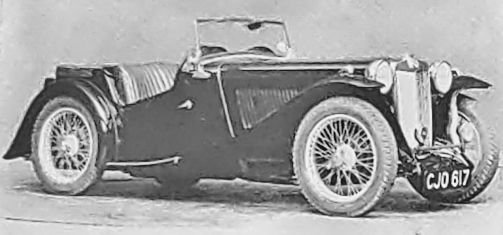
The MG TA 1936 replaced the PB Midget, from which it had been further developed. Compared to its predecessor, the track was enlarged by 76 mm to 1143 mm and the wheelbase was extended by 178 mm to 2388 mm.
History
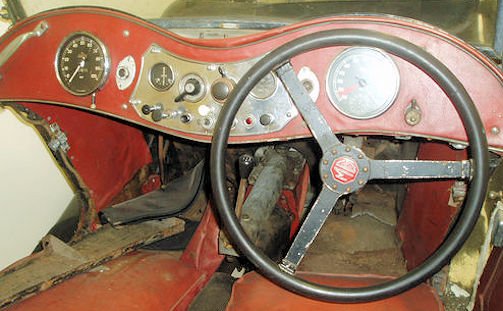
After 1935, the traditional overhead-camshaft engine of the MG Midget was dropped, and a quieter, simpler and more reliable pushrod overhead-valve type substituted. The o.h.c. Midgets had cleverly used their vertical drive shafts to the camshaft as the dynamo armature, but this did not enhance the performance of the dynamo, into which oil penetrated. The new T series were generally less spartan cars, in keeping with the company's abandonment of competitions, their bigger, long-stroke engines less fussy, their bodies roomier and more comfortable.
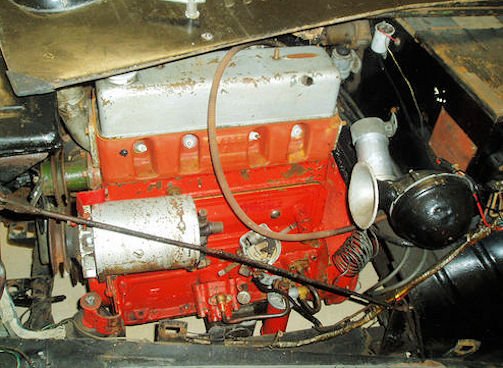
The advanced overhead camshaft (ohc) engine was not adopted because it was not used on any other production vehicle. Instead, the MPJG engine was used with the Wolseley Ten's valves, but it was equipped with two SUs, a modified camshaft and better gas management. The displacement was only 1292 cc (bore 63.5 mm × stroke 102 mm). The upper gears of the four-speed gearbox were synchronized. Power output was 50 b.h.p. at 4500 r.p.m., and the axle ratio was higher, which made them faster than the P series
although heavier the TA two-passenger sports model, and they stopped better, too, with their Lockheed hydraulic brakes.
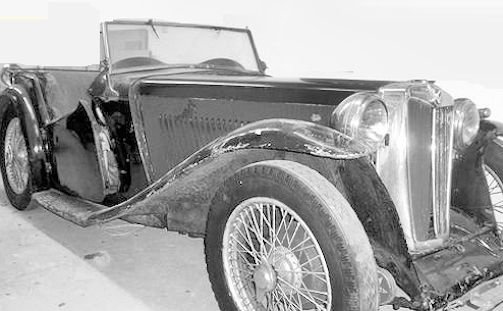
Like the PB most vehicles were built as open two-seater with a body in mixed construction (steel sheet on a framework made of ash wood). In addition, there was from 1938 a convertible from Tickford with bodies of Salmsons from Newport Pagnell and an "airline" coupe, as it was from the P-Type knew, but of which only one copy should have been made. It reached a top speed of about 125 km / h in standard equipment and an acceleration from 0 to 100 km / h in 23.1 seconds. Unlike the PB, the TA had hydraulically operated brakes.
Magnette Mark III
 |
|
|
Production |
1959 to 1961 |
|
Class |
Motor Car |
|
Related |
Morris Oxford V |
|
Engine |
1.5 L B-Series I4 |
|
Wheelbase |
2,521 mm (99.3 in) |
|
Length |
4,521 mm (178.0 in) |
|
Width |
1,613 mm (63.5 in) |
By February 1959 The Mark III Magnette was announced built the same as Riley 4/68 version This was built from only 1959 to 1961.
History
The new Pinin Farina designed and produced by the British Motor Corporation (BMC). Both saloon cars had tail fins the Raised wings at front and rear are visible from the driving position, but there is some distortion at the edges of the curved windscreen.
The interior featured facia panel and door capping’s in a polished walnut veneer and the seats are upright shape leather-covered upholstery over sponge rubber filling, for rear seat passengers arm rests are provided on the doors as well as in the centre. Storage provision made with the usual shelf under the rear windows another occupying the full width beneath the facia apart from space for radio loudspeaker, and a lockable glove box. The Controls include fingertip indicator switch and toggles the facia for wipers and lights, the horn ring has a well-made feel. It’s easy to accommodate luggage in the boot, which has a low loading level and is illuminated at night by the number plate lamp. A 10-gallon fuel tank (giving a range of about 250 miles) sits between the boot and the rear seat, making space for the spare wheel. The boot lid is counterbalanced by torsion-bar springs
Standard Equipment
lights: 2 headlamps, 2 sidelamps and front amber flashers, 2 tail, stop and rear amber flashers, number plate lamp. Direction indicators Windscreen wipers Flasher type, amber, self-cancelling Twin electrical, Self-parking Windscreen washers Twin, vacuum operated Sun visors Two
Boot lid and glove box Glove lockers Map pockets Parcel shelves One (on passenger's side) two (below facia and behind rear squab)
Interior lights; Two (above door pillars with individual and courtesy switches), Interior heater; Fresh-air type with de-misters,
Car radio Optional extra
Standard tool kit: Jack, wheel brace, starting handle, ignition gauge and screwdriver, tyre valve tool, pump, plug spanner and tommy
bar, plug and tappet gauge, screwdriver and grease gun.
Instruments: Speedometer (with mileage indicator and decimal trip), oil pressure gauge, ammeter, thermometer, fuel gauge, and electric clock.
The car is fitted with BMC's 1489 cc B type engine with new type twin S.U. H.D.4 carburettors.
Unladen kerb weight 22 cwt,
Acceleration: 20-40 m.p.h. 10.9 sec,
cruising speed 65-70 mph Maximum speed 87.7 mph,
fuel consumption 31.4 m.p.g.

MG Magnette Mark IV
 |
|
|
Production |
1961 to 1968 |
|
Class |
Motor Car |
|
Body |
4 door saloon |
|
Engine |
1.6 L B-Series I4 |
| Wheel base | 100.25 in, 2546 mm |
| Length | 177.95 in, 4520 mm |
| Width | 63.00 in, 1600 mm |
| Height | 58.00 in, 1473 mm |
| Dry weight | 2452 1b, 1112 kg |
The MG Magnette Mark IV was a car built By BMC under the MG Brand name in the 1960s
History
The previous Mark III was updated in 1961 as the Mark IV the car now had a longer wheelbase of 100 inches and wider track with large wrap-round bumpers front and rear with over-riders giving the car a distribution of weight 54.6 % to front axle, and 45.4 % at rear axle. From the outside not much had change, the Mark IV was almost identical to the Mark III shape, but less pointed tailfins bring the car into the 60s fashion. built with the same British Motor Corporation (BMC) ADO38 platform with the mono-construction 4-door saloon body that incorporates the body shell. floor, bulkhead, frame members and Wing valances as the also made Austin A60 Cambridge, MG Magnette Mark IV, Morris Oxford Series VI, Riley 4/72/Comet, and Wolseley 16/60 that came fitted with luxury features such as deep, well-sprung upholstery with foam-rubber seat cushions; leather upholstery with leather-cloth on non-wearing parts; walnut-veneer fascia and door cappings.large luggage boot (trunk),with 19 cu.ft capacity, with counterbalanced lid the spare wheel is also stowed in special carrier below luggage boot.
Inside a Speedometer and oil gauge; ammeter, engine temperature a Lighting panel combined windshield wiper switch: mixture indicator control on steering-column Safety glass laminated glass pile carpets with under-felt; 4 ashtrays; 2 sun visors; door fixed handles and push-button lock release: front seats vidual adjustment; folding arm-rest in rear seat: arm-rests box in fascia with locking lid; sponge-rubber parcel tray ; provision for fitting H.M.V. radio.
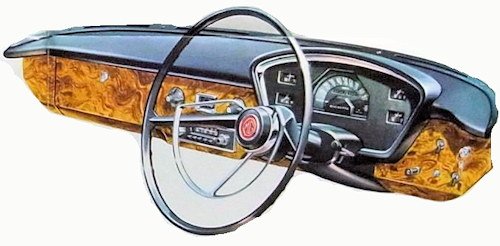
A larger 1.6 L (1622 cc) 4 cylinder B-Series engine, with capacity increased by increasing the bore to 76.2 mm, was fitted With traditional rear wheel drive and mechanical 4 speed gear box with synchromesh gears on 2nd, 3rd, 4th, also an Borg-Warner Automatic transmission was offered as an option. Suspension at the front independent, wishbones,the rear suspension rigid axle, semi-elliptic leaf-springs with lever dampers andanti-roll bars front and rear. For stoping power 9 in. (22.9 cm.) diameter brake drums front and rear on 14" Ventilated disc-type wheels with 4-stud fixing and Dunlop 590-14 tubeless tyres.
PERFORMANCE:
- Engine capacity: 99.20 cu in, 1622 cu cm
- Fuel consumption: 28.2 m imp gal, 23.5 m US gal
- Max speed: 86 mph, 138.5 km h
- Max power (SAE): 71 hp at 5000 rpm
- Max torque (SAE): 89 1b ft, 12.3 kgm at 2500 rpm
- Max number of engine rpm: 5700
- Specific power: 43.8 hp/l
- Power-weight ratio: 34.6 lb/hp, 15.7 kg/hp
- Acceleration: O—50 mph (0—80 km/h) 13.2 sec
- Max speed in 1st gear: 25 mph, 40.2 km/h; max speed In 2nd gear: 40 mph, 64.4 km/h; max speed in 3rd gear: 62 mph. 99.8 km/h;
Max speed in 4th gear: 86 mph, 138.5 km/h
Body and inside trim colours : Single colours. Smoke Grey with Blue upholstery and Bluecarpet. Tartan Red with Grey upholstery and Red carpet. Rose TaupeTerracotta upholstery and Rose Taupe carpet. Connaught Green Green upholstery and Green carpet. Old English White with Terracotta upholsteryand Rose Taupe carpet. Black with Grey upholstery and Red carpet.Terracotta upholstery and Rose Taupe carpet.Duotone colours: Connaught Green and Old English Rose Taupe Old English White. Smoke Grey and Old English White. Old White and Sandy Beige.The first colour is always the top colour, and the upholstery and carpet are the same as those available for the top colour in the single-tone.
14,320 Mark IVs were built up to 1968 the last sold by 1969. the Magnette was finally discontinued without a successor.
MG 1100 and 1300 Mark II (BMC ADO16)
 |
|
|
Production: |
1967 to 1971 |
|
Class: |
Motor Car |
|
Engine: |
1.1 L-1.3 L |
|
Wheel base: |
93.50 in, 2,375 mm |
| Overall length: | 60.35 in, 1,533 mm |
| Overall height: | 53 in, 1,346 mm |
| Overall width: | 60.35 in, 1,533 mm |
| Dry weight: | 1,621 1b, 735 kg |
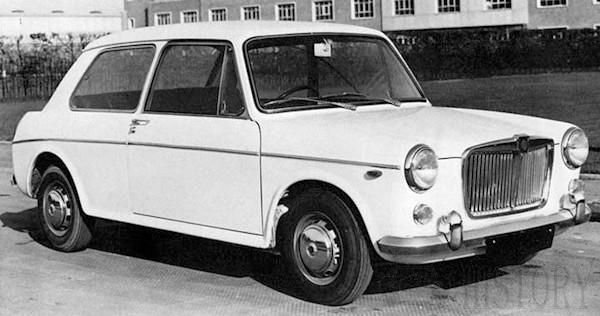
The Mark II MG 1100 and 1300 were built from 1967 to 1971 in home markets.
History
At the end of May 1967, BMC announced the fitting of a larger 1275 cc engine to the MG two and four-door family car variants. The new car combined the 1275 cc engine block already familiar to drivers of newer Mini Cooper S and Austin-Healey Sprite models with the 1100 transmission, its gear ratios remaining unchanged for the larger engine, but the final-drive being significantly more highly geared.distribution of weight was 61.4% to front axle,and 38.6% at rear axle.Front suspension was independent type with , wishbones, hydrolastic (liquid) rubber cone springs, hydraulic connecting pipes to rear wheels,with rear suspension also independent, swinging longitudinal trailing arms, hydrolastic (liquid) rubber cone springs, hydraulic connecting pipes to front wheels, combined with transverse torsion bars and anti-roll bar.
The Mark II versions built as the MG 1300 and an 1100 version of the Mark II continued alongside the larger-engine models.On the outside, a slightly wider front grille, extending a little beneath the headlights, and with more detailing. BMC engineers redesigned the MG-1100, adding the 1275 cc engine already seen in the Austin Mini Cooper, but with a lower power level (56 and 65 hp instead of 76) and a more elegant and sporty appearance. The elegant front metal grill was the main hallmark of this vehicle.Optional Accessories
for the MG include reclining backrests; AP Automatic gearbox, hydraulic torque convertor with 2 conic bevel gears (twin concentric differential-like gear clusters) with 4 ratios operated by 3 brake bands and 2 multi-disc clutches.
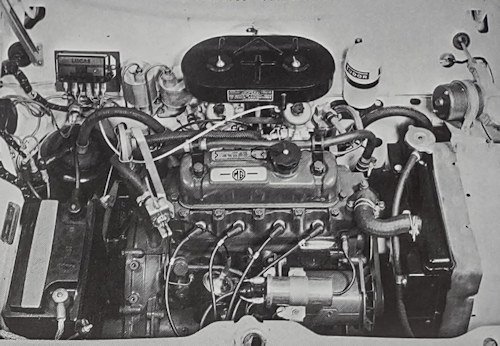
Unusually for cars at this end of the market, domestic market waiting lists of several months accumulated for the 1300-engined cars during the closing months of 1967 and well into 1968.The manufacturers explained that following the devaluation of the British Pound in the Fall / Autumn of 1967 they were working flat out to satisfy export market demands.
PERFORMANCE :1300cc
- Engine Capacity 77.80 cu in, 1,275 cu cm
- Fuel Consumption 32.5 m/imp gal, 27 m/US gal, 8.7 1 x 100 km
- Max Speed 97 mph, 156.2 km/h
- max power (DIN): 70 hp at 6,000 rpm
- max torque (DIN): 77 1b ft, 10.7 kg m at 3,000 rpm
- max engine rpm: 6,000
- specific power: 54.9 hp/l
- max speeds: 30 mph, 48.3 km/h in 1st gear
- 49 mph, 78.9 km/h in 2nd gear
- 74.5 mph, 119.9 km/h in 3rd gear
- 97 mph, 156.2 km/h in 4th gear
- power-weight ratio: 23.2 lb/hp, 10.5 kg/hp
- acceleration: standing 1/4 mile 19.6 sec, 0—50 mph (0—80 km/h) 9.4 sec
Mark II versions of the MG introduced in October 1968.The MG, car was sold also in In Spain. In Denmark the MG models were sold as the MG Sports Sedan there, as it was in North America from 1962, and was available with a two-door bodyshell that would not be available in the UK until 1968. The Vanden Plas Princess was briefly the MG Princess 1100 in North America. Versions of MG were assembled in New Zealand from CKD kits from 1963 until the final versions were replaced by the Allegro in 1975.
The exported cars had a metal body structure; although in some countries like Chile a two-door fiberglass version was built, they were made of fiberglass. The fiberglass versions turned out to be 15% heavier than the metal ones, but they did not rust in coastal areas and were resistant to low-energy shocks. These rare versions built until around 1975, Some shortcomings of the fiberglass version were that it was not completely rainproof, so its trunk could be flooded, leaving the electric fuel pump located inside easily vulnerable to faults.
MG TC
 |
|
|
Production period: |
1945 to 1950 |
|
Body versions: |
Roadster |
|
Engines: |
Gasoline engine: |
|
Length: |
3556 mm |
|
Width: |
1422 mm |
|
Wheelbase: |
2388 mm |
|
Curb weight: |
833 kg |
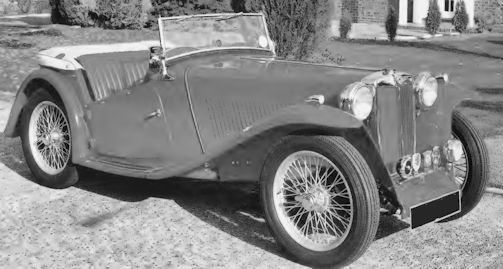
The MG TC was the first car that MG brought out after the Second World War in 1945. This looked very similar to the pre-war TB and had almost the same engine.
History
This had a slightly increased to 7.4: 1 compression, made 54.5 bhp (40 kW) at 5200rpm and offered a more modern equipment in the wider interior The ladder-type chassis with channel-section side members differed little from pre-war designs.
The MG TC was also exported to the US. The export version had slightly smaller " sealed beam " headlamps to US standard, larger, double taillights, a turn signal and chrome bumpers front and rear Bumpers were not included as standard. The TC took the British sports-car tradition into the American export market with immense success There were over 10,000 vehicles manufactured, for MG ratios a large number. In 1947, the vehicle cost £ 527 in the UK.

In November 1945 MG introduced their TC model, retaining the 1250cc 55 bhp engine, but in a four inches wider body with a number of minor specification improvements rigid front and rear axles with short semi-elliptic springs and lever-type shock absorbers. Top speed of the TC was quoted as 78 mph and with its separate flared wings, its running boards and separate headlamps it looked everything that a sports car at that time should. Its good handling compensated for a poor aerodynamic shape and relatively low power it ran out of steam towards 80 mph hood offers some weather protection in the raised position. Side screens are bright metal framed and can, of course, be erected independent
of the hood.
Performance:
Max. b.h.p., 54.4 at 5,200 r.p.m.;
b.h.p. per sq. in. piston area, 2.52.
Top gear, m.p.h. Per 1,000 r.p.m., 15.84 top gear. m.p.h. at 2,500 ft./min. piston speed, 67
Known also as the Midget, following the long MG tradition with that name, the TC had no peer for several years in the late forties. If one happened to be a sports-car
enthusiast, one had to have a TC it was thing to do, and many aspiring racings rally drivers on both sides of the Atlantic broke their teeth on TCs. In January 1950 the MG TC was replace by the T D, which offered coil-spring independent front suspension wire wheels were replace by discs, front and rear bumpers were standardized and again the body was widened to give a little extra cockpit room and comfort The TD continued the TC's success despite cries of disgust from enthusiasts In 1953 this was replaced by the T F model, which had radiator raked back, a sloped slab tank at the rear and lamps flared into its wings. Extra power was available in the TF 1500

