
Land Rover
- Details
- Parent Category: L
- Category: Land Rover
- Hits: 51
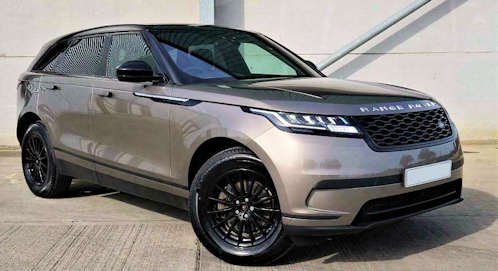
Range Rover Velar
 |
|
|
Production : |
since 2017 |
|
Class : |
SUV Off Road |
|
Body versions : |
station wagon |
|
Stars in the Euro NCAP: |
5 Stars |
|
Engines: |
Gasoline: 2.0-5.0 liters |
|
Wheelbase: |
2874 mm |
| Length: | 4803 mm |
| Width: | 1933 mm |
| Height: | 1657 mm |
| Curb weight: | 1804-2085 kg |
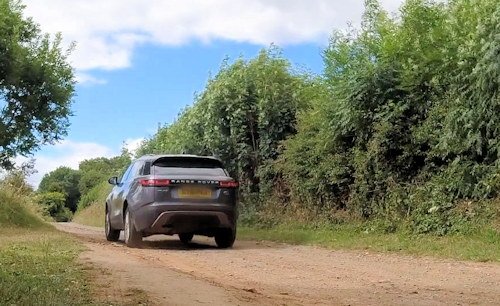
The Range Rover Velar (code name L560) is an SUV of the British SUV manufacturer Land Rover.
History
The vehicle was presented in March 2017 at the Geneva Motor Show and came in September 2017 as the fourth model of the Range Rover series. The Velar is placed between the Range Rover Evoque and the Range Rover Sport and builds on the aluminium platform of the Jaguar F-Pace and 2,874 mm (113.1 in) wheelbase. All the Velar models come with a useful three-year or 60,000-mile warranty. It’s comfortable, quiet and drives well over long-distance and on the smaller roads as well as motorways
The name of the SUV is a reminder of the first Range Rover. The first prototypes in the late 1960s bore this name. The vehicle was presented to the public from 10 May 2017 to 16 July 2017 on an inland waterway vessel reconstructed for the launch. There two varieties the standard Velars and the sportier R-Dynamic versions all can tow up to 2,500kg.
The Range Rover Velar uses Jaguar Land Rover's Ingenium line of four-cylinder diesel and petrol engines in addition to JLR's six-cylinder engines. which include a 2.0L I4 petrol and 2.0L Ingenium P400e PHEV I4 petrol engines, with larger 3.0L P400 turbo MHEV I6 and 3.0L AJ126 Supercharged V6 petrol engines also the 5.0L AJ133 supercharged V8 petrol Autobiography Dynamic Edition the diesel engines 2.0L Jaguar Land Rover Ingenium t/c also MHEV and a 3.0L AJD V6 turbo-diesel

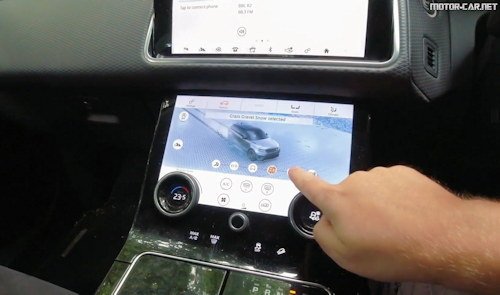
All models now use an automatic transmission, the 6-cylinder engines use the ZF 8HP70 8-speed automatic transmission. All 4-cylinder engines use the ZF 8HP45 8-speed automatic transmission. off road and off-road drive models include Dynamic mode, Basic Terrain Response, Eco, Comfort, Grass-Gravel-Snow, Mud-Ruts and Sand settings (see video below).
In the spring of 2018 Land Rover changed the engine range so that in the future it will meet the Euro 6d TEMP standard. For safety there it comes with Six airbags as standard and options for adaptive cruise control, plus blind-spot assist and lane-keeping assist the adaptive suspension as an option also.
On February 5, 2019, the manufacturer presented the series as Autobiography Dynamic Edition. It is powered by the 404 kW (550 hp) five-litre supercharged engine from the Jaguar F-Pace SVR.
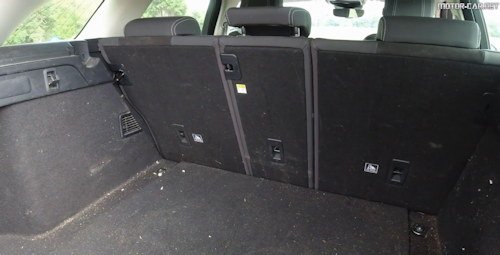
The Velar featuring LED headlights, heated front seats on all models. With upgrades such as navigation and a Meridian premium audio system. Boot space is large at 558 litres of capacity. That increases to 1,731 litres of capacity with the rear seats folded down but the rear room space is just about adequate for two adults only.
A revised version of the Velar was presented in September 2020. Since then, the SUV has also been available as a plug-in hybrid with a fast 0-60 mph time of around 5.4 second. The 48V electric supercharger (MHEV) 106 kW at 144 PS (142 hp). This P400e plug-in hybrid model. Land Rover claims up to 130mpg with combined range with a claimed 33 miles on battery alone.
- Details
- Parent Category: L
- Category: Land Rover
- Hits: 38
Range Rover Sport 2nd generation
 |
|
|
Production period: |
since 2013 |
|
Body versions : |
station wagon |
|
Type: |
Off road |
|
Engines: |
Gasoline : 2.0-5.0 liters (221-423 kW) |
|
Length: |
4850-4879 mm |
|
Width: |
1983 mm |
|
Height: |
1780-1803 mm |
|
Wheelbase : |
2923 mm |
|
Curb weight : |
2083-2471 kg |
The second generation, which is no longer based on the Land Rover Discovery but on the new Range Rover, even though 75% of the parts are different, was unveiled on March 26, 2013 in New York City . Market launch in Europe was on 20 September 2013.
History
The Range Rover Sport is an off-road vehicle that has been offered since 2005. The first generation was based on the platform of Land Rover Discovery , but was sold for marketing reasons under the more prestigious name Range Rover , which should be addressed to a different, younger shoppers. The introduction started in February 2005.
The second generation appeared Europe-wide on 20 September 2013. It is characterized by a significant weight reduction, which is achieved by a body made entirely of aluminum. Technically, the model is based on the fourth Range Rover generation. Many components such as chassis, on-board electronics, gearbox and suspension were taken over. For model year 2018, the series will receive a revision.
The vehicle is available in various equipment lines, all differentiated by different standard extras and build on each other: S / SE; HSE; HSE Dynamic and Autobiography Dynamic.

On June 6, 2013, Paul Dallenbach set the Range Rover Sport 5.0 Supercharged a new best time for series SUVs on the official race track of the famous Pikes Peak International Hill Climb hill climb . The vehicle was in original condition except for an additionally installed roll cage. With a power loss of up to 40%, which is due to the thin air at the appropriate height, Dallenbach needed 12 minutes 36 seconds and 61 hundredths.
Compared to its predecessor, the off-road capabilities have been improved. The Range Rover Sport from model year 2014 has a maximum fording depth of 850 mm. New onboard systems such as "Wade Sensing", which uses radar sensors in the exterior mirrors to measure the depth of water around the vehicle, enable safe driving on unknown routes.
For the first time in the Range Rover Sport, this generation of manufacturers decided to offer two different drive variants for different requirements. Basically, the vehicle is always equipped with four-wheel drive. However, there is in addition to the already known system with reduction gear and differential lock a less expensive and 18 kg lighter, but not so powerful version with a Torsendifferential as standard equipment. This is designed for operation on paved roads and provides enough traction in everyday use. The version with the known system is especially recommended for off-road driving and towing with a trailer.
Range Rover Sport SVR (since 2014)
Land Rover announced a super sports version of Range Rover Sport at the 2014 Pebble Beach Concours d'Elegance . The modified V8 supercharged engine delivers 405 kW (550 hp) and has been on the market since October 2014. Since model year 2018, the SVR makes 423 kW (575 hp).

- Details
- Parent Category: L
- Category: Land Rover
- Hits: 61
Wolf Land Rover
 |
|
| Place of origin | United Kingdom |
|---|---|
| Specifications | |
| Weight | 1.60 tonnes |
| Length | 4.55 m |
| Width | 1.79 m |
| Height | 2.03 m |
| Main armament | 12.7mm heavy machine gun |
| Secondary armament | 7.62mm general purpose machine gun |
| Engine | Land Rover 300 Tdi engine 111 hp (83 kW) |
| Power/weight | hp/tonne |
| Suspension | Wheel 4×4 |
| Operational range | 510 km |
| Speed | 160 km/h |
The Land Rover Wolf is a light military vehicle based on the Land Rover Defender.
Name
Wolf was the project name used by Land Rover. It came up in an informal Land Rover engineering meeting, the engineering director said “if we’re not careful this project is going to bite us in the arse”. The transmission manager then said “well we'd better call it Wolf then”.
The MoD designates the Wolf 90 as Truck Utility Light (TUL) and the Wolf 110 as Truck Utility Medium (TUM) High Specification (HS) and Land Rover calls it eXtra Duty (XD). The name Wolf has been adopted by soldiers as a generic term. Contrary to what many people think Wolf does not mean Wheel On Left Flank.
Initial order
From the debate in British parliament of 18 January 1996:
"The Land Rover vehicle, known commercially as Defender XD, has been subjected to extensive and rigorous trialling in order to ensure that it can meet the high standards of reliability which are essential for operational military vehicles. Therefore, I am pleased to have been able to announce earlier today that, subject to the satisfactory completion of contractual negotiations, I propose to place an order with Land-Rover for about 8,000 vehicles. That order is worth about £170 million. It will bring substantial industrial and employment benefits to Land-Rover, and enhance the vehicle's already excellent prospects in export markets."

Design
The Wolf was tested, rejected, upgraded and tested again before the MoD was satisfied. It is far stronger and more reliable than the Land Rover Defender on which it was based.
Engine choice
When the Wolf was designed the engine in the civilian Defenders was the Td5. Land Rover preferred the 300Tdi for the Wolf because the electronics in the Td5 were more complex to manage in the field.
The 300Tdi on a Wolf uses a slightly different design of timing cover compared to the civilian version.
Reinforced rear axle
The testing was extremely rigorous and Salisbury axles kept breaking, the axle was redesigned using stronger internals, hubs and outer casing, making one of the strongest axles ever made.
Fibreglass roof
The fibreglass roof was far simpler to manufacture over the raised height of the roofbars than the Defender aluminium roof. The production was outsourced.
Side mounted spare wheel
Everywhere else where Land Rover tried to mount the spare wheel caused the mountings to break free and it was too heavy for the bonnet. There are 3 versions of mounting, soft top, hard top and quick release.
Chassis
The chassis is considerably different in design to the standard Defender chassis even though it looks similar. The side walls are standard, most of the rest is bespoke. The additional rear load bed mounting was to take increased weights as the standard chassis kept punching big dents in the rear floor.
Chassis made after the production run (service chassis) are slightly different, later ones have a triangular reinforcement behind the front outriggers, none of them have the front round tube going through the main chassis walls as it is more costly to tool and produce although it is stronger.
The chassis wasn’t galvanised due to the additional weight it adds. There were also Health and Safety concerns about the gases involved in welding a galvanised chassis.
WMIKs made from the factory had two outriggers in the middle of the chassis instead of just one on a standard Wolf chassis. The second outrigger is to take the extra load of the gun mounting. Many WMIKs were converted from Wolfs and kept one outrigger.
The chassis on all Wolfs was sprayed internally with Dinitrol rust proofing.
Tyres

Goodyear G90s were designed for the project and strengthened on the sidewalls in testing. The Michelin tyres were felt to be better but more expensive and classed as an approved second choice as used on Winterised/Waterproofed Wolfs.
Side Lockers
Experience from the pre Wolf Military Defender showed that full jerry cans were dangerous and too tight in the lockers, the unusual shaped doors were simply to take full jerry cans more easily. They were meant to be watertight but never were.
Versions
The MoD procured at least 29 different versions. Some Wolf Land Rovers are winterised and/or waterproofed. Waterproofed versions have a snorkel that allows the vehicle to wade through water up to windscreen level. Winterised versions are fitted with an engine fluids heater to pre-warm the engine, a heated windscreen and heaters in the rear cabin.
Other modifications are made for operations in tropical environments. The Royal Marines operate a special deep-wading version for amphibious assaults. Fitted with a 'periscope' snorkel, waterproofed electrical systems and instruments, and prepared with grease and graphite lubricant on practically every moving part, these versions can run with the entire vehicle submerged if needed. The tailgate is held open by struts to allow water into the vehicle to prevent it floating away, and to allow water to rapidly drain after reaching the shore. In training exercises the vehicles are operated in depths so that the driver's head and shoulders are clear of the water.
Alongside the HS/Wolf programme the MOD ran a design project for a new battlefield ambulance vehicle, known as Project Pulse. This was also won by Land Rover with a version of the ultra-long wheelbase Defender 130. Whilst not officially a 'Wolf' the 130 ambulances (with bodies by Marshall Aerospace) used the same chassis and transmission upgrades, identical drivetrains and the same Defender-based front bodywork.

Weapons Mount Installation Kit
A variant of TUM is the Weapons Mount Installation Kit (WMIK, pronounced ‘Wimik’) for use as reconnaissance and close fire support vehicles. WMIKs are manufactured jointly by Land Rover and Ricardo Vehicle Engineering and feature a strengthened chassis and are stripped down, fitted with roll cages and weapon mounts. Typically the vehicle will carry one 12.7 mm Heavy Machine Gun, 7.62 mm General Purpose Machine Gun (GPMG) or on occasion the MILAN ATGM, on the rear ring-mount, with an additional pintle mounted GPMG on the front passenger side. In late 2006, the MoD announced it was purchasing 40 new belt-fed Automatic Lightweight Grenade Launchers (ALGL) made by Heckler and Koch (HK GMG) that can fire up to 360 grenades per minute with an effective range of 1.5 km and a maximum range of up to 2.2 km.; they are to be mounted on WMIKs in Afghanistan.
Upgrades
In the REMUS project the MoD upgraded its Wolf fleet with Front Roll Over Protection, Exmoor Trim Military front and rear anti vibration acoustic matting, wax injection of chassis / bulkhead and chassis underseal.
Service
Wolf was marketed in other countries than the UK but many foreign military Land Rover procurement agencies felt they did not need the extra strength and reliability of the Wolf because the older models had passed their own testing and Wolf was too expensive.
Vehicles based on the Wolf were proposed for requirements raised by Canada and the USMC but not selected. Other nations' service Land Rovers are visually very similar, particularly Italy's, but are in fact based on the Core Model (military) Land Rover Defender which does not include the Wolf chassis enhancements and other features. The Wolf is currently in service with Croatia, the Netherlands and the United Kingdom.
The vehicles have become a symbol of British forces in Iraq and Afghanistan. In keeping with their hearts and minds philosophy they were chosen for patrol duties instead of armoured fighting vehicles such the Warrior infantry fighting vehicle. Following a spate of incidents, there has been concern that the unarmoured nature of the Wolf exposes the crews to excessive danger, and they are being supplemented by more heavily armoured vehicles such as the Vector and Mastiff Protected Patrol Vehicles.
The MoD is supplementing the Wolf by the now British built Pinzgauer and Alvis Panther in some utility and liaison roles and the new Supercat MWMIK due to a shortfall of WMIKs. There are reports that some of this equipment may have to be sold at below cost once operations in Iraq are completed as the Treasury has refused to cover the cost of replacement. In Afghanistan "an average of one of these vehicles a week" is being lost, and with replacements often arriving late; a "fifth of the fleet" of WMIKs is currently "damaged or has been destroyed by enemy fire".
The MoD is now selling off (casting) most of its fleet of Wolf 90 Land Rovers because the Bowman radio system is too heavy for the Wolf 90. The 110 version remains in service.
Civilian usage
A fleet of Wolf-specification Defender 110 Hard Top models were built for the proposed Land Rover TransGlobal expedition in 1998. These vehicles were essentially arctic-prepared military models (with 24-volt electrics, convoy lighting, military-spec air intakes, internal insulation and the standard Wolf chassis and suspension upgrades) combined with expedition gear such as winches, a roof rack, roof-mounted tent, roll cage etc. A hydraulic power take-off system was also fitted, intended for powering the vehicles across the Bering Straight on catamaran rafts.
The expedition was cancelled only days before the planned departure date, and most of the fleet were auctioned off to the general public. These distinctive vehicles (as well as their high level of equipment, they are painted in the TransGlobal's gold livery) are desirable expedition vehicles, and several have been used on long-range trips by private owners including Land Rover's own Fifty 50 challenge and the Lone Wolf Transglobal Expedition.
Small numbers of ex-military Wolfs have also entered the civilian market. These are usually examples that were crash-damaged in military service and auctioned off, to be rebuilt by their new owners.
In 2003 the German government placed an order for a fleet of Land Rover Wolf vehicles for security and law enforcement forces. The fleet consisted of high capacity pick-ups, vans and station wagons. All fleet vehicles were ordered in Bonatti Grey with white roofs (last batch vehicles had grey roofs) and the electrical systems were kept to a minimum with all luxury items such as electric windows, heated seats, radar detector omitted for simplicity. Vehicles were supplied as a mixture of 12 and 24 volt FFR variants, their powerplants being either the standard Td5 turbodiesel engine, or some 3 Litre BMW units. The contract was cancelled in late 2004 after the German government opted for one with Mercedes Benz who supplied their G-Class "Gelandewagen" in various forms, and a small number of these last batch vehicles were imported and immediately sold-off to the private market.


