
Lanchester
- Details
- Parent Category: L
- Category: Lanchester
- Hits: 34
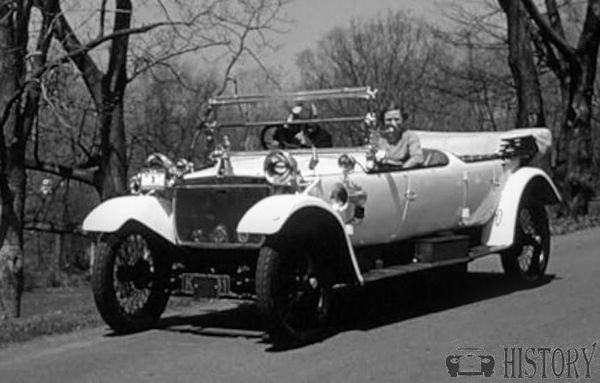
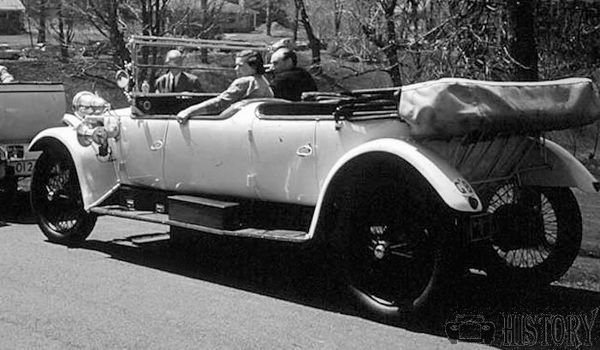
Lanchester Thirty-Eight
| (1910 1914) | |
|---|---|
 |
|
| Overview | |
| Manufacturer | The Lanchester Motor Company Limited |
| Production | 1910-1914 |
| Assembly | Sparkbrook, Birmingham |
| Designer | George Lanchester |
| Body and chassis | |
| Class | luxury carriage |
| Body style | Tourer |
| Layout | FR layout (engine between driver and front seat passenger) |
| Powertrain | |
| Engine | 4.856 L I6 Straight-six |
| Transmission | Lanchester patent compound epicyclic, 3-speeds and reverse, with separate high pressure lubricating system Clutch-Lanchester multi-disc for direct drive |
| Dimensions | |
| Wheelbase |
127.0 in (3,226 mm) (SWB) |
| Kerb weight | 35 cwt (LWB with standard touring body) |
The Lanchester Thirty-Eight was designed by the youngest brother, George Lanchester assisted by Frederick Lanchester acting as a consultant which was a reversal of their previous roles.
By the end of 1913 Frederick Lanchester would cease to have any connection with the company at all.
However as the 38 hp was a development of the preceding 28 hp which was designed by Frederick this car may be said to have more of Fred than of George in it.

| Lanchester 38 hp Engine | |
|---|---|
| Manufacturer | The Lanchester Motor Company Limited |
| Production | 1910-1914 |
| Combustion chamber | |
| Configuration | 6-cylinder in-line |
| Displacement | 4,856 cubic centimetres (296 cu in) |
| Cylinder bore | 101 mm (4.0 in) |
| Piston stroke | 101 mm (4.0 in) |
| Cylinder block alloy | 1910-1912 cylinders cast singly 1913-1914 in pairs |
| Valvetrain | Overhead, horizontal, 2 per cylinder, operated by rocking levers and flat plate springs Twin camshafts in upper half of crankcase |
| Combustion | |
| Fuel system | Lanchester patent wick fuel vapouriser H.T. magneto and Bosch trembler coil for starting |
| Fuel type | Petrol |
| Cooling system | Honeycomb radiator, thermo-syphon, two fans |
- Details
- Parent Category: L
- Category: Lanchester
- Hits: 40
Lanchester Fourteen Leda LJ200
 |
|
| Manufacturer | The Daimler Company Limited |
|---|---|
| Model years | 1950-1953 |
| Assembly | Coventry |
| Predecessor | Lanchester Fourteen Roadrider |
| Successor | none, Sprite withdrawn |
| Class | small luxury car |
| Body style | 4-door six-light saloon (coachbuilt = Fourteen) (all-steel = Leda) 2-door drophead coupé |
| Layout | FR layout |
| Engine | 1,968 cc (120.1 cu in) 4-cylinder in-line ohv |
| Transmission | 4-speed preselective self-changing gearbox and Fluid Flywheel |
| Wheelbase | 8'8" 104 in (2,600 mm) track 4'4" 52 in (1,300 mm) |
| Length | 14'7½" 175.5 in (4,460 mm) |
| Width | 5'6" 66 in (1,700 mm) |
| Kerb weight | 28 long cwt 0 qtr 0 lb (3,136 lb or 1,422 kg) |
| Related | Daimler Conquest |
The new Lanchester Fourteen was displayed to the press on 9 October 1950 the day before the public announcement. The only familiar feature was the fluid flywheel and pre-selective gearbox. It was planned that when the 300,000 square feet of factory space destroyed in the Coventry raids was completed the initially coachbuilt body would be replaced with an all steel body which would reduce the car's weight, enable a price reduction and permit shipment in a form suitable for assembly overseas. The Times regarded the new car's only features of technical interest to be the laminated leaves (usually bars) of the front suspension's springing and the automatic lubrication every time the car was started and warmed up. Aside from the front suspension the new chassis differed little from its pre-war version. The engine was new, a 1968 cc "four" replacing the 1809 cc "six".
Design and specifications
details in addition to tabled data
Engine
The engine was flexibly mounted isolating torque reactions. It was fitted with a statically and dynamically balanced three bearing crankshaft; big ends fitted with steel-backed white-metal liners; three bearing camshaft with steel-backed white-metal liners; air silencer ; automatic advance and vacuum control of the distributor with over-riding hand adjustment for varying grades of fuel.
Transmission
The usual Daimler transmission with fluid flywheel and pre-selective 4-speed epicyclic gearbox was provided. Hardy Spicer open propeller shaft with needle roller universal joint and hypoid bevel rear axle linked the engine and rear wheels.
Chassis
The frame was of box section and cruciform braced. Suspension was independent in front using laminated torsion bars with a torsional stabilising bar. At the rear there were half-ellipticsprings. Girling hydraulic shock absorbers and Girling hydro-mechanical brakes were fitted
Wheels and tyres - disc type bolt-on wheels were fitted with low pressure cushion tyres 6.7 x 15inches.
Standard body
Was an entirely new coachbuilt body. When supplied for export with the lighter all-steel body this car was known as the Lanchester Leda
Price
Standard coachbuilt 4-door six-light body £895
- Details
- Parent Category: L
- Category: Lanchester
- Hits: 26
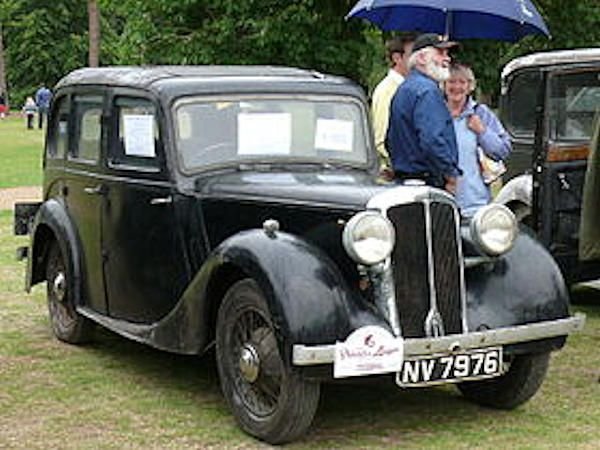
Lanchester Fourteen
1937 to 1940
 |
|
| Manufacturer | The Daimler Company Limited |
|---|---|
| Predecessor | Lanchester Light Six |
| Successor | Lanchester Fourteen |
| Class | small luxury car |
| Body style | 4-door six-light saloon 4-door four-light "razor-edge" sports saloon 2-door four-light four-seater coupé all with fully panelled or leathercloth roofs and quarters. |
| Layout | FR layout |
| Engine | 1,527 cc (93.2 cu in) 6-cylinder in-line ohv |
| Transmission | 4-speed preselective self-changing gearbox and Fluid Flywheel |
| Wheelbase | 8'6½" 102.5 in (2,600 mm) track 4'0" 48 in (1,200 mm) |
| Kerb weight | 25 long cwt 0 qtr 0 lb (2,800 lb or 1,270 kg) |
| Related | Lanchester Eleven |
The Lanchester Fourteen Roadrider, a new 6-cylinder Lanchester was announced by The Lanchester Motor Company Limited at the beginning of September 1936. The name Roadrider was chosen because of the special suspension features which were provided. It was stated to be the lowest priced six-cylinder Lanchester ever offered.This car replaced the previous 12 hp Light Six model with a larger six-cylinder (14 hp) engine again in the Lanchester Eleven chassis and body.
However the four-light four-door sports saloon was given a brand new very pretty "razor edge" body which proved to be not unlike the entirely new Roadrider shape introduced within twelve months.
Design and specifications
Chassis Engine and Transmission
These followed the customary Lanchester practice and the transmission included the Daimler fluid flywheel and the self-changing pre-selective four-speed gearbox. Final drive was by underslung worm gear.
Standard body
Magna type wire wheels and fully chromium plated bumpers were standard. There was a new range of coachwork. Upholstery was provided in a new style either in all leather or a combination of leather and cloth. The windscreen had remote-motor dual wipers operating from the bottom.
Prices
- chassis £250
- fabric topped saloon £325
- panelled topped saloon £330
- sports saloon £340
- coupé £330

