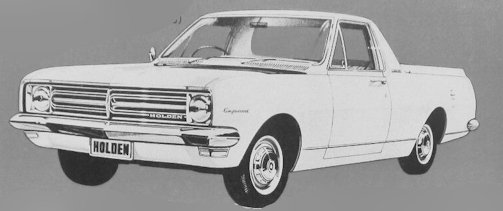
Holden
Holden Gemini TX / TC / TD
 |
|
|
Production period: |
1975 to 1979 |
|
Body versions: |
Saloon, station wagon, panel van, coupe |
|
Engines: |
Gasoline :1.6 litres (61-63 kW) |
|
Length: |
4133-4158 mm |
|
Width: |
1570 mm |
|
Height: |
1296-1363 mm |
|
Wheelbase: |
2404 mm |
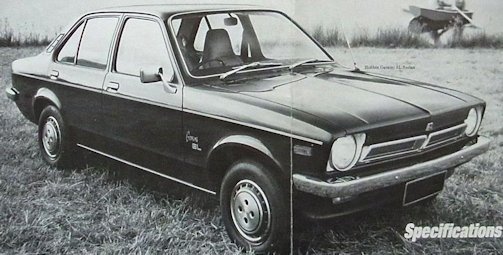
The Holden Gemini TX / TC / TD was manufactured from 1975 to 1979 by the Australian automaker Holden.
History
The Holden Gemini was manufactured by the Australian automaker Holden, the local offshoot of General Motors, according to design plans of the Japanese Isuzu Gemini in Brisbane.
Changes
TX Gemini (1975-1977)
TC Gemini (1977-1978)
TD Gemini (1978-1979)
The successor to the recently expired TA Torana presented Holden in March 1975. The TX Gemini was GM's first "world car”, which was launched in Germany as Opel Kadett C in the UK as Vauxhall Chevette was sold and in the USA as Chevrolet Chevette and Pontiac T1000. The Japanese version was called Isuzu Geminiand served as the basis for the Australian edition, albeit with different engine. The TX Gemini was only offered with a 1.6 -litre inline four-cylinder engine that delivered 63 kW of power. Later, the power was reduced to 61 kW. The buyers had the choice between a manual four-speed gearbox and a three-speed automatic transmission, both with middle shift. There was a 4-door sedan and a 2-door coupe, the former as a normal and better equipped SL version, the latter only as an SL version. From April 1976, there was for the Coupe still an A8T package called Fashion Pack On the tail plates of the first delivered in Australia Coupes was the name, 'Isuzu Holden' read.
PERFORMANCE
max power (DIN): 100 hp at 6.000 rpm
max torque (DIN): 101 1b ft, 14 kg m at 4,000 rpm 62.7 hp/l
max engine rpm: 6.500
max speeds: (I) 29 mph, 47 km/h; (II) 48 mph. 78 km/h; (III) 73 mph, 117 km/h; (IV) 106 mph, 170 km/h
power-weight ratio: 19.8 lb/hp. 9 kg/hp
Fuel consumption: 29.4 m/ imp gal, 24.5 m/US gal, 9.6 1 x 100 km.
Only for use on the racetrack, the coupe was equipped with a 1.3 l R4 engine with 52 kW power, which was supplied by Isuzu. Officially, this version was not offered.
In March 1977, the Gemini received a small facelift and became the TC Gemini. The grille, previously divided into two panels, was divided into 11 boxes with chrome frames, each once again divided vertically with narrow chrome strips. The fashion pack was now also available for the sedan. In April 1977, the even better equipped Sandpiper version was introduced, which had a black grille instead of the chrome.
In April 1979, the model presented significantly revised. Except for the simplest model, which still had round headlights, the TD Gemini had rectangular headlights and the grille was again simpler than previously designed with three horizontal chrome bars. The biggest innovation, however, were two new models, a van and a station wagon with 3 doors each. Side and rear parts of these vehicles were supplied by Opel from Germany.
The third transmission option was a manual five-speed gearbox. Saloon and coupe were now also available as SL / E version, which essentially corresponded to the earlier Sandpiper. In March 1979, the SL / E sedan was replaced by the much cheaper, but similarly equipped SL / X sedan.
Options and Accessories
Tri-matic automatic transmission with smart T' bar floorshift.
Air conditioning
Laminated windshield
Radial tyres
45 amp. hour heavy-duty battery
Nylon cloth inserts
Power-boosting for brakes Lower pedal pressures when applied.
Insect Screen Stops insects clogging radiator core. (Not available for models with air conditioning.)
Headlamp Screens Tough, chrome-plated, steel mesh . hinged for easy cleaning.
Front and Rear Mud Flaps
Left Hand Exterior Mirror
Weathershield Deflects wind and rain so that you can drive in comfort with window open.
Sunshade Keeps car cool, reduces sun glare and eye strain.
Parcel Shelf Even more storage space for those
Tow Bar and Tongue
Trailer Wiring Harness
Stereo Tape Player
The TX Gemini was built 43,009 times, created by the TC Gemini 17,256 copies and the TD Gemini 42,396 pieces.
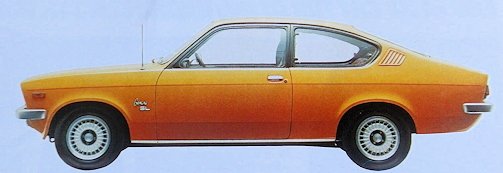
Holden Sunbird
 |
|
|
Make: |
Holden |
|
Production period: |
1976 to 1980 |
|
Class: |
Motor Car |
|
Body versions: |
Saloon, coupé |
|
Engines: |
Gasoline:1.9 litres(62-75 kW) |
|
Length: |
4493 mm |
|
Width: |
1704 mm |
|
Height: |
1328 mm |
|
Wheelbase: |
2586 mm |
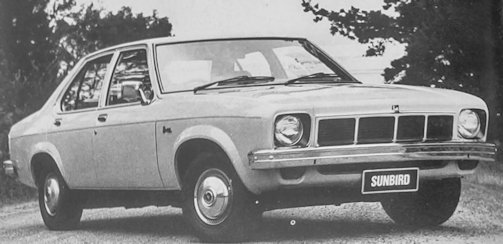
The Holden Sunbird was a mid-size car that was manufactured by Holden in Australia in the model years 1976 to 1980.
History
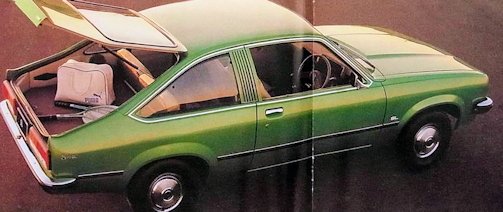
The Holden Sunbird came as a four-cylinder variant of the LX / UC Torana A saloon/sedan with 4 doors; 4 seats with separate front seats with reclining backrests. Four-cylinder Sunbird and six-cylinder Torana have the same saloon and hatchback coupe body shells.
Updates
LX Sunbird (1976-1978)
UC Sunbird (1978-1980)
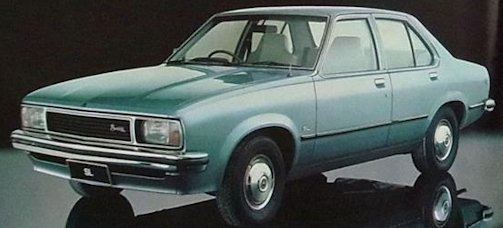
By November 1976, the cars were still called LX Torana, then became the model with the weakest engine of the LX Sunbird. The 4-door sedan had a four-cylinder in-line engine with 1,897 cm 3 capacity and 100-102 bhp (74-75 kW) power, of Opel was supplied. The simply equipped car had a manual four-speed gearbox as standard or, on request, a three-speed automatic transmission. The appearance was essentially that of Torana; only small changes (e.g., radiator grille and chrome hubcaps) differentiated it. By May 1977 Holden brought out as the second model a 3-door coupé.
Features
- Radial Tuned Suspension.
• Push-button radio with lockdown aerial.
• Electric heated rear window
• Full foam reclining front bucket seats,
• Body stripes.
• Electric clock
• Cigarette lighter.
• Locking glove-box With courtesy light.
• Passenger assist handles _
• 2-speed power-boosted heater/ventilation
• Full wheel covers.
• Multi-function column control stalk.
• Power front disc brakes, rear drums.
• Inertia reel front seat belts.
• Rosewood pattern dash.
• Loop pile carpets,
• Soft grip steering wheel.
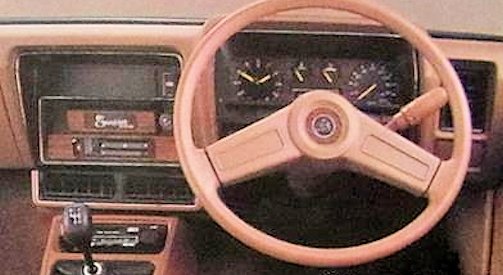
The successor, the UC Sunbird, appeared in March 1978, in three trim levels: Sunbird, Sunbird SL, and Sunbird SL / E. New coil springs, dampers and anti-roll bar and new front suspension geometry have improved ride and cornering and there is a new Salisbury axle. The rack and pinion steering has also been improved. Seats, trim and instruments were also redesigned this year, The simple Sunbird was only available with manual transmission. From the predecessor, the vehicle differed by rectangular headlights and a modified front end.
PERFORMANCE: 1.9L
- max power (SAE): 96 hp at 5,200 rpm
- max torque (SAE): 116 1b ft. 16 kg m at 3,600 rpm
- max engine rpm: 6.000: 48.5 hp/l
- max speed: about 93 mph. 150 km/h
- power-weight ratio: 26.7 lb/hp, 12.1 kg/hp
The Opel engines delivered still 92-98 bhp (68-72 kW), but were replaced in September 1978 by the Holden "Starfire" engine. This was slightly smaller in displacement (1892 cm 3) and made only 84 bhp (62 kW). End of 1979, the coupés (along with the sister model Torana) also. The 4-door sedans were built until September 1980.
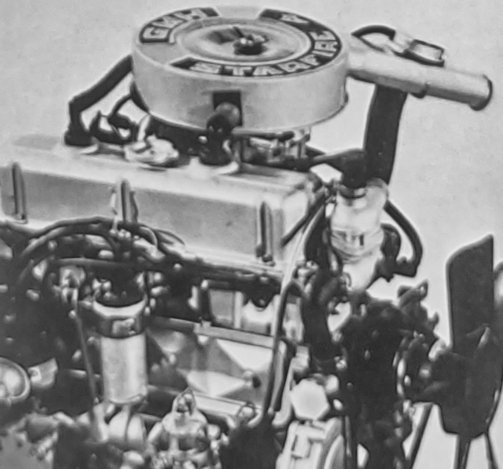
PERFORMANCE: Holden "Starfire" engine
- max power: 81hp at 4800rpm
- max speed: 99 mph. 159 km/h
- power. weight ratio: 31.S lb/hp. '4.3 kg/hp
- Fuel consumption: 28.2 m, lmp gal. 23.5 m/US
From the LX Sunbird / Torana originated 65,977 copies. The UC Sunbird / Torana was built 53,008 times. Initially, the Sunbird was replaced by a four-cylinder version of the Commodore, from 1982 then by the new Camira.
Holden Torana first Generation (HB)
 |
|
|
Production: |
1967 to 1969 |
|
Class: |
Motor Car |
|
Body versions : |
Sedan |
|
Engines: |
Gasoline :1.2 liters |
|
Length: |
161.30 in, 4,097 mm |
|
Width: |
63 in, 1,600 mm |
|
Height: |
53.20 in, 1,351 mm |
|
Wheelbase : |
95.80 in, 2,433 mm |
|
Curb weight : |
1,674 1b, 759 kg |
The first generation Holden Torana (HB) was built in Australia from 1967 to 1969.
History
The Holden Torana was a car which Holden made in Australia from 1967 to 1980 as successor to the Vauxhall HA Viva . The Three Holden Torana models available Holden Torana sedan, Holden Torana Special (S) sedan, and Torana Super Luxury (SL) sedan.
The name comes from an Australian language and means "fly".The first Torana was introduced to the Australian market in May 1967 and replaced the Vauxhall HA Viva as a facelift version of the Vauxhall HB Viva. It was available as a 2-door sedan with 12 "wheels and had a 1.2-liter inline four-cylinder engine and a four-speed manual transmission with floor-mounted gearshift and gearbox ratios of 1st 3.765, 2nd 2.213, 3rd 1.404, 4th 1 and reverse 3.707. On request, there was a three-speed automatic transmission from Borg-Warner.
The cars stopping power of eight inch diameter drum brakes With a total braking area Of 125.65 square Inches. Corrosion resistant brake lines and rayon braid brake hoses contribute significantly the reliabilit and durability or HoldenTorana braking system. Disc brakes are optional on all three models.On request there was a brake booster and front disc brakes.The front suspension with its long arm and short Wishbone units together With rubber bushed diagonal brace struts was independent with wishbones, coil springs and telescopic dampers at the rear rigid axle, trailing lower radius arms, upper blique radius arms, coil springs and telescopic dampers.Combined with Wide track, and low centre Of gravity for weight perfect distribution of 47% to the front axle,and 53% at rear axle giving outstanding stability and cornering control. Along with friction-reducing ball bearing incorporated in the steering column sleeve.in giving light and positive steering that requires only 3.4 turns from lock to lock.

In March 1968 there was as an optional extra the "Series 70" engine.This was higher compressed, the camshaft had higher cams and there was a Stromberg CD single carburetor along with the Zenith downdraught single barrel carburettor or Optional 2 Zenith carburettors. So the new engine reached 51 kW (69 bhp). Along with this engine, there were front disc brakes as standard. The weaker engine was then no longer in connection with the automatic transmission. In addition, there was a sports model, which was named after the well-known Australian racing driver Jack Brabham Brabham Torana .

With built-in safety features. Deep padded instrument panel plus dished steering wheel,collapsible sun visors, shatter-proof interior mirror, lap/ sash scat belts.
All models are fitted With glove compartments. Full Width parcel trays are standard in special:and super luxury models. Interior Hip room in the front is 51.5 inches, and in the rear. 50.3 inches. Leg room is 37.2 inches for the front seats and 34.8 inches for the rear. Dash and doors have been treated With a special noise insulation compound and floors are insulated with asphalt impregnated noise deadening material and jute felt. Noises are isolated at their source by the use of special rubber mountings where the front and rear suspensions, engine, gearbox and exhaust system bolted to the body.Maximum comfort has been achieved by curving and padding Seats in polyether foam, for back and side support and by providing leading cushion edges for proper leg comfort. Upholstery in the Holden Torana is in high quality pleated Sadlon, the exclusive expanded Vinyl material Which is also durable. The super luxury model are fully carpeted and colour matched to the upholstery, and the floors or standard and special models feature easy to clean rubber matting.
With four colour coats of gloss retaining acrylic lacquer are sprayed On and buffed to produce the Holden "magic mirror" finish.There is a choice of 13 colour combinations and two-tone optional for special and Super luxury models. Vinyl roof is also optional for the super luxury
Under the body intensive anti—corrosion production technique, the Car body receives a complete phosphate coating immediately after degreasing. Next comes an anti-rust primer
dip, followed by an under and over spray with primer surfacer this includes the inner surfaces of the sills, Which in addition are treated With a coating aluminised bituminised paint to give hidden surfaces special protection.
PERFORMANCE
- Engine capacity: 70.70 cu in, 1,158.56 cu cm
- Fuel consumption: 34 m/imp gal, 28.3 m/US gal, 8.3 1 x 100 km
- Max speed: 80 mph, 128.8 km/h
- Power-weight ratio: 29.8 lb/hp, 13.5 kg/hp
- Acceleration: standing 1/4 mile 21.1 sec, 0—50 mph (0—80 km/h) 13.5 sec
- Speed in direct drive at 1,000 rpm: 15.7 mph, 25.3 km/h.
The engine of the Brabham Torana also had the "Series 70" engine, but with two Stromberg CD carburetors and sporty air filter. Together with the low backpressure exhaust system, this increased the power to 59 kW (79 bhp). The Brabham Torana also had wide wheels and tires, brake boosters and front disc brakes as standard, another caption and black trim. An automatic transmission was not available on this model.
In September 1968, the Torana for 1969 was introduced, also HBII Torana. The new series had a body made in Australia and was also available as a 4-door sedan. The body of the four-door was also delivered to the UK for the Vauxhall Viva. The cars had now safety steering columns, deeper recessed instrument panel and new steering wheels of the large Holden. From England, no components were imported, so there was no operation of the parking and high beam and the horn on the pitman arm more. The high beam switch was now in the footwell like the big Holden. There was now also a dual-circuit brake system, but the front disc brakes were still optional on the weakest engine. The Brabham Torana was also, but only as a two-door. This now had the sport steering wheel of the contemporary Monaro GTS, many additional instruments, other lettering and black trim.
Optional Equipment:
- Front wheel disc brakes
- whitewall tubeless tyres
- black trim
- Two tone paint treatment
- Vinal roof trim
- Outside air heater and demister
HB Torana was built until October 1969. A total of 16,318 of the first series (with imported from the England body) and 20,243 pieces of the second series (with Australian body).
|
model |
description |
type |
Construction |
|
HB-82211 |
Torana |
2 doors |
05 / 1967-09 / 1968 |
|
HB-82411 |
Torana S. |
2 doors |
05 / 1967-09 / 1968 |
|
HB-82611 |
Torana SL |
2 doors |
05 / 1967-09 / 1968 |
|
HB-82211 |
Torana |
2 doors |
09 / 1968-10 / 1969 |
|
HB-82411 |
Torana S. |
2 doors |
09 / 1968-10 / 1969 |
|
HB-82469 |
Torana S. |
4 doors |
09 / 1968-10 / 1969 |
|
HB-82611 |
Torana SL |
2 doors |
09 / 1968-10 / 1969 |
|
HB-82669 |
Torana SL |
4 doors |
09 / 1968-10 / 1969 |

Holden Monaro 1st Generation (HK / HT / HG)
 |
|
|
Production period: |
1968 to1971 |
|
Class |
Motor Car |
|
Body versions: |
Coupe |
|
Engines: |
Gasoline : 2.6-5.7 litres |
|
Length: |
184.80 in, 4,694 mm |
|
Width: |
71.40 in. 1816 mm |
|
Height: |
54.90 in, 1,394 mm |
|
Wheelbase: |
111 in, 2,819 mm |
|
Curb weight: |
2.585 lb. 1,173 kg |
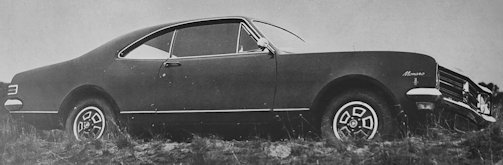
The Holden Monaro 1st Generation was built from 1968 to 1971 in Australia.
History
The Monaro introduced a two-door hardtop (no B-pillar) based on the contemporary sedan Holden Belmont the HK series is and was in the basic version, as GTS and the GTS 327 offered. The basic model was available either with 2.6 l or 3.05 l in-line six-cylinder, the GTS with the 3.05 l R6 in stronger version or a 5.0 l V8. In the GTS 327, a 5.4-liter V8 from Chevrolet did its job. A GTS 327 won in 1968 straight from the Bathurst 500-mile race. In early 1969, the Australian journal Wheels chose the Monaro as "Car of the Year 1968".The front suspension was independent with wishbones, coil springs,anti-roll bar and telescopic dampers at te rear rigid axle, semi-elliptic leaf-springs and telescopic dampers. Optional an 4-speed mechanical gearbox or 2-speed automatic gearbox also limited slip final drive as option along with power-assisted steering.
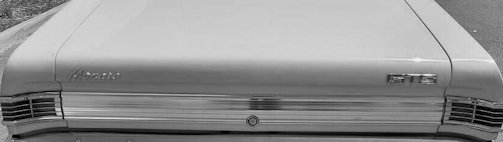
In June 1969, the Monaro HK received a first facelift and now listened to the name 'Monaro HT' '. At the same time, the 5.4-liter V8 was replaced by a 5.7-liter V8 in the top-of-the-line model, its designation changed accordingly to GTS 350 (the figures indicate the cubic inch of the respective displacement). This model also won the Bathurst race in 1969.
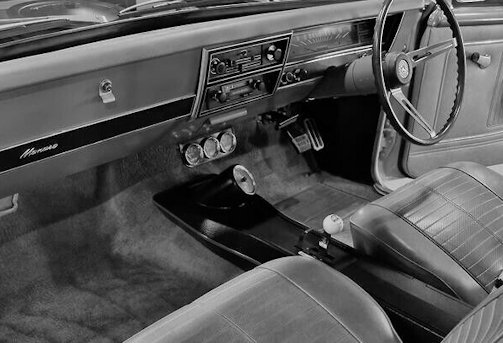
1970 followed again slightly revised Monaro HG. Distinguishing features of HT and HG compared to the HK were the plastic radiator grille (the HK it was made of metal), round tachometer on the dashboard instead of quadrangular instrument on the centre console, rubber bearings on the front axle (instead of bearings made of sintered bronze) and enlarged, drawn to the body corners taillights,to distinguish the variants also on the shape of the decorative stripes. For the HK, a strip ran along the left side of the bonnet and bonnet, the HG the stripes ran along the upper flanks and ended just in front of the C-pillar. The GTS models in HT and HG version had air scoops on the bonnet. In design, the first-generation Monaro is similar to the Opel Rekord C coupe; however, the Holden was a good deal bigger.
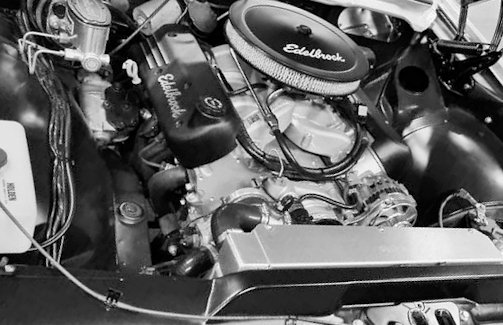
- PERFORMANCE: 161 cu in
Engine capacity: 161 cu in, 2,638.31 cu cm
Fuel consumption: 27.4 ml imp gal, 22.8 ml US
Max speed:96 mph, 154.6 km/h
max power (SAE): 114 hp at 4,400 rpm
max torque (SAE): 157 1b ft. 21.7 m at 2,000 rpm
max engine rpm: 5,200
specific power: 43.2 hp/l
power-weight ratio: 22.7 lb/hp, 10.3 kg/hp;
acceleration: standing 1/4 mile 20.6 sec. O—50 mph (O—80 km/h) 11.4 sec - 186 cu in, 3,047.98 cu cm
- 126 hp max speed 100 mph, 161 km/h)
- 145 hp (max speed 110 mph, 177 km/h)
- V8 engine, 307 cu in, 5,030.81 cu cm
max power (SAE) 210 hp at 4,600 rpm
max torque (SAE)300 1b ft, 41.4 kg m at 2,400 rpm
max speed 117 mph, 188.4 km/h
For the Monaro of the types HK, HG and HT a total of 29,529 were produced.
|
model |
description |
Vehicle type |
Construction period |
|
HK-80337 |
Monaro coupe |
Hardtop coupe, two-door |
1968-06 / 1969 |
|
HK-80737 |
Monaro GTS Coupe |
Hardtop coupe, two-door |
1968-06 / 1969 |
|
HK-80837 |
Monaro GTS 327 Coupe |
Hardtop coupe, two-door |
1968-06 / 1969 |
|
HT-80337 |
Monaro coupe R6 |
Hardtop coupe, two-door |
1969-07 / 1970 |
|
HT-80437 |
Monaro Coupe V8 |
Hardtop coupe, two-door |
1969-07 / 1970 |
|
HT-80737 |
Monaro GTS Coupe R6 |
Hardtop coupe, two-door |
1969-07 / 1970 |
|
HT-80837 |
Monaro GTS Coupe V8 |
Hardtop coupe, two-door |
1969-07 / 1970 |
|
HT-81837 |
Monaro GTS 350 Coupe V8 |
Hardtop coupe, two-door |
06 / 1969-07 / 1970 |
|
HG-80337 |
Monaro coupe R6 |
Hardtop coupe, two-door |
1970-06 / 1971 |
|
HG-80437 |
Monaro Coupe V8 |
Hardtop coupe, two-door |
1970-06 / 1971 |
|
HG-80737 |
Monaro GTS Coupe R6 |
Hardtop coupe, two-door |
1970-06 / 1971 |
|
HG-80837 |
Monaro GTS Coupe V8 |
Hardtop coupe, two-door |
1970-06 / 1971 |
|
HG-81837 |
Monaro GTS 350 Coupe V8 |
Hardtop coupe, two-door |
1970-06 / 1971 |
Holden Belmont Kingswood First Generation (HK)
 |
|
|
Manufacturer |
Holden (General Motors) |
|
Production |
1968 to 1969 |
|
Class |
Motor Car |
|
Body style |
|
|
Wheel base |
111 in, 2,819 mm |
|
Length |
184.80 in, 4,694 mm |
|
Width |
71.40 in, 1,814 mm |
|
Height |
55.60 in, 1,412 mm |
|
Ground clearance |
7.20 in, mm |
|
dry weight |
2,521 1b, 1,144 kg V8 2,658 1b, 1,206 kg |
The 1960s Holden Belmont and Kingswood HK first Generation was built in the model years from 1968 to 1969.
History
The Holden Belmont and Kingswood were built from 1968 to 1977 by Holden in Australia as a successor to the standard. In parallel, the Holden Kingswood replaced the special the full-size Holden range of family cars comprised the Holden Standard, the Holden Special, and Holden Premier models. This was still manufactured until 1979 as Kingswood and Kingswood SL. The Kingswood Utility was manufactured until 1985. Manufactured in a choice of sedan and station wagon with Commercial utility coupé, panel van, on more basic variants were offered.
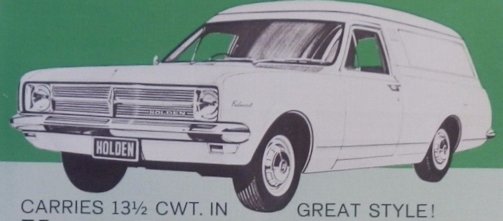
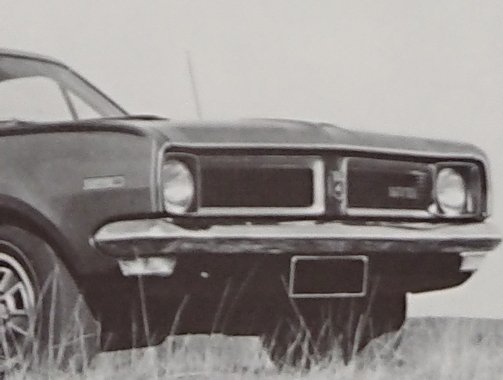
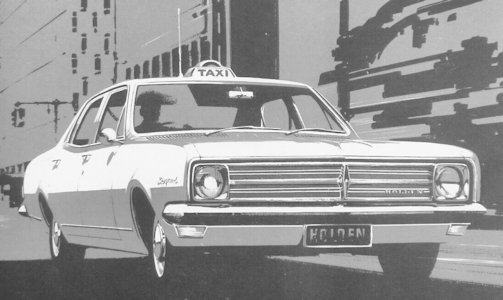
In January 1968, the Holden were introduced under a new name. The HR replacing the standard was the Holden Belmont this became the Belmont HK, the HR Special the Kingswood HK. Only the luxury Premier retained its name. The cars increased in wheelbase and length by 5 "and were given a new, contoured front, with the centre of the radiator grille and the vehicle corners with the headlights going forward. The new grille was horizontally and vertically divided by a chrome strip. Over the rear wheel arches there was a fashionable hip kink and there were wide taillights. In addition to Belmont, Kingswood and Premier in this series were also the sports coupe Monaro and the luxury sedan Brougham manufactured, Belmont panel van with payload of 13.5cwt. and cargo space of over 90 cubic feet, tailgate width of 49.2 ins and cargo height 40 ins also the pickup ute was available as Belmont and Kingswood with options for bucket seats and fitted with toughened underbody with protective steel skids, for extra strength and heaver shock absobers along with a special Taxi version.
Engines
- 2.6L GMH '161' I6
- 3.0L GMH '186' I6
- 3.0L GMH '186S' I6
- 5.0L 'Chevrolet 307' V8
- 5.4L 'Chevrolet 327' V8
In addition to the well-known six-cylinder engines with 2.6 l and 3.05 l displacement and 108-145 bhp (79-107 kW), there were for the first time at Holden V8 engines. Chevrolet contributed a 5031 cc and 210 bhp (154 kW) engine, and the other GM brands the 2-door coupe Monaro GTS came with a 5359 cc V8 and 250 bhp (184 kW) V8s. Transmission 3 or 4 speed manual and 2-speed "Powerglide" automatic option.
PERFORMANCE
- 161 cu in
Engine capacity: 161 cu in
Fuel consumption: 27.4 m/imp gal, 22.8 m/US gal, 10.3 x 100 km
Max speed: 92 mph, 148 km/h
max power (SAE): 114 hp at 4,400 rpm
max torque (SAE): 157 1b ft, 21.7 kg m at 2,000 rpm
max engine rpm: 5,200
specific power: 43.2 hp/l
power-weight ratio: 22 lb/hp, 10 kg/hp
acceleration: standing 1/4-mile 20.6 sec, 0-50 mph (0-80 km/h) 11.4 sec - 186 cu in
3,047.98 cu cm
126 hp (max speed 96 mph, 154.6 km/h) and 145 hp (max speed 106 mph, 170.7 km/h) - 307 cu in
V8 engine capacity 307 cu in
max power (SAE) 210 hp at 4,600 rpm, max torque (SAE) 300 1b ft, 41.4 kg m at 2,400 rpm, max speed 113 mph, 181.9 km/h
The HK range produced just under 200,000 and was replaced by the Holden HT series in May 1969.
|
model |
description |
Vehicle type |
Construction period |
|
HK-80135 |
Belmont Wagon |
Combi, five-door |
01 / 1968-05 / 1969 |
|
HK-80169 |
Belmont Sedan |
Limousine, four-door |
01 / 1968-05 / 1969 |
|
HK-80170 |
Belmont Panelvan |
Delivery van, three-door |
03 / 1968-05 / 1969 |
|
HK-80180 |
Belmont Utility |
Pickup, two-door |
03 / 1968-05 / 1969 |
|
HK-80335 |
Kingswood Wagon |
Combi, five-door |
01 / 1968-05 / 1969 |
|
HK-80369 |
Kingswood Sedan |
Limousine, four-door |
01 / 1968-05 / 1969 |
|
HK-80380 |
Kingswood Utility |
Pickup, two-door |
03 / 1968-05 / 1969 |