
Datsun
Datsun Sports 1000 S211
 |
|
|
Sales period |
1959 to 1960 |
|
Class |
Sports Car |
|
body type |
convertible |
|
Drive system |
FR |
|
engine |
Inline 4 cylinder 1.0L |
|
transmission |
4 speed MT |
|
Wheelbase |
2,220mm |
|
full length |
3,936/4,025mm |
|
full width |
1,472/1,475mm |
|
Overall height |
1,407/1,365mm |
|
vehicle weight |
765/890kg |
|
brakes |
4-wheel drum |
|
Designed by |
Yuichi Ohta |
|
maximum speed |
115/132km/h |
The Datsun Sport 1000 was a roadster that was manufactured by Nissan from 1959 to 1960.
History
The Datsun Sport 1000 presented a cheaper alternative to the British open sports cars of MG and Triumph at the time. Successor was the 240Z, which was still called in Japan Fairlady.
The first Datsun Sports was the S211 from 1959. This had the Datsun C engine, a four-cylinder in-line with 988 cc and a power of 37 bhp (27 kW). There were only 20 copies. Yuichi Ohta, who previously designed the Datsun DC-3 and prototype S211 A80X, also designed this car. Both the A80X and the S211 had bodies made of re-inforced fibreglass plastic resin built by Tonouchi Industria.
November 1957 - Datsun Sport 1000 announced at an automobile exhibition. Initially, domestic sales were also planned. By October 1958 - Production model exhibited at the Tokyo Motor Show. The body was made of FRP, a new material that was popular in Japan at the time, and it was a four-seat open model. June 1959 - Production begins.

1960 - A plated moulding was placed on the side of the body, creating a two-tone colour bordering the moulding. The total production since the previous year was only 20 units, handbuilt only in small numbers and they were right-hand drive. Most were test sold in North America as 1960 models and replaced with the steel body SPL212.
The chassis was derived from the ladder frame of the Datsun Truck 220 Series / Sedan Model 211 (predecessor of the Bluebird).
The engine is an OHV 988cc C type with 4 speed manual floor change gearbox, the engine same as the truck and sedan, but with a two-barrel carburettor, it produces 34 horsepower (25.35kW) / 6.59kgm (64.7Nm), and the maximum speed is announced to be 115km/h.
- Max power 34 bhp. at 4,400 rpm
- 47.73 ib.ft. at 2,400 rpm
- Max speed 115km
Datsun Bluebird PL 610 U series
 |
|
|
Class |
Motor Car |
|
Production |
1971–1976 |
|
Assembly |
Japan, Australia, New Zealand |
|
Body style |
4-door sedan |
|
Drive |
rear wheel drive |
|
Engine |
1595 cc L16 Inline 4 |
|
Transmission |
4-5 speed manual |
|
Wheelbase |
|
|
Length |
|
|
Width |
1,600 mm (63.0 in) |
|
Height |
1,415 mm (55.7 in) |
|
Curb weight |
1,035 kg (2,282 lb) |
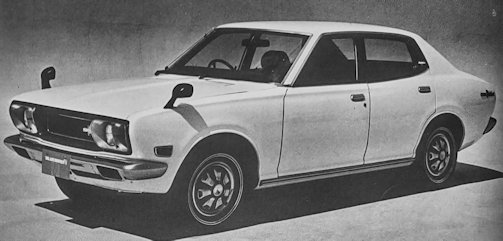
The Bluebird 610 series was launched in Japan in August 1971 badged as the U series.
History
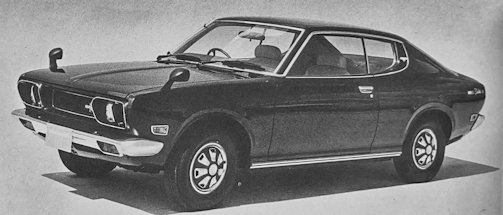
In the summer of 1971, the PL 510 (with its previous Datsun 1600, Datsun 160, Datsun 180B and Datsun 610 exports in the US) was followed by a more American-style body U series in sedan, coupe and station wagon 1.6- and 1.8-liter four-cylinder engines in a variety of variants was offered. The engine was equipped with an in-line 4-cylinder 1.6L (L16) and 1.8L (L18). The grades are STD, DX, GL, SSS, SSS-L, and SSS-E for Japan only equipped with Bosch fuel injection.
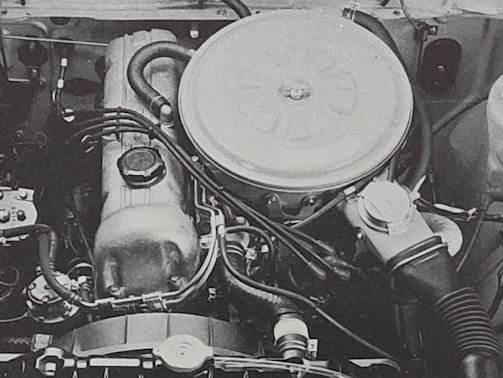
- PERFORMANCE: 1.6L
max power (DIN): 100 hp at 6,000 rpm
max torque (DIN): 98 1b ft, 13.5 kg m at 4,000 rpm
62.7 hp/l
fuel consumption: 28.2 m/ imp gal, 23.5 m/US gal, 10 1 x 100 km.
power-weight ratio: 21.2 lb/hp, 9.6 kg/hp
max speeds: (l) 28 mph, 45 km/h; (Il) 45mph, 73 km/h; (Ill) 71 mph, 115 km/h; (IV) 99 mph, 160km/h - PERFORMANCE: 1600 SSS
max power (DIN): 105 hp at 6,200 rpm
max torque (DIN): 100 1b ft, 13.8 kg m at 4,200 rpm; 65.8 hp/l
max speed: 103 mph, 165 km/h
power-weight ratio: 20.7 lb/hp, 9.4 kg/hp. - PERFORMANCE: 1800 SSS
max power (DIN): 115 hp at 6,000 rpm
max torque (DIN): 112 1b ft. 15.5 kg m 4,000 rpm
65 hp/l
max speed: 109 mph, 175 km/h
power weight ratio: 19.2 lb/hp, 8.7 kg/hp. - PERFORMANCE: 1800 SSS-E
max power (DIN): 125 hp at 6,200 rpm
max torque (DIN): 116 1b ft, 16 kg m at rpm
70.6 hp/l
power-weight ratio: 17.9 lb/hp, 8.1 kg/h
The sedan and hardtop feature a so called "J line" under the side window, and its colour is in addition to the standard dark Gray, if the outer plate colour is white, the J line will be black, and if it is navy blue metallic, you can also choose orange. Due to the shift to a higher car class, the car body became larger, and the curved surface tone in line with the trend of the time gave it a strong design, and the car name was changed to "Bluebird U" with a surname of "U”. The slogan at the time of release is "Heartwarming Bluebird U series”. A fulfilling family Bluebird U" (since 1973). In the conventional 510 series, only the low-priced 1.4L and 1.6L models of the 2-door sedan/4-door sedan continued to be produced until December 1972 and were sold together in the home market with STD (Standard trim) GL (Grand Luxe), the sports SSS (Super Sports Sedan) with higher output engine with twin carburettors, or top of the range DX (Deluxe)
For The home market equipped with an inline 6-cylinder 2.0L L20 type, the 2000GT series GT, GT-E, GT-X, GT-XE with a 150mm longer wheelbase and a 55mm longer front overhang. is added. The front area was treated like the American Pontiac at the time, and the air outlet-like treatment of the scuttle was reminiscent of a shark's gills. large sales did not happen due to the oil crisis and exhaust gas regulations to help with this Nissan introduced their NAPS emissions system by 1975 along with facelift was made with changes to the grille, rear lights and interior, the coupe received a five-speed gearbox.
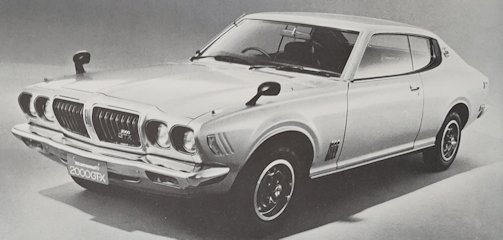
- PERFORMANCE: 2.0L GTX-E
max power (DIN): 130 hp at 6,000 rpm
max torque (DIN): 123 1b ft, 17 kg m at 4,400 rpm
max engine rpm: 6.000
65.1 hp/l
max speed: 112 mph, 180 km/h
power- weight ratio: 20.3 lb/hp, 9.2 kg/hp.
- August 10, 1971 - Released.
- August 1972 - SSS-L was added to the 1.8L sedan, and a 5-speed M/T car was added to the 1.6L EGI and SSS series as part of the improvement. In addition, discs are used for the front brakes of DX/STD grades, excluding vans. Passenger car road wheels changed to 14 inches, SSS car fender mirrors changed to square 5-speed manual transmission available in the Japanese market and also Australia.
- August 1973 - Changed the design of the rear combination lamp around the front grille with a minor change. Added 2000GT series.
- September 1975 - 2.0L EGI car, 1.6L, 1.8L, 2.0L carburettor specification car in October conforms to the 50 years exhaust gas regulation.
- February 1976 - 2.0L EGI car conforms to 1.6L, 1.8L EGI car in March 1951 emission regulations.
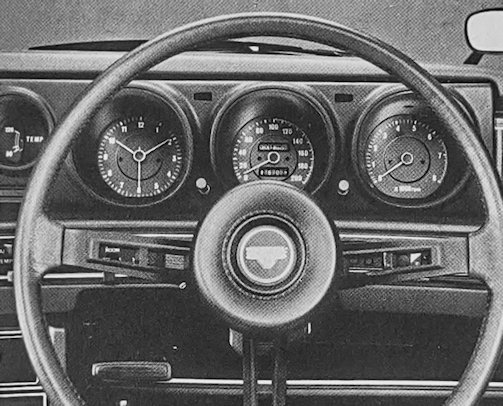
Datsun Sports Fairlady 1600 SP311
 |
|
|
Production period: |
1965 to 1970 |
|
Class: |
Sports car |
|
Body versions: |
Roadster |
|
Engines: |
Gasoline:1.6 litres 4 cylinders |
|
Length: |
155.65 in, 3,954 mm |
|
Width: |
58.85 in, 1,495 mm |
|
Height: |
51.40 in, 1,306 mm |
|
Wheelbase: |
89.75 in, 2,280 mm |
|
Curb weight: |
2,029 1b, 920 kg |
The Datsun Sports Fairlady roadster 1600 SP311 / SPL311 type was a small roadster built from the mid-1960s to 1970 sold as the Fairlady 1600, or the Datsun Sports 1600.
History
The new model was first shown at the 1964 Tokyo Motor Show and released in May 1965 the "Fairlady 1600" (SP311 type) equipped with an in-line 4-cylinder OHV 1,595cc R-type engine (90 horsepower / 6,000 rpm). The engine, transmission, chassis, etc. are the same as the " Silvia ". There were many changes in 1965. The 1.5-liter SP310 remained in production until January, but was given the new SP311 and SPL311 models with a new Nissan water cooled R16 engine with 2 SCI-Hitachi carburettors later cars with a pair of SU carburettors Early engines with 3 crankshaft bearings in later SPL311 had an improved 5 main bearings both with cast iron cylinder block and cylinder head.
PERFORMANCE
- Engine capacity: 97.33 cu in, 1,595 cu cm
- Fuel consumption: 27.4 m/imp gal, 22.8 m/US gal, 10.31 x 100 km
- Max speed: 106 mph, 170.7 kmlh
- Max power (SAE): 96 hp at 6,000 rpm
- Max torque (SAE): 104 1b ft, 14.3 kg m at 4,000 rpm
- Max engine rpm: 6,000
- Specific power: 60.2 hp/l
- Power-weight ratio: 21.2 lb/hp, 9.6 kg/hp
- Acceleration: standing 1/4 mile 17.6 sec
- Max speeds: 34 mph, 54.7 km/h in 1st gear; 53 mph, 85.3 km/h in 2nd gear; 81 mph, 130.4 km/h in 3rd gear; 106 mph, 170.7 km/h in 4th gear
The new Fairlady 1600 had 14 "wheels and small exterior changes. The chassis of box-type ladder frame, with X reinforcements. The front suspension as independent with wishbones, coil springs, anti-roll bar, and telescopic dampers at the rear rigid axle, semi-elliptic leaf springs with telescopic dampers. The new engine produced 96 bhp (71 kW). The front brake was changed from a drum brake (two-leading type) to disc brakes now with a total of 140.65 sq. in, 907.19 sq. cm linings for stopping power and the fully synchromesh gearbox was also strengthened. Distribution of weight was 56% at front axle and 44% to rear axle. It was also built as Nissan Silvia and was even the first car with Nissan's new R engine, a further development of the G-engine with 1,488cc. Considering the speed increase, small-diameter wheels and a low-floor frame were adopted to lower the centre of gravity.

Later in 1966 the Fairlady S equipped with a special B680X engine (in-line 6-cylinder DOHC 1,992cc, 190 horsepower / 7,600 rpm) in the "4th Clubman Race" (preliminary race for the Japanese Grand Prix) (Treated as a prototype machine) entered the race (Driver: Kenjiro Tanaka) and took pole position, but retired (winner was the Toyota RTX, which was also a first-time entry, a prototype of the later 1600GT). In the GT II class, the Fairlady 1600 wins.
In November 1967 changes include increased windshield screen, adoption of collapsible steering shaft for the first time in Japanese cars, addition of dash pad and headrest, 3-point seat belt, door outer handle, switch, shape of protrusions such as rear-view mirror changed to comply with North American safety standards (Motor Vehicle Safety Standard). Models from May 1965 to October 1967 are called "low windscreens", and models after November 1967 are called "high windscreens" to distinguish them.
The SP311 remained in production until April 1970.
Datsun Sports 1500 SP310 FairLady
 |
|
|
Production: |
1963 to 1965 |
|
Class: |
Sports Car |
|
Body versions: |
Roadster |
|
Engines: |
Gasoline:1.5 litres |
|
Length: |
155.63 in, 3,953 mm |
|
Width: |
58.86 in, 1,495 mm |
|
Height: |
51.38 in, 1,305 mm |
|
Wheelbase: |
89.76 in, 2,280 mm |
|
Dry weight: |
1,991 1b, 903 kg |
The Datsun Sports 1500 (SP310) was a small roadster built in Japan in the 1960s.
History
Datsun's first real sports cars were the SP310 Fairlady 1500 (right-hand drive) and as the SPL310 for left-hand drive.Exhibited as "Datsun Fairlady 1500" at the Tokyo Motor Show in October 1961. The chassis is a diversion of the Datsun Bluebird 310 series, with front wheel independent suspension, wishbones, coil springs, anti-roll bar, telescopic dampers, and an box-type ladder frame X-shaped reinforcement member added between the front and rear suspension support parts to further increase rigidity with distribution of weight at 54.6% front axle and 45.4% at rear axle,at the rear rigid axle, semi-elliptic leafsprings, telescopic dampers. This member is also a major feature of the S310 type family, which includes Silvia.

The car was well equipped with a transistor radio, and hardtop. The first SP310 also had a special third seat built in laterally left-facing behind the front seats. Although many British fans brands thought that the Datsun Fairlady was a copy of the MGB. Considering the time, it takes to convert a production line to a new model, it is equally inconceivable that the Datsun had copied the MG, and vice versa. However, the two cars have some then common styling details, which led to this erroneous assumption.

They had a Nissan G15 engine with with cast iron block and head a single SU carburettor and a displacement of 1497 cc and compression ratio of 9. There was again a manual four-speed gearbox with synchromesh gears on 2nd, 3rd and 4th. By October 1962 In addition to the export DATSUN 1500 (SPL310), the Japanese domestic model Fairlady 1500 (SP310) is announced. Equipped with an in-line 4-cylinder G-type engine (71 horsepower / 5,000 rpm). Later by June 1963 in response to the success of the Japanese GP, Nihon Kikaki SU X2 downdraught carburettors were installed and the output was improved to 85 horsepower / 5,600 rpm.
PERFORMANCE: Datsun Sports 1500 (twin carb)
- Engine capacity: 90.80 cu in, 1,488 cu cm
- Fuel consumption: 29.7 ml imp gal. 24.8 mlUS gal, 9.5 1 x 100 km
- Max speed: 96.3 mph. 155 Km/h
- Max power (SAE): 85 hp at 5,600 rpm
- Max torque (SAE): 92 1b ft, 12.7 kg m at 4.400 rpm
- Max number of engine rpm: 6,000
- Specific power: 57.1 hp/l
- Power-weight ratio: 23.4 lb/hp, 10.6 kg/hp
- Standing 1/4 mile 19.7 sec
By 1964 A Racing kit was released and Minor changes to the 2-seater. April 1965 sales ended in the form of replacing with "Fairlady 1600".

Datsun Sunny 1000 B10
 |
|
|
Country of manufacture |
Japan |
|
Production |
April 1966 to January 1970 |
|
Seats |
5 people |
|
Body type |
2/4 -door sedan |
|
Engine position |
front |
|
Drive system |
rear wheel drive |
|
Engine |
A10 type 1.0L straight 4 OHV |
|
Transmission |
3-speed AT |
|
Wheelbase |
2,280mm |
|
Length |
3,820mm |
|
Width |
1,445mm |
|
Height |
1,345mm |
|
Vehicle weight |
645kg |
Datsun 1000 Sunny B10 was a car built from 1966 to 1970 by Datsun in Japan.
History
It was initially released as a 2-door sedan. The design of the lightweight monocoque body, which was assembled with a small number of parts by making effective use of large- sized pressed materials, along with the size and front wheel suspension structure using horizontal leaf springs.
Body types were sequentially 5 seats with front seats separate with reclining backrests.The line-up will consist of a total of five body types a 2 and 4-door sedan, the 2-door coupe in February 1968 saw the release of the new coupé Marketed as the "Sunny Coupé" in Japan and in Australia, where it was marketed as the "Datsun 1000 Coupé", it was available in a wide variety of levels from Standard, to Grand Luxe the distribution of weight for the coupe was 56% at front axle, and 44% to rear axle. Total horsepower in the 1968 model was claimed to be 62 hp (46 kW) at 6,000 rpm. The engine displacement was kept below 1.0-litre to keep it in the lowest Japanese road tax bracket and encourage sales. 2-door light van, and truck.
PERFORMANCE: 2-door Coupe
- engine capacity: 60.29 cu in, 988 cu cm
fuel consumption: 36.2 m/imp gal, 30.1 m/US gal, 7.8 1 x 100 km - max speed: 87 mph, 140 km/h
- max power (SAE): 60 hp at 6,000 rpm
- max torque (DIN): 59 1b ft. 8.2 kg m at 4,000 rpm
- max engine rpm: 6,000
- specific power: 60.7 hp/l
- power-weight ratio: 24.7 lb/hp, 11.2 kg/hp
- acceleration: standing 1/4 mile 18.4 sec
PERFORMANCE: 4-door Sedan
- max power (SAE) 62 hp at 6,000 rpm
- max torque (SAE) 62 1b ft, 8.5 kg m at 4,000 rpm
- 62.7 hp/l specific power
- power-weight ratio 23.6 lb/hp, 10.7 kg/hp
- max speed 84 mph, 135.2 km/h
The in-line 4-cylinder A-type engine developed for the first-generation with a total displacement of 988 cc and a four-speed gearbox. The Sunny performed well and continued to be made over the next 30 years while undergoing improvements, earning it a reputation as a masterpiece engine (originally a 1,000cc high-camshaft engine). Not only was it a lightweight, simple, and well-balanced economic engine, but it also had good characteristics such as flexibility in the low rpm range and light revving up to high revs, and had high potential for tuning as a racing engine. The crankshaft was originally a 3-bearing type specification, but later it was strengthened with a 5-bearing.
Production volume of the first generation was 447,031 units
Updates
- February 19, 1966 - Sunny's car name presentation will be held at the Metropolitan Gymnasium (at that time) in Sendagaya , Tokyo. Yoshisuke Ayukawa , the founder of Nissan, was present at the event.
- April 23, 1966-B10 type Sunny 2-door sedan is on sale. The car name at the time of release is " Datsun Sunny " (the car name on the vehicle inspection certificate is also "Datsun"). The original grade consisted of two grades, "Standard" and "DX", and the transmission was set only for one type of column shift 3-speed MT.
- April 1967-4-door sedan released. A 4-speed MT/ floor shift "Sports" series and a 3-speed AT model for the first time in its class were added to the "DX”.
- July 1967 - First minor change.
- March 1968 - Added a fastback style 2 -door coupe (KB10 type). The luggage compartment is a trunk -through type that supports leisure use.
- October 1968 - Minor change. Add orange to the tail lamp and make the brake and turn signal independent.
- August 1969 - Partially improved. Along with this, the advanced grade "GL" was set.


