
De Tomaso
De Tomaso Zonda
 |
|
|
Presentation Year: |
1971 |
|
Vehicle Expo: |
Geneva Motor Show |
|
Class: |
sports car |
|
Body design: |
Coupe |
|
Engine: |
Petrol engine: 5.8 litres 5763 cc |
|
Engine location: |
front longitudinally |
|
Length: |
4.505 m |
|
Width: |
1.87 m |
|
Height |
1.15 m |
The De Tomaso Zonda was a sports prototype car of the Italian car manufacturer de Tomaso, which was first presented in 1971.
History
A luxury sports coupe with 2 seats by Ghia for De Tomaso, with the support of the US company Ford. A series production did not materialize. The company entered into a relationship with the Ford Corporation. In connection with a larger business, which also includes the acquisition of Alejandro de Tomaso Ford was ready to sell a revised, everyday version of the Mangusta in large quantities in the US market. De Tomaso then developed the Mangusta for Pantera, who had an independent body and an improved suspension, conceptually but largely similar to its predecessor. Ford drove the Italian-built Pantera 1971 in the United States through the network of Lincoln - Mercury dealers. The project was initially a success; until 1974 Ford was able to sell more than 5000 Panteras.
At the beginning of the 1970s, de Tomaso strove for an expansion of the model range. The company put the Pantera the four-door sedan Deauville aside, a year later, the derived notched coupe Longchamp appeared. They also had a Ford large-scale engine and a body designed by Tom Tjaarda. Unlike the Pantera, however, Ford did not sell Deauville and Longchamp in the US; the Europe-only marketing led to the fact that both models achieved in 15 years in total only medium three-digit production figures.
As part of the expansion effort, De Tomaso also considered extending the model range to an exclusive front-engine sports coupe that would be located above the Pantera and compete with top Ferrari and Maserati models.
First designs for the body went back to the friend of Alejandro de Tomaso Milan fashion designer Giulia Moselli; However, it only provided superficial sketches. The detail design was the responsibility of Tom Tjaarda, who was the head of design of the Carrozzeria Ghia. Ghia also produced a prototype that was publicly displayed at the 1971 Geneva Motor Show. In this prototype, De Tomaso Maserati’s took on the tradition of naming car models after winds. The hatchback coupe was named Zonda, which referred to a strong wind in the Argentine Andes. Ford and De Tomaso did not agree on a series production in the following years; Ford refused to import to the US, as the $ 14,000 forecast sales price did not suggest any profitable sales. De Tomaso alone was not able to develop the Zonda to production maturity. Therefore, the project was not pursued.
The De Tomaso Zonda had an elongated hatchback body, which significantly in the proportions and profile of the Giorgetto Giugiaro -designed Maserati Ghibli recalled. He had a low, long hood, a far back laid passenger compartment and a deep sloping rear roofline. As with the Ghibli, there were only small side windows behind the doors. Front were folding headlights Installed. Technically, the Zonda based on the front engine platform of De Tomaso Deauville, which was shortened, however. The drive was provided by the other De-Tomaso models known, 5.8-liter eight-cylinder V-engine from Ford.

De Tomaso Pantera II Monttella
 |
|
|
Presentation Year: |
1974 |
|
Class: |
sports car |
|
Body design: |
Coupe |
|
Engine: |
Petrol engine: |
The De Tomaso Pantera II (also: De Tomaso Montella) is a running prototype of a prototype of the Italian sports car manufacturer De Tomaso in 1974.
History
The mid-engine coupe built by Ghia was conceived as a concept for the successor of De Tomaso Pantera. However, a series production did not materialize. The sudden disengagement of Ford in 1974 had a whole series of negative effects on the production of the Pantera : the loss of the Vignale factories and the consultancy of Ghia (both owned by Ford), the sudden increase in the list price (due to the reduction to a few dozen of the assembled examples) and the loss of the sales network in the United States Ford had already decided to pull the plug on the joint venture , so it closed the Vignale plant and got rid of the bodywork production lines, leaving De Tomaso to produce the cars on its own in the Modena plant with its own equipment, and sought a new partner in North America to start production of the Pantera II , meanwhile renamed Ghia Monttella and transported to Ford headquarters in Detroit. The project did not arouse interest and, years later, the prototype of the car was sold to a collector together with other Ghia prototypes, only to be restored to its original condition in 2008 The Modena- based company Automobili De Tomaso made after first designing racing cars for Formula 1, since the mid-1960s, road sports cars. On the produced in 55 copies Vallelunga 1963 followed three years later with the Mangusta De Tomaso’s first sports car, which was equipped with a large US eight-cylinder engine. From him originated in four years 400 vehicles. In 1969, in search of a larger market, the company entered into a relationship with the Ford Corporation. In connection with a larger business, which also involves the acquisition of Alejandro de Tomaso Ford was ready to sell a revised, everyday version of the Mangusta in large quantities in the US market. De Tomaso then developed the Mangusta for Pantera, who had an independent body and an improved suspension, conceptually but largely similar to its predecessor. Ford drove the Italian-built Pantera 1971 in the United States through the network of Lincoln - Mercury dealers. The project was initially a success. By 1974, Ford was able to sell more than 5000 Panteras.
In 1973, De Tomaso began planning for a successor to the Pantera. De Tomaso commissioned Ghia to design a new body. The execution took over Ghia's then chief designer Tom Tjaarda, His design was formally independent, but followed the layout of the Pantera, whose body shell remained essentially unchanged. Ghia built by hand using a Pantera technique by hand, a ready-to-drive prototype of the model, which was shown publicly in spring 1974 in bronze paint under the names Pantera II or Pantera 7x at several exhibitions. In the following months, Ford and De Tomaso ended their connection. Above all, these were caused by considerable quality defects of the Pantera, because of which many customers claimed warranty claims at Ford and the decline in sales due to the oil crisis. Ford ended the sale of the Pantera in late summer 1974. Since De Tomaso had manufactured numerous bodies of the sports car in stock, the Pantera could not be replaced for the time being.
Only in 1975, the now two-tone painted, but otherwise unchanged prototype was again shown publicly, but the car was now called De Tomaso Montella. In 1975, the Montella was brought to the US and received approval in the state of Michigan. De Tomaso had the hope that another group would be interested in marketing the car. This did not happen. In 1981, a private buyer bought the vehicle and put it into everyday life for a few years. The vehicle still exists; it is occasionally shown at exhibitions. De Tomaso produced the Pantera in its 1971 form until 1990; a stylistically slightly modified version remained until 1994 in the program.
De Tomaso took over the main design features of the Pantera for the Pantera II. Drive and chassis were completely the same; Like the standard model, the Pantera II had a 5.8-liter eight-cylinder V-engine from Ford. The body shell, the glazing and the interior were also taken over. The front end and the car flanks, however, were smooth-surfaced; the striking angles of the first Pantera accounted for. A striking design feature were the free-standing, non-glazed struts that connected the roof part with the rear end. Tom Tjaarda quoted here, the rear-end design of the by Giorgetto Giugiaro -designed Maserati Merak. The front safety bumpers were integrated into the body, the rear was mounted.
De Tomaso Isis
 |
|
|
Constructor: |
De Tomaso |
|
Class: |
Race Car |
|
Year: |
1959 to 1963 |
|
Chassis: |
tubular frame |
|
Seats |
single |
|
Engine |
Rear four-cylinder |
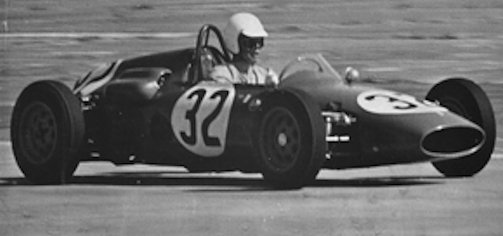
The De Tomaso Isis was the first race car of the Italian car manufacturer De Tomaso .
History
Alessandro de Tomaso is an Argentinian who came to Europe to race sports Maserati’s and Oscas in the mid-fifties and settled in Italy after his marriage. The first car of his own creation was the Isis, a Cooper-based Formula Junior car, and he subsequently constructed a few cars for the then current 1500 cc Formula Two with Osca and Alfa Romeo engines.
The car was built in small series for the Formula Junior and formed the basis for some more De Tomaso vehicles.
The from Argentina coming racer and businessman Alejandro de Tomaso denied one race Formula in December 1959 his last. For the US Grand Prix, a Cooper T43, which he had equipped with an OSCA engine. In the same year he founded the Italian Modena an automobile workshop in which he produced racing cars for different classes (and from 1965 also sports cars). The first vehicle of the new brand was called Isis. The name was a tribute to de Tomaso's wife Isabell de Tomaso (born Haskell), who financed her husband's racing projects with their fortune.
The Isis had a tubular frame. All wheels were hung individually. The body was at Fantuzzi. The drive initially used a built-in behind the driver's seat, 1.1 litre in-line four-cylinder engine from the Fiat 1100, the initially of Aquilino Branca was later tuned and OSCA. published in 1963, two newly built vehicles with one of Holbay tuned Ford were equipped -Motor. They were more stable than the Fiat four-cylinder and made sure that the Isis reached some finishings. On the basis of Isis Alberto Massimino Formula 2 racing car developed F2 and F1 model F1, originated from the total of five to 1963 copies. Even the F1, which was designed for different engines, was successful only with the Holbay engine.
The production volume is not exactly documented but a total of around six vehicles were built. The first car was built in 1959, the last in winter 1962/63. Three cars remained in Italy, where they were used, inter alia, by the Scuderia De Tomaso at individual Italian races; moreover, at least one was sold to the USA.
In 1960, only one race of an Isis is recorded. Isabell de Tomaso drove the car on October 23, 1960 at the Coppa d'Oro di Sicilia on the Circuit di Siracusa in Syracuse. This returned 10 of 30 laps before failing.
At the beginning of 1961, Giovanni Alberti reported an Isis to several Formula Junior races in Italy. The messages were mostly under their own name, but partly also for the Scuderia Madunina. It is not certain that he actually took part in the race with the car. Placements are not noted. But it is certain that he missed qualifying at the Lotteria Monza in Isis. 1962 drove different pilots with the Isis. Giovanni Alberti, Gastone Zanarotti, Nasif Estéfano and a driver with the pseudonym "Lucky" were each announced at one or more Formula Junior races in Italy; Finish arrivals of these drivers, however, are not occupied. "Lucky" missed at least once the qualification and fell again for technical reasons, also Estéfano did not finish. Only at the last Italian race of 1962, the Trofeo d'Autunno in Vallelunga, the Isis was successful: Franco Bernabei was third, 30 seconds behind the winner in the overall standings.
In 1963, Franco Bernabei drove a revamped Isis equipped with a Ford Holbay engine. At the Trofeo Bruno e Fofi Vigorelli in Monza he was ninth with this car. Roberto Bussinello finished second in a parallel race with a comparable car and set the fastest race lap. More Isis Ford drivers were in this year Franco Bernabei, Vincenzo Zannini (eleventh in the Lake Garda Tour), a pilot with the pseudonym "Miro Gay", the Trofeo Luigi Musso at Vallelunga in third place finished, and Giosue Butti.
De Tomaso 801 F1 car
 |
|
|
Constructor: |
Scuderia De Tomaso |
|
Designer: |
Alberto Massimino |
|
Year: |
1962 |
|
Predecessor: |
De Tomaso F1 |
|
Chassis: |
tubular frame |
|
Wheelbase: |
2410 mm |
|
Mass: |
459 kg |
|
Tire: |
Dunlop |
The De Tomaso 801 (Alternative name: De Tomaso 002 ) was a Formula 1 race car of the Italian car manufacturer De Tomaso in the 1960s .
History
The De Tomaso 801 was designed by former Ferrari designer Alberto Massimino .Born in Argentina racing driver and businessman Alejandro de Tomaso founded in 1959 in Modena, Italy, an automobile workshop in which he first race cars for various classes and from 1965 also produce road sports cars.The car was announced in the early 1960s at several Grand Prix, but appeared only at two events, qualified for only one race and finally put in a single lap. The 801 is considered the worst Formula 1 car of the 1.5-liter era.
The engine of the 801 was a water-cooled eight-cylinder boxer engine with a capacity of 1481 cc (68 × 51 mm) and two overhead camshafts. Each cylinder had two spark plugs . Mixture preparation was carried out using four double carburettors from Weber . De Tomaso gave the performance of the eight cylinder with around 170 hp, which was 25 to 30 hp below the values of the Porsche and Ferrari engines from the time. Observers doubted the accuracy of De Tomaso's statements and suggested that engine power was actually lower. The power transferred a constructed by De Tomaso five-speed gearbox.
The chassis of the 801 corresponded largely to the construction of the 1961 De Tomaso F1. It had a tubular frame that corresponded to the F1 in the front area. In the rear area over the engine further cross braces were attached, the installation of which was made possible by the flat-fitting boxer engine . The chassis consisted of inner swing levers on the front suspension and upper swing levers and diagonal struts on the rear suspension. A similar structure was built in 1948 at Massimino Maserati ; Colin Chapman took over the concept later for some Lotus racing cars. The front disc brakes came from Girling , the back of Amadori. The body of the 801 was manufactured by Fantuzzi .
Race History
The De Tomaso 801 was the second attempt de Tomasos to build a Formula 1 racing car. Previously, the company had to for the Formula Junior certain Isis constructed and a Formula 2 presented -car, which was not been used. From this F2 mentioned model, the De Tomaso F1 was derived, which appeared in 1961 in some Formula 1 races. The F1 was made in several copies, with purchased engines from Alfa Romeo , Ferrari and OSCAwere combined. No version of the F1 was successful; Often de Tomasos rider failed to qualify. Alejandro de Tomaso thought the engines used were not competitive and ultimately decided to design their own eight-cylinder engine. The new engine was installed in a likewise newly designed chassis, which received the designation 801 (alternatively: 002).
As it became apparent that the 801 was a failure, De Tomaso began planning for a successor who had an aluminum monocoque and should be equipped with a self-constructed V12 engine. The considerations did not go beyond the stage of first studies. De Tomaso returned in 1970 with the model 505 back to Formula 1 as a partner of British team Frank Williams Racing Cars .The orignal 801 stood until 2005 in De Tomaso's plant in Modena, before it was sold.
Unlike his predecessors, the De Tomaso other racing teams sold as the Scuderia Serenissima and the Scuderia Settecolli , the 801 remained as a single piece built in the factory. It was used exclusively by factory team Scuderia De Tomaso . This first appeared at the 1962 Italian Grand Prix . As driver of the Argentinian Stock Car driver Nasif Estéfano was used, who had previously driven only a Formula 1 race in a private Maserati 250F . In training, the car did not work properly. Estéfano was scored with a lap time of over six minutes while Jim Clark needed only 1:40 minutes in the factory lotus for a circuit tour. Although De Tomaso reported to use the 801 in the 1963 season Grand Prix of Monaco , Britain and France.However, the car did not appear for any of these races.
The last use came In 1963, the Scuderia De Tomaso with the 801 and Nasif Estéfano for the Grand Prix of Rome in Vallelunga , a spring race that had no World Cup status. 19 drivers were registered for this race. Estéfano qualified the 801 for ninth place on the grid. In the race he only returned one lap; at the beginning of the second lap failed with a clutch failure.
Qvale Mangusta
| (2000 to 2002) | |
|---|---|
 |
|
| Overview | |
| Manufacturer | Qvale |
| Also called | De Tomaso Biguá |
| Production | 2000–2002 (284 produced (55 with automatic), including 18 for the European market and 1 RHD version) |
| Assembly | Modena, Italy |
| Designer | Marcello Gandini |
| Body and chassis | |
| Class | Sports car |
| Body style | Three-position coupe/targa/full convertible |
| Related | MG XPower SV |
| Powertrain | |
| Engine | 4.6 L Ford Cobra SVT V8 |
| Transmission | BorgWarner T45 5-speed manual (or optional automatic transmission) |
| Dimensions | |
| Wheelbase | 105.1 in (2,670 mm) |
| Length | 165.1 in (4,194 mm) |
| Width | 74.8 in (1,900 mm) |
| Height | 51.8 in (1,316 mm) |
| Curb weight | 3,351 lb (1,520 kg) |
The Qvale Mangusta is a sports car produced in limited numbers in Italy by the automaker Qvale between 2000 and 2002. During development and early production, it was badged as the De Tomaso Biguá. Later (and for the North American market) it was badged as the De Tomaso Mangusta (named for the car originally built between 1967 and 1971.)
The Mangusta uses a front mid-engine, rear-wheel drive layout, and is powered by a Ford 4.6L DOHC V8. It was offered with either a BorgWarner T45 5-speed manual gearbox or a 4-speed automatic.
History
In 1993 and 1994, Maserati technical director Giordano Casarini made a number of business trips to the United Kingdom and, while there, first saw the TVR Griffith. He was impressed by the style and sales success of such a low-production-volume car.
Alejandro de Tomaso had meanwhile suffered a stroke in 1993. After a period of recovery, de Tomaso asked Casarini (whom he considered a trusted friend) what should be done with the De Tomaso company. Casarini suggested that De Tomaso make "an Italian TVR", pointing out the positive design elements that made the Griffith attractive. Alejandro de Tomaso negotiated with the Maserati chairman to release Casarini to De Tomaso, so that work on the design could begin.
Casarini intended to use an existing, inexpensive V8 engine that would reduce the purchase and maintenance costs of the car. In the tradition of De Tomaso cars, he wished to use a Ford V8 and explored the possibility of using the new Ford Modular 4.6L V8, but discovered that Ford was not yet ready to sell it to manufacturers.
Casarini learned that TVR was investigating the possibility of using differentials made by Australian company BTR Automotive in its cars. When communicating with a supplier for the differentials, he was directed towards Holden Special Vehicles (HSV), who indicated that they would be able to offer engines and transmissions. At this stage, the De Tomaso project was given the internal code name "ETX".
Soon after Casarini's communications with HSV, Ford Motor Company contacted him with the news that they would indeed be able to supply the Modular V8, along with transmissions, ancillaries, and electrics.
Alejandro de Tomaso had been a fan of the design work done by Marcello Gandini, so Gandini was called to Modena to discuss the job of styling the new De Tomaso project. To show him the character and feel of the desired product, Gandini was driven around in a TVR Griffith. He was ultimately commissioned for the styling job, and was given the instruction that the folding roof mechanism on the De Tomaso be similar to the multi-position roof used by the Griffith.
A prototype of the car was displayed at the 1996 Geneva Motor Show as the De Tomaso Biguà, though it still needed development before it would reach full production. The company required capital to continue, and an initial appeal to the Italian government failed due to the declining health of Alejandro de Tomaso. Eventually, the company approached the Qvale family, who, led by Kjell Qvale, had been a North American importer for Maserati. Qvale agreed to fund the development of the car, with the agreement that the final product would be sold under the De Tomaso brand, as the De Tomaso Mangusta.
At one point, the Biguà prototype car was crashed by a Ford engineer in Modena. The incident damaged a curbstone, and the De Tomaso company was forced to pay a fine to the City of Modena (though the city did not repair the damage until years later.)
In 1997, the Qvale Modena SpA company was established to produce the Mangusta. Bruce Qvale led the project of developing a production facility, which involved the renovation and modernization of a building in Modena. The building was "elegantly and comprehensively furnished, [with] marble everywhere", and certified ISO 9001 compliant.
Design and technology
The chassis of the Mangusta was designed by former Formula 1 designer Enrique Scalabroni, who had worked for Dallara, Williams F1, and Scuderia Ferrari. Each chassis is formed of welded laser-cut steel sections, and was then galvanized by Vaccari & Bosi. Body panels were constructed of resin transfer moulding (RTM) plastic by Stratime Cappelo Systems of Villers-Cotterêts, France; this same company had provided bodywork using the RTM technology for the Alfa Romeo SZ and the Lotus Elan M100. The panels were then painted by Italian company Rovercoat S.p.A. before they were fitted to a car.
The first simple mock-up of the chassis design was done by Casarini and Scalabroni assembling pieces of packing cardboard to show the basic layout. Scalabroni placed emphasis on high torsional rigidity of the chassis, which was particularly important as the final design would not have a structural roof. The design also emphasized safety: significant impact energy during a front-end collision is dissipated by lateral movement of the engine. In tests, the Mangusta chassis showed a torsional stiffness of 1,450 kg/m/deg, which was more than four times the typical stiffness of an open car at the time.
Both the front and rear suspension on the Mangusta uses double wishbones with coil springs and anti-roll bars.
The Mangusta uses a unique roof mechanism referred to as the "roto-top", designed by Gandini and inspired by the folding roof of the TVR Griffith. The roto-top features a center removable panel (similar to normal targa configurations) but also allows the rear section to electrically rotate (on a forward pivot) out of sight into a cavity behind the seats. This transforms the car into a full convertible.
In the Mangusta's interior, most visible surfaces are covered in leather. Visteon Automotive Systems was selected as the supplier for the interior electrics. The alloy wheels for the Mangusta were produced by Antera.
When the Mangusta was transitioned from a prototype to production model, Carlo Gaino of Synthesis Design was contracted to perform any necessary adjustments to the design. Synthesis Design developed two cars: one was the restyling of the production car, the other an evolution based on the reduction of production costs.

Production and launch
The first De Tomaso Mangusta was completed on November 10, 1999. On January 6, 2000, at the Los Angeles Motor Show, Bruce Qvale announced the return of the De Tomaso brand to North America with the new Mangusta. Also announced was the Mangusta's entry into racing, with Qvale Motorsports entering a car sponsored by Tommy Bahama into the BF Goodrich Tires Trans-Am Series. The Mangusta went on sale for US$78,900 on January 20, 2000, with a single ordering option of 18-inch alloy wheels.
As the Mangusta was being launched, Alejandro de Tomaso was independently pursuing another design project (which was to recycle the De Tomaso Pantera name). Because the De Tomaso company was being financially supported by Qvale at the time, this caused disharmony between Qvale and de Tomaso that ultimately resulted in the decision to discontinue their cooperation on the project. The De Tomaso Mangusta was renamed the "Qvale Mangusta", and production continued.
Twenty-nine cars were manufactured for the purpose of crash-testing and homologation. Also, a partially completed right-hand-drive Qvale Mangusta was shown at the British Motor Show in October 2000. Ultimately, 284 cars were sold.
Reaction
Automotive journalists and testers praised the car for its performance and handling, and for the utility of the roto-top. Some build quality issues were noted on early cars, and the reaction to the unconventional styling was mixed.
Lacklustre sales figures in 2000 prompted Qvale to reduce the price of model year 2001 cars by nearly 10,000 USD, which the company announced on October 13, 2000.
Connection with MG
In the summer of 2000, after BMW had sold the MG Rover Group to the Phoenix Consortium, Bruce Qvale contacted one of the Consortium directors, Nick Stephenson, and proposed forming a European distribution deal for the Qvale Mangusta. Soon after, Stephenson and his colleagues began to consider the possibility of using the Mangusta platform to develop a high-performance halo car to grow the MG brand.
On February 28, 2001, Stephenson and his colleague Peter Beale began negotiations with Qvale Modena to purchase Mangusta production assets. A contract was drawn, and on June 19 of that year, the announcement was made that the deal was complete (with account reports indicating that the price was £7 million.)
Under the MG Rover group, the Qvale Mangusta platform was developed into the MG XPower SV.
SpecificationsLayout - Front-engined, rear-wheel drive convertible Top speed - 160 mph (257 km/h) (manual transmission); 155.4 mph (250 km/h) Acceleration - 0-60 mph: 5.3 sec Engine displacement - 4601 cc Engine type - Normally aspirated aluminum DOHC 4-valve V8 with 9.8:1 compression Peak power - 320 bhp (239 kW; 324 PS) @ 6000 rpm Peak torque - 314 lb·ft (426 N·m) @ 4800 rpm Transmission - BorgWarner T45 5-speed manual, 4-speed automatic transmission (optional) Brakes - Brembo ventiled discs on all wheels with ABS and traction control Suspension - double wishbones, coil springs (front and rear) Steering - power assisted rack and pinion |
 |

