
Connaught
Connaught Type A Race Car
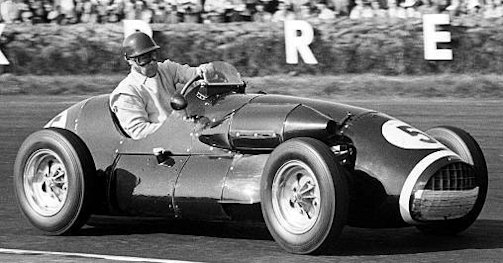 |
|
|
Company |
Connaught |
|
Class |
Race Car |
|
Years |
1950 to 1954 |
|
Engine |
1.7-2.5L |
|
Gearbox |
four-speed |
|
Drive |
Rear |
|
Wheelbase |
85/90 in (216/228 cm) |
The Connaught Type A was a single-seat Formula 2 racing car built by Connaught Engineering in 1950 and used until the late 1950s.
History
The A-series Connaught was built by designer Rodney Clarke and engineer Mike Olivera the beautifully engineered and very safe car with superb roadholding but the suspension was also rather flimsy and it was rather underpowered because of the Lea-Francis origins of its engine. The engine was safe to 6000rpm, but at 6200rpm valve bounce set in. A valve would touch a piston, bend and jam in the guide with the result that the valve gear would break. Fitted with a twin-tube chassis with torsion-bar suspension front and rear the tubular chassis had de Dion rear suspension. The pre-selector gearbox which was controlled by a little lever and actuated by the clutch pedal. It was, however, necessary to have the gearbox over-hauled by the manufacturer after every four races to keep pace with wear.
Type A 1950 nine pieces were built in 1950, which were used from the 1951 season. All A-types had conventional trellis frames and independent wheel suspensions with wishbones and torsion bars on all wheels. The rear suspensions were replaced during the racing season in 1951 by De Dion axles. The cars were powered by Lea-Francis four-cylinder engines, which made 135 hp. The later Connaught A-Type Long Chassis was developed in early 1954. With the advent of the 2.5 litre Grand Prix format for that season, but by that time the front-line career of Connaught’s A-Type Grand Prix car was over.
This performance was not outstanding even for a Formula 2 car, so that Lea Francis improved the engine. When 1952 World Cup races were held with Formula 2 cars, the engine had an output of 165 hp with fuel injection an improvement from the early 135 bhp. The later engine an A1ta 4 cylinder with 2470cc and Pre-selector gear-box combined with the final drive unit.
On the racetracks the Connaught’s were welcome additions to the starting fields. Connaught Formula Il single-seater took part in its first race at the Castle Combe circuit in 1950. A second place was gained with McAlpine at the wheel and this marked the beginning of a long string of noteworthy race performances, including 4th and 5th place in the 1952 British Grand Prix at Silverstone against Continental opposition of the highest quality, including the world-famous Ferrari.
The racing cars were never victorious, even though top riders like Johnny Claes, Jack Fairman, Tony Rolt, William Whitehouse and Roy Salvadori moved the A-types. At the Great Britain Grand Prix in 1952, Dennis Poore and Eric Thompson reached the fourth and fifth place in the race The year 1953 marked the end of Formula II, although there are still many races run in the British Isles for this type of car. The Type A was superseded by the B-Type, a car that came to be known as the Syracuse after Tony Brooks's win there in 1955.

