
Bristol
Bristol 411 Series 1-5
 |
|
|
Manufacturer |
Bristol Cars |
|
Production |
1969 to 1976 |
|
Produced |
287 |
|
Class |
Sports Car |
|
Layout |
FR layout |
|
Engine |
6,286 cc OHV V8 6,556 cc |
|
Transmission |
3-speed automatic |
|
Wheelbase |
2,896 mm (114.0 in) |
|
Length |
4,902 mm (193.0 in) |
|
Width |
1,727 mm (68.0 in) |
|
Height |
1,460 mm (57.5 in)-1,473 mm (58.0 in) |
|
Curb weight |
1,676 kg (3,695 lb)-1,712 kg (3,774 lb) |
The Bristol 411 is a sports car which was built by the British manufacturer Bristol Cars.
History
The Bristol 411 was a two-door sedan by British car manufacturer Bristol Cars, replacing the Bristol 410 in 1969 and produced until 1976. In the course of the seven-year production period, the model successively underwent numerous technical and visual modifications. Some of these changes were so serious that, based on the manufacturer's previous practice, they would actually have justified a new model designation; at least that was the case for the change from 411 Mk.2 to Mk.3 and from Mk.3 to Mk.4. Nevertheless, Bristol retained the designation "411" for all variants and differentiated the individual models according to series (Mark 1 to Mark 5). The model is currently being re-offered as the Series 6 Coupé by Bristol Cars.
Introduced 1969. Max. speed 140 mph approx. Acceleration 0—70 mph in 9-5 secs approx. Fuel consumption 14—18 mpg approx. Chrysler 6.2-litre engine with Torqueflite automatic transmission and limited-slip diff. Front suspension has been modified to accommodate radial-ply tyres. Electric windows now standard. Front seats redesigned for increased comfort. Bristol’s are built in small numbers for those who still appreciate cars individually built and tested at an unhurried pace. With a massive steel chassis carries bodywork in aluminium. Steering is power-assisted. Fitted later with the larger 6.5-litre Chrysler engine runs on three-star fuel and has an electronic injection system with no contact breaker points to adjust 12-volt negative-earth ignition system; 71 amp. /hr. battery, high performance alternator charging system. Spare wheel, battery, fuse boxes, are mounted in the front wings. The closed box section chassis, welded steel construction with 3 cross members, forming a very robust structure of great protective strength; open propeller shaft; Bevelift Jacking system using built-in jacking points. The front suspension, independent by wishbones of unequal length with coil springs, telescopic hydraulic dampers, torsional anti-roll bar, rear suspension, torsion bar springs with Watts linkage, adjustable telescopic dampers.

Replacing it was the much larger big-block B series engine of 6,277 cc (383.0 cubic inches) - as compared to the 5,211 cc of the 410. This much larger engine gave the 411 an estimated 30 percent more power than had been found in the 410. The 411 was capable of 230 km/h (143 mph). To cope with this extra power, a limited slip differential was fitted so that the car skidded much less at high speeds. The Chrysler capacity 6,277 cc. (383 cu. in.), with compression ratio 10:1, power output 335 (S.A.E. gross) b.h.p. at 5,200 r.p.m., maximum torque 425 (S.A.E. gross) Jb./ft. at 3,400 r.p.m. With chain driven camshaft, hydraulic tappets; full flow oil filter; Carter 4-barrel downdraught carburettor, automatic choke for cold starting; manifold heat
control valve for rapid warm up; large paper element air cleaner/ silencer with pressurized at 13 p.s.i. cooling system with capacity of 29 Imp. pt. (16.5 litre’s) and twin electric fans automatically controlled by thermostat ensure optimum cooling irrespective of engine speed engine incorporates 'Cleaner Air System', which reduces concentration of hydrocarbons and carbon monoxide in exhaust gas. Power-assisted steering, re-circulating ball type, 15.7:1 ratio, sealed ball joints; 15 in. 3-spoke steering wheel with an energy absorbing steering column designed to collapse axially at a pre-determined rate, anti-theft steering column lock operated by ignition key; Dunlop pressed steel, perforated bolt-on disc wheels with 5 in. rims, Avon radial ply tyres, 185 x 15 with tubes; separate front and rear hydraulic brake systems operated by tandem master cylinders, failure warning device connected to lamp on instrument panel. Self-adjusting, servo-assisted Girling disc brakes on all wheels, handbrake employs separate clamps operating on rear discs with automatic adjustment, pull-up type lever, mounted on floor between front seats, warning light indicates 'handbrake on' position and also checks warning circuit function. The mechanical parking lock working through transmission operated by gearchange lever.

Full 4-seater Saloon, the underside of body fully undersealed, inside of body selectively treated with anti-drumming material with welded steel structure and aluminium alloy panelling Available in single or duo-tone colours. With full width front and rear bumpers, windscreen and rear screen in laminated plate glass; door lights and quarter lights in toughened plate, hinged rear quarter lights; spare wheel housed in unique compartment in left-hand front wing; similar compartment on right-hand side houses battery, twin brake servos and fuse panel. The interior showed a number of important changes from the Bristol 410. The traditional twin-spoke steering wheel was replaced by a more practical three-spoked leather-wrapped wheel, which as a result of the traditional Bristol badge being removed from the front of the car, was the only place where this badge was retained.2 doors hinged on front pillars have burst-proof locks and are fitted with armrests, individual fully adjustable front seats with fully reclining backs, which tip forward to allow easy access to rear; individual rear seats accommodate 2 persons in comfort and have folding centre armrest. The interior upholstered in top quality hide over foam rubber cushions and backs, protective padding above and below facia panel, walnut veneered facia panel, instrument panel and door capping with pile carpet with soundproof underlays, for storage lockable glovebox, also pockets in doors, on rear of front seats and sides of rear seats, full width rear parcel shelf; courtesy roof light operated either by the doors or independent switch; 3 ashtrays; 2 cigarette lighters. Luggage boot, 19 cu. ft. capacity, with tool stowage shelf.
Through-flow heating and ventilation system provides fresh air at desired volume and temperature without necessity of open windows; air is fed to heater and/or 4 individually adjustable Cold air face level vents from opening below the windscreen, minimizing intake of traffic fumes, 4 slots at base of windscreen for demisting and defrosting; instruments, grouped in cowl in front of driver, have rheostat-controlled illumination and include: 4 in. diameter speedometer with trip recorder, 4 in. diameter tachometer, battery condition indicator, petrol gauge, oil pressure gauge, water temperature gauge and electric clock; warning lights for head lamp main beams, direction indicators, brake fluid level, petrol reserve, handbrake and manual override switch for cooling fans.
The sealed beam 4 head lamp system, outer pairs giving main and dipped beams, inner pairs main beam only with foot-operated dip switch; side and direction indicator lamps and side repeat direction indicator lamps; twin combined tail, stop and direction indicator lamps incorporating reflectors; twin automatic reversing lights; 2 rear number plate lights; automatic luggage boot light; dual 2-speed self-parking windscreen wipers, windscreen washers and twin wind tone horns. An interior convex driving mirror; combined direction indicator, horn and head lamp flash switch mounted on steering column; rheostat controlled, subdued, facia illumination, hazard warning system, and red reflectors on the trailing edges of both doors. Fuel tank mounted behind rear seat, isolated from car interior and boot by steel bulkhead, capacity 18 gal. (Imp.) (82 litre’s) including 3 gal. (13 litre’s) reserve supply controlled by
switch on facia panel; lockable filler cap; consumption 14-18 m.p.g.
The Chrysler Torque-flite gearbox has 3 forward speeds and reverse automatic transmission, with fluid torque converter, gives variable ratio drive incorporating intermediate gear hold, permitting engine braking, gears selected by floor-mounted selector lever with 6 positions: P (park, R (reverse), N (neutral), D (drive), 2 (second), and 1 (low), ratios (overall), low 7.52, intermediate 4.45, high 3.07, reverse 6.75, torque converter stalled ratio 2:1.
Over its seven years in production, the 411 showed a number of changes.
Bristol 411 Mk.1
The Bristol 411 Mk. 1 was introduced in the spring of 1969. The main difference from the previous 410 was the use of a much larger engine. After eight years, Bristol parted with the proven 5.2-liter eight-cylinder and now relied on a 6.3-liter engine from Chrysler, which has been used in a similar configuration in the Jensen Interceptor for some time was used. The new engine was less heavily machined than the previous engine; Bristol used from now on essentially standard engines. The adaptation of the new engine to the car involved numerous technical detail changes. According to Bristol, the reason for changing the engine was primarily the fact that the new engine was easier to service because it was no longer necessary to adjust the valve clearance. However, it should also be noted that the larger engine resulted in a significant increase in performance. The engine now delivered 335 SAE hp.
The body had also been revised in numerous details. However, the changes were so subtle that they were hardly noticeable at first glance. The most conspicuous modifications concerned the side trim – only one instead of the previous two – and the rear end: Here the Humber was retained while fundamentally being retained-Rear lights now dispensed with the hinted rear wings; the rear of the car was designed smooth instead. Apart from that, Bristol had redesigned the shape of the radiator grille, modified the location of the auxiliary lamps and revised the curves of the front fenders. In the interior, the use of a new steering wheel was noticeable: instead of the traditional two-spoke steering wheel, a three-spoke model was now installed, in the hub of which a Bristol coat of arms could be seen.
The performance increased significantly with the new engine. The Bristol 411 had a top speed of 230 km/h, and the factory specified a value of 7 seconds for the acceleration from 0 to 60 miles per hour. According to Autosport magazine, the Bristol 411 Mk. 1 was the fastest production touring car in the world.
At launch, the Bristol 411 retailed for £6,997.
Bristol 411 Mk.2
In the autumn of 1970, Bristol presented a first revised version of the 411. From a technical point of view, the main innovation was the use of an automatic instead of the previous manual level control. Externally, there were some very subtle changes that were to be understood as cosmetic modifications. For example, Bristol used new door handles and door locks that were slimmer. The Mk. 2 was produced until 1972.
Bristol 411 Mk.3
With the introduction of the third series in July 1972, the Bristol 411 received a largely new body. Although the basic layout of the car and the design of the passenger cell remained essentially untouched, the front and rear sections were redesigned in a striking way. The radiator grille now went over the entire width of the vehicle. Integrated into this were four large round headlights from the supplier Lucas, whose diameter was almost 20 centimetres and which ensured excellent visibility when driving at night. Between the headlights was a chrome-plated radiator grille element, which was reminiscent of a toaster due to its shape. The item was then pressed into the Toaster Grill or Barbecue Grill called. It was retained in all subsequent 411 models and was also found - in a modified form - in the Bristol 412 and later in the Bristol Britannia and Bristol Brigand, but not in the immediate successor of the 411, the Bristol 603. In line with the new front end, the bonnet and front fenders were also revised. The latter were slightly raised to improve visibility of the front end. At the rear, the Humber Sceptre’s old taillights were replaced with new, rectangular taillights that were still vertical. Reversing lights were located on both sides next to the license plate. Overall, the 411 Mk. 3 made a much more contemporary impression than its predecessors without being particularly fashionable or modern itself.
A special feature were two twin exhaust pipes that protruded conspicuously from under the rear end panel of the car. These were dummies. In fact, the exhaust gases exited through a downward-flowing opening positioned about two inches from the end of the exhaust pipes. This design was to ensure that escaping exhaust fumes would not leave a mark on the Bristol driver's garage wall. The interior was classic. The style, the ergonomics and the good workmanship were unanimously praised in the press; only the use of British Leyland door handles was the subject of criticism.
The drive technology was only slightly modified. The 6.3-litre Chrysler engine was retained, but Bristol lowered the compression ratio to a ratio of 9.5:1 (instead of the previous 10.1:1) in terms of exhaust emissions and fuel consumption. This was associated with a reduction in engine power and also in driving performance.
Bristol 411 Mk.4
A newly revised model, the 411 Mk. 4, appeared as early as autumn 1973. This time the changes were primarily of a technical nature. Bristol wanted to react to the slightly deteriorated performance that had resulted from the modifications to the Mk. 3. In order to ensure the well-known sportiness again, the company management decided - as was the case with Jensen - to use a new, even larger engine. However, the 7.2 Liter engine from Chrysler was not chosen, which caused countless thermal problems at Jensen. A 411 is said to have been equipped with this engine for test purposes; the choice ultimately fell on the smaller, lighter and similarly powerful 6.6 Liter engine from Chrysler. With a compression ratio of just 8.2:1, which enabled the use of regular petrol, the result was an output of 264 hp according to European measurement methods. The Mk. 4 thus achieved driving performance that was again at the level of the 411 Mk. 2. The same engine was used in the Bristol 412 introduced in 1974, a security convertible with a body by Zagato.
At launch, the Bristol 411 Mk. 4 was retailing for £8,973.

Bristol 411 Mk.5
In the summer of 1975, the last expansion stage of the Bristol 411 was presented. The changes were purely cosmetic. The toaster grill was now painted black. Some emblems changed, and the car had inertial seat belts as standard. A special feature was the optionally available Avon safety tires, which enabled the car to be controlled at high speeds even in the event of a defect.
The purchase price for a new car in 1975 was 12,587 British pounds.
The Bristol 411 Mk. 5 was the last Bristol model whose body was conceptually based on the Bristol 406, which is now 15 years old. It was replaced in autumn 1976 by the Bristol 603, which received a completely new, independent design.
- PERFORMANCE: 383 cu in
max power (SAE): 335 hp at 5,200 rpm
max torque (SAE): 425 1b ft, 58.6 kg m at 3,400 rpm
max engine rpm: 5,500
specific power: 53 hp/l
max speeds: 50 mph, 80 km/h in 1st gear: 90 mph, 145 km/h in 2nd gear; 140 mph, 225 km/h in 3rd gear
power-weight ratio: 11 lb/hp, 5 kg/hp
carrying capacity: 904 lb. 410 kg
acceleration: 0-50 (0-80 km/h) 6 sec;
speed in direct drive at 1,000 rpm: 26.4 mph, 42.5 km/h;
fuel consumption: 18 m/ imp gal, 15 m/ US gal, 15.7 1 x 100 km. - PERFORMANCE: 400 cu in
max power (SAE): 335 hp at 5,200 rpm
max torque (SAE): 418 1b ft, 57.7 kg m at 3,400 rpm;
max engine rpm: 5,500: 51 hp/l
max speeds: (l) 50 mph, 80 km/h; (Il) 90 mph, 145 km/h; (Ill) 140 mph, 225 km/h
power-weight ratio: 11 lb/hp, 5 kg/hp
carrying capacity: 904 1b, 410 kg
acceleration: 0-50 mph (0-80 km/h) 6 sec; speed in direct drive at 1,000 rpm: 26 mph, 41.8 km/h
fuel consumption: 16 m/imp gal, 13.3 m/US gal, 17.7 1 x 100 km.
Bristol Cars offers a modernised version of the Bristol 411, the Series 6. The factory Bristol 411 Series 6 model occupies a special position. The automobiles of this generation are not new cars, but extensively restored vehicles from earlier series. The first Bristol 411 Series 6 was completed in 2008. Other Bristol eight-cylinder models were later converted in this way. The vehicles were delivered with a new vehicle guarantee.
As part of the restoration, the customers' used vehicles are completely dismantled and rebuilt using numerous new parts. The chassis of the donor vehicle is also the basis of the newly built vehicle. While the body design remains unchanged, the technical components are largely replaced. The vehicles receive the drive and chassis technology of the current Bristol Blenheim 3, so that the driving performance, the driving behaviour and the exhaust gas values are significantly improved. The vehicles are equipped with the current 5.9 Liter eight-cylinder engine; depending on the customer's wishes, the standard version or the heavily machined version from the Blenheim 3S can be used, which, according to the factory, has an output of up to 400 hp. The computer-controlled four-speed automatic of the Blenheim is also carried over. Finally, the vehicles will have a modern audio system, a satellite navigation system and an iPod connection.

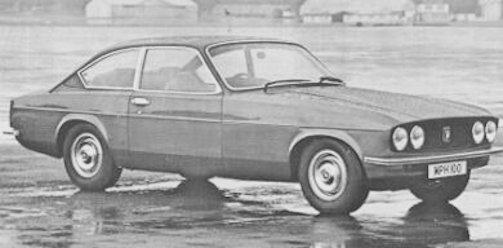
Bristol 603 S1
 |
|
|
Production period: |
1976 to 1978 |
|
Class: |
Luxury car |
|
Engines: |
5.2–5.9 litres |
|
Length: |
4910mm |
|
Broad: |
1770mm |
|
Height: |
1440mm |
|
wheelbase: |
2900mm |
|
curb weight: |
1690kg |
The Bristol 603 S1 is a two-door sports sedan produced by British car manufacturer Bristol Cars Ltd in the 1970s.
History
The Bristol 603 S1 replaced the Bristol 411 Mk.5 in October 1976 and was in production until late summer 1982. The car appeared on the occasion of the thirtieth anniversary of the brand. Its design forms the basis for all later presented Bristol models up to the Bristol Blenheim produced until 2011.ith the 603, Bristol began a new designation system. After the Bristol 412 was presented as the brand's youngest model in 1974, the successor to the Bristol 411 should have been called the 413. The company wanted to avoid this. Instead of jumping to number 414, Bristol embarked on a whole new counting system with the new model. In the first sales brochures, which were published on the occasion of the presentation of the model in October 1976, the model designation is still given as Bristol 600 Series the company decided on the designation 603. This choice was intended to take account of the fact that the city of Bristol celebrated its 603rd anniversary in 1976.
The two models
603 E The last Bristol styled by long-term chief stylist Dudley Hobbs, the 603 was a complete update on the 4-seater Bristol theme. using the lighter 312-cid Chrysler engine,
it introduced a thoroughly modem exterior and interior design, giving improved passenger accommodation. To maximize fuel economy, a two-barrel carburetor was used along with an economy low-stall torque converter.it offered shock absorbers that were adjustable to suit the owner's taste the 'E" model introduced standard air conditioning and electrically adjustable front seats. The handbrake enjoyed its own separate calipers and rear self-leveling suspension was standard offered the silence and comfort of a Rolls Royce with the performance of the contemporary Aston Martin from the time.
603 S For Bristol customers who valued power above economy, the sported a performance four-barrel carburetor, larger 360 engine, and performance torque converter. As had become a Bristol tradition,
Apart from the Bristol 412, the Bristol 603 represented the most lasting change in the company's recent history. The car broke almost completely with the 16-year-established design of the previous models 406 to 411, and there were also numerous changes from a technical point of view. The 603 was the first car to have Bristol's own bodywork. The British bus manufacturer Park Royal Vehicles had previously supplied the body shells. Bristol's owner, Tony Crook, promised himself that production would take place in-house greater flexibility and better ability to respond to periods of reduced demand. The outer body panels were no longer made by hand, but machine pressed. Initially, the results of the pressing process were of varying precision. In the first few years, the large sheet metal parts in particular showed considerable unevenness, which gave viewers the impression of poor manufacturing quality.
The Bristol 603's exterior had been completely redesigned. The designer in charge was Dudley Hobbs, a longtime Bristol employee who had already designed several previous models of the 603. The 603 was still a two-door, four-seat sedan, and the basic proportions – a long front end with spare wheels on the side and a passenger compartment set back – were retained. Other than that, everything else about the 603 was new. Deviating from the previous notchback line, the 603 received a semi hatchback with very thin B and C pillars. The aim of the designers was to improve the clarity of the body. The thin vehicle pillars and the large rear window enabled a very good all-round view. To support this Bristol launched in the press the note that the factory had not been able to find an interior mirror large enough to fully cover the rear window. The flowing roofline of the 603 was that of Tom Karen (Ogle Design) designed the Anadol A1, a car that Reliant had developed for the Turkish market. The short tail was sloping and featured rectangular taillights, already familiar from the Bristol 411. Unlike the previous model, there were two large rear fog lights and reversing lights on the left and right of the license plate in the tailgate. The large round headlights familiar from the 411 could be found on the front end. Unlike the previous model, the grill was not designed as a toaster grill, but consisted of three elements of roughly the same size, of which the middle one bore a large Bristol logo. Extremely thin, chrome-plated bumpers were striking. Bristol used many Vauxhall / Bedford add-on parts, such as front indicators, door handles and taillights.
The design of the interior was largely retained. Bristol retained the now-classic dashboard traceable back to the 404 coupes; Generously laid wood and leather continued to dominate the furnishings.Overall, the Bristol 603 was a decidedly narrow car. Bristol valued this feature, citing it as the reason for the car's particular handiness.
The Bristol 603's design has received mixed reception. In isolated press reports, the 603 was described as a "very nice car". In most cases, however, the design was critically appreciated, for example by describing the car as "not exceptionally beautiful" Some Bristol customers went further in their formulations. They compared the body of the 603 and others - which was also partly unclearly manufactured. with the "self-construction of a village blacksmith".
As for all of its predecessors, Bristol also used the well-known tubular frame for the 603, which had only been slightly modified. What was new, however, were the engines, which were smaller than in the Bristol 411. A 5.9-liter eight-cylinder was now on offer, which was still obtained from Chrysler; a smaller, 5.2 litre version was also temporarily added. Both were also used by Monteverdi at the time, specifically for the Sierra sedan.
PERFORMANCE
max speed: about 118 mph, 190 km/h
speed in direct drive at 1,000 rpm: 28.2 mph, 45.4 km/h
fuel consumption: 20 m/lmp gal, 16.7 m/US gal, 14.1 1 x 100 km at 70 mph, 112 km/h.
The first series Bristol 603 was offered from 1976 to autumn 1982. There were two engines to choose from:
- The Bristol 603S (for Sport) was equipped with a 5.9 litre eight-cylinder Chrysler engine. The 8.0:1 very low compression powerplant featured a quad carburettor which helped it produce around 200 hp. Bristol did not name any exact performance data; a comparison with Monteverdi but allows the conclusion of corresponding values. What is certain is that the performance has been noticeably reduced compared to the earlier models. For the 603S, Bristol quoted a 0 to 60 mph acceleration in the range of 7.6 seconds. In contrast, the magazine "Motor Road" determined a value of 8.4 seconds in a test in 1978, a good second longer than the aerodynamically unfortunate 412 with the 6.6-liter engine. According to Motor Road, the top speed of the 603S is 140 mph or 225 km/h. The Bristol 603S is the most common version of the model.
- The Bristol 603E (for Economy) was also available. It was equipped with a 5.2-litre version of the eight-cylinder and carried only a double carburettor. With a view to the freely available performance data of the correspondingly motorized Monteverdi Sierra 5.2, an output of around 160 hp should have accrued. For the 603E, the 1976 factory brochure specifies an acceleration value of 10.9 seconds for the sprint from 0 to 60 miles per hour. A test of this model by a trade journal is not known. Only a few examples of the 603E were produced.
Priced at £30,000 in 1978, the 603 sat between the Aston Martin V8, which was listed for £21,000, and the Rolls-Royce Corniche, which was priced at £38,000.
Later In 1982 the factory built the first prototype of the Bristol Brigand, based on a 603 S1 produced in 1977.
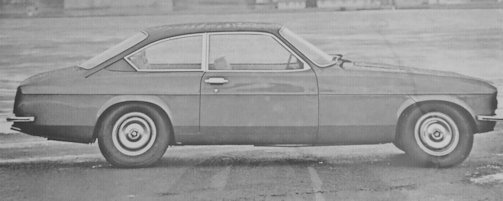
Bristol Beaufighter and Beaufort (412)
 |
|
|
Production period: |
1980 to 1993 |
|
Class: |
sports car |
|
Body versions: |
convertible |
|
Engines: |
V8 5.9 litres |
|
Length: |
197 in, 500 cm |
|
Width: |
69.50 in, 177 cm |
|
Height: |
56.50 in, 144 cm |
|
Wheelbase: |
114 in, 290 cm |
|
Curb weight: |
3,850 1b, 1,746 kg |
The Bristol Beaufighter sometimes referred to as the Bristol 412 S3 Beaufighter was built from 1980 to 1993.
The Bristol Beaufighter was an open sports car produced by the British car manufacturer Bristol Cars Ltd., presented in 1980 and produced until the summer of 1993. The Beaufighter was a development of the Bristol 412 first presented in 1974, which it replaced. The new model differed from its predecessor primarily in terms of drive technology. The name of the vehicle referred to the former fighter-bomber of the parent company Bristol Airplane Company, which had been produced in larger numbers during the Second World War. With this model, Bristol Cars for the first time turned away from the decades-long tradition of individualizing its own vehicles with a number code (400-412, 603).
History
The Bristol Beaufighter only differed from the 412 in details on the outside, but the car had been heavily modified on the engine side.
The Beaufighter was the first mass-produced British car to have a turbocharged engine. This engine was based on the well-known 5.9-liter eight-cylinder from Chrysler, which Bristol had used in the 603 since 1976 and in the 412 since 1977. The first considerations for a supercharged version of the eight-cylinder engine go back to Chrysler; there, such concepts have been experimented with since the mid-1970s. In the course of the economic problems, Chrysler finally gave up the work. The project was taken over by Bristol, where engineers Dennis Sevier and Eden Holder brought it to series production.
The bodywork of the Beaufighter was very similar to that of the Bristol 412. It was still a "safety cabriolet" with a fixed roll bar and a hardtop over the driver's seats to expand markets that had strict regulations. Unlike the 412, however, the hardtop above the driver's seats was permanently installed and not removable; the soft top over the rear seats, on the other hand, could be folded down as before.

The body design was still the subject of criticism. When the 1980 model was introduced, the Beaufighter was described, among other things, as "distinctive, but certainly not beautiful". The body continued to be manufactured at Maggiora in Turin. Some details had been modified; Zagato claimed the changes were engineered in Italy. The main distinguishing feature were four rectangular twin headlights, which were the previous headlight-indicator unit from the Vauxhall Viceroy (Opel Commodore in Europe). The Beaufighter's turn signals were now located under the front bumper. Unlike the 412, the Beaufighter had a distinct bulge on the bonnet due to the turbocharger. From 1983 onwards, the Beaufighter models had so-called side marker running lights based on the American model at the front and rear as standard, even if they were sold on the European market.
Another special model was the Bristol Beaufort presented in 1984 a full convertible based on the 412, which dispensed with both the roll bar and the Targa roof. The mechanism of the padded top was electrically operated. In addition to the independent roof structure, the Beaufort had some other modifications to the body, such as modified door handles and a covered tank filler neck. The rear seat of the Beaufort was greatly shortened due to the large convertible top compartment and could only be used to a limited extent.The Beaufort had a reinforced windscreen frame to compensate for the absence of a fixed roll bar.

The Beaufort was made on the initiative of company owner Tony Crook. A series production did not materialize. Bristol suffered from economic difficulties in the first half of the 1980s, so that development to series maturity could not be financed. During the 14-year production period, the Beaufighter underwent only minor modifications. In the late 1980's Bristol designed a shorter and lighter sports version of the Beaufighter, intended to be around 4,500mm in length. The plans envisaged a foldable rear seat, which should increase the volume of the luggage compartment. The works did not progress beyond the stage of drawings; the death of the main developer meant the end of the project.

The interior was also changed. Initially, a smoothed dashboard was available, dispensing with the traditional oval surround behind the steering wheel that had been a Bristol feature since the 404. However, this idea did not last long; Bristol quickly reverted to the classic layout. The idea of equipping the Beaufighter with digital instruments was similarly short-lived. Borrowing from the conception of the contemporary Aston Martin Lagonda, Bristol experimented with similar solutions, but also encountered similar problems and decided not to pursue this path any further, since the advantages and disadvantages could not be brought into an appropriate balance.
Deviating from the American base engine, the engines used by Bristol had independent cylinder heads developed in Great Britain. The engines also had a four-barrel carburettor from Carter, which differed in dimensioning from the basic American version. This engine was built at Bristol's Filton factory with a Rotomaster turbocharger. The turbocharger was not permanently activated rather, the engine had a system called "priority valve" that activated or deactivated the turbocharger depending on the position of the accelerator pedal. Bristol claimed the Beaufighter was the first European car to use such technology. The engine block itself was not changed, nor was the compression, although some modifications in the area of the engine were necessary. The turbo engine and drive technology were also used in the Bristol Brigand convertible from October 1982.With stricter emissions Under the name Bristol 412 USA, Bristol sold about 15 vehicles in the 1980s, which combined the body of the Beaufighter with the drive technology of the Bristol 412 S2 and the Bristol Britannia.

The electronic ignition system has been revised; and the American-made Lean Burn System a lean mixture setting that helped Chrysler meet US emissions regulations in the late 1970s was eliminated for the Beaufighter engine along with a high-performance gasoline pump, and the cross-section of the intake ducts was increased. In the course of upgrading the engine. Turbocharging significantly increased the engine's power and torque. As usual, Bristol did not name any specific values. Company owner Tony Crook stated that "more than sufficient power" was available; the increase in output and torque amounts to 30 percent. Later reports put the power of the engine at around 320 hp. Tony Crook described the Beaufighter at his presentation as the fastest accelerating four-seater.
The automatic transmission was also revised, since the version used up until then was not up to the increased torque of the engine. The regular TorqueFlite automatic was mated to a torque converter that Chrysler had developed for the 7.2-liter V8 was upgraded with a stronger, thicker propeller shaft. The clutch was also taken over from this version. The Beaufighter had significantly better driving performance than the Bristol 412 and the Bristol 603 produced at the same time. In a first test, it sprinted from 0 to 96 km/h in 6.7 seconds and reached a top speed of more than 240 km/h. During the first test drives, a consumption of over 30 litres per 100 km was noticed; In the following months, however, Bristol managed to reduce this value to around 25 litres/100 km through fine tuning. However, the driving performance suffered from the aerodynamically comparatively unfavourable body of the Beaufighter. The aerodynamically much better designed Bristol Brigand, which was produced from 1982, was even faster with a comparable curb weight.
PERFORMANCE
Max speeds: (1st) 54 mph, 87 km/h; (2nd) 100 mph, 161 km/h; (3rd) 150 mph, 241 km/h
Fuel consumption: 17-20 m/imp gal, 14-17 m/US gal
The Beaufighter and Brigand were very expensive vehicles. The sales price was roughly on par with the Aston Martin V8. When it went on sale in 1980, the Beaufighter was priced at £37,999. The Beaufighter was in production for 14 years. Manufacture ended in the summer of 1993 just before Bristol switched production to the new Blenheim model. Comparatively few models of both models were made over the years.

Bristol 407
 |
|
| Manufacturer | Bristol Cars |
|---|---|
| Production | 1961 to 1963 88 units |
| Class | Sports |
| Type | Sport saloon |
| Layout | FR layout |
| Engine | 5130 cc OHV V8 |
| Transmission | 3-speed automatic |
| Wheelbase | 2,896 mm (114.0 in) |
| Length | 4,877 mm (192.0 in) |
| Width | 1,727 mm (68.0 in) |
| Curb weight | 1,651 kg (3,640 lb) |
The Bristol 407 was a luxury car produced by British manufacturer Bristol Cars between 1961 and 1963.
History
It resembled the 406 built between 1958 and 1961 on the outside. The only differences were a single horizontal bar on the slightly larger radiator grille, which had slowly increased in size from the 405 to the 406 to the 407, and two exhaust pipes instead of one at the back. The 407, on the other hand, did not have the outdated BMW-derived six-cylinder engine that was no longer suitable for Bristols to compete in performance with other British luxury car brands. A 5,130 cc (313 cu in) Chrysler V8 constructed in Canada, fitted with a new camshaft and mechanical tappets (lifters) of Bristol design, replaced the old six-cylinder engine.It re-established Bristol's credentials in the field of performance cars. The engine gave the 407 a maximum speed of over 125 mph (201 km/h).
The Bristol 406 , which was produced from 1958 to 1961, suffered, unlike its predecessors, from a lack of performance: Bristol's own 105 bph in-line six-cylinder engine (type 110) no longer enabled the 1.5-tonne car to achieve the sporty performance that earlier Bristol models had distinguished had. A further increase in performance of the engine, the concept of which dates back to before the Second World War , could no longer be achieved.
Bristol was therefore looking for a new drive in the second half of the 1950s. First, the company began to develop its own new engine. The key data was a six-cylinder configuration and a displacement of 3.0 to 3.5 liters, a value that was in the range of contemporary Alvis engines. The power output of the first prototypes was not convincing, however; In any case, the parent company was of the opinion that the financial cost of the new design was not in proportion to its benefit. In 1959, Bristol tested an Armstrong Siddeley six-cylinder in-line engine as a further alternative . The 4.0 liter engine was standard in the Armstrong Siddeley Star Sapphireused and achieved 165 bhp. Bristol fitted a 406 with this engine and ran some factory tests. A takeover into series production did not materialize, however. The prototype went on sale and was in regular use until 1975. In 2015 it was rediscovered in an unrestored condition.
Ultimately, Bristol decided to use American eight-cylinder from Chrysler . It is not clear who led the initiative to use American engines. Bristol owner Tony Crook repeatedly told the following story: Actually, Chrysler only wanted to order a Torque-Flite automatic transmission for test purposes. To the surprise of the Bristol employees, Chrysler would have delivered an in-house eight-cylinder in addition to the transmission that had been ordered. Bristol then subjected the engine to thorough tests and, in view of the high performance and economic efficiency of the concept - which meant saving its own development costs - decided to use the American engine. To further cost saving, Bristol did not include the engines directly from the US but from Canada, which the Commonwealth was one. This meant that when the engines were brought to the UK, no import duties were incurred.
The basis for the Bristol engine was an older American engine, which had debuted in 1956 with the Chrysler brand Plymouth and originally had a displacement of 260 CID (4.2 liters). Bristol obtained the engine blocks from the USA and had them completed by hand in a Canadian Chrysler workshop. A number of far-reaching modifications were carried out there at the same time, which differentiated the Bristol engines from their high-volume counterparts:
- The engine bore was increased from 3.56 inches to 3.87 inches. This ultimately resulted - with only marginally changed stroke - a displacement of 5.2 liters; Chrysler did not have an engine of this size in its production portfolio.
- The engines received a new, Bristol-designed cylinder head that replaced the original "polyspherical" head of the Plymouth product.
- Finally, the intake ducts were redesigned.
Overall, after the manual modifications, the engine delivered an output of 250 hp. This means that the performance potential had more than doubled compared to the previous model. Bristol was back on track to become a sports car maker.
The switch to American engines was problematic. This step was not without a model: Facel Vega from France had already embarked on this path a few years earlier, and British competitor Jensen was about to do the same. Conservative British customers were nonetheless skeptical and, according to Tony Crook, quite a few are said to have seen it as a fall from grace. Most of the critics were reconciled by the outstanding performance of the car.
Bristol's veteran 2.0 liter six-cylinder engine continued to be built for some time after the introduction of the 407. It was primarily supplied to AC Cars , where it was installed in the Ace, Aceca and Greyhound models until the end of 1962 .
For the new car, Bristol adopted the familiar chassis largely unchanged. The suspension, damping and steering, however, have been adapted to the significantly higher weight of the car. The vehicle continued to have a body made of sheet aluminum, which was based on a massive steel frame. Unlike its predecessor, the scaffolding was now manufactured by Park Royal Vehicles , the company that also produced the legendary London double-decker buses.
Outwardly, the 407 appeared to correspond exactly to its predecessor, the 406: the naked eye hardly noticed any difference, even in a direct comparison of the two models. In fact, however, the body panels of the 407 had been almost completely redesigned - but with the stipulation that the design of the 406 was kept as close as possible. The reason for the changes was the fact that Chrysler's eight-cylinder engine was built significantly lower than the old Bristol engine. This enabled a flatter bonnet, a lower belt line and - to keep the proportions in balance - a different roof. The Bristol Owners Club claims that no body panel on the 406 matched the 407. If so, then the step from 406 to 407 was certainly one of the best camouflaged model changes in automotive history.
The 407 was initially offered with both automatic and manual transmission. The automatic system was - typical for American designs of the time - to be operated from the dashboard via push buttons. For the critical clientele, Tony Crook also had a manual transmission from Pont-à-Mousson on offer (the own Bristol transmission could not withstand the torque of the Chrysler engine); Crook later reported, however, that not a single customer had ordered the manual transmission.
The British press welcomed the new Bristol. It was praised that the driving performance was convincing again: The top speed of the 407 determined the top speed of the 407 in a test from October 1961 with 122 miles per hour (196 km / h), and for the acceleration from 0 to 60 miles per hour (96 km / h) the car only needed 9.9 seconds. The average consumption was 20.4 liters per 100 km.
The Bristol 407 remained in production until the summer of 1963. Around 300 copies are said to have been produced during this time.
Bristol 407 GTZ Zagato
As in the case of the Bristol 406 , Bristol also had a special body designed by Zagato for the 407 . The result, the Bristol 407 GTZ Zagato, had nothing to do with the 406 Zagato. The new design featured an elongated, rounded body with a very low belt line, a "hip swing" over the rear wheels and a lavishly glazed hatchback. The car was significantly lighter than the factory 407 and reached top speeds of over 200 km / h.
The Bristol 407 GTZ Zagato was first exhibited in October 1961 at the Earls Court Motorshow. The car was not on the Bristol stand, however, but on the inconspicuous Zagato stand. The originator of the project was again Anthony Crook (and not Bristol Cars Ltd.). It only took 10 weeks from the idea to the finished product. You could see that in the car. Much was improvised. This did not only apply to the radiator grille with a crest-shaped shield, that of a Lancia Flaminia Supersportwas borrowed. The car was received warmly, but the few journalists who were allowed to drive the car criticized the front-heavy construction. The heavyweight of the car was the American engine. The extremely light Zagato body therefore led to an unfavorable weight distribution. Tony Crook, who had initially hoped for a few orders, abandoned the project in the summer of 1962 because the factory had not gotten a grip on weight distribution problems. For all that is known, the 407 GTZ remained a one-off. It still exists today.
Bristol 407 Viotti
Another special model was a four-seater convertible that Carrozzeria Viotti from Turin produced on an uncut chassis from the 407. The body was relatively simple and took out some perspective, the design of the Fiat 1500 Spider anticipated. The car was first presented at the 1960 Turin Motor Show at the Viotti stand. This was followed by another presentation in Great Britain, this time at the Bristol Cars stand. The actor Peter Sellers , who loved Bristol vehicles, took over the car for some time, leaving his colleague Britt EklandTake a picture next to the car. The Viotti convertible remained a one-off. It still exists today.
In Film and Television
1962 Bristol 407 in Full Circle, Movie with Mia Farrow from 1977

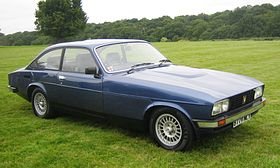
Bristol Type 603 Brigand Britannia
 |
|
| Manufacturer | Bristol Cars |
|---|---|
| Production | 1982 to 1994 |
| Body style | 2-door saloon |
| Layout | FR layout |
| Engine | 5.2 or 5.9 litre V-8 |
| Transmission | 3-speed automatic 4-speed automatic from Blenheim 2 |
| Length | 193 inches (4910 mm) |
| Width | 69 inches (1770 mm) |
| Height | 57 inches (1440 mm) |
| Related | Bristol 412 |
The Bristol Type 603 is a car which was launched in 1976, by British manufacturer Bristol Cars to replace the 411.
With the 603 introduced along with the Zagato-built 412 the Bristol car underwent its first major facelift since the introduction of the 406 in the late 1950s. The classic three-box two-door saloon was replaced by a considerably more streamlined design with a much larger and more curved rear window. The manufacturer pointed out that the new car had more head, leg and shoulder room than any previous Bristol. The outdated style of door handle was updated.
The original 603 was offered in two versions, largely owing to the energy crisis which increased fuel prices so that affordability of fuel was no longer a certainty for those who could afford such expensive cars. The 603E has a 5,211 cc V8 petrol engine, whereas the 603S had a larger 5.9 litre unit, from Chrysler. The 603 saw improvements over previous models in its fuel consumption, being able to achieve as much as 22 miles per imperial gallon (13 L/100 km; 18 mpg-US) at around 100 km/h (62 mph) compared with the 411's 17 miles per imperial gallon (17 L/100 km; 14 mpg-US) for comparison, as good as the Jaguar XJ-S. Both retained the same transmission and suspension as the 411, but the cabin had become more luxurious with the provision of electrically adjustable seats and air conditioning.With the 603S2, as the energy crisis eased, all Bristols had a standard 5.9 litre Chrysler unit that was to be used for all subsequent editions of the car. The headlamp clusters were also set in a new grille.
603S3 (Britannia and Brigand)
The third series of 603, introduced in 1982 and continuing until 1994, saw Bristol adopt for the first time the names of the famous Bristol Aeroplane Company models for its cars. With this series of 603, there was a smaller radiator grille and more modern rear vision mirrors. The tail-lights were also mounted directly vertically, whereas on previous versions of the 603 the reversing lights were separate from the rear turn indicators and brake lights.
The Bristol Britannia was the standard version, whilst the Bristol Brigand had a Rotomeister turbocharger added to the Chrysler V8 engine and a torque converter originally used on the 440 V8 to cope with the extra performance, which saw the Brigand capable of 150 mph (241 km/h). The Brigand could be distinguished from the Britannia by the bulge in the bonnet needed to accommodate the turbocharger, and also had alloy wheels as standard equipment.
PERFORMANCE: 5 900 cc
max speeds:150 mph, 241 km/h
fuel consumption: 17-20 m/imp gal
There were a number of minor changes to the appearance of both models during their 12-year production run, especially at the front.

