
Brabham
Brabham BT19 F1 Race car
|
|
|
|
Manufacturer: |
Brabham |
|
Production period: |
1966 |
|
Class: |
Race car |
|
Body versions: |
Single seat open |
|
Engines: |
V8 |
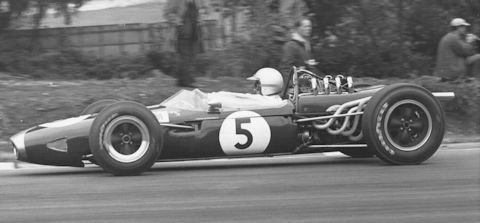
The Brabham BT19 was a Formula racing car that Brabham built in the mid-1960s. The name BT stood for the surnames of Jack Brabham and Ron Tauranac, the two constructors. In 1966 it was driven by Jack Brabham, who became the first driver to win a world championship Grand Prix in a car bearing his own name with an engine producing barely 300 bhp thought by its high budget competitors could not possibly compete with them.
The BT19 was a remarkable one-off, hastily adapted for the first season of racing under the 3 litre Formula 1. Coventry Climax announced during 1964-65 that they would not be building a new engine for the three-litre Grand Prix Formula proposed for 1966. This move left such British specialist constructors as Lotus, Brabham and Cooper out on a limb.
Lotus had Cosworth Engineering build them an engine with Ford money; Cooper turned to Maserati in Italy, who wheeled out a three-litre version of their age-old 2.5-litre V 12 engine of 1957.
Brabham looked to his native Australia and the Repco specialist performance equipment company there, who had helped fund his production racing car company upon its inception in 1961/62. Repco, had devised a racing V8 on the basis of an Oldsmobile unit Repco's Chief Engineer Frank Hallam and Project Engineer Phil Irving were instructed to produce a new engine to fit into the existing Repco Brabharn chassis The BT19 chassis was a typically practical Tauranac spaceframe design, its well-triangulated tubular frame unusual in that it used oval-section tubing. Suspension was with unequal-length wishbones at the front, comprising a transverse link and trailing radius rod at the top and a one-piece tubular wishbone at the bottom modified Triumph Alford and Alder uprights while the rear suspension employed single top links, reversed lower wishbones and twin radius rods which located cast uprights. Outboard spring/damper units were fitted all-round and Hewland's HD gearbox to its rear Goodyear tyres.
They took a very simple Oldsmobile 1785 production V 8 engine with an alloy block a linerless aluminium engine programme meant for a .Buick "compact" based round the General Motors Oldsmobile F85 cylinder block rather than a totally new and developed it extensively for Formula 1 use. It offered a maximum 315 bhp at 7250rpm from 88.9 mm x 60.325 mm cylinders, and displacing 2995-7 cc, there was a single overhead camshaft per bank. Installed in a very light and practical spaceframe chassis designed by Brabham's associate Ron Tauranac, this was to prove sufficient.
The chassis used originally had been laid down for a still-born flat-sixteen-cylinder 1.5-litre Climax engine in 1965, and it was quickly adapted to accept the new Repco engine. Running against H 16 BRM, V12 Ferrari, V 12 Eagle-Weslake, V 12 Maserati and ultimately V 8 Cosworth-Ford engines, this unit did amazingly well.
Jack Brabham's BT19 won the 1966 French Grand Prix and then won the British, Dutch and German Grands Prix consecutively, clinching the World Championship titles for himself and for his cars along with the BT22 In 1967 Ron Tauranac did 'a proper job' BT 24 car with which Denny Hulme won the Drivers' title, pipping his team-leader, who was content that his marque was for the second successive year Champion of the World.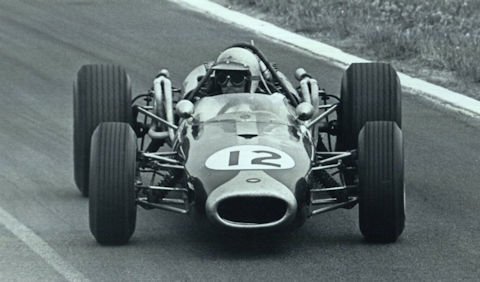
Brabham BT8 Race car
|
|
|
|
Manufacturer: |
Brabham |
|
Production period: |
1964 to 1966 |
|
Class: |
Race car |
|
Body versions: |
Single twin seat open |
|
Engines: |
Gasoline 2.0-3.5l |
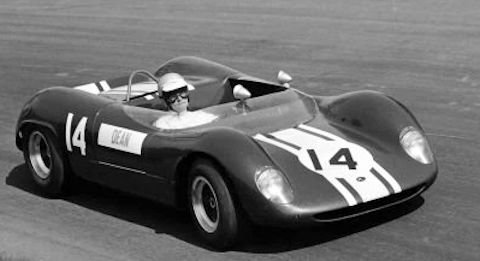
The Brabham BT8 was a sports racing car built in from 1964 to 1966 by Brabham.
Most Brabham’s were single-seaters, but as sports-racing cars were popular in Britain and North America in the mid-1960s, Jack Brabham and Ron Tauranac now followed the examples such as from Lotus.
Jack Brabham drove the BT8 with BRM engine on its debut at Goodwood, and now built derivatives of single-seater designs with full-width bodywork. The transmission was the Hewland Mk 5-speed gearbox and the BT8 was intended to be powered by the Coventry-Climax FPF 2-litre unit or the BRM V-8. of similar concept to the previous BT5 with multi-tubular space-frame chassis, front suspension by unequal-length wish-bones and coil spring/damper units and rear suspension by lower wishbones, radius arms and coil spring/damper units. The wheelbase was 3 in longer than previous models. Two 12-gallon alloy fuel tanks were installed, one on each side.
The first was BT5. based on the BT2 Formula Junior, built a multi-tubular chassis but forced to abandon it by new regulations for Indianapolis and Formula I with independent suspension and fibre bodywork. It was intended for Coventry Climax 2 litre engines, although larger conversions to a 2.5 and a 3.5 litre Oldsmobile V8 fitted still with Hewland gearboxes were used. The dozen or so cars built were successful in the now 2 litre classes.
The BT8 remained available until 1966 in total around 12 were built up until 1966.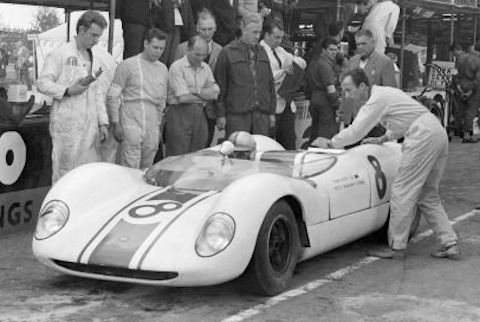
Brabham BT7 F1 Race car
|
|
|
|
Manufacturer: |
Brabham |
|
Production period: |
1963-1964 |
|
Class: |
Race car |
|
Body versions: |
Single seat open |
|
Engines: |
Gasoline V8 |
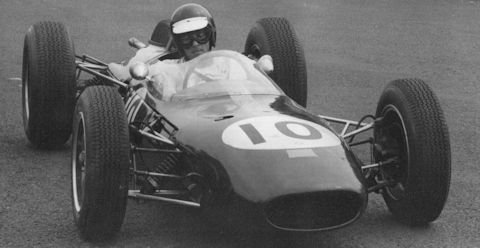
The Brabham BT7 was a Formula One racing car first built in 1963 by Brabham.
History
The BT7 was developed from the BT3, and was the car that really established Brabham as a leading Grand Prix contender. it was a breakthrough season in that Brabham won the International Trophy and Gurney won the French GP. later in the year
Jack Brabham now ran a two-car team from 1963, with a development bringing the first F1 victories for the team, when Brabham won the Aintree 200 and the Silverstone International Trophy in his cars in 1964.Short-stroke Coventry Climax V-8s were used, with five-speed Hewland gearboxes.
This was built around a stiff space frame but problems came with this suspension and also the fuel system adjustable on board. The suspension was revised, with an upper wishbone and lower transverse link at the rear. the wheelbase was longer and the bodywork more effective after Tauranac had taken aerodynamic advice from Jaguar's Malcolm Saver. while the Brabham team was third in the Constructors' Championship, ahead of Ferrari. The two cars were modified for 1964 fitted with new wide Dunlop’s.
Brabham BT53 F1 Car
 |
|
|
Constructor: |
Brabham |
|
Designer: |
Gordon Murray |
|
Years |
1984 |
|
Chassis: |
Monocoque made of carbon fiber with subframe at the rear axle |
|
Engine: |
BMW M 12/13 |
|
Wheelbase: |
2946 mm |
|
Mass: |
545 kg |
|
Tire: |
Michelin |
|
Petrol: |
Castrol |
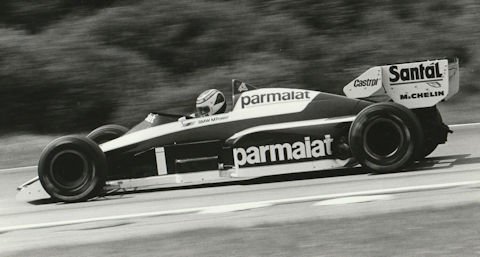
The Brabham BT53 is a Formula 1 racing car of the team Brabham Racing Organization , which was used in the 1984 season . Nelson Piquet , Teo Fabi , Corrado Fabi and Manfred Winkelhock drove the car developed by Gordon Murray . Nelson Piquet won two races with the Brabham BT53.
History
From its predecessor, the arrow shape of the car was adopted for the BT53. The sides were pulled slightly forward and more angular. For fast tire changes, an onboard four-point jack system was installed, along with carbon fiber reinforced brake discs for shorter stopping distances and a Hewland six-speed gearbox. The engine weighed 175 kilograms and had four cylinders in series with a capacity of 1499 cc. At a boost pressure of 3.2 bar in the race, the BMW engine produced 626 kW, which corresponded to 850 hp. The livery of the car was dark blue and white as in the previous year's Brabham BT52 . Team principal Bernie Ecclestone had also signed contracts with Parmalat and Fila for the 1984 season. With Michelin , Santal and Castrol also these partners were preserved.
The season 1984 engine damage made defending the title impossible for Nelson Piquet . Although he finished four times in the top three and won in Canada and the GP in Detroit , but otherwise fell, except for a second, third and sixth place, always off. Team-mate Teo Fabi secured the Brabham team nine points, while Corrado Fabi and Manfred Winkelhock ran out of goals. At the end of the season, the Brabham team took fourth place in the constructors' championship with 38 points.
Brabham BT52 F1 Race car
|
|
|
|
Constructor: |
Brabham |
|
Production |
1983 |
|
Designer: |
Gordon Murray |
|
Chassis: |
Monocoque made of carbon fiber with subframe at the rear axle |
|
Engine: |
BMW M 12/13 1.5 liter R 4-turbo |
|
Wheelbase: |
2845 mm |
|
Mass: |
540 kg |
|
Tire: |
Michelin |
|
Petrol: |
Castrol |
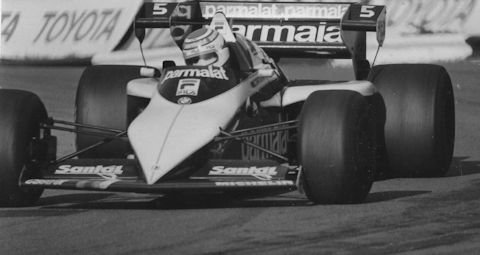
The Brabham BT52 is a Formula 1 racing car of the team Brabham Racing Organization , which was used in the 1983 season . Nelson Piquet and Riccardo Patrese won with the Gordon Murray developed car four Grand Prix and achieved 2 pole positions . Nelson Piquet won his second world title with the Brabham BT52. With the BMW engine in the rear, for the first time in the history of Formula 1, a turbo engine- powered vehicle for the driver world champion.
Technology
The BT52 (the designation BT51 in front of the BT52 was reserved for another model that never existed) looked like an arrowhead with a delta-shaped front wing . The radiator, the turbocharger cowling and the exhaust were set back in the rear of the car. The turbo engine of BMW, designed by Paul Rosche, with 165 kilograms, although somewhat overweight, but made in qualifying up to 1,400 hp (1,030 kW).
Gordon Murray used aluminum for the monocoque and plastic reinforced with carbon fiber . The front of the cell closed with a light metal bulkhead, in which the wishbone stored and vertical struts were housed. The paint of the car was dark blue and white. Team principal Bernie Ecclestone had signed a sponsorship agreement with Parmalat with side sponsor Fila. In addition to advertising stickers on the side panels of the wings and on the vehicle nose , the latter mainly included title sponsoring - the team was announced as Fila Sport in the 1983 season . Michelin , Santal and Castrol were other partners.
For the Brabham team and Nelson Piquet the season began with a victory in Brazil at the inaugural race for the 1983 season . After a break in the United States followed in France second behind Alain Prost (Renault), which subsequently developed into a favorite for the championship and with three more victories up to the Grand Prix of Austria could build a 14-point lead on Piquet. In the last four races of the season, however, Prost dropped out three times, while Piquet won in Italy and at the GP of Europe . With a third place finish of the season n South Africa Piquet was finally able to pass Prost and win the driver's championship with a three point lead. In this race, Piquest's team-mate Riccardo Patrese , who otherwise did not get along well with the car and lost a total of ten times during the season, won. In the Constructors' Championship Brabham finished third behind Ferrari and Renault .

