

Nissan Maxima 4th generation
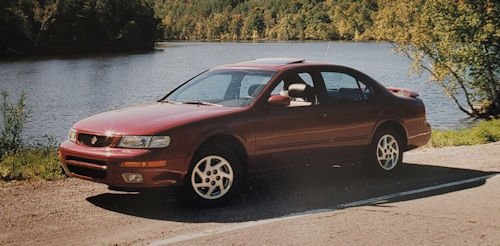 |
|
|
Production period: |
1995 to 2000 |
|
Body versions : |
sedan |
|
Engines: |
Gasoline engines : 2.0-3.0 liters |
|
Length: |
4768-4811 mm |
|
Width: |
1770 mm |
|
Height: |
1415 mm |
|
Wheelbase : |
2700 mm |
|
Curb weight : |
1410 kg |
From 1995, the model received a new design and new engines. The old engine of the VG series has been replaced by the newly developed VQ series. In Europe, the performance of the 3.0-liter V6 model was increased to 142 kW (193 hp). A 2.0-liter V6 engine with 103 kW (140 hp) was introduced. In other countries was also a 2.5-liter V6 on offer.
The presence of a limited-slip differential. Its interior presentation is also a little more cheerful, notably with perfectly legible white-background instruments. Updates include an additional cup holder on the center console, a modified keypad for the keyless entry system, and the availability of optional ABS on the base GXE models. Finally, the more luxurious GLE and SE versions, with leather-upholstered seats, now feature four-way power adjustment. The Maxima has plenty of arguments to appeal to those looking for a car similar in size Toyota Camry.
Its engine differs from the old one: it's lighter (the block and cylinder head are made of aluminum), more compact, and above all, more fuel-efficient.
This 24-valve DOHC V-type engine develops 190 lively horsepower, which averages 110 liters per 100 km and much less for a stable speed, even with the automatic transmission.
Handling and comfort benefit from a rear suspension based on a familiar principle but with a new twist. It's a semi-rigid axle using special chassis design to eliminate lateral thrust and keep the wheels perpendicular to the ground.
The A32 was no longer an independent model, but identical to the Nissan Cefiro which was sold in Asia. European models were given the suffix QX. In the North American market, the Maxima was sold with a slightly modified body, the international version was as Infiniti I30, however, also available. From a technical point of view, specific remedies have been provided with regard to the weak points of the predecessor model (such as with the cracked exhaust manifolds and the defective automatic transmissions, due to the higher speeds usual in Europe).
For the A32 series, the independent rear multi-link axle of the J30 was replaced by a simple live axle (Nissan referred to as Kompaktlenkerachse and similar installed on the Primera P11 and Almera), which tends to sudden oversteer in the border area, a clear step backwards compared to the previous model and was one of the few serious weaknesses of the Maxima. Likewise, the semi-active "Super Sonic Suspension" system was no longer available.

