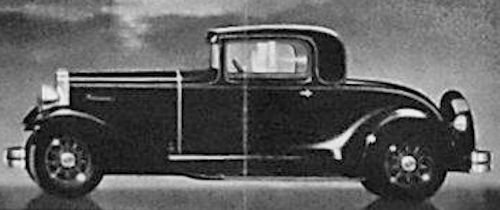
Nash 660 (Six-Sixty)
 |
|
|
Production |
1931 |
|
Assembly |
United States |
|
Class |
Motor Car |
|
Body |
|
|
Engine |
3,299 cc |
|
Transmission |
3-speed manual |
|
Drive |
Rear wheel |
|
Wheelbase |
2,902 mm |
The Nash 660 (pronounced Six-Sixty ) was a series of six-cylinder cars of the Nash Motors Company in Kenosha . This was replaced with his more powerful eight-cylinder sister model 870 the Single Six and was made only in the model year 1931. The following year, the series was renamed Nash 960 (pronounced: Nine-Sixty ).
The 660 took over the chassis with 2,902 mm wheelbase from its predecessor.
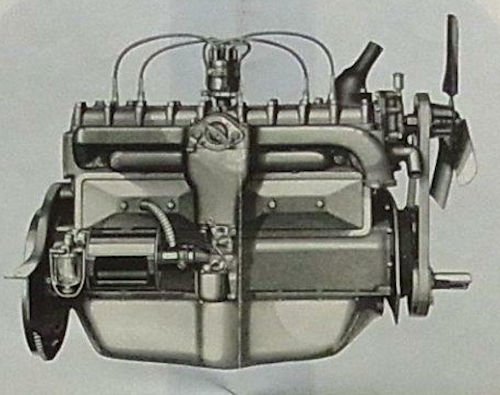
The side-controlled six-cylinder inline engine with 3,299 cc displacement (bore × stroke = 79.4 mm × 111.1 mm) came from the previous year. However, he now made 65 bhp (48 kW) at 3,200 rpm. The motor is the powerful Nash, high-turbulence type. It has big main bearings, instead of the customary 3 or 4 bearing on each side or each connecting rod and runs smoother, quieter and longer lived. Aluminium alloy (Invar strut) pistons are used, instead of the cast-iron type Six connecting rods are drilled for feed lubrication to the piston pins and cylinder Crankshaft flywheel and clutch are balanced. And a torsional vibration still further smoothed the action of this quiet running motor.
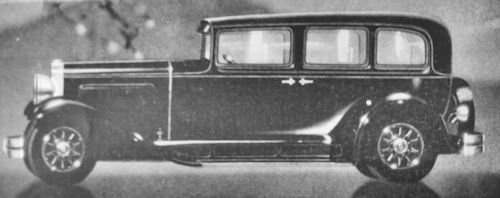
The drive and brake components (single-disc dry clutch, 3-speed mid-range gearbox, rear-wheel drive, mechanical brakes on all four wheels) also came from the previous year's model. There was ac, two different 2-door coupes and a 4-door sports Phaeton.
Equipment .Three-spoke steering Wheel/ with steel core encased in hard rubber, giving clear vision of all operating instruments; throttle and lighting switch on steering wheel with horn button in centre. Heat indicator, hydrostatic gasoline gauge, speedometer, oil pressure gauge, ammeter, carburettor heat control button and choke button on indirectly-lighted instrument panel. Starter button on dash. Coincidental lock on steering post bracket. Twin ventilators on top of cowl with operating levers directly underneath instrument board. Automatic windshield wiper; rear view mirror. Chromium-plated head lamps. Combined stop and tail light. Interior hardware, silver finished; exterior hardware, chromium plated. Front dash board insulated against heat, cold and noise. One-piece fenders.
Coupes are upholstered in mohair (leather optional at no extra charge), have adjustable driver's seat, crank Operated windshield, curtain on rear window and lock type door handle on rear deck door. Coupe with rumble seat has an adjustable rear window. Sport Phaeton is upholstered in leather has a folding windshield, folding top boot, side curtains that open with doors, large pockets in doors, foot rest and robe rail in rear tonneau.
Sedan models are upholstered in mohair, have adjustable driver's seat, crank operated windshield, arm rests, dome light. foot rest, and curtains on back and rear quarter windows. The '4-door Sedan has smoking set, robe rail an assist cord. The 2-door Sedan also has a shirred door pocket.
The 1932 model was introduced on June 1, 1931, showed no major changes and was now the 960 . As with the larger 990 , 980 and 970 models , the grille got a slight V-shape and the main headlights got a more elongated (rocket) shape. Instead of the two superimposed front bumper parts, there was a one-piece bumper.
Already on March 1, 1932 replaced the Big Six Model 1060 model series.