SEAT 850
 |
|
|
Mother company |
Fiat Auto |
|
Make |
SEAT |
|
Years |
1966 to 1974 |
|
Built |
662,832 |
|
Successor |
SEAT 133 |
|
Bodyworks |
Sedan two and four doors |
|
Setting |
Rear engine and rear wheel drive |
|
Dimensions |
3575/1425/1380 mm |
|
Weight |
714 kg in running order |
|
Designer |
Dante Giacosa |
The SEAT 850 was a car produced by the Spanish manufacturer SEAT from 1966 to 1974
History
Based on the Fiat 850 and manufactured by SEAT in Spain under licence from Fiat. It was more inexpensive than its predecessor, the SEAT 600, while also being more comfortable. The Fiat 850 was first introduced in 1964. Although some Fiat 850 were imported to Spain, the manufacture under license of the SEAT 850 did not begin until 1966 , the year in which the new car was presented to the public in the Salon of the Automobile of Barcelona.
In April, the SEAT 850 N ("Normal"), with a saloon body, was put up for sale. This first version had a rear engine of 843 cubic centimeters that provided 37 hp of power, with which it could reach a maximum speed of 125 kilometers per hour. Initially, only the two-door body was available, but soon a first four-door version appeared inspired by the Italian bodybuilder Francis Lombardi, and who shared the battle with the two-door saloon. Later a new body of four doors with Spanish design would be presented, and that increased in length with respect to the initial saloon.

In total, 662,832 units of the SEAT 850 were manufactured. Production ended in 1974 , developing multiple versions during its eight years in the market.
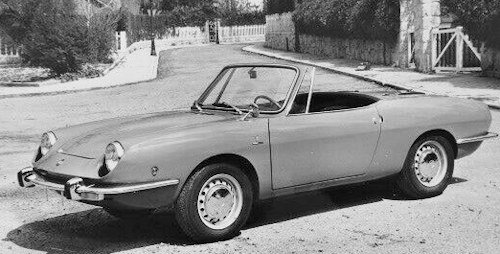
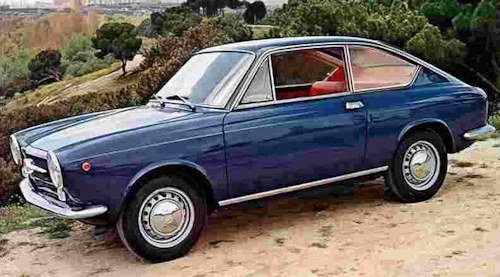
The SEAT 850 was manufactured with several different bodies. Although the most popular were two- and four-door sedans, sports versions also existed. Thus, customers with a higher purchasing power could have the SEAT 850 Coupé, SEAT 850 Sport Coupé or SEAT 850 Sport Spider, the latter convertible .
Within the saloon version, different models were put up for sale based on their technical characteristics and standard equipment. The most basic was the SEAT 850 Normal, which was followed by the SEAT 850 Special (a better equipped version with the same engine as the 850 Normal). Their respective evolutions were the SEAT 850 D and the SEAT 850 D Special, and finally, the SEAT 850 Special Luxury and its evolution, the SEAT 850 D Special Luxury. Although engine displacement was always maintained at 843 cubic centimeters for saloons, the maximum power increased from 37 hp (DIN) of the SEAT 850 Normal and 47 (DIN) of the special SEAT 850, to 52 hp (DIN) of the SEAT 850 Special luxury that provided its 903cc engine.
PERFORMANCE
- Engine Capacity 51.44 cu in, 843 cu cm
- Fuel Consumption 42.1 m/imp gal, 35.1 m/US gal, 6.7 1 x 100 km
- Max Speed 74.5 mph, 120 km/h
- Power- weight ratio: 36.8 lb/hp, 16.7 kg/hp
- Acceleration: standing 1/4 mile 23 sec, 0—50 mph (0—80 km/h) 20 sec
- Max power (SAE): 40 hp at 5,300 rpm
- Max torque (SAE): 41 1b ft, 5.7 kg m at 3,500 rpm
- Max engine rpm: 5,300
- Specific power: 47.4 hp/l
- Max speeds: 18.6 mph, 30 km/h in 1st gear; 34.2 mph, 55 km/h in 2nd gear; 52.8 mph, 85 km/h in 3rd gear; 74.5 mph, 120 km/h in 4th gear
Of all the versions, the one that achieved the greatest sales success was the SEAT 850 Special two-door, of which some two hundred thousand units were manufactured.
In 1970 Siata Torino hill, and the license of its model based on the Fiat 850 called Siata Spring, was acquired in 1972 by the company Iso Rivolta , since Fiat had stopped manufacturing the 850, agreements would be reached with SEAT to develop it under the base of SEAT 850, becoming known as SEAT-ORSA 850 Spring Special, until the end of its production in 1975.