
About
Technical
-
Engines
model - capacity power Consumption
(l / 100 km)construction time gasoline engines 1.4 LPG ecoFLEX Z14XEP 1364 cc 64 kW (87 hp) LPG: 8.1 / gasoline: 6.2 07 / 2009-11 / 2009 1.4 Twinport ecoFlex Z14XEP 1364 cc 66 kW (90 hp) 6.2 02 / 2004-11 / 2009 1.6 Z16SE 1598 cc 64 kW (87 hp) 7.8 replaced by 1.4 Twinport 03 / 2003-02 / 2004 1.6 (Ecotec) Z16XE 1598 cc 74 kW (101 hp) 7.5 replaced by 1.6 Twinport 03 / 2003-07 / 2005 1.6 Twinport (Ecotec) Z16XEP 1598 cc 77 kW (105 hp) 6.7 08 / 2005-11 / 2009 1.6 Turbo (Ecotec) Z16LET 1598 cc 132 kW (180 hp) 7.8 only in OPC version (six-speed gearbox) 09 / 2005-11 / 2009 1.8 (Ecotec) Z18XE 1796 cm³ 92 kW (125 hp) 7.3 03 / 2003-11 / 2009 diesel engines 1.3 CDTI ecoFlex Z13DTJ 1248 cc 55 kW (75 hp) 5.0 with standard particle filter 08 / 2005-11 / 2009 1.7 DTI (Ecotec) Y17DT 1686 cc 55 kW (75 hp) 5.5 replaced by 1.3 CDTI 03 / 2003-07 / 2005 1.7 CD TI (Ecotec) Z17DTH 1686 cc 74 kW (101 hp) 5.2 with five-speed gearbox without particle filter 03 / 2003-07 / 2005 1.7 CDTI (Ecotec) Z17DT 5.4 with six-speed gearbox and particulate filter 10 / 2006-11 / 2009 1.7 CD TI (Ecotec) Z17DTR 1686 cc 92 kW (125 hp) 5.4 with six-speed gearbox and particulate filter 10 / 2006-11 / 2009 The CDTI lettering of the 1.7 (74 kW) from 2003 to 2005 differs from the other diesel engines by the two red colored "TI" letters. After the facelift, the 92 kW diesel got this feature.
Technical data
Technical specifications1.4 TWINPORT ecoFLEX 1.6 TWINPORT ECOTEC 1.8 ECOTEC 1.6 Turbo ECOTEC (OPC) Engine construction and number of cylinders
R4 gasoline engine
with multi-point injectioncapacity 1364 cc 1598 cc 1796 cm³ 1598 cc Max. Power
(hp)
at 1 / min66 kW
(90 hp)
560077 kW
(105 hp)
600092 kW
(125 hp)
6000132 kW
(180 hp)
5500Max. Torque
at 1 / min125 Nm
4000150 Nm
3900165 Nm
4600230 Nm
2200-5500Gearbox, standard 5-speed manual transmission 6-speed manual transmission Gear, optional - 5-speed Easytronic - top speed 168 km / h 181 km / h
181 km / h 1190 km / h
190 km / h1222 km / h Acceleration in s
from 0-100 km / h13.8 13.3
14.3 111.3
12.3 18.2 Fuel consumption
(according toEEC directive, combined l / 100 km)6.2 S 6.7 S
6.7 S 17.3 S
7.3 S 17.8 SP CO 2emission, combined 148 g / km 159 g / km
159 g / km 1174 g / km
174 g / km2187 g / km Emission standardaccording to EU classification Euro 4 1.3 CDTI ecoFLEX 1.7 CDTI ECOTEC 1.7 CDTI ECOTEC Engine construction and number of cylinders
R4 diesel engine with common rail injection capacity 1248 cc 1686 cc 1686 cc Max. Power
(hp)
at 1 / min55 kW
(75 hp)
400074 kW
(101 hp)
440092 kW
(125 hp)
4400Max. Torque
at 1 / min170 Nm
1750-2500260 Nm
2000280 Nm
2300Gearbox, standard 5-speed manual transmission 6-speed manual transmission Gear, optional - - - top speed 157 km / h 180 km / h 195 km / h Acceleration in s
from 0-100 km / h17.8 12.8 10.9 Fuel consumption
(according toEEC directive, combined l / 100 km)5.0 D 5.4 D 5.4 D CO 2emission, combined 135 g / km 146 g / km 146 g / km Emission standardaccording to EU classification Euro 4 1 value for the Easytronic transmission
-
Manuals
Vauxhall Opel Meriva A
 |
|
|
Production period: |
2003 to 2009 |
|
Class: |
Motor Car |
|
Body versions: |
minivan station wagon |
|
Engines: |
Gasoline : 1.4-1.8 litres (64-132 kW) |
|
Length: |
4052 mm |
|
Width: |
1694 mm |
|
Height: |
1624 mm |
|
Wheelbase: |
2630 mm |
|
Curb weight: |
1323-1467 kg |
|
successor |
Opel Meriva B |
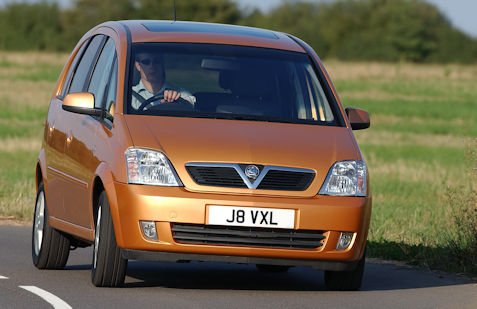
The Opel Meriva is a minivan of the US automobile company General Motors, which was offered as Vauxhall Meriva in the UK, as Chevrolet Meriva in South America and as Opel Meriva in the rest of the world.
It was based on the Opel Corsa C presented in autumn 2000 and was developed by General Motors do Brazil together with the Opel development centre in Russelsheim. The European version Opel and Vauxhall Meriva were from spring 2003 to autumn 2009, the Opel plant Figueruelas in Zaragoza in Spain produced the Latin American version by 2012 the factory Sao Jose dos Campos in Brazil.
Mervia’s chassis has been designed using a number of well-proven components from existing models in the Vauxhall range. The chassis architecture is broadly similar to that on other Vauxhall models, using the familiar MacPherson strut layout with lower wishbones and a stabiliser for the front suspension, and an enhanced compact torsion crank axle at the rear.
The steering system for the Meriva is the version of Vauxhall’s speed sensitive electric power steering (EPS). Meriva has disc brakes on all wheels with those at the front being ventilated. Electronic Brake Force Distribution (EBD) is also standard on all models, which ensures the car remains stable under braking when there are different friction levels on the left and right side. An electronic stability program, ESP, is available across the range.
Its 103.5 inch /2630mm wheelbase which almost matches that of the larger Zafira brother’s 106in/2694mm. At 159in/4042mm it is just 10.7in /270mm shorter than Zafira. In terms of width (66.6in/1694mm) and height (63.9in/1624mm) the differences between Meriva and Zafira are 1.7 and 2.2 inches/43mm and 55mm.
The rear lights are raised and integrated the four-window arrangement that stretches rearwards from a split A-pillar window triangle. There is a dual glass sun roof, both front and rear electrically operated the dual sun roofs maintain a comfortable interior climate even when it is extra hot outside. The fuel tank flap houses a tool for the tyre valve cap that means clean hands and easy access when checking pressures. Meriva is fitted with an optional follow-me-home lighting system has H7 halogen bulbs and crystal-clear glass headlamps, with xenon headlamps and high-pressure headlight washers an option, and the rear stop lamp has high powered LEDs to give an extra braking warning to following traffic.
Meriva contains the second-generation immobiliser and copy-proofed rolling security code. The copy-proofing protects against remote code scanning or grabbing. Meriva’s high-quality radio frequency central door locking system has two electric actuators for each door and the boot lid, making opening and locking significantly smoother.
The car’s anti-theft alarm system monitors all the normal intrusion risks – doors, bonnet, tailgate and ignition. To deter would-be intruders an ultrasonic sensor activates the alarm when it detects breaking glass anywhere inside the cabin. It also features an inclination sensor which sounds the alarm when the car is moved. The alarm is automatically activated and deactivated when the car is locked or unlocked.
Meriva’s engine line-up first consists of three petrol and one diesel unit, the entire engine range being characterised by lively, willing performance on the road coupled with an environmental conscience with their low emissions. Petrol option from the 1.6 8v, a 1.6 16v or the 125PS 1.8 16v.Fuel consumption, on a combined cycle, for the three petrol engines is 36.2mpg for the 1.6 8v, 37.6 mpg for the 1.6 16v, and 34.4 mpg for the 1.8 16v.
The Common Rail Engine ("CDTI") was developed jointly by GM Powertrain and Fiat. After completion of the joint venture, General Motors and Fiat share the rights to this engine, the production is due to long-term contracts continue at Fiat. The 1.3 CDTI of the ECOTEC engine family from Opel was voted engine of the year in 2005 in the class of 1.0 to 1.4 l displacement. 1.7CDTi ECOTEC, a new common rail direct injection diesel and emissions low enough to comply with Euro 4. Common rail technology uses a high-pressure pump to supply fuel to the common rail, which is then delivered to the cylinders via injection valves. maximum torque is reached at a lowly 2300 rpm with 240 Nm of pulling power available at this engine speed. Maximum power output is 100 hp.
Easytronic automated manual option is available in conjunction with the 1.6 16v engine from launch. Easytronic uses electronically controlled actuating motors in place of a clutch pedal. Drivers are given the option of shifting the gears themselves, or if they prefer, they can let the car do the work in full auto mode.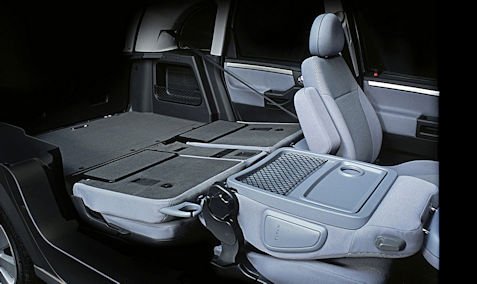
Interior safety measures include height limiters as well as two Isofix child seat mounts on the outer rear seats head curtain airbags for front and rear passengers are optional. ABS anti-lock braking is standard and Meriva has Vauxhall’s pedal release system helps minimise foot and lower leg injury in a severe frontal collision. These have combined to give Meriva a four-star safety rating in the Euro NCAP test the five-seater FlexSpace concept, two rear passengers in two separate seats can enjoy leg and shoulder room superior to that found in many mid-size cars. The rear seat is in effect three independent units in a 40:20:40 split, composed of two broad individual seats and a narrower centre seat. One of its features is the ability to fold away the centre seat allowing the two outer seats to be easily slid inwards by three inches. The seat backs can recline from their regular 23 degrees to 34 degrees. For luggage space. If more is needed, one or both of the individual outer seats can be slid forward, folded down or lowered to the floor.
The Audio system consists of a module in the rear console with separate controls for programme selection and volume, and sockets for two headsets. Along with the Twin Audio system, Meriva will also be available with the “Auto Vision” DVD entertainment system that allows rear seat passengers to watch DVD films or play conventional music or data CDs.12-volt power sockets, one each in the load area and in the front and rear sections of the centre console. There are reading lights for both front and rear passengers.
The instrument panel has four sports-style circular dials for fuel, rpm, speed and temperature, and a triple-information display sit in the centre of the instrument panel. The steering column is adjustable for rake.60-litre, three-compartment storage box under the load-area floor panels and the optional. A compartment on the fascia panel in place of the ashtray can store cassettes, CDs or a mobile phone along with a make-up mirror and a pocket for small items in the driver’s sun visor with 3.1 litre drawer under the front passenger seat.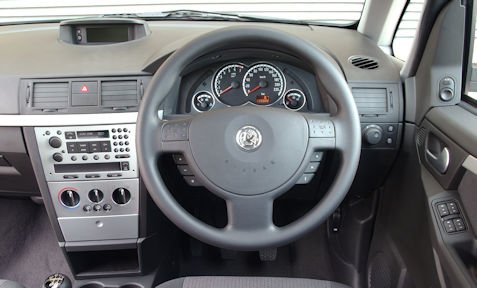
In January 2006, the Meriva received a facelift. The crossbar on the radiator grille is now no longer centred, but as with all current Opel models placed above the grill. A modified front bumper with redesigned fog lamps (round instead of rectangular), a modified design of the front headlights with clear glass and darkened taillights are other features/The base model has four disc brakes (front ventilated) with ABS including brake assist , front and side airbags, the electronic stability program ESP Plus with traction control TC Plus , a speed-dependent electric power steering (EPS), central locking with radio control , Steering column and driver's seat with height adjustment, tachometer, electr. adjustable and heated exterior mirrors and a double luggage compartment floor. Only in conjunction with the 1.7 CDTI engine is the Meriva Selection 110 years also equipped with air conditioning as standard.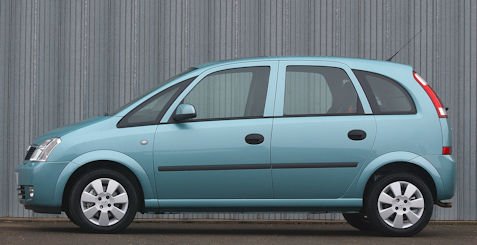
The next higher edition Edition also offers electric windows, air conditioning, a MP3-CD radio with steering wheel remote control, a front centre armrest, additional storage compartments and various additional lighting (reading lights, etc.). The current equipment (November 2008) also includes fog lights.
The model Cosmo is no longer offered since the end of 2008. It had light alloy wheels, electr. folding exterior mirrors, an on-board computer, fog lights and a leather steering wheel. Instead, there is now standard with heated seats, cruise control and a rear parking pilot. The head airbags that are standard on the Meriva OPC are available on additional models for the other models.
Equipment Options: Essentia, Enjoy, Edition, catch me, Catch me now, NAVI, Cosmo, INNOVATION, OPC, Selection
At Opel and Vauxhall Meriva, A was in May 2010 by the Meriva replaced, in Latin America in 2012 by the developed in Brazil alone Chevrolet Spin, who is also in Bekasi in Indonesia is produced.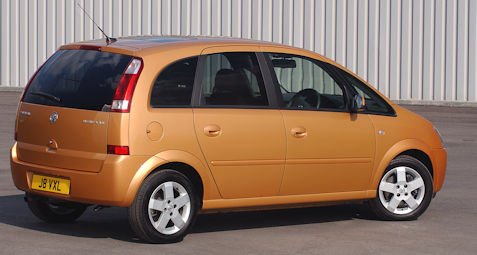
|
Featured
|
|
