
Belgium
Apal (Application Polyester Armé de Liège s.à.r.l )
Automotive manufacturer of Belgium from 1961 to 1998.

APAL was a small Belgian car factory that started in the 1960s there main production was kit cars built on the VW Beetle chassis.
History
Fiberglass specialist Edmond Pery founded the automobile manufactory in Blegny -Trembleur (Liège) in 1961. Pery presented his first model, a GT coupe with gullwing doors, powered by Volkswagen or Porsche engines, at the 1962 Brussels Motor Show .By 1965 Apa began with the production of a Formula V - single-seater .Between 1968 and 1973, about 5000 fiberglass bodies were produced for different buggies, such as the Apal Buggy, the Apal Rancho, the Apal Jet, the Apal Auki the Apal Corsa (with gullwing doors) and the Apal Horizon.
The traditional buggy was available on a standard VW chassis with a 1200 or 1300 cc air-cooled VW engine . It was produced in more than 4000 copies by Apal.
The most successful model was the Apal Speedster, a replica of the Porsche 356 , based on a shortened VW Beetle chassis. 700 Speedsters were built from 1981 to 1994. In 1984 Apal also developed a pre built two-seater sports coupé using Mercedes-Benz W201 underpinnings, called the Francorchamps This was developed together with an American company only two copies were built.
The Francorchamps, a limited production two seater sportscar based around the mechanicals of the Mercedes-Benz 190.Its unusual bodywork is a composite of fibreglass and Kevlar and includes a removable hard top for open air motoring Weighing just over a ton, it has a lively performance and, thanks to its three-section tubular steel chassis, excellent road manners. Sold only as a hand-built car to special order, the Francor champs boasts a leather interior, electric windows and generous luggage capacity. On the options list are 16-valve (160bhp)and turbocharged (185bhp) engines.
The last model, the Apal Sport One, was based on the Pontiac Fiero and was introduced in 1992.Edmond Pery also designed a four-wheel prototype for DAF in 1974 and another prototype for Volkswagen in 1992.In the meantime, the company has changed production and produces luxury bathrooms. The brand "Apal" had been taken over by a German company.
Models
- Apal Buggy
- Apal Coupe
- Apal Rancho
- Apal Jet
- Apal Auki
- Apal Corsa
- Apal Horizon
- Apal Formula Vee
- Apal Speedster
- Apal Francorchamps
- Apal Sport One

Van Clee Automotive manufacturer
Egem-Pittem Belgium From 1978 to 1996.

Van Clee was a Belgian manufacturer of kit car type automobiles .
history
The company from Egem-Pittem started in 1978 with the production of automobiles These models were also offered as a “Kit Car” . The vehicles were also exported to Italy Greece and Holland.
The model Highway was a buggy with tilting roof and was based on the chassis of the VW Beetle . For the engines from VW with either 1600 cc and 2000 cc displacement .
The models 600 Mungo , Ernet , Ernu and Rusler were based on the chassis of the Citroën 2 CV . The original two - cylinder boxer engine with 602 cc of displacement drove the front wheels. The vehicles had a plastic body and optionally a textile top or a hardtop for the rear vehicle area. The 600 mongoose was 25 cm shorter than a Citroën Méhari .
In 1996 the Van Clee production ended.
Belgian Cushman (Materiel Motorisée de Qualité)
Automotive manufacturer of Belgium From 1908 to 1926.
Belgian Cushman was a Belgian vehicle brand from the 1950s.
History
The company Materiel Motorisée de Qualité from Anderlecht began in 1951 with the production of scooters built under the American license. In 1954, a small car was born .
The microcar presented in 1954 was technically based on the scooters and equipped with the Cushman 300 cc 4T engine. This could accommodate two people, but remained a prototype.
By 1958 ended production.
Méan Motor Liberta Engineering SA
Automotive manufacturer Liege Belgium from 1966 to 1974
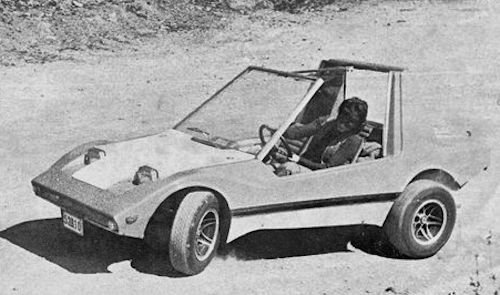
The Méan Motor Engineering SA was a Belgian manufacturer of automobiles . The brand name was Méan .
History
The company from Liège began in 1966 under the direction of Jacques d'Heur with the production of automobiles. End of 1971 it was renamed Liberta Engineering SA . The company offered the vehicles with plastic body both ready assembled and as a kit car .1974 ended production.
The first the Sonora 1000 model was an open two-seater Dry weight 1,279 lb. 580 kg with the chassis of the VW Beetle . The first choice was the four-cylinder engines of Ford Anglia with capacity 60.84 cu in, 997 cu cm the max power (SAE) of 41 hp and Dry weight of 1,279 lb. 580 kg and max speed of 90.1 mph, 145 km/h this came with Independent front and rear suspensions and drum brakes.
The larger Ford Cortina GT engine with a capacity 91.52 cu in, 1,499.90 cu cm had a max power of (SAE) 83.5 hp and Max speed of 96.3 mph, 155 km/h. this now had front disc brakes. along with NSU TT , Peugeot 404 and Renault 8 engines. The largest was the six-cylinder engine of the Ford Taunus with 2000 cc displacement capacity 121.92 cu in, 1,998 cu cm with dry weight 1,433 lb. 650 kg. The top speed was specified at Max speed 111.9 mph 180 km/h for this strongest model.
The Barquette This was an open two-seater with roll bar for racing.The Aquila This model had a built-in motor of Ford , which was mounted in the rear.
Liberta Funcar.This model was created between 1972 and 1974. It was a fun car in the style of a buggy . For the drive provided four-cylinder engines from Renault or Simca .
Minerva
Belgian automobile manufacture Belgium. Produced from 1902 to 1938

The Minerva was a prominent Belgian luxury automobile manufactured from 1902 until 1938. The company became defunct in 1956.
Minerva was a Belgian manufacturer of luxury cars between 1902 and 1938.
The Belgian Sylvain de Jong (1868-1928) founded in 1897 the bicycle factory Minerva in Antwerp . In 1900 he began a 3 or 4 horsepower Swiss single-cylinder engine of the brand Zedel to mount his bicycle. After acquiring a license from the Swiss engineers H. Lüthi and E. Zürcher (they had developed a 211 cc engine), he began building motorcycles . Their engines were arranged obliquely under the tube frame together with the tank and the ignition . His carburetorworked through a touchpad. The motorcycle was powered by a twisted, round leather belt . The leather strap transferred the movement of the motor pulley to another larger diameter pulley attached to the rear spokes of the bicycle. This compound was known as the Minerva position. The Minerva motorcycles quickly gained a good reputation due to their reliability and their victories at the Zurenborg racetrack. Thanks to strong demand, the business grew quickly and was relocated to new buildings.
Minerva also made bicycles over time. Road bikes were built from tubing sets by the Italian pipe maker Columbus Tubi . Today wheels are distributed by Minerva again. These are aluminum trekking and city bikes.
After trials with light automobiles, a few years were produced small vehicles with single-cylinder engines, which were named Minervette. In 1902, a 6 CV four-cylinder model was added. In 1903 de Jong founded NV Minerva Motors in Berchem near Antwerp . In 1904 he began producing models with two- , three- and four-cylinder engines with chain drive and metal-clad wood frame. In 1907, Minerva racing cars took the first four places at the Ardennes race. As the 8-liter car 1908 at the Belgian Ardennenrennen the Kaiserpreis de Jong finally devoted himself to the construction of luxury, large-volume cars and stopped the production of bicycles and motorcycles.
Charles Rolls , who later co-founded Rolls-Royce , began selling the 14 CV 2.9 liter Minerva in England , which became a major market outside the Netherlands , France and Switzerland. At £ 105, the minervette was the cheapest car in the UK market at 636 cc.
In 1908 Minerva acquired a worldwide license for the double slide motor of the American Charles Yale Knight . These engines ran extremely quiet and quiet. Besides Minerva, the British Daimler and the French Panhard & Levassor engines also built this construction. All future Minervas stayed with this unit, and valve engines disappeared from the program, which should prove fateful for Minerva. At the Austrian Alpine competitions and the SwedishWinter competitions quickly set with the new engine sporting success. Soon, apart from the 6.5-liter engine, one with 2.5 and one with 4.5 liters capacity was part of the Minerva range. Among the most famous customers of the prestigious brand were the kings of Belgium, Sweden and Norway and Henry Ford .
When most cars still had a crank start , Minerva built on request electric starters and lighting. In addition to the primitive leaf springs , Minervas already had shock absorbers and spiral-toothed rear-axle angle gearboxes.
Automobiles
In 1902 De Jong added cars to his production as well with a 6 hp four-cylinder model. In 1903 he founded Société Anonyme Minerva Motors in Berchem (Antwerp). Volume car production began in 1904 with a range of two-, three- and four-cylinder models with chain drive and metal clad wooden chassis and the Minervette cyclecar. The 8-litre Kaiserpreis won the Belgian Circuit des Ardennes race in 1907.
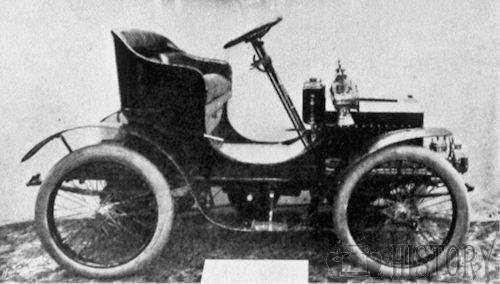
Minerva 1905
Charles S Rolls (of future Rolls-Royce fame) was a Minerva dealer in England selling the 2.9-litre 14 hp (10 kW). The most important market for the manufacturer remained England, where at £105 the small 636 cc single-cylinder Minervette was the cheapest car on the market, followed by the Netherlands and France.

Minerva 1907
In 1908, Minerva obtained a worldwide Knight Engine license. The Knight motor, developed by Charles Yale Knight in the United States, used double sleeve valves and ran almost silently. All future Minervas would use these engines. Sporting successes continued with the new engines including the Austrian Alpine Trials and Swedish Winter Trials. Customers for the Minerva would include kings of Belgium, Sweden and Norway, Henry Ford and the Impressionist Artist Anna Boch.

During World War I Sylvain de Jong and his engineers were based in Amsterdam where they maintained development of their automobiles. Minerva cars were used for hit and run attacks against the Germans initially with rifle fire and light machine guns from simply protected open topped vehicles. These vehicles became increasingly sophisticated until trench warfare robbed them of the mobility needed for their hit and run tactics.
In 1920, they returned to Belgium to restart the production of luxury cars with the 20CV 3.6-litre four-cylinder and 30CV 5.3-litre six-cylinder models. The manufacturer's star rose not only in Europe, but in the United States as well where American film stars, politicians and industrialists appreciated the cars. The Minerva had the same quality as the Rolls-Royce, but was slightly less expensive. In 1923, smaller models were introduced; the 2-litre four-cylinder 15CV and 3.4-litre six-cylinder 20CV with standard four-wheel brakes. In 1927, the 30CV was replaced with the 6-litre AK and also a new 2-litre six, the 12-14, was introduced. Large cars continued to be a specialty of Minerva's, and in 1930 the then almost-compulsory-for-the-time straight eight was introduced in two sizes; the 6.6-litre AL and the 4-litre AP. The last Minerva was the 2-litre M4 of 1934 but it did not sell well.

Minerva 1936 28-30hp
With the financial crisis in the 1930s, the company was restructured as Société Nouvelle Minerva but in 1934 merged with the other major Belgian manufacturer Imperia. Imperia continued to make Minervas for a year and the AP until 1938 and from 1937 badged some of their cars and trucks for export to England and France as Minerva-Imperias. Just before the outbreak of the war, a group of businessmen from Verviers bought out Minerva.
The last model was the 1934 presented M4 with 2-liter four-cylinder engine, which did not sell well. Because of the high reliability of the Knight slider motors, Minerva developed a 9.4-liter V-12 aircraft engine with a power output of 150 hp. Because of the global economic crisis in the 1930s, the company was reformed under the Société Nouvelle Minerva , the New York sales office closed, the London branch reorganized and merged in 1936 with the other Belgian designer Imperia . Imperia produced Minervas and model AP until 1938 for another year . For theExport to England and France, the passenger and trucks were marked as Minerva Imperias.
World War II
During the war, the business premises served as a branch of Erla Maschinenwerk , where the Messerschmitt Bf 109 were repaired. On April 8, 1943, it was the target of a bombing that demanded civilian casualties.
Land Rover production

Collaboration with Land Rover
After the Second World War , the company produced until 1953 the British Land Rover under license for the Belgian army. There were plans to re-enter the market for passenger cars, but they never got beyond the prototype stage . The company fought to survive and produced until 1956, the Continental-powered Land Rover C20 .
After World War II the company produced a version of the Land Rover 80" under licence for the Belgian army up to 1954. The 80" model was known as the TT (Tout Terrain). A smaller number of licence built Land Rover 86" were built from late 1953 to 1956. These vehicles had locally built steel bodywork. Some civilian sales of both the 80" and the 86" models were achieved. A number of Land Rover vehicles were also assembled for the Belgian Gendarmerie or Rijkswacht. The Rijkswacht vehicles had the more traditional Aluminium bodywork and front wing shape associated with Land Rover vehicles. A bitter dispute broke out between Land Rover and the Minerva company and this led to a court case, won by Minerva for breach of contract. This was the death knell of the partnership and licence arrangement. After the deal with Land Rover fell apart there were plans to re-enter the car market but these did not get beyond the prototype stage. The company struggled for survival and made the Continental-engined Land Rover-like C20 until 1956.

