
Induction-extraction
- Details
- Parent Category: Tech Guide
- Category: Induction-extraction
- Hits: 22
Overhauling a Zenith carburettor hot-Air Choke

Zenith Carburettor Service guide for hot air top choke see other guides for different types
The spring that controls the choke flap is operated by air from the exhaust hot-box unit. First remove the carburettor to allow access to parts if space is tight insuring fuel pipes are disconnected safely.
Allow it to cool down if it has been used before dismantling the choke.
1. Clean the choke unit and check that the white line on the serrated cover coincides with the casting mark on the choke body. If no marks can be seen, scribe a line across both surfaces to establish their positions with marker that will not be removed by fuel or cleaning.

2. Hold one spanner on the centre nut of the assembly and, using another spanner, carefully undo the union nut securing the hot-air pipe. Remove the screws that hold the clamp plate and lift out the thermostat cover, heat mass and coil spring. Remove the heat insulating plate.
3. Check the fast-idle cam and choke flap spindle for free operation. If they are tight, clean them with a lint-free cloth and lubricate them first.

4. Check the operation of the piston in the choke housing. It should move freely inside its cylinder. If it is tight, remove and clean it. It should be level with the top of the cylinder on 42 WIAT carburettors, and •040 in. below the top of the piston on 42 V NT carburettors.
5. Thoroughly clean the inside of the choke housing with methylated spirit or clean petrol insure all is cold and away from heat. Remove any dirt or carbon deposits found. Dry the housing and oil the piston lightly.
6. Some automatic chokes have a diaphragm-mounted unit attached to the side of the choke housing. Undo the three screws holding the diaphragm cover and remove the diaphragm from the housing. this may be worn so with care stretch the diaphragm to see if it is holed or damaged or hardend from age. If the diaphragm is faulty, fit a new one kits may be diffrent so insure this is corect befor purchase .

7. Check the choke spindle for play by moving in all directions there should be no play. If it is worn, remove the choke flap and fit a new spindle. Make sure the choke linkage is refitted the correct way and clean all parts.

8. Reassemble the unit. Fit the heat insulating plate and the coil spring. Make sure that the spring engages the operating peg on the mechanism inside the choke housing. Fit the heat mass and thermostat cover. Replace the retaining plate. Make sure that the marks on the plate and choke housing line up. Do up the securing screws and refit the pipe from the exhaust hot-box. Make sure that all the carburettor linkage moves freely and no lose or worn parts of fuel lines before starting the engine.
- Details
- Parent Category: Tech Guide
- Category: Induction-extraction
- Hits: 25
How to Check and adjusting the choke operation on an SU carburettor
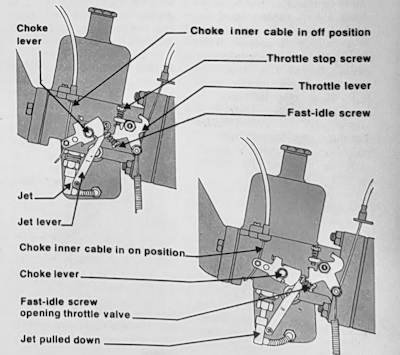
Checking and adjusting the choke operation on an SU carburettor.
The choke on an SU carburettor is operated by a cable that draws down the jet to increase the flow of fuel through the carburettor. As the jet is drawn down, so a fast-idle cam opens the throttle valve slightly to produce a fast idle.
Operate the choke control knob and check that the jet drops down and returns fully when the choke knob is released.
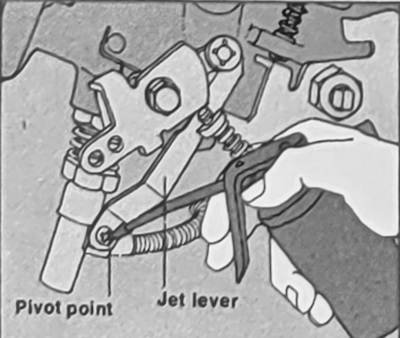
Lubricate the Jet lever Pivot point where it is fixed to the jet, with light machine oil.
Disconnect the choke inner cable from its clamp in the choke lever, and reconnect it with in 1/16 inch (1.5875 mm). free play. Pull out the choke knob until the choke lever just starts to move the jet.
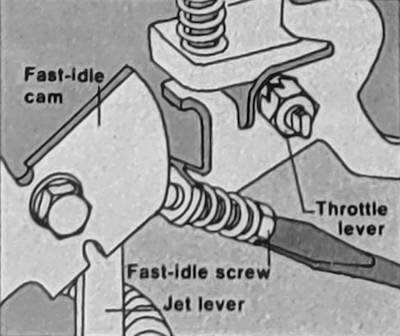
Start the engine and run it until it reaches operating temperature. Adjust the fast-idle screw to give a speed of approximately 1000 rpm, or a
fast-idle speed.
When the choke is operated on cold starting, this will open the throttle valve sufficiently to give a fast idle.
- Details
- Parent Category: Tech Guide
- Category: Induction-extraction
- Hits: 32
Stromberg carburettor Auto water choke Overhauling
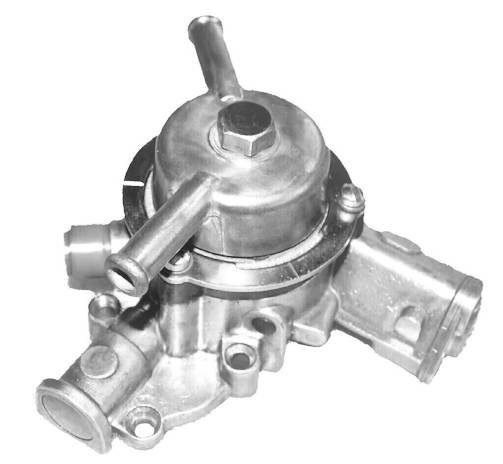
Stromberg carburettor Automatic choke Overhauling (water type) guide.
Note models may be different in side depending on age of carburettor also see Manual pull operated guide.
The choke flap is open during the operation of normal running and driving, In cold weather a much richer mixture is needed for cold starts.
When outside is cold so is the engine cold and the water in the system is also cold, the flap is held closed by a bi-metallic spring, controlled by water temperature. As the engine warms up, the water heats and the spring expands, closing the flap after years of service they can become corroded or worn.
1. First Disconnect the inlet and outlet water pipes from the water jacket on the choke unit. Undo the centre bolt and remove the water jacket hoses can be left in place if room and just checking, but be sure to check for cracks and wear on these especially round the fastening clips.
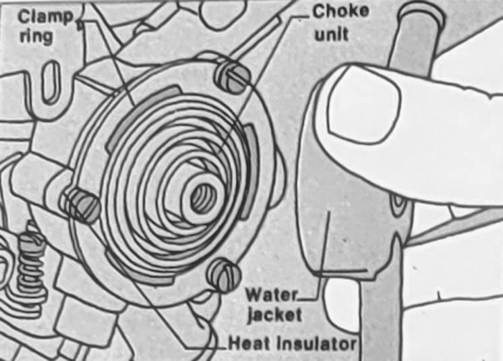
2. Depending on model remove the three screws and clamp ring as shown. Carefully remove the finned heat mass and coil spring check for damage and corroded dirty parts also inside the the water jacket top for blockage.
3. Remove the heat insulator. Clean inside the choke housing. Check that the metering needle moves freely. If not, prise off the choke spindle clip and remove the stepped cam, spring and thermostat lever. Undo the housing plug and remove the metering needle. Carefully clean the needle and reassemble it. Undo the three screws holding the piston cover.
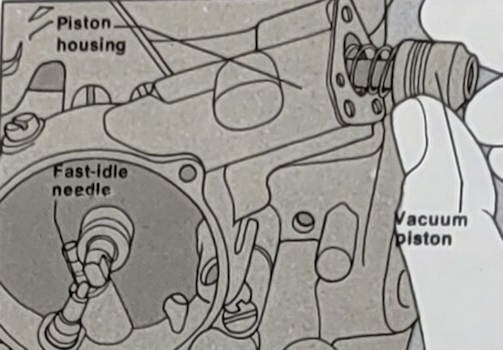
Remove the cover and piston. check and clean the piston and refit it. Reassemble the lever, also check spring and stepped cam to the choke spindle before Reassemble and replace spring or parts if broken corroded or worn . Refit the retaining clip to secure them.

4. Rotate the thermostat lever anti clockwise. Use a feeler blade to measure the distance between the base of the stepped cam and the fast-idle needle. (Check the clearance) for the model.
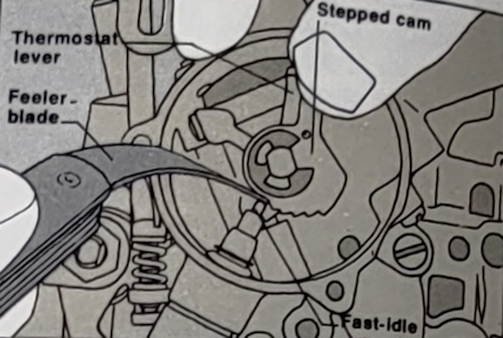
5. Fit the heat insulator. Make sure that the peg on the thermostat lever fits through the slot in the insulator. Refit the coil spring and heat mass.
Line up the marks on the heat mass, body casting and retaining plate. Fit the plate screws. Replace the water jacket and hoses.
Check for leaks and top up if pipes have been disconnected re pressurise the system if coolant is lost and allow to get to temperature.
- Details
- Parent Category: Tech Guide
- Category: Induction-extraction
- Hits: 18
Stromberg CD carburettor adjust the choke operation
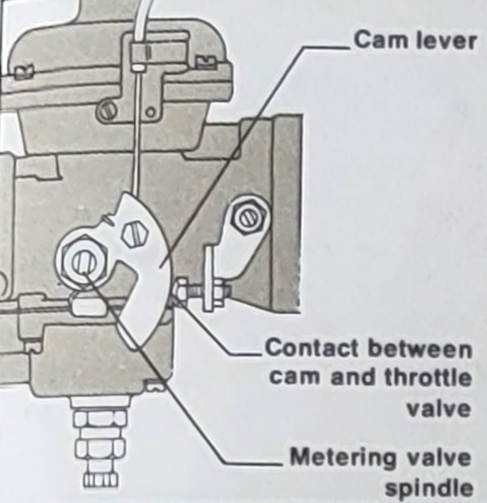
The choke cable on a Stromberg CD carburettor is connected to a cam lever which in turn, is attached at its centre to a special petrol metering valve built into the body of the carburettor. As the choke knob is pulled out, so the lever turns. The cam face of the lever contacts the throttle valve and opens the valve slightly to provide a fast idle.
The arm turns the metering valve spindle, which provides a richer petrol/air mixture to the carburettor.
Check that the lever lifts when the choke knob is pulled, and that the lever returns to its stop on the carburettor body when the knob is released.
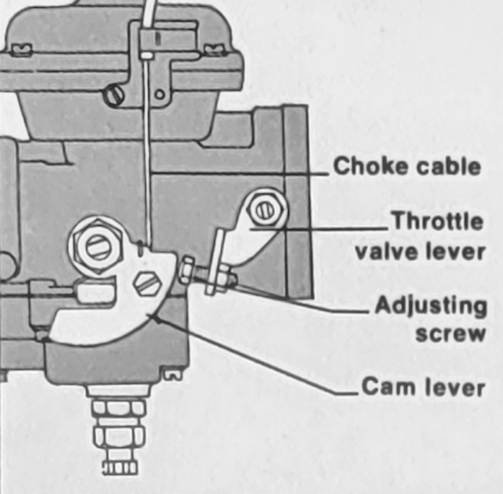
Loosen the clamp that holds the end of the choke cable to the cam lever. Make sure the lever is against its stop, and reconnect the choke cable.
Pull the choke knob out and start the engine. It should run at a fast idle. If not, or if it is running too fast, adjust the screw that is attached to the throttle valve lever, and which touches the edge of the fast-idle cam lever.
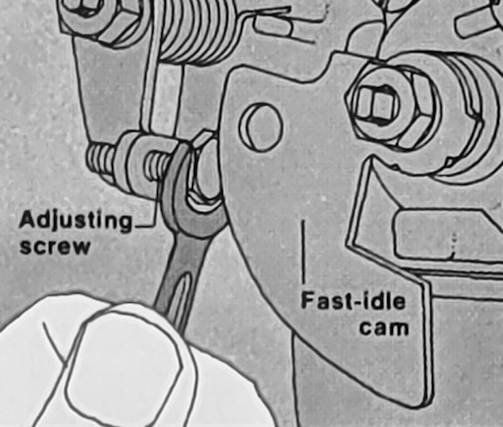
Turn the screw clockwise to decrease the fast-idle speed and anticlockwise to increase it. When adjusted properly, the engine should run at about 1000 rpm when cold and first started under choke.
- Details
- Parent Category: Tech Guide
- Category: Induction-extraction
- Hits: 40
Overhauling a Stromberg CD carburettor
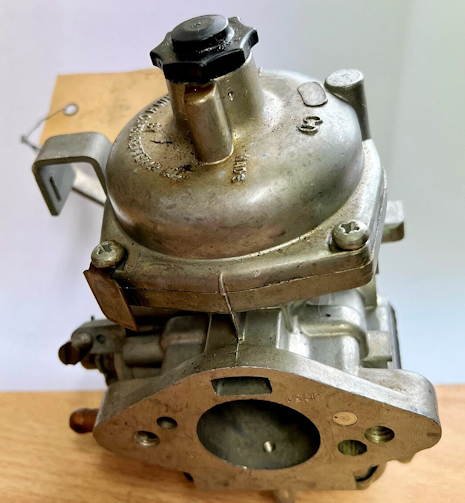
The Stromberg CD range regulates the fuel flow by moving a tapered needle in and out of an adjustable jet. The needle is fixed to the base of the air valve, which is moved by a diaphragm. The diaphragm is fitted to the air-valve body and the outside flange of the carburettor body, to form a seal between the carburettor intake and the suction chamber at the top. If a diaphragm becomes perforated or damaged, the seal is broken and the air valve cannot lift engine response is slowed considerably.
MANUAL CHOKE CONTROL
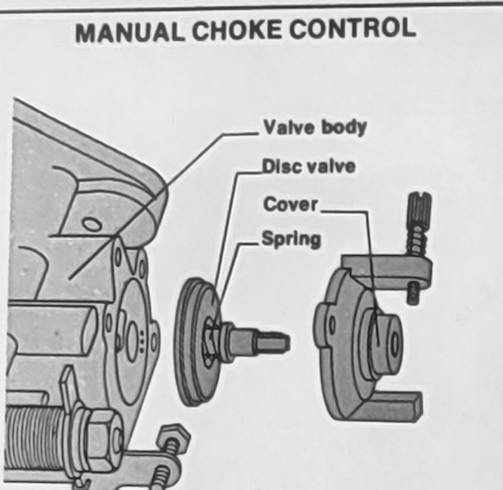
When the choke control on the car's instrument panel is pulled out, it operates an enrichening valve on the side of the carburettor body, and a fast-idle cam opens the throttle slightly to increase the engine speed. If dirt is able to get into the system it can block off the fuel regulating holes and make cold starting diffcult. Strip and clean the enrichening valve. Some Stromberg CD carburettors use a water-heated automatic choke. If this fails, overhaul it.
1. Disconnect the choke cable from the side of the carburettor. Undo the nut holding the fast-idle cam to the spindle of the enrichening valve.
2. Lift off the fast-idle cam and remove the cam spring. Note how the spring is fitted. It is important to replace the spring in the correct position.
3. Undo the two screws that hold the enrichening valve to the carburettor body, and lift out the valve assembly. This will reveal a light spring and 'C' washer.
4. Remove the 'C' washer that holds the valve disc spring, and remove the spring. This enables the two parts of the disc valve to be moved apart for cleaning. Do not try to take the discs off the spindle, The end of the spindle is burred over to secure them.
5. Make sure that the fuel regulating holes in the disc are clear. Wash the disc valve in clean petrol. Dry the valve and reassemble it so that the small regulating holes are at the bottom of the housing when the choke is in the 'on' position.
Fitting A new needle jet or diaphragm
Tools: Screwdrivers; spanners to fit the jet holder nut; pliers.
Materials: New jet; set of carburettor gaskets and seals new diaphragm, if necessary.
Fitting a new throttle spindle and butterfly involves the same procedure as a fixed jet carburettor. If the diaphragm, needle or jet need renewing, the carburettor has to be dismantled.
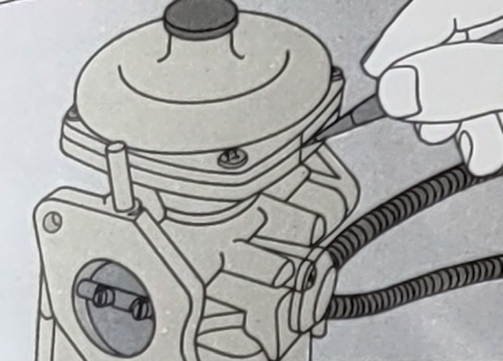
1. Scribe a line across the suction chamber and the carburettor body, so that it can be refitted in the correct position. Undo the four crossheaded screws on the top of the carburettor and lift off the chamber. Remove the air-valve return spring.
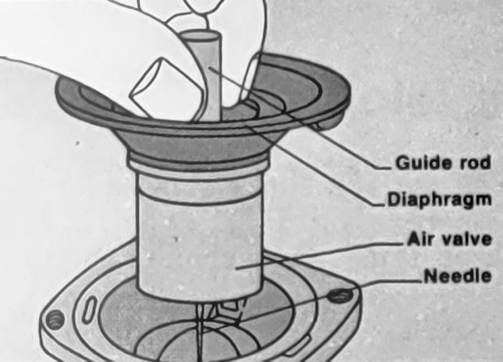
2. Lift out the air valve and the diaphragm assembly. Hold the diaphragm up to the light and stretch it to check if it is perforated. If so, a new diaphragm will have to be fitted to the air valve.
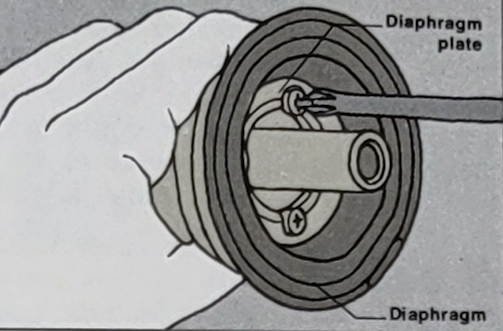
3. Undo the four screws through the centre diaphragm plate. Lift off the plate and diaphragm. Fit the new diaphragm and tighten the screws.
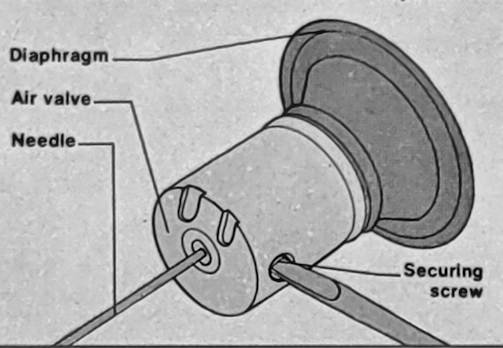
4. Loosen the needle securing screw, and remove the needle from the air valve. Fit a new needle, keeping its shoulder flush with the air-valve base. Tighten the securing screw.
5. Turn the carburettor upside-down and remove the jet adjusting screw. Undo the larger of the two nuts at the base of the float chamber and remove the jet holder, jet, jet spring and brass bush.
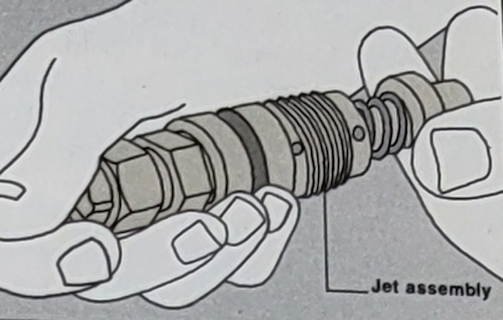
6. Fit a new jet and spring to the brass bush. Fit the assembly to the jet holder, with new washers and 'O' sealing rings. Screw the jet Jet assembly holder assembly into the body of the carburettor.
7. Fit the air-valve assembly, and make sure that the lug on the lip of the diaphragm fits into the groove on the body of the carburettor. Make sure that the needle on the bottom of the air valve fits squarely into the jet. Fit the suction chamber and tighten the chamber screws.
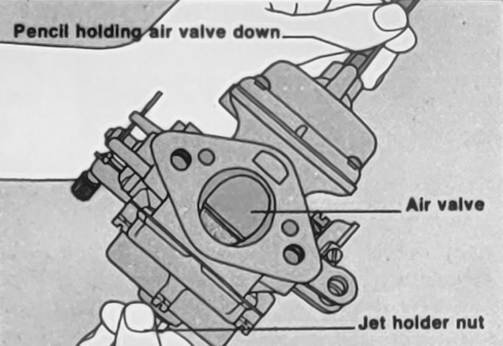
8. Lift the air valve and let it drop. If it does not give a metallic click as it strikes the jet bridge, loosen the jet holder half a turn and push the air valve down with a pencil. This will centralise the jet. Once the air valve falls freely, tighten the jet holder nut. Fit the damper and adjust the carburettor.
Renewing the float needle valve
Tools: Screwdriver; spanner to fit the needle- valve housing; pliers.
Materials: New needle valve; washers.
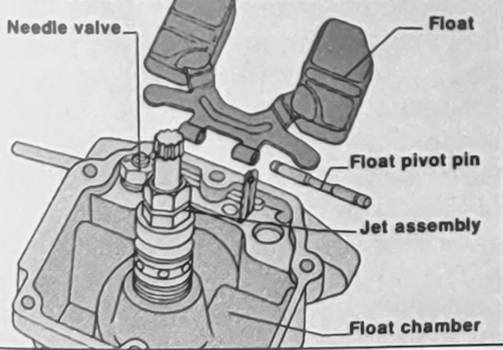
1. If fuel floods from the float chamber, undo the six float chamber screws and remove the float chamber. Remove the float pivot pin. Lift off the two floats to gain access to the hexagon-shaped needle-valve housing in the carburettor body.
2. Undo the housing and remove the complete assembly from the carburettor body. The size of the needle valve is marked on the flat section on the hexagon head of the housing.
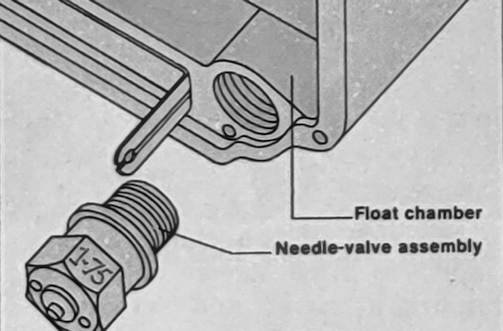
3. Use washers of the same thickness as those removed. Fit and tighten the new needle-valve assembly. Refit the float assembly and turn the complete unit upside-down.
4. Use a ruler to measure the distance between the top of the float the highest part and the body of the carburettor. It should be 16 mm. If it needs adjusting, gently bend the float arm extension until it just touches the needle valve and gives the correct float-level height. Note that the float arm extension is springy, so bend it slightly past the required point. Measure the distance and adjust if necessary. Reassemble the float chamber. Start the engine and check for flooding.
