
Electrical & electronic
- Details
- Parent Category: Tech Guide
- Category: Electrical & electronic
- Hits: 39
Car alternator Voltage check for faults

A Simple guide for checking the cars alternator and voltage regulator for possible faults is an important task, especially more so for modern cars.Read on to find out more and how to check if this is working correctly in your vehicle
- First check you have access to the alternator it may only be accessible from under the car, so you may need to raise the car to gain access if poor lighting, be sure you a have a lead lamp or touch to hand to select the correct location only needed if theres a fault (step 8) .
- Next on your meter Connect black lead to "com' (common) socket the other end to the battery negative . Connect red lead to "Volts" On Multimeter other end to battery + positive on the car battery.
- Remember when checking volts, the meter must be Connected in parallel. select range for up to 200 volts DC depending on meter. DC stands for direct currant such as a supply from a battery that is used in cars AC is for home, industrial use as alternating current is it comes from an indirect source and alternates to keep a steady currant,
- Get someone to go in the car check there is no load applied such as main lights heater or powerful stereo system on then start the engine from inside the car and gradually depress the accelerator until the increase of speed is around 1000 rpm revs.
- While you observe voltage increase until regulator controls output, normally between 13.3 to 14.7 volts. This is provided there are no other loads switched on.
- The more modern and powerful the alternator this won’t be so noticeable as on an older classic car may take some time depending on the make and year of car and you location worldwide.
This voltage may vary such as older Japanese mechanical type of regulators Can go up to about 15 volts and then drop back to normal after some time. you can check the individual cars rating on all the cars maintenance pages here on Motor Car. - Check this voltage, if possible, for several minutes Don't be caught out. Some faulty regulators seem to be regulating correctly at first glance, but tend to creep up very slowly, so give it some time. This is important a faulty regulator and or alternator is bad if it reads too low for battery. But also can result in damage to the cars electrical system if to high (above 16 Volts).
-
Now you have checked the voltage and there is a fault, low voltage may be down to the connections or if the car has a diagnostic socket get someone to check this first. on older cars check the cables for damage from heat moving parts and so on or remove the alternator and clean replace or get refurbished. High voltage needs to be repaired if not easy to find, or replace as fault with the voltage regulator is not east to fix .But also see the Motor car Remove a Car Alternator, Replace Car alternator bushes , Alternator How it works and alternator sevice & overhaul
Also see the Motor Car alternator load check.

- Details
- Parent Category: Tech Guide
- Category: Electrical & electronic
- Hits: 32
Brake lights not working? Classic cars

Have your brake lights gone out? If this is the case, a few easy checks should quickly reveal the problem. Driving without working brake lights is not only illegal, but also dangerous. So keep an eye on it at frequent intervals. Also, keep a backup brake light bulb on hand because these can burn out quickly. Because the brake light circuit is one of the most basic electrical circuits in historic cars, it rarely causes many problems. A blown bulb is almost often the source of a brake light malfunction, but a more serious problem can be identified and swiftly repaired by performing a few simple checks.
When the brake lights give trouble, there are usually clues which indicate where the problem lies. Because they have a very simple circuit, most faults can be traced and put right with a few tools and some simple test equipment.A test lamp does for most jobs though a circuit tester is also handy.First check the lights. If only one light is out of action the fault is most likely to be a blown bulb as the brake light switch and main fuse are obviously working.However, the fault could also lie in the earth, bulbholder or wire to that light, so If the bulb has not failed check further.
Although nearly all classic cars have only one fuse for both brake lights a few do have a separate fuse for each light. One common fault is that a tail light goes out as you apply the brakes, so no light shows on that side.This is due to a faulty earth, which breaks down when both lights try to earth themselves through it at the same time.
If both lights have failed, then the fault is most likely to be somewhere in the power feed to both lights the fuse may have blown or the brake light switch may be faulty. It is also possible that both bulbs may have at the same time blown, although rare. But if you rarely check your brake lights you may been running on only one for some time. A failure may have been by a power surge from the generator, Power surges occur but if the same recurs you should have generator checked specialist
If the fault is more serious a blown bulb or fuse and have no idea of the possible cause, work through each section below until you find the problem

Check Bulb
To check whether a bulb is blown, you must first remove it from Its bulbholder. On some the bulb is removed on some cars together With its holder from the rear of the light cluster .In some cases you may have to take the wires off the holder before you remove it, while on others there is enough slack in the wires to get the bulb and its holder out. On other cars the bulb has to be removed from the front, after the coloured lens has been removed. Once you have removed the screws, lift the lens away carefully taking care not to damage the sealing rubber. Examine the rubber seal for a split or perished a damage seal will let water into the light unit and possibly result in a short circuit, so buy a new one if it is damaged.
If there are no screws holding the lens, and the bulb cannot be removed from the rear, then the light's rubber housing holds the lens and chromed ring in place.
To remove this sort of light unit, use a small screwdriver to gently prise up the outer lip of the rubber, then work the chromed ring out. If it proves a little stubborn, use another screwdriver to prise the ring free. Now do the same for the lens be careful not to damage the rubber or it may not make a water tight seal when refitted and the bulbholder will get wet and corrode. Once the lens is off, you can remove the bulb to check it.
Push it inwards then turn it anticlockwise to release it, If the bulb is stuck, spray the holder with penetrating oil and try again. If the bulb is stuck very firmly you will probably find that the bulb glass comes away in your hand leaving the metal cap remaining in the bulbholder.
If this happens, crush the casing with a pair of pliers and twist the bulb out as usual.
Bulb holder

If bulbholder is at all corroded you should clean it thoroughly with wet and dry sand paper before you fit the new bulb. If the bulb came out In one Piece, check lt. Most stop lights are stop-tail lights the bulb has two filaments. one for the tail light, and the other for the brake.A broken filament should be clearly visable If you hold the bulb up to the light you should clearly see a break one of the filaments. but If you are not sure, connect the bulb across the battery using a length of wire The bulb Will have two points at the base test both of these. If one filament does not light, buy a new bulb If they both light. the fault lies In the bulbholder or the supply Wire.
If all the bulbs are intact, then first check in the boot that the multi-plug or any other connection has not come adrift or that any wires have not been torn from their connections. Now check that power is reaching the bulbholder. There are two terminals in most rear light bulbholders: one for the tail light and one for the brake light. which, switch on the sidelights and then touch each terminal with the probe of an earthed test lamp.
The one which lights is the sidelight terminal. Now touch the other terminal with the test lamp probe and ask an assistant to depress the brake pedal If the test lamp does not light then there is a fault in the power supply wire .If the test lamp lights, then the bulbholder or its earth must be faulty . The sort of bulbholder which can be removed from the back of the light can be tested by simply swapping it for the one from the other side. If the light now works try cleaning the original bulb-Holder contactson the fault unit. With the integral bulbholder, may just be that there is surface corrosion which is preventing a good contact remove all traces of corrosion off with a light emery board or a piece of wet and dry paper.
Earth Test

If power is reaching the central contact in the bulbholder and the bulb and bulbholder are both sound but the light still does not work, then the earth needs checking. To check the bulbholder's earth, remove the bulb and attach the clip of a test lamp to the earth. This is usually the outer casing of the holder, but on an integral bulbholder there may be a small brass tag which touches the side of the bulb and earths the light.
Now turn on the ignition, and press the brake pedal down probe the brake light terminal in the holder with the test lamp . If the bulb lights, then the earth is good and the fault must lie in the bulb or bulbholder. If the test lamp does not light, then you have confirmed that the earth is faulty.
To repair the earth, you must find out how the bulbholder is earthed to the car body Metal and clip-in bulbholders usually earth through the casing of the Fuse Box.
If both brake lights have failed and the bulbs are sound or you found no power at the light or at the feed wire in the boot then you must check the power supply from the fusebox to the rest of the circuit. Your first move is to check the fuse which controls the brake lights (your car's handbook will tell you which one it is). If it has not failed look for any signs of looseness or corrosion. If it appears loose, carefully bend the fusebox terminals so that it is held more tightly. Corrosion can affect the fuse box terminals causing either a complete failure of the circuit or more annoyingly an intermittent fault, So check the terminals and remove any signs of corrosion with an emery board or wet and dry paper, If the fuse is securely mounted and not blown, use the test light to check for power at the fuse terminals. The tester should light at both terminals with the fuse in place. If it lights on only one side, recheck the by bending fuse terminal for a tighter hold on the fuse and the holder. If it does not light on either terminal then power is not getting to the fusebox, You can try replacing the feed wire if the fusebox feed wires are easy to get at, Where the terminals are hidden inside the car the job is a lot more difficult as you may need to get the dashboard out.
Brake light switch

A switch This can be fitted somewhere Into the brake hydraulic circuit, where its operated by pressure in the system, or near to the brake Pedal where pressing down on the pedal operates the switch.To test for power at the switch, attach the test lamp to a good earth point, then press Check for power at both switch terminals if the test lamp only lights on one terminal, the switch faulty and must be changed. To confirm this, disconnect the two wires that run Into the switch and then connect the two together, thus by-passing the switch. If the brake lights now come on you can be sure that the switch is broken and have to be changed touched power to either terminal of the switch then the switch is working and the fault must be in the wire to the back of the car. Instead of trying to find the break in the wire, and splicing in a new section, renew the entire length of wire that runs from the brake switch to the bulbholder.
Disconnect the battery, disconnect the old wire, then lay the new wire down alongside it or under the carpet if that is easier. Wherever you lay the new wire, make sure that It is not exposed; even if It is under the carpet, tape it to the floor Connect up the new wire using new connectors where necessary, then connect up the battery and check that the brake lights now work. No power at either terminal on the switch means that the power wire to the switch is faulty and may need to be replaced As a extension wire from the fusebox switch, If the lights now work when the pedal is pressed,
Temporary repair
If you cannot repair the bulbholder, fit a complete new rear light.
if they are hard to come by or a rare car, try to fit just a new bulbholder. If swapping bulbholders does not work. Or if bulb is lose in holder a little silver metal paper round the bottom of the bulb or the body of the bulb may work.Also a temporary measure you can run a suitably thick wire directly from the battery to the fusebox. Be sure to connect it to the right side of the fusebox so that the fuse protects the circuit. If you are in any doubt, once the brake lights are working remove the fuse and check that the lights do not now come on.
- Details
- Parent Category: Tech Guide
- Category: Electrical & electronic
- Hits: 30
Simple spark plug service
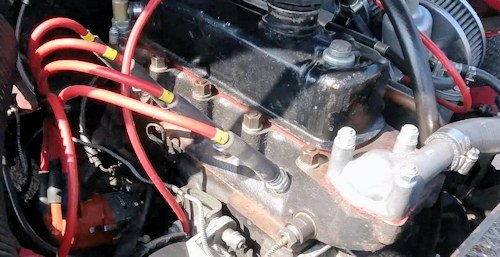
Does engine idle smoothly and fire on all cylinders? Do the plugs have clean insulators?
Keeping your spark plugs in peak condition will help your car to start more easily, run better and use less fuel at the same time.Spark plugs are among the most vital parts of the ignition system. condition and adjustment affect both performance and Econorny.
Although they look simple in construction, they are do an assigned job to work in direct Contact with the extreme temperatures and pressures with the engine's combustion.
When to do this job
The constant passage of high voltage electrical energy across the gap between the two electrodes gradually erodes away the metal and so the gap enlarges.So, you should replace or replace the plugs and adjust the gaps every 5,000 miles (8,000 km). Standard spark plugs must be changed every 10,000 miles though the new modern, and platinum cored types have a longer life.
Points to watch Spark plugs are only as good as the leads that supply them with electricity. Renew them if you get poor starting after fitting new plugs.
What this job involves
- Tools: Plug spanner; plug gapping tool; feeler gauges; contact file
- New set of spark plugs
- Removing spark plugs
- Cleaning spark plug tips
- Adjusting spark plug gaps
- Replacing spark plugs
Replace Spark Plugs
You must have a plug spanner to unscrew the spark plugs from the cylinder head Most plugs need a 14 mm or a smaller 10 mm plug spanner check what size you have before buying a plug spanner. The best ones have a rubber insert to grip and protect the ceramic plug body
On some cars access to some spark plugs is extremely difficult because one end is under a bulkhead or some other components. To reach this plug you Will need a plug spanner made specifically for your car.
Before pulling off the plug connector caps, label each plug's high-tension lead with its cylinder number so that it can be replaced correctly.
- Pull off the plug caps always pull the cap itself, not the plug lead
- Push the plug spanner firmly on to the first plug and unscrew it.
Use a brush or vacuum cleaner to clean out any dirt or flakes of corrosion from around the plug hole to prevent them from falling inside the cylinder when the plug is out
Some cars have a particularly deep plug recess where a brush will not go — either blow out the dirt or use a vacuum cleaner to remove it.Unscrew the plug completely and repeat. Bear in mind that if the engine is still hot, the plugs will be too
Note: Do not use too much force if spark plug is stubborn or may have been cross-threaded.use a steel extension handle on the plug spanner but take the car garage which will have tools and experience to remove over tightened or corroded plugs.
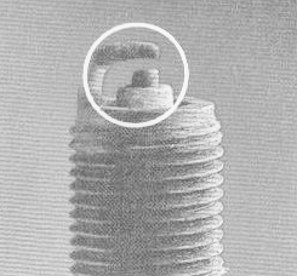
Clean spark plugs
Never use a hard wire brush on the tip of the plug because the bristles can leave conductive tracks of metal across the centre electrode insulator.
But a wire brush can be used to remove any dirt from the screw threads of the plug. Wipe off any dust or oil on the ceramic insulator body.
Next. use the contact file to clean the tip of the central electrode and the inside face of the side electrode.If the file will not fit between the electrodes, use the lever notch on the gapping tool to bend back the side electrode slightly
File the surfaces of the electrodes until they are clean and flat — be careful to keep the file level while you are using it.
Rare or Classic car plugs that are hard to obtain that are Badly blackened or those with hard deposits can be cleaned by grit blasting
spark plugs colour
The colour and condition of each spark plug if the engine is well tuned, they should be the same light biscuity brown colour
Plugs Of a significantly different appearance are a sign of a problem needing further investigation,You may have a leak between the inlet manifold and the head or a valve may be at fault.
Marked rounding of the centre electrode together with pitting of the side electrode means that the plug should bediscarded. It is not a good idea to renew just one plug always fit a whole new set.
spark plugs gap
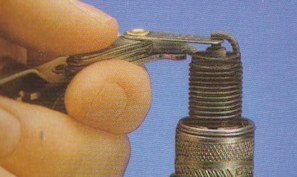
Most spark plugs have a gap of 0.6mm to 0.9 mm but check for your car. Use your feeler gauge thickness to get the correct size once it is fitted You can adjust the gap by bending the side of the electrode.
If the gap is too narrow, bend back the side electrode with the lever notch on the gapping tool. If the gap is too wide, tap the side electrode gently with a spanner of flat surface so that it moves closer. to the central electrode.
Note: Always check that new spark plugs have the right gap before fitting.
- Details
- Parent Category: Tech Guide
- Category: Electrical & electronic
- Hits: 28
Fuel gauge types and how they work

A fuel gauge is an instrument that displays the amount of fuel in a tank. The gauge is made up of two parts: the detecting unit and the indicator. It is commonly used in automobiles. The storage tank is essentially a receptacle for storing enough fuel to allow the vehicle a respectable range, as the name implies. A gauging device is frequently included to tell the driver of the amount of fuel remaining in the tank.
Two commonly used systems are:
The Bi-metal Fuel Gauge.
Used more on early cars.This operates in basically the same way as the first system. The only significant difference is that the indicator pointer is driven by a bi-metallic strip.Fuel level changes causing the tank resistance to alter, varying the heating coil current and the position of the indicator pointer.
The main advantage of this system lies in the fact that the bi-metallic strip takes time to alter its temperature and hence, there are no sudden movements of the indicator pointer due to the fuel surging in the Fuel Level
The Electric Fuel Gauge
This has a tank unit consisting of a float mechanically connected to a strip resistance which has one end
connected to earth and the other end to the indicator. When the tank is full, all the resistance is in circuit and the indicator pointer is driven into the "Full"sector of the scale. As the fuel level decreases, so docs the resistance in the circuit and the pointer moves progressively back across the scale until finally, all the resistance is out of circuit and the pointer registers empty.
Modern Electric Fuel Gauge and how they work
The sensing unit usually uses a float connected to a potentiometer. typically printed ink design in a modern autmobile. As the tank empties, the float drops and slides a moving contact along the resistor, increasing its resistance. In addition, when the resistance is at a certain point, it will also turn on a "low fuel" light on some vehicles.
Meanwhile, the indicator unit is measuring and displaying the amount of electrical current flowing through the sending unit. When the tank level is high and maximum current is flowing, the needle points to "F" indicating a full tank. When the tank is empty and the least current is flowing, the needle points to "E" indicating an empty tank.
If an electrical problem opens the electrical circuit and causes the indicator to portray the tank as empty rather than full, the system can be fail-safe (which would allow the driver to run out of fuel with no prior notification). Corrosion or wear of the potentiometer will result in inaccurate fuel level readings. However, there is a risk involved with this system.
The variable resistor, to which a float is connected, receives an electric current, and the resistance value varies depending on the fuel level. Such resistors are found on the interior side of most car fuel gauges, i.e. within the gasoline tank. Sending current via such a resistor poses a fire threat (as well as an explosive risk). With the progressive increases of alcohol to vehicle gasoline fuel, these resistance sensors are likewise displaying an increased failure rate. Alcohol accelerates corrosion at the potentiometer because it can carry current like water.Potentiometer applications for alcohol fuel use a pulse and hold methodology in that a periodic signal is sent to determine fuel level decreasing the corrosion potential. Therefore there is demand for another safer, non contact method for fuel level is desired.
Magnetoresistance type fuel level sensors offer a potential alternative for automotive use. These fuel level sensors work similar to the potentiometer example, however a sealed detector at the float pivot determines the angular position of a magnet pair at the pivot end of the float arm. These are highly accurate, and the electronics are completely outside the fuel. These sensors' non-contact nature addresses the risk of fire and explosion, as well as concerns with any fuel mixes or additions to gasoline or alcohol fuel mixtures. Magneto resistive sensors can be used with any fuel or fluid, including LPG and LNG. For these senders, the fuel level output can be ratiometric voltage or, better yet, CAN bus digital. These sensors are also fail-safe in the sense that they either output a level or nothing.
- Details
- Parent Category: Tech Guide
- Category: Electrical & electronic
- Hits: 47
Electronic brakeforce distribution (EBD)

Electronic brakeforce distribution (EBD or EBFD), Electronic brakeforce limitation (EBL) is an automobile brake technology that automatically varies the amount of force applied to each of a vehicle's brakes, based on road conditions, speed, loading, etc. Always coupled with anti-lock braking systems, EBD can apply more or less braking pressure to each wheel in order to maximize stopping power whilst maintaining vehicular control Typically, the front end carries the most weight and EBD distributes less braking pressure to the rear brakes so the rear brakes do not lock up and cause a skid. In some systems, EBD distributes more braking pressure at the rear brakes during initial brake application before the effects of weight transfer become apparent.
How EBD works
As per SAE - Buschmann et al. "The job of the EBD as a subsystem of the ABS system is to control the effective adhesion utilization by the rear wheels. The pressure of the rear wheels is approximated to the ideal brake force distribution in a partial braking operation. To do so, the conventional brake design is modified in the direction of rear axle overbraking, and the components of the ABS are used. EBD reduces the strain on the hydraulic brake force proportioning valve in the vehicle. EBD optimizes the brake design with regard to: adhesion utilization; driving stability; wear; temperature stress; and pedal force."
EBD may work in conjunction with ABS and Electronic Stability Control ("ESC") to minimize yaw accelerations during turns. ESC compares the steering wheel angle to vehicle turning rate using a yaw rate sensor. "Yaw" is the vehicle's rotation around its vertical center of gravity (turning left or right). If the yaw sensor detects more/less yaw than the steering wheel angle should create, the car is understeering or oversteering and ESC activates one of the front or rear brakes to rotate the car back onto its intended course. For example, if a car is making a left turn and begins to understeer (the car plows forward to the outside of the turn) ESC activates the left rear brake, which will help turn the car left. The sensors are so sensitive, and the actuation is so quick that the system may correct direction before the driver reacts. ABS helps prevent wheel lock-up and EBD helps apply appropriate brake force to make ESC work effectively and easily.

