
Vehicle Body
- Details
- Parent Category: Tech Guide
- Category: Vehicle Body
- Hits: 28
Paint Flatting scratches problems
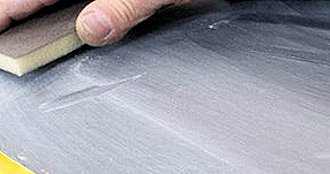
This section includes Paint Flatting scratches problems, lifting, raising or swelling of flatting scratches. This is often a mild form of lifting. To repair allow film to harden thoroughly, then rub out and polish. If scratches are still too noticeable, wet flat with P600 grit paper and respray.
Cause
1. Light scruffing or scratching of old surface, usually with too coarse grit wet and dry.
2. Insufficient flatting of old finish or under-coat.
3. Use of coarse grit wet and dry.
4. Improper cleaning of surface.
5. Flatting across area being repaired and old surface which contains silicone.This really brings the scratches up.
6. lure to allow undercoat to dry thoroughly before flatting.
7. Flatting with petrol.
8. Spraying filler coats too heavily, especially the first coat over old finishes.
9. Use of poor-quality or wrong thinner.
Prevention
1. Use wax and grease remover and plenty of new clean rags to clean an area several times larger than repair area.
2. Use fine grit wet and dry, flatting well back into old finish.
3. Use recommended type and amount of thinner in primer—filler.
4. First coat of primer should be applied wet but thin.
5. Allow enough time between coats of filler for each one to dry.
6. Do not blow air on primer-filler to make it dry faster.
7. Allow surfaces to harden thoroughly before flatting.
8. Never use petrol for flatting old finish or fillers.
9. Flat with P600 grit wet and dry.
10. Allow to dry out thoroughly before applying colour.
11. Thin colour with amount and type of thinner recommended by paint manufacturer.
12. Avoid cheap thinner.
13. Apply as recommended by the manufacturer.
- Details
- Parent Category: Tech Guide
- Category: Vehicle Body
- Hits: 37
Paint Flooding problems
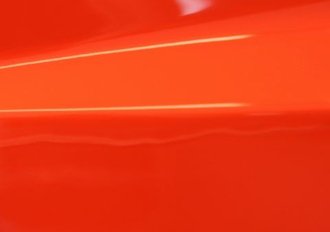
This section is about Paint Flooding problems includes floating, mottling and shadowing. To repair while film is still wet, apply a thin mist coat of colour. If film is dry, respraying or refinishing is going to be necessary.
Cause
Most colours are made from a combination of different pigments which have varying densities and particle sizes, giving them a natural tendency to separate when the film is in a liquid state. Under normal conditions this tendency is small in magnitude and cannot be seen by the naked eye.
Certain conditions which may aggravate this to a point where the separation of the pigments become visible are:
1. Use of thinner which dries too slowly, allowing the pigment particles to migrate.
2. Applying the colour on a cold surface, or in a cold room.
3. Applying too heavy films of colour.
Prevention
1. Apply undercoats in normal recommended film thickness, and allow to dry thoroughly before application of colour coat.
2. Use thinner as recommended by the paint manufacturer.
3. Avoid extremely heavy coats.
4. Do not spray on a cold surface or in a cold room.
5. Iridescent colours may require a final light coat to avoid flooded appearance.
- Details
- Parent Category: Tech Guide
- Category: Vehicle Body
- Hits: 108
Car Paint Fish eyes defect Paint problems

Fish eyes problems in vehicle spray Paint. The cause is Surface contaminated with silicone, wax, grease or oil. This is not an easy problem to resolve without the preparation as below.
As many modern waxes and car polishes contain silicone, which is today the most common cause of fish-eyeing of fresh paint coatings. Silicones adhere strongly to the paint film, and extra effort is required for removal. Minute quantities of silicone in flatting dust, from contaminated rags, or even from car polishes sprayed at considerable distances from jobs ready for painting can cause this trouble.
Prevention
Clean surface thoroughly with wax and grease remover before flatting operations. Be sure to clean an area several times larger than repair area. Use plenty of wax and grease remover on clean rags. Do not allow to dry by itself, but quickly wipe dry with new, clean rags.
These rags should not be used again on any surface to be painted, since the slightest amount of silicone contamination will cause trouble. Proceed with flatting operation, being careful not to touch or flat into uncleaned area. Clean off flatting dust and do all blowing off with air at this point only.
Repeat wax and grease cleaning operation carefully. Treat bare metal areas with metal pre-treatment and rust remover. Tack off and start painting. A simple test for silicone on a surface consists of spraying black or a dark coloured air-drying enamel one thin wet coat over a small area. Presence of silicone on surface will usually produce immediate formation of fish-eyes in the wet film. Wipe off with solvent cleaner before the test spot dries. This test is not infallible since the test section selected may not have any silicone on it for some reason.
- Details
- Parent Category: Tech Guide
- Category: Vehicle Body
- Hits: 37
Paint Fading (colour change) problems
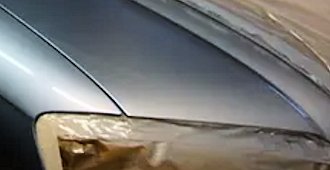
Fading is a change in colour of the pigment portion of the film due to exposure to sunlight, or in a few cases to chemical fumes. Do not confuse fading with chalking or dulling. Fading generally goes deep into the film, and unlike chalking and dulling cannot usually be polished out.
If the job is badly faded (after it has been polished out) the only cure is to repaint.
Prevention
Some coloured pigments and pigment combinations are more resistant to fading than others. It is very difficult to prevent fading and about the only measures the painter can take to help are:
1. Use paint developed and made by a reliable manufacturer.
2. Use enough colour on the job to obtain good hiding.
3. Tint with only the bases recommended by the paint company for the type of colour in question.
- Details
- Parent Category: Tech Guide
- Category: Vehicle Body
- Hits: 42
Dry spray Paint finish problems
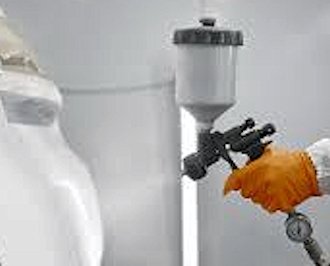
How to repair Paint finish with Dry spray Problems. In certain cases overspray can usually be removed by Polishing out. With synthetic enamels it is important to prevent the overspray.
Cause
1 .Poor-quality thinner (too fast).
2 .Incorrect amount of thinner.
3 .Excessive air pressure.
4 .Improper spray gun setting, or dirty spray gun.
5 .Holding spray gun too far from surface.
6 .Spraying in draught.
Prevention
1 .Use correct amount of thinner of the correct quality.
2 .Use correct air pressure.
3 .Adjust fluid feed and spray pattern to minimize overspray. Use clean and efficient
4 .spray gun. Hold spray gun closer to work. Use good gun technique.
5 .Do not spray in strong draughts.
