• Home
  • Makes
  • History
  • Maintenance
    • Engines By Make
    • Engine Components
    • Electrical & electronic
    • Gearbox & Drivetrain
    • Induction & Exhaust
    • Suspension Types
    • Tyres wheels Brakes
    • Vehicle Body types
  • Trivia
  • Register
  • "log in"

Volvo

Volvo XC70 3rd Gen (2007-2016)

Details
Parent Category: V
Category: Volvo

Volvo XC70 Third generation

Volvo XC70 3rd Gen Maintenance (2007-2016)

Production period:

2007 to 2016

Body versions :

station wagon

Engines:

Gasoline: 2.0-3.2 liters (175-224 kW) 
Diesel: 2.0-2.4 liters (120-158 kW)

Length:

4838 mm

Width:

1861 mm

Height:

1604 mm

Wheelbase :

2815 mm

Curb weight :

1821-1844 kg


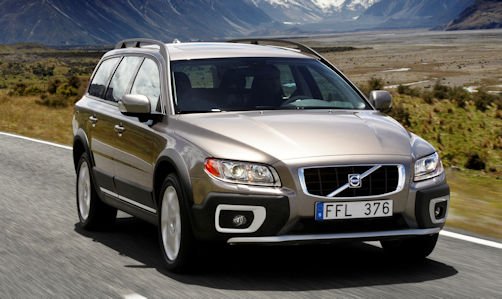
The Volvo XC70 third generation of Volvo’s capable cross-country model was introduced in the summer of 2007.. 

History

The XC70 was initially only with the largest gasoline engine and the stronger of the two five-cylinder diesel available, but with standard all-wheel drive (AWD).At the tuning fair SEMA in the US Volvo presented the study Volvo XC70 Surf Rescue , which is designed specifically for lifeguards . This study has 12 cm more ground clearance, fender flares, aluminum underbody mudguard, neoprene seat covers and a roof rack for rescue surfboards. 

The large dark-coloured plastic panels on the previous XC70 model have now been mostly replaced with painted surfaces.

Engines
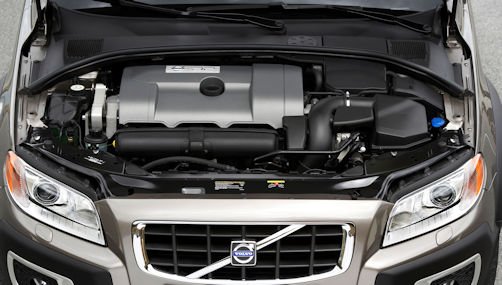
Volvo XC70 Repair Manuals 3rd Gen (2007-2016)

six cylinders and a displacement of 3.2 litres. The six-cylinder normally aspirated engine producing 175 kW (238 hp) and 320 Nm.The engine has an advanced valve mechanism featuring dual cam profiles on the inlet side. With CPS (Cam Profile Switching), as the system is known, the inlet valves can be raised to two different heights depending on engine revs and load. In normal driving, with normal throttle activation and low engine revs, fuel consumption is minimised at the same time as there is sufficient torque for good driveability. In addition, the engine features VIS (Variable Intake System). It consists of two throttle valves that adjust the volume of the inlet manifold to suit the current driving conditions and allow the engine’s capacity to be exploited to the very maximum throughout the rev range. In the XC70 are installed transversely, even the six-cylinder unit. This has been made possible owing to an extremely compact construction.The six-cylinder in-line engine’s compact format has been achieved by positioning ancillaries such as the power steering pump and air conditioning compressor behind the engine in the space above the gearbox.

Turbodiesel in-house manufactured second-generation D5 five-cylinder diesel engine is available in two versions. The more powerful variant offers 400 Nm of torque. Compared with the first generation, the new D5 engine featuring a new electronically controlled turbocharger, more advanced multi-point injection technology and a particularly powerful engine management system. A service-free particle filter is standard.

Engines are mated to a six-speed gearbox, manual or automatic with Geartronic. They are designed to handle the huge power of these engines. With Geartronic it is also possible to change gear manually.

Suspension and brakes

Power Parking Brake is standard, electrically operated parking brake system known as Power Parking Brake. If the parking brake is engaged at traffic lights, for instance, it is automatically disengaged when the accelerator is pressed and the car moves off. Please note that the driver’s safety belt must be secured for this function to operate.

The parking brake is engaged by pushing a lever to the left of the steering wheel and disengaged by pulling the lever.

To ensure that the parking brake is applied when the car is parked, it is automatically engaged when the key is removed from the ignition switch or, if the car is equipped with Keyless Drive, when the door is opened. This function must be selected initially in the car settings menu.

DSTC (Dynamic Stability and Traction Control) is standard. This is a stability-enhancing system that when necessary reduces engine torque and applies carefully calculated braking power to reduce the risk of a skid. By combining systems such as Four-C, AWD and DSTC.

Active chassis with Four-C optionally specified with an active chassis based on Volvo’s Four-C technology. It is an advanced self-regulating chassis system that uses a number of sensors to continuously monitor the car’s behaviour. The dampers are adjusted to suit the current driving conditions in mere fractions of a second.Four-C adjusts chassis settings to match the car’s speed. The higher the speed, the firmer the damping. This makes the car easy to control even at high speeds.

Three alternative chassis settings at the touch of a button allow the driver to alter the car’s driving character to suit his or her personal taste.

• COMFORT provides pleasant, comfortable progress with calm, harmonious body movements.

• SPORT provides more controlled body movements, faster steering response and a higher degree of road contact.

• ADVANCED gives minimum damper movement and maximum contact between tyres and road surface. It’s the setting for enthusiastic driving on smooth and flat asphalt.

Inside
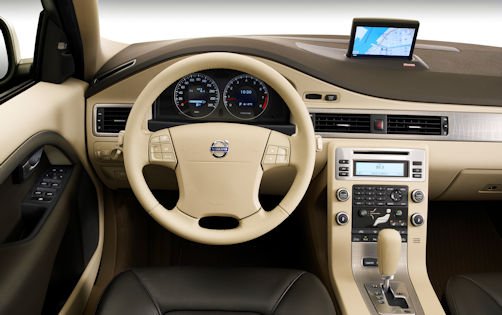
Volvo XC70 Service Guide 3rd Gen (2007-2016)

Increased legroom, more spacious and more comfortable than its predecessor. The distance from front to rear passengers has been extended by 21 millimetres, rear legroom by 48 millimetres and rear knee clearance by 21 millimetres, width at shoulder height has been increased by 30 millimetres in the front seats.Power-adjustable seats are available as an option, and they can be equipped with perforated and ventilated leather upholstery. These seats are equipped with fans in the seat and backrest cushions. The temperature in the cushions is lowered on hot days and in humid climates.The opposite effect  heating of the front seats when the weather turns chilly – can be selected at a choice of three temperature settings. The rear seat too can be specified with heating, which includes separate switches for each of the two outer seats and, as in the front seats, three temperature settings.

 Volvo XC70 can be equipped with the Clean Zone Interior Package, a system that is based on ECC (Electronic Climate Control) and IAQS (Interior Air Quality System).When the car is unlocked using the remote control, the passenger compartment is automatically ventilated for about a minute if the outdoor temperature is higher than 10 degrees Celsius. 

Settings are altered in the car’s information system. The menu includes the seats, rear-view mirrors, climate unit, audio unit, navigation system. One of the selectable functions is automatic operation of the rear defroster. When this setting is chosen, the defroster is automatically activated when outside temperature is about 9 degrees C. Another example is the speed-dependent power steering. It is an option and can be set at one of three levels via the information system.
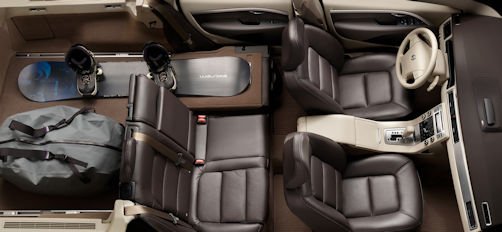
Volvo XC70 3rd Gen Technical details (2007-2016)

The rear seat splits 40/20/40, with two very comfortable seats and armrest in between. The centre backrest can be folded to make space for long cargo items or raised to provide an additional seat. The backrests can be folded separately to create a larger load compartment with an entirely flat floor. 

The luggage compartment floor is equipped with aluminium rails and movable anchorage points to secure the load. The anchorage points can be tucked into the rails. The side panels also have built-in load anchorage eyelets to keep luggage securely in place. What is more, they can be supplemented with multifunctional rails for a variety of hooks, load-anchoring nets, cargo space dividers and other load-related accessories.

An extra sliding load floor is available as an accessory. It is fastened simply and quickly in the floor rails and slides out easily over the bumper to permit convenient loading. It is automatically locked into place when the handle is released. When it is not in use, the floor can easily be removed from the car altogether.

Power-operated tailgate. It is opened by pressing a button on the remote control, and the rest is handled by the car’s hydraulics, there is a dual-stage safety function integrated into the tailgate, involving an emergency stop, which means that the hydraulic system is equipped with a force sensor, stopping immediately if it senses an obstruction during operation.

Improved safety 

The body structure is divided into zones, each of which has a different task during the deformation sequence. The outer zones are responsible for most of the deformation. The closer the collision forces get to the passenger compartment, the less the material deforms. In order to give each zone the right properties, different grades of steel are used in different structures, a total of four different grades. Apart from regular body steel, three different grades of high-tensile steel are used: High Strength Steel, Extra High Strength Steel and Ultra High Strength Steel.

To improve safety for children in the rear seat of the all-new XC70 model, Volvo has further developed the Side Impact Protection System (SIPS) with a stronger body structure, extended inflatable curtains and a height-adjustable integrated child booster cushion.The booster cushion, which is integrated in the rear seat, can be set at two heights, allowing children of different sizes to see out through the windows yet at the same time. The lower setting is intended for children between 115 and 140 cm in height and weighing between 22 and 36 kg, while the upper setting is designed for children measuring 95-120 cm and weighing between 15 and 25 kg. The all-new Volvo XC70 can be equipped with integrated child booster cushions in both outer rear seats.

The inflatable curtains in the all-new Volvo XC70 have been extended by 60 mm, which in combination with the height-adjustable booster cushions and the strong body side structure provide more children of different sizes with effective protection in a side impact.The front passenger airbag can be disabled using a key. What is more, the seat can be specified with attachments for rear-facing fitting of a child seat once the front passenger airbag is disabled.

  • Improved child safety with extended IC (Inflatable Curtain) and integrated booster cushions
  • New, stronger side structure
  • Crumple zones made from different grades of steel
  • Lower cross-member contributes to enhanced compatibility
  • Compact transverse engines contribute to collision safety
  • Second-generation WHIPS system
  • Protection for other road users
  • Other protective safety solutions
  • Collapsing steering column which upon deformation moves horizontally for the best possible interaction with the airbag
  • tPedals with a function that limits the risk of penetration into the passenger compartmen
  • Airbags with two-stage function
  • Seat belt pre-tensioners for all five seats
  • Reinforced, transversely fitted tubular beam between the A-posts
  • Strong SIPS tubes in the seats and a sturdy magnesium bracket in the middle of the car
  • Diagonally fitted beams of Ultra High Strength Steel in the doors

In the middle of 2013, the XC70 was modified as part of a facelift. Here, Volvo changed the design of the radiator grille, which is characterized by a honeycomb-like structure henceforth. At the rear, the revised model differs by chrome strips under the tail lights and under the Volvo logo.

In mid-May 2016, the production of the XC70 finished.
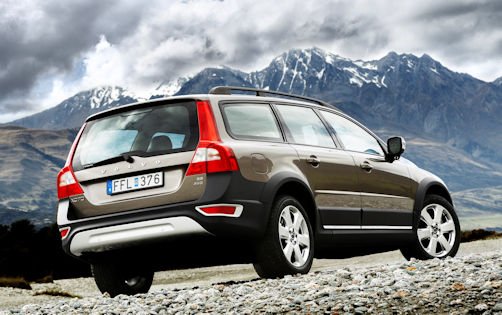
Volvo XC70 specifications 3rd Gen (2007-2016)


Volvo XC70 2nd Gen (2000-2007)

Details
Parent Category: V
Category: Volvo

Volvo XC70 second generation

Volvo XC70 Service Guide car history 1st Gen (2000-2007)

Production period:

2000 to 2007

Body versions :

station wagon

Engines:

Gasoline : 2.4-2.5 liters (147-154 kW) 
Diesel engines : 2.4 liters (120-136 kW)

Length:

4733 mm

Width:

1860 mm

Height:

1562 mm

Wheelbase :

2763 mm

Curb weight :

1718-1794 kg

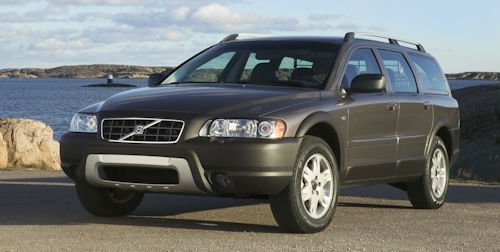
The Volvo XC70 is a passenger car model of the Swedish car manufacturer Volvo . This is the Volvo V70's crossover version with higher suspension, all-wheel drive (on most models) and all-terrain attachments. Produced in Volvo's Torslanda plant in Gothenburg, Sweden, the XC70 echoes the modern Volvo design themes introduced in the S80 and subsequently seen in the XC90 SUV and V50 Sportswagon, but with its own unique, rugged styling with chunkier bumpers, body-side protection mouldings and larger door mirrors. 

When Volvo launched the original V70 XC (‘Cross Country’) in 1997, it was a new breed of car. Here was a vehicle that combined the luxury and dynamics of an estate car with the versatility of All Wheel Drive and the extra ground clearance that can handle rough terrain. Early 2000 still under the name V70 XC put on the market, but in mid-2003, then renamed XC70 . In the summer of 2007, the second generation appeared, which was available until mid-2016.

The Volvo V70 Cross Country was replaced in March 2000 by the second generation V70 XC  . As V70, with large unpainted plastic aprons and four-wheel drive family and off-road capability. It was initially delivered with two engine variants: the five-cylinder inline gasoline engine had 2.4-liter displacement, 147 kW (200 hp) and the five-cylinder common rail diesel engine with 2.4 liters had 120 kW (163 hp). Buyers had the choice between a 5-speed manual transmission or a 5-speed gearbox.In mid-2003, the V70 XC was renamed XC70 . At the same time, the all-wheel drive was improved.

Volvo XC70 1st Gen specifications (2000-2007) 

The 2.5T petrol engine, available with five-speed manual or Geartronic transmissions, uses a light pressure turbo to provide stirring performance – 0-62mph takes 8.1sec – with good mid-range torque of 320Nm from as low as 1500 rpm up to 4500rpm, and emissions of 244 g/km.

The D5 turbodiesel variant was introduced for the 2003 model year It is available with either a six-speed manual transmission or Volvo's five-speed Geartronic adaptive automatic with manual mode.Volvo’s D5 common rail turbodiesel, which generates 163bhp, and with the standard six-speed manual achieves an average of 37.7mpg on the official Combined cycle, with emissions of 199 g/km. A five-speed Geartronic transmission is also available. 

The five-cylinder, 20 valve engine has the latest diesel technology with variable turbine geometry. A common rail system enables the fuel to be distributed under very high pressure via a single 'common' fuel line or 'rail', and the combustion can be controlled precisely, reducing emissions and maximising performance, economy, flexibility and refinement.
The engine develops 163bhp at 4,000rpm and 340Nm of torque from 1,750-3,000rpm, which takes the XC70 with manual transmission from 0-62mph in 10.5 seconds, with a maximum of 124mph, emissions of 199g/km and 37.7mpg on the official Combined cycle. With the Geartronic transmission, the figures change slightly with acceleration to 62mph taking one second longer, with a maximum speed of 121mph, emissions of 223g/km and 33.6mpg on the Combined cycle.

In autumn 2004, followed by a facelift, to the side marker lights , aluminum skirts front and rear and a streamlined front end and also included a new gasoline engine. This now had 2.5 liters of displacement and a power of 154 kW (210 hp). The 5-speed geartronic has been replaced by a 6-speed geartronic. In addition, the interior especially the center console and the control unit in the dashboard. New, bolder ‘large mesh’ grille similar to XC90 with a bright frame and dark silver inner, plus larger front and rear skid plates. The XC70 also has a new bumper colour (‘Stone Grey’) which will be available as an alternative to the brown bumper, wheel arch and lower side mouldings on certain body colours.

Level of standard luxuries include a minimum of alloy wheels, leather upholstery, electronic climate control with Air Quality System and pollen filter, alarm and immobiliser, DSTC (Dynamic Stability and Traction Control), electric driver's seat and folding door mirrors with water repellent glass, load compensating suspension, and a high-performance audio system with six CD in-dash autochanger and Dolby Pro-Logic II with surround sound, nine speakers and 4 x 50W amplifier.
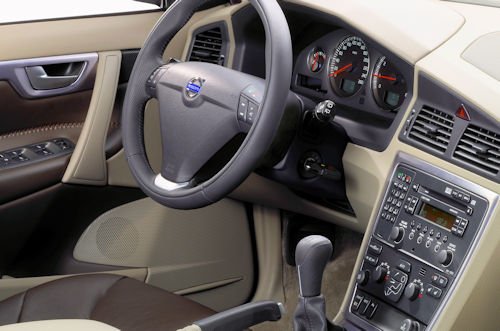
The interior design concept for the Volvo XC70 is typical Swedish design and style of the rest of the Volvo range There’s an aluminium passenger grab handle on the centre console in case the terrain gets really rough, and the standard leather trim features ‘sail seam stitching,’ which underlines Volvo’s tough yet luxurious approach to the quality of its interior design.The cabin has room for five adults, with the option of two additional rear-facing seats in the loadspace, with air vents on the B-pillars for the added comfort of rear passengers.When the rear seats are all folded flat, there’s 1641 litres of load capacity, while the front passenger seat also folds forward to allow longer loads up to 3.09m to be carried.Unique to the Volvo XC70 is the option of a 40/20/40 split rear seat, which allows long items to be accommodated between two rear passengers. The centre section can also be removed and replaced with accessories, such as an electric cooler box.
* Space for five adults, plus option of two extra rear-facing seats in loadspace, with three-point safety belts and head restraints for each occupant
* Angle of rear seat backrest can be adjusted through 30 degrees
* Unique 40/20/40 split rear seat option for further versatility
* Air vents on B-pillar for added comfort of rear passengers
* Standard ‘sail seam’ leather trim
* Aluminium passenger grab handle on centre console
* Front passenger seat folds forwards to accommodate loads up to 3.09m long
* Luggage volume of 1641 litres with seats folded
* Unique shopping bag holder in loadspace
* Rear waste bag/bottle holder
* Optional Family Pack includes power child locks, integrated booster cushions, and foldable table with dual cupholders for rear passengers

Park assist: Rear park assist is now a factory fitted option, while a new front park assist facility is now available as a dealer-fit accessory. Rain sensor: Following customer feedback, the automatic rain sensor wipers fitted to some models has been improved with a separate on/off switch. The functionality of the system has also been improved, so that, for instance, you can do a single ‘flick’ stroke with the rain sensor still on. Auto-up front passenger window: The front passenger electric window gains the auto-up function. Larger washer reservoir:drivers with the optional headlamp washer system will have to stop less often to refill the washer reservoir as its capacity has increased from 4.5 to 6.4 litres. Other interior convenience items such as a new centre console and improved audio units are covered in the Interior section.

At the end of 2005, a further development of the diesel engine with an output of 136 kW (185 hp) and particulate filters was introduced. Furthermore, the optional, so-called Four-C suspension was added, which can be individually adjusted to the surfaces / road bumps (sports and comfort). Direct competitors are the Audi allroad quattro , which is based on the Audi A6Avant, the Subaru Outback , which is based on the Subaru Legacy , the VW Passat Alltrack , which is based on the VW Passat , and the Škoda Octavia Scout.

Safety
BLIS: (Blind Spot Information System) first time on production cars from 2004. The system works at speeds above 10km/h and is designed to improve driver vision, by providing as much information as possible to make safer decisions when changing lanes. It uses digital camera technology mounted in the door mirror to monitor any surrounding traffic within 3m of each side of and up to 9.5m behind the car. If the system detects traffic in this area it illuminates an amber light on the A-pillar by the door mirror to warn the driver. The warning lamp is triangular to represent a warning symbol and located so it is only seen when the driver needs to check mirrors before any manoeuvre, rather than when looking straight ahead. A button on the dashboard enables the system to be turned on and off, if desired.

Suspension
The Volvo XC70 shares its basic suspension set-up with the Volvo V70, but with modified geometry and an extra-wide track. The MacPherson strut front suspension employs dampers and coil springs that are combined in a single unit and are positioned asymmetrically in relation to the strut. Beneath the spring struts are triangular lower links, with an anti-roll bar attached directly to the bottom of the struts themselves. Anti-lift and anti-dive technology. At the rear, the Volvo XC70 employs a sophisticated multi-link system, mounted in a aluminium subframe. This is attached to the body at four points via insulating rubber bushes to keep noise and vibration to a minimum. Four links on each side hence multi-link –comprised of two trailing arms, upper and lower links, a track rod and an anti-roll bar, control the movement of the wheels. As with the front suspension, the coil springs and dampers form a single unit. This system permits a small degree of passive rear wheel steer when cornering, to aid stability. In recognition of its role as a load carrying estate, the Volvo XC70 features load compensating suspension as standard.

Volvo XC70 1st Gen Technical details (2000-2007)

Volvo Amazon 123GT (1967-1968)

Details
Parent Category: V
Category: Volvo

Volvo Amazon 123GT

Volvo Amazon 123GT Service Guide

Manufacturer

Volvo Cars

Production

1967 to 1968

Designer

Jan Wilsgaard

Class

Sports car

Body style

2-door coupe

Layout

FR layout

Engine

1778 cc B18 I4

Transmission

4-speed M41 overdrive manual

Wheelbase

2,590 mm (102.0 in)

Length

4,395 mm (173.0 in)

Curb weight

2,400 lb (1,100 kg)


The Volvo Amazon 123GT P130 is a car manufactured and marketed in the 1960s By Swedish-owned manufacturer Volvo.

History

The Sportier version 123GT with more high-compression ratio (10)  B18B engine and is standard equipped with 2 SU type HS 6 semi-downdraught carburettors, among other things, also the M41 4-speed gearbox with overdrive an extra gear mounted on the gearbox, a so-called overdrive that is switched electro-hydraulically. This overdrive is produced by the company Laycock de Normanville from England. The Overdrive/top gearbox ratios are 1st 3.130, 2nd 1.990, 3rd 1.360, 4th 1, overdrive/top 0.756, rev 3.250 this also came at the rear with optional limited slip final drive. The front suspension as  independent with wishbones, coil springs,anti-roll bar, telescopic dampers at the rear rigid axle, swinging longitudinal trailing arms, torque arms, transverse linkage bar, coil springs and telescopic dampers.The difference in power of the A, B and D engines is mainly achieved through the use of 1 or 2 carburettors, different camshafts and the difference in compression ratio.

PERFORMANCE: Volvo Amazon 123GT 

  • Engine capacity: 108.49 cu in, 1,778 cu cm
  • Fuel consumption: 26.9 m/imp gal, 22.4 m/US gal, 10.5 1 x 100 km
  • Max speed: 108.7 mph, 175 km/h
  • Max power(SAE): 115 hp at 6,000 rpm
  • Max torque (SAE): 112 1b ft, 15.5 kg m at 4,000 rpm
  • Max engine rpm: 6,500
  • Specific power: 64.7 hp/l
  • Speed in direct drive at 1,000 rpm: 15.9 mph, 25.6 km/h.
  • Power-weight ratio: 21.2 lb/hp, 9.6 kg/hp
  • Max speeds: 32.9 mph, 53 km/h in 1st gear; 52.2 mph, 84 km/hin 2nd gear; 75.8 mph, 122 km/h in 3rd gear; 103.1 mph, 166 km/h in 4th gear; 108.7 mph, 175 km/h in overdrive/top

Volvo initially used the designation Amason on the Swedish home market and wanted to call the export version Amazon. Originally the first model was designated with the model number P1200, later it became P120A. Because the German moped manufacturer Kreidler had already registered the name Amazone, Volvo was not allowed to use the name outside Scandinavia. The cars, destined for export, were therefore officially designated by the factory with three model numbers, P120, P130 and P220, which were available in 4 different trim numbers, 121, 122S, 123GT and 'Favorit'. In practice, the above type designations proved cumbersome and these cars were used by the public worldwide. Amazon and Amazon Kombi, despite Kreider’s "rights". 

Volvo Amazon 123GT specifications (1967-1968)

The 123GT version is introduced The 123GT is always a P130 (2-door) and has as standard: The B18B engine with Laycock-de Normanville overdrive a 360 W alternator and 2 additional lights (1 spotlight and 1 floodlight) as well as Lighting in the engine and luggage compartment, on the body  2 rear-view mirrors on the front wings (fenders) along with Chrome rings on the wheel rims and radial tires inside a storage box Tray on the dashboard and Tachometer special sports steering wheel along with fully adjustable reclining seats.

Only About 5,000 of these 123GT cars were made only in 1967 and 1968.

Volvo Amazon 123GT Technical details (1967-1968)

Volvo 260 Series (1975-1982)

Details
Parent Category: V
Category: Volvo

VOLVO 260 Series

1975 to 1982
VOLVO 264 range and history
Overview
Manufacturer Volvo Cars
Body and chassis
Class Executive car
Body style
  • 4-door sedan
  • 4-door Limousine
  • 4-door Estate
Layout Front-engine, rear-wheel-drive
Powertrain
Engine

2,664 cc B27 (PRV) V6

2,849 cc B28/B280 (PRV) V6

2,383 cc D24 I6 diesel

Transmission
  • 4-speed M45/M46 manual
  • 5-speed M47 manual
  • 3-speed BW35/BW55 automatic
  • 4-speed AW70/AW71 automatic


In August 1974, along with the 240 series, the new Volvo was launched to replace the Volvo 164.The Volvo 260 series includes the Volvo 262, 262 C, 264 and 265 passenger car models from the Swedish car manufacturer Volvo.

History

The Volvo 264 was introduced in 1974 as the successor to the Volvo 164, which was produced simultaneously with the 264 in 1975

It was based on the Volvo 244, but differed from this externally in terms of rectangular headlights, a projecting hood nose, larger taillights and six instead of four-cylinder engines. The 164's recirculating ball steering was replaced with rack and pinion steering. At the front there is a strut axle with a lower wishbone and stabilizer, the rear axle is rigid and is guided by four trailing arms and a Panhard rod, and Volvo also installed a stabilizer here. There are coil springs at both the front and rear. Compared to the 240 models, the front brake discs of the 264 are internally ventilated. 

It was initially offered in the equipment variants DL (De Luxe - basic equipment with fabric upholstery and carburettor engine) and GL (Grand Luxe - luxury equipment with velour or leather upholstery and injection engine), from 1976 also as GLE (Grand Luxe Executive) with standard air conditioning, metallic paintwork and injection engine.

The station wagon Volvo 265 was introduced in late summer 1975. A two-door sedan with a six-cylinder engine was also available exclusively for the US market in the 1976 and 1977 model years. It was called Volvo 262 and only 3239 copies were made.

In August 1976 came a two-door coupe Volvo 262 C, which was manufactured at Bertone. Characteristic features were the roof, which was 10 cm lower than that of the sedan and covered in artificial leather, and the significantly more inclined windscreen.

In the late summer of 1978, the Volvo 262 C and Volvo 264 got a modified, lowered trunk lid and new taillights that were also visible from the side.

In the fall of 1980, as part of a facelift, all vehicles in the 260 series received e.g., Dashboard, headlights and indicators changed. There were also narrow bumpers with a black plastic coating. The coupé could now also be ordered with a painted roof instead of the imitation leather cover. The engine had been revised and from that point on it delivered 155 hp (114 kW) with a displacement of 2849 cm³.

In the spring of 1982, production of the sedans was discontinued in favour of the Volvo 760. Production of the coupe ended around the same time. The station wagon, on the other hand, was still available in some markets under the name "Volvo 260" until autumn 1984. Its production ended with the introduction of the Volvo 760 station wagon.

Variations of the 260 Series . The 240 Series was available in Sedan or Station Wagon, (264DL and 264GL) however the 260 Series was available in Coupe (262C by Bertone), and Limousine 264 TE. Later the 265 DL estate became available alongside the existing range, and this was the first production Volvo estate to be powered by a six-cylinder engine.
VOLVO 264 gl xray view
 
Dimensions: Overall length 490 cm, wheelbase 264 cm. Brakes: Hydraulic, disc brakes on all four wheels.

Special editions

VOLVO 264 TE limousine view

Volvo 264 Top Executive (1975 to 1981): A limousine version of the 264; many now reside in Germany as they were exported to the former German Democratic Republic for use by the government.options included a telephone and refrigerator. As a representation vehicle, e.g., for the state fleet in Sweden and the GDR, limousines extended by 70 cm were initially manufactured by Bertone in Italy, later in the Yngve Nilsson bodywork factory in Laholm / Sweden. These bore the designation Volvo 264 TE (Top Executive). These vehicles had a special interior made of leather or blue or light Gray noble velour. A third row of seats with two folding seats was located in front of the rear bench seat. Between 1976 and 1984, 335 264 TE cars were sold worldwide. Of these, 135 went to the GDR and two landaulets based on the 264 TE. The Norwegian royal family temporarily used a silver-coloured Volvo 264 TE as a representation vehicle.The overall length was 560 in 220.47 cm  height  56.69 in  (144cm), 

Volvo 262C

Volvo 262C  luxury coupe made by Volvo. Based on the Volvo 200 Series, the 262C was built by Bertone in Turin with limited production from 1977 to 1981

A completely new engine, the B27E PRV-engine, had been developed for the 264 - a V6 with a displacement of 2.7 litres,   had a displacement of 2664 cc, an aluminium alloy block, and wet cylinder liners. This engine produced 140 bhp (100 kW) for both the 264DL and 264GL. A fuel-injected variant of the V6, the B27F, was introduced to the US in the 1976 260 series. 

The Volvo 264 was powered by a V six-cylinder engine with an initial displacement of 2.7 litres. It was jointly developed by Peugeot, Renault and Volvo. These as " PRV engine the well-known machine was initially offered both as a carburettor engine (B27A) and as an injection engine (B27E). The performance in the 1975 model year was 125 hp (carburettor version) and 140 hp (injection version). Production of the carburetted version ended at the end of the 1980 model year. The B27E got a different intake manifold and camshafts for the 1979 model year. With a slightly higher compression ratio, it now delivered 148 hp. At the start of the 1980 model year, the displacement of the injection version was increased to 2.8 litres and power increased to 155 hp (B28E engine).

Since the V6 engine was originally planned as a V8 unit, the angle of the cylinder banks was 90 degrees, which would have resulted in even firing intervals of 90 degrees in a V8 engine. However, due to the oil crisis in the early 1970s, the number of cylinders in the engine was reduced by two to six during development. With a cylinder bank angle of 90 degrees, unequal ignition angles of 90 and 150 degrees resulted, which led to an impairment of smooth running.

The engine block was made of light metal with inlaid gray cast iron liners. Valve control was via two timing chains. Engine versions based on this engine were also installed in models from Renault (R30, R25, Espace, Alpine), Peugeot (504 Coupé/Cabriolet, 604, 505), Lancia Thema, De Lorean and the Volvo 760 / 780. Although there was enough space under the long bonnet and, in principle, a smooth -running six-cylinder in-line petrol engine would have offered, such was not used in contrast to the previous model Volvo 164.

Volvo-264 B27E PRV-engine,

All models were available with a choice of 4-speed manual or 3-speed automatic transmission. Overdrive was also optional on the manual, while a 5-speed manual gearbox was optional on the 264GL and 265GL. in collaboration with Peugeot and Renault.

Volvo-264 GL Front view

Volvo L420 truck (1956-1966)

Details
Parent Category: V
Category: Volvo

Volvo L420 Truck

Volvo L420 Truck specs

Manufacturer

Volvo Trucks

Type

Commercial vehicle

Production

1956 to 1966

Class

Truck

Engine

3.6 L B36 V8

3.6 L D36 I4 diesel 

Transmission

4/5 speed manual

Curb weight

4.5-5.2 ton

wheelbase

 8-9 ft

width

 6 ft


The Volvo L420 Truck was a series of trucks produced by Swedish automaker Volvo between 1956 and 1966.

History

Volvo introduced its first forward control truck L420  at the end of 1956 that was commonly known as snabbe.It had a payload of approx. 3 tonnes with a Gross weight 4.5 tons and 5.2 tons. The truck’s Engine a Volvo B 36 AV petrol 3.6L V8 with a B.H.P. of 120 had been developed by Volvo for a planned automobile  in the early 1950s. From 1964 onwards was then offered with a 3.6 L D36 diesel engine.

The Overall length depending on model was 16 ft. 9 inc and the L42011, 18 ft. 1 in. also the L42012 at 19 ft. 5 in.Overall Width(L42013). x 6 ft. (single rear wheels), 6 ft. 10 inc (dual rear wheels).  Height (to top of cab) was 7 ft. 4 in. Turning circle and Wheel-base depending on model of 36 ft. 40 ft. or 46 ft. Wheel-base 8 ft. 6 in., 9 ft. 10 in., 11 ft 2 inc .Track 5 ft. 4 in. (front), 5 ft. 2 in.

  1. Volvo P1800 ES (1971-1973)
  2. Volvo XC60 2nd gen (2017-)
  3. Volvo S90 (2016-)
  4. Volvo C30 (2006–2013)
  • 1
  • 2

log on

Log in to Motor car

  • Forgot your password?
  • Forgot your username?

Welcome To Motor Car

On Motor Car
Engine makes Drivetrain
Induction exhaust Tyres Wheels Brakes
Engine Guide Maintenance Guide
Suspension Electrical
Understanding the Automobile

Veteran - Vintage - Classic - Modern  

 Luxury Cars  Bus Coach
Roadsters  Coupes
 Super Cars  Kit cars
 Cyclecars  Microcars
 Electric  Fibreglass

Enjoy all of Motor Car Here

1890s 1900s 1910s 1920s 1930s 1940s 1950s 1960s  1970s 1980s 1990s 2000s 2010s


Motor Car est. 2003

  1. You are here:  
  2. Motor Car
  3. Makes and Models
  4. V
  5. Volvo