
Lexus
Lexus ES Fifth generation (XV40)
| 2007 to 2012 | |
|---|---|
 |
|
| Overview | |
| Production | March 2006 – 2012 |
| Model years | 2007–2012 |
| Assembly | Japan: Miyawaka, Fukuoka (Miyata plant) |
| Designer | Kengo Matsumoto (2004) |
| Body and chassis | |
| Class | Mid-size car |
| Layout | Front-engine, front-wheel-drive |
| Platform | Toyota K platform |
| Related | Toyota Aurion (XV40) Toyota Camry (XV40) |
| Powertrain | |
| Engine | 2.4 L 2AZ-FE I4 3.5 L 2GR-FE V6 |
| Transmission | 6-speed U660E automatic |
| Dimensions | |
| Wheelbase | 2,776 mm (109.3 in) |
| Length | 4,854 mm (191.1 in) |
| Width | 1,821 mm (71.7 in) |
| Height | 1,450 mm (57.1 in) |
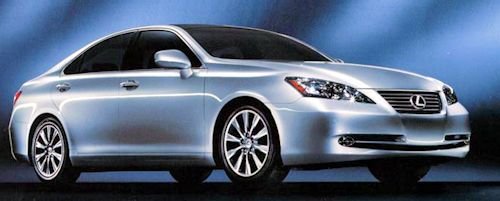
Lexus unveiled the fifth-generation ES in February 2006 at the Chicago Auto Show for the 2007 model year. The line initially consisted of the ES 350 sedan, which as per previous models, featured front-wheel drive and a V6 engine—now displacing 3.5 liters. The line was refreshed in 2009, during which more features were added, and a four-cylinder variant, the ES 240, was introduced for Asian markets. The fifth-generation ES remained Lexus' top-selling sedan model in the North American and Asian markets, anchoring the marque's entry-level model lineup. Like previous generations, the fifth-generation Lexus ES was geared towards the comfort luxury segment, favoring a soft ride over sporty performance. It continued the previous generation's direction of moving the ES more upscale in its design and features; Lexus touted the ES 350 as faster, more powerful, more aerodynamic, and more quiet than the original LS 400 flagship. Like its predecessors, the fifth-generation ES continued to be made in Japan, at the Kyushu plant in Fukuoka, Japan. Despite being built in the country, the ES 350 is left-hand drive only and was not sold in the Japanese market, as well as the other regions with right-hand drive, although the country allows both RHD and LHD vehicles on their roads.
2006–2009
The fifth-generation ES (GSV40) debuted at the Chicago Auto Show in February 2006 as the ES 350, featuring a six-speed automatic transmission with a front-wheel drive 272 hp (203 kW) aluminum 3.5 L 2GR-FE V6 engine with intake and exhaust variable valve timing. The exterior design featured an all-new body in the style of Lexus' new design philosophy, L-finesse. The new design was sleeker than its predecessor, with a streamlined cabin and character lines across the hood, fenders, and rear pillars. The Lexus emblem returned to the grille for the first time since the first generation, and was placed at the center of a five-bar horizontal grille. For the debut 2007 models, Lexus introduced a number of unique colors exclusive to the ES 350, including Aquamarine Pearl, Royal Ruby Metallic, Moon Shell Mica, and Amber Pearl. The drag coefficient was Cd 0.28. Compared to the preceding fourth-generation ES 300/330, the fifth-generation ES 350 was 51 millimetres (2 in) longer and 10 millimetres (0.4 in) wider overall, but with shorter overhangs.
The ES 350 interior featured walnut wood accents, leather seats, dual zone climate control with air filter, an MP3 player auxiliary input, power tilt and telescoping steering wheel, and eight standard airbags. A keyless entry and ignition system, Lexus SmartAccess, which does not require the electronic remote to be taken out of the driver's pocket, was standard. Available new features included a 300-watt, 14-speaker Mark Levinson premium audio system, power seat cushion extender, radar-based adaptive cruise control, rain-sensing windshield wipers, power rear sunshade, DVD navigation system, and Lexus Park Assist, a sonar-based warning system with backup camera. For the first time, the ES offered an "Ultra Luxury Package," which featured many of the aforementioned options along with a three-panel panoramic glass moonroof. The ES also featured a secondary start system, that runs on battery, so that the driver does not have to use the engine for accessory functions. The secondary system allowed the driver use the radio, GPS, Bluetooth, and air conditioning/heating. The instrument panel used Optitron gauges and LED lighting.
Lexus estimated that the ES 350's engine-transmission combination allowed acceleration to 60 mph (97 km/h) in less than 7 seconds, but tests netted the ES 350 as being one of the fastest front-wheel drive luxury sedans then available. 0–60 mph was acquired in as little as 6.2 seconds by auto magazines, and the car showed a strong point of high-end power as it cleared the quarter mile in 14.6 seconds while traveling at almost 100 mph (160 km/h). Fuel economy was estimated at 21 mpg-US (11.2 L/100 km; 25.2 mpg-imp) in the city and 30 mpg-US (7.8 L/100 km; 36.0 mpg-imp) on the highway. Some commentators have complained that so much power to the front wheels has produced uncomfortable torque steer in both the new ES and Camry.
The ES 350 arrived at U.S. dealerships in late April 2006 as a 2007 model. The 2007 base price in the U.S. was $33,470. That year, the ES 350 was launched in North America, the Middle East, China (excluding Hong Kong and Macau), South Korea and Taiwan. At the 2008 Chicago Auto Show, Lexus debuted a Pebble Beach Edition ES 350, produced in partnership with the Pebble Beach Company. The Pebble Beach ES 350 came in either Truffle Mica, Pearl Silver, or Obsidian Black exterior colors, with exterior and interior badging, along with the choice of either travel or golf products by the Callaway Golf Company or Viking Range cookware.
Safety features on the ES 350 included dual front airbags, knee airbags, side-torso and curtain airbags, along with traction control, Vehicle Stability Control (VSC), anti-lock brakes (ABS), and electronic brake-force distribution (EBD). A pre-collision system (PCS), which incorporates a grille-mounted sensor and retracts seatbelts and triggers full braking power, was optional, and came with the distance-aware Dynamic Radar Cruise Control system. The front passenger airbag used a twin-chamber design for reduced occupant discomfort upon deployment. The National Highway Traffic Safety Administration (NHTSA) crash test results in 2007 rated the ES 350 the maximum five stars in the Frontal Driver, Frontal Passenger, and Side Driver categories, and four stars in the Side Rear Passenger and Rollover categories.
Toyota recalled and replaced 55,000 optional all-weather rubber floor mats from the Toyota Camry and ES 350 in September 2007, citing the risk of unsecured mats jamming the accelerator pedal. In August 2009, the NHTSA probed the ES 350 following 40 acceleration control complaints, eight crashes and 12 injuries, with floor mats implicated in most cases. An accident involving a loaner ES 350 killed four persons near San Diego on August 28. The NHTSA and San Diego County Sheriff's Department found that the car was wrongly fitted with an unsecured SUV rubber floor mat; the mat had jammed the accelerator, which an earlier driver had complained about.On September 29, a Toyota safety notice advised floor mat removal, shift to Neutral (N) gear in an emergency, with a 3-second push button ignition press for engine shutoff. On November 29, the 2007–2010 MY floor mat recall was revised to add shorter accelerator pedals, thinner replacement mats, and a brake override feature which ignores accelerator input when the brake pedal is depressed.
2009–2012
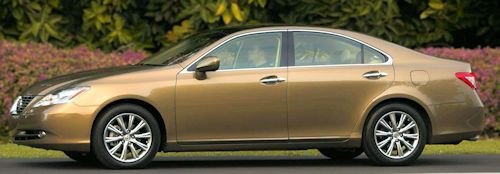
In 2009, the 2010 model year ES underwent a mid-cycle facelift. A slightly revised grille resembled that of the new Lexus HS, and the lower bumper and taillights were changed. Other exterior changes included chrome-trimmed side moulding, turn signal indicators on the side mirrors, and new split 5-spoke alloy wheels. Memory seating, rain-sensing windshield wipers, and rear seat-mounted side-impact airbags were now standard. The steering wheel controls now had hard touch buttons as opposed to the previous soft ones. The navigation system shared with the then current Lexus RX now included upgraded VoiceBox speech recognition, Bluetooth phone book downloading, and Lexus Insider, XM Weather, Sports, and Stocks reports. Bluetooth streaming audio and a USB port that included iPod integration was now built into the stereo.
In 2010, the revised ES line gained a brake override feature which ignored accelerator input when the brake pedal was depressed, which was installed on new builds from January 2010. Debuting first in the Chinese auto market, the 2010 ES lineup added a second model, the ES 240 (ACV40), which was produced to comply with the country's new emission laws for luxury cars, making it the first gasoline four-cylinder Lexus since the 2005 IS. The ES 240 received a 2.4L 2AZ-FE inline-four engine producing 123 kW (165 hp) and 224 N·m (165 ft·lbf) of torque at 4000 rpm.
Several awards won by the fifth-generation Lexus ES include 2009 Best Upscale Car for the Money from U.S News & World Report, AutoPacific 2009 Vehicle Satisfaction Award for Best Midsize Luxury Car, and Best New Luxury Car (under $50k) Award in 2007 at the Canadian Car of the Year Awards, selected by the Automobile Journalists Association of Canada. The ES 350 has also been named Consumer Guide 2008 Best Buy in the Premium Midsize Class, ConsumerSearch Best "budget" luxury sedan of 2008, Kiplinger's Personal Finance Best New Car for 2007, and Best in Class Intellichoice Best Car Value Over $23,000 for 2007, and Polk Automotive Loyalty award for 2008.
Technical specifications
| Drivetrain specifications by generation | ||||||||
|---|---|---|---|---|---|---|---|---|
| 1989–1991 | 1991–1996 | 1996–2001 | 2001–2003 | 2003–2006 | 2006–2012 | 2010–2012 | 2013–Present | |
| Engine | 2.5 L V6 | 3.0 L V6 | 3.0 L V6 | 3.0 L V6 | 3.3 L V6 | 3.5 L V6 (ES 350) | 2.4 L I4 (ES 240) | 3.5 L V6 |
| Gears | 4 (AT) or 5 (MT) | 4 (AT) or 5 (MT) | 4 | 5 | 5 | 6 | 5 | 6 |
| Power | 116 kW (156 hp) | 138 kW (185 hp) | 150 kW (200 hp) | 160 kW (210 hp) | 163 kW (219 hp) | 203 kW (272 hp) | 123 kW (165 hp) | 200 kW (268 hp) @6200 rpm |
| Torque | 220 N·m (160 lb·ft) @4400 rpm | 264 N·m (195 lb·ft) @4400 rpm | 290 N·m (210 lb·ft) @4400 rpm | 300 N·m (220 lb·ft) @4400 rpm | 330 N·m (240 lb·ft) @3600 rpm | 346 N·m (255 lb·ft) @4700 rpm | 224 N·m (165 lb·ft) @4000 rpm | 336 N·m (248 lb·ft)@4700 rpm |
Lexus LS XF40 4th Generation
| From 2006 | |
|---|---|
 |
|
| Overview | |
| Manufacturer | Lexus (Toyota) |
| Production | August 2006–present |
| Model years | 2007–present |
| Assembly | Japan: Tahara, Aichi |
| Designer | Yo Hiruta (2003, 2004) |
| Body and chassis | |
| Class | Full-size luxury car |
| Body style | 4-door sedan |
| Layout | Front-engine, rear-wheel-drive Front-engine, all-wheel-drive |
| Powertrain | |
| Engine | 4.6 L 1UR-FE V8 4.6 L 1UR-FSE V8 5.0 L 2UR-FSE V8 |
| Transmission | 8-speed AA80E automatic CVT L110F automatic (hybrid) |
| Dimensions | |
| Wheelbase | SWB: 2,969 mm (116.9 in) LWB: 3,091 mm (121.7 in) |
| Length | 2006–09: SWB: 5,029 mm (198.0 in) LWB: 5,151 mm (202.8 in) 2009–present: SWB: 5,060 mm (199.2 in) LWB: 5,179 mm (203.9 in) |
| Width | 1,875 mm (73.8 in) |
| Height | 1,476 mm (58.1 in) 1,481 mm (58.3 in) (hybrid) 1,466 mm (57.7 in) (air suspension) |
| Curb weight | SWB: 1,925 kg (4,244 lb) LWB: 1,965 kg (4,332 lb) |
The Lexus LS (XF40) is the fourth generation of the Lexus LS line of flagship sedans. Lexus debuted the model line at the 2006 North American International Auto Show, with variants including the standard wheelbase LS 460 (USF40) and long wheelbase LS 460 L (USF41); the chassis codes (USF40/USF41) are derived from the fourth generation XF40 platform code and UR series engine designation. In development from 2001, the final design was selected for the V8 models in late 2003, with the hybrid variant's design finalized in 2004. Introduced at the 2006 New York International Auto Show, all-wheel drive hybrid models, the standard wheelbase LS 600h (UVF45) and long wheelbase LS 600h L (UVF46), joined the lineup in the 2008 model year. The LS 460 and LS 460 L models feature a 4.6 L UR series V8 and an 8-speed automatic transmission, while hybrid models are powered by a 5.0 L UR series V8 engine equipped with electric motors, with a continuously variable transmission and all-wheel drive. All-wheel drive versions of the non-hybrid LS 460 (USF45) and LS 460 L (USF46) models were introduced at the 2008 Moscow International Motor Show The XF40 received updates for the 2010 and 2013 model years.
Since its introduction, multiple fourth generation Lexus LS models have been sold worldwide, including standard, long wheelbase, hybrid, and all-wheel-drive versions. At its introduction, the LS 600h L became the most expensive sedan produced in Japan, with a sticker price of approximately US$125,000.
Design and engineering
Exterior
The fourth generation Lexus flagship was the first LS to receive the styling cues of Lexus' new design direction, L-finesse. The design features body forms running the length of the car, with wheel arches, arrow-shaped chrome trim, a grille set slightly below the level of the headlamps, and a fastback rear decklid. Compared to the previous generation LS, the forward and aft coefficient of lift was reduced to 0.02 and 0.01, respectively, while aerodynamic drag remained the same (Cd 0.26). Exterior-wise, the LS 460 L has a similar profile as the LS 460, with identical overhangs in both front and rear; the rear passenger doors are noticeably longer in the stretched model. Design patents for the vehicle's exterior design, including front and rear fascias, side windows, and lights, were filed with the United States Patent and Trademark Office on October 3, 2005.
Additional details of the design include adaptive headlamps housed in hand polished surrounds designed to look like Baccarat crystal tumblers, chrome exhaust vents integrated into the rear bumper, and "L"/"S" curve shapes. The fenders are produced using a 5200-ton press, which when introduced made it the world's strongest stamping press. The model's new paint finish is applied to bare-metal body panels which are first prepared by a six-axis buffing robot with 3D movements, the entire paint finish is wet-sanded twice by hand between layers of paint application. Both front and rear window frames are each constructed from a single die-cast zinc piece, plated in chrome and then polished by hand.
Interior

Interior features include a 19-speaker Mark Levinson Reference Surround Sound System, Gracenote, and a 30 GB HDD with room for 2,000 songs. The fifth generation HDD-based Lexus navigation system features XM NavTraffic, a real-time traffic monitoring system with dynamic rerouting (in the U.S., and similar systems elsewhere). Keyless SmartAccess with push-button start, Optitron instrument panel with TFT multi-information display, auxiliary MP3 player input, and a 5-position tire pressure display are standard equipment. A 24-hour concierge/emergency aid service, Lexus Link (later Lexus Enform), was offered in North America, with the analogous G-Link system offered in Japan. Japanese market LS sedans also feature MiniDisc compatibility, television reception, onboard security surveillance cameras, and remote cellphone access.
Comfort and convenience features range from a 16-way adjustable heated and cooled driver seat to a rear cabin with power reclining memory seats, a cool box, and five powered sunshades. Certain versions of the LS can be equipped with climate control features such as first automobile ceiling air diffusers, air purifiers, air ionisers, and four-zone climate control with infrared body temperature sensors. The leather on the seats and steering wheel are made smoother than previous models, due to being buffed longer in production the steering wheel is buffed for three hours and incorporates a whip stitching pattern. Upgraded materials (such as a headliner made out of ecsaine, a suede-like material used by couturier Yves Saint-Laurent) are offered for the interior. Inside the wood veneer trim has been laminated to aluminum instead of fiberglass by Yamaha's piano craftsmen. A special-order "Executive" seating package on long wheelbase models includes a rear seat DVD entertainment system with ceiling fold-down LCD screen, fixed center console with a swivel tray table, and a passenger-side shiatsu and shoulder massaging ottoman seat.
Driver-assist systems
The Intelligent Parking Assist System feature (also called Advanced Parking Guidance System) can parallel-park or reverse-park the LS into a preselected space with minimal brake input at the push of a button.This feature utilizes the backup camera and parking sensors. Other drive-assist features include Dynamic Radar Cruise Control, which can accelerate and brake while monitoring traffic (similar to Mercedes-Benz's Distronic Plus), a Brake Hold button, which prevents creeping forward motion when the driver's foot is off the brake pedal, and the Automatic Parking Brake, which can engage the parking brake simultaneously whenever the transmission is shifted to Park.
The Lane Keeping Assist (not available on the LS 600h due to conflict with LED headlamps) feature includes the Lane Departure Warning (LDW) and Lane Keep (LK) systems. When activated, the LDW system will issue an audiovisual warning and LK will apply a brief corrective steering response when veering motion is detected. The LK system (activated when the radar cruise control is engaged) will actively provide continued steering assist.
Safety systems
Debuted on the fourth generation Lexus LS, the next-generation Pre-Crash System (Pre-Collision in the U.S.) offers forward and rear protection. The Frontal Pre-Crash system will activate a warning buzzer and red dash lights to alert the driver if a potential hazard is detected in the vehicle's path. If the system detects a potential collision, the system will adjust steering and braking responsiveness. If a collision is determined to be unavoidable, the seatbelt pretensioners will activate, and the brakes will automatically engage to slow the vehicle. The Rear Pre-Crash system, the first active rear collision safety feature in an automobile, utilizes trunk-mounted obstacle detection and warning systems; if a rear collision is deemed unavoidable, sensor-equipped Pre-Crash Intelligent Headrests in the front seats will adjust position upwards up to 25 mm (0.98 in) and forwards up to 60 mm (2.4 in) to cradle the head during impact, reducing whiplash. The rear Pre-Crash system in the U.S. market waited for FCC regulatory approval. For 2010, the LS hybrid further incorporated an all-TFT instrument panel display, which featured the addition of a night vision capability with pedestrian detection.
A new active safety feature called the Driver Monitoring System debuted on the LS 600h L sedan. The Driver Monitoring System uses a CCD camera placed on the steering column to track driver attentiveness by eye tracking. Using infrared LED detectors, this system will respond if a collision is imminent and the driver not paying attention (a warning alarm will sound followed by a brief automatic application of the braking system).
Standard active safety features also include electronically controlled braking (ECB), anti-lock brakes (ABS), and traction control (TRAC). The stability/traction control system, Vehicle Dynamics Integrated Management (VDIM) (with disable button), incorporates ECB, electric brake force distribution; related systems include Vehicle Stability Control, Adaptive Variable Suspension, and the Variable Gear Ratio Steering systems. VDIM integrates these systems to improve vehicle responsiveness to driver input and prevent loss of control. An Emergency Steering Assist system acts to minimize body roll and improve vehicle responsiveness in sudden maneuvers. This system reduces the steering gear ratio and prompts the suspension to adopt stiffer settings, helping make emergency maneuvers more stable and controlled. Passive safety features include eight to ten standard airbags (depending on model, up to eleven with upgraded rear seats),passenger detection systems, front and rear crumple zones, three-point seatbelts with pretensioners and force limiters, and a reinforced steel body. Dual-stage driver and twin-chambered front passenger airbags, front knee airbags, full-length side curtain airbags, and Thorax-Abdomen-Pelvis (TAP) airbags are also installed.

Variants
USF40 / USF41 (2006)
Introduced at the 2006 North American International Auto Show, the redesigned LS was based on the LF-Sh concept vehicle and used an all-new platform. The initial models, the LS 460 (USF40) and long wheelbase LS 460 L (USF41), featured a brand-new 4.6 L 1UR-FSE V8 producing 380 hp (283 kW) and 367 ft·lbf (498 N•m) of torque. The LS 460 introduced the first production eight-speed automatic transmission and an automatic parking system.
The LS 460 and LS 460 L first went on sale in Japan on September 19, 2006. It was the first time the car was sold under the Lexus marque in Japan, and identified the next phase of Lexus' launch as a global premium brand. The LS 460 and LS 460 L arrived at dealerships in the United States on October 20, 2006. Sales of the LS 460 began in Europe in late 2006. In early 2007, the redesigned Lexus LS reached the Middle East and other Asian countries. The LS 460 arrived in Australia in mid-2007. The U.S. launch of the 2007 Lexus LS model was accompanied by special presentations at "460 Degrees" art galleries in Beverly Hills, Chicago, Miami, and New York City, and an outdoor vehicle art display at the World Financial Center in downtown Manhattan.
The previous double-wishbone front suspension was replaced with a dual joint multilink design with an all-electric system. To increase rigidity and lower unsprung weight, forged aluminum is now used for the suspension links, front steering knuckles, and rear hub carriers. along with a single-piece hollow die-cast aluminum front subframe with machined mounting points, and approximately half of the body uses high-tensile steel Overall the amount of laser welding has been doubled compared to the previous model.
The LS 460 L, the debut vehicle of the LS line at the 2006 North American International Auto Show, sports an added 4.8 inches (121.9 mm) of length, affording passengers a more capacious rear compartment, and adds more features. Standard amenities on the LS 460 L (some optional on the LS 460) include a power open/close trunk, heated steering wheel, backup camera, navigation system, XM NavTraffic in the U.S., Bluetooth, semi-aniline leather interior, and heated/cooled power memory rear seats.The LS 460 L offers the Variable Gear Ratio Steering (VGRS) and the Adaptive Variable Air Suspension performance upgrades; the air suspension features normal, comfort, and sport modes. Compared to the standard wheelbase LS 460, the LS 460 L adds up to 250 lb (110 kg) of weight while still matching the 0–60 miles per hour (97 km/h) acceleration of its lighter stablemate, listed at 5.4 seconds. The "Executive Class Four-Seat Package" with massaging rear seat is an option for chauffeured customers.
UVF45 / UVF46 (2007)
Launched at the New York International Auto Show in April 2006, the LS 600h L (UVF46) is the first production V8-powered full-hybrid vehicle. The LS 600h (UVF45), a standard wheelbase version destined for Asia and Europe, was launched in Japan in May 2007. Both models are equipped with Lexus Hybrid Drive, featuring a 5.0 L 2UR-FSE V8 engine mated to two electric motors with nickel-metal hydride battery packs.The first motor has two primary functions, starting the gasoline engine and charging both the second motor and the nickel-metal hydride battery; the second motor is a high-output generator capable of 165 kilowatts (221 hp) alone. The entire system generates an official output of 327 kilowatts (439 hp). This total figure does not combine the V8 engine and the electric motor standalone power figures.The powertrain uses a two-stage L110F continuously variable transmission, featuring a three-mode power switch for control of torque output between hybrid (normal), power, or snow modes; an additional EV mode allows for silent driving under full electric power.
According to tests by the Environmental Protection Agency (EPA) and on the European combined cycle, fuel economy is slightly higher overall than the lower-powered non-hybrid LS; the LS 600h L also receives a U.S. Super Ultra Low Emission Vehicle (SULEV) rating. European emissions standards testing has listed the LS 600h L's CO2 emissions at 219g/km, and the vehicle is listed under the United Kingdom's Vehicle Excise Duty tax band F. According to EPA testing, the LS 600h L earns an energy impact score of 16.3 barrels of petroleum gasoline per year, with a carbon footprint of 8.7 tons of CO2 emitted per year.
Aiming to compete with top-specification versions of rival luxury sedans, designers billed the LS hybrids as having "the performance of a V12, but the efficiencies of a V8", opting for the hybrid approach to meet performance, fuel efficiency, and emission targets. The LS 600h L, based on the long-wheelbase LS 460 L introduced with the new LS 460 platform, aimed to compete with the Audi A8L W12, BMW 760Li, and Mercedes-Benz V12 S-Class (e.g. S600) models, whose prices approach or exceed US$120,000. This market featured separate engineering and engine designs for added power, with the most common powerplant being a 12-cylinder engine. Designers visited Beverly Hills and South Florida as part of the LS hybrid development process. To reduce noise, vibration, and harshness, the transmission gear teeth and engagement points were finished to within micrometres, a sound-absorbing cover was employed, and acoustic analysis was performed to evaluate noise emissions.
Standard equipment on the LS hybrids includes all-wheel drive, a Torsen limited-slip differential, and an Adaptive Variable Air Suspension, plus an optional Active Stabilizer Suspension System (an upgrade to the standard multi-link front suspension expressly developed for the LS hybrids). Hybrid-only features include the first production low beam LED headlights in the U.S. market, a leather-trimmed dash, and blue-tinted badging; the standard SmartAccess key fob can also be substituted with a 3.35 mm (0.132 in) thick wallet-sized "smart card". After its press debut, the LS 600h L's price was speculated to be higher than any previous Lexus, and in April 2007, Lexus announced that the base price for the LS 600h L would be over US$104,000, surpassing the V12-equipped Toyota Century as the most expensive Japanese flagship sedan ever produced. With a price reaching six figures, the LS 600h L placed a Lexus vehicle in the U.S. "ultra-luxury" segment for the first time.
By March 2007, the initial allocation of LS hybrids in the U.S. was nearly sold out, with 1,850 preorders placed months before debut. As of October, 2007, Lexus sold 6,093 LS 600h's worldwide. When the LS hybrid originally went on sale in July 2007, Lexus initially targeted 7,000 total units worldwide for the first year, and 2,000 annually in other markets. Ward's Auto and other media outlets reported that the Lexus LS 600h first year's (2007) allocation was entirely sold out and that there was a one-year backorder as a result. Positioned as the halo vehicles of the LS line, the LS 600h and LS 600h L saw corporate purchases for emissions reductions, along with use as an official state car. In 2008, a redesign of the rear battery area increased trunk space by 20%.
USF45 / USF46 (2008)
All-wheel drive, specifically the LS 460 AWD (USF45) and LS 460 L AWD (USF46), was added to non-hybrid models for in 2008 for the 2009 model year with the addition of front passenger memory function.
Limited editions
Neiman Marcus
Specialty department store Neiman Marcus offered 100 individually numbered LS 600h L "Launch Edition" sedans for early 2007, available only through the Neiman Marcus catalog for InCircle members. These special models came in an exclusive Truffle Mica color with Alabaster interior, with chrome wheels and a customized Italian leather luggage set. The limited units were symbolically chosen to coincide with Neiman Marcus' centennial anniversary.
Pebble Beach
For the 2009 model year, the LS 600h L was produced in a 50-unit "Pebble Beach Edition" in partnership with the Pebble Beach Company, operator of the namesake golf courses and resorts. These vehicles featured Pebble Beach badging and tags, a two-tone interior, and the choice of a travel or merchandise package. The special edition was first shown at the 2008 Pebble Beach Concours d'Elegance.
Salone del Mobile
The 2006 Salone del Mobile (Milan Design Week) exhibition at the Museo della Permanente in Milan, Italy, featured an LS 460 art model with a sculpted body along with a fiber-optic "Evolving Fiber" landscape. At 2007's Salone del Mobile, Lexus presented an "Invisible Garden" exhibition at the city's Zona Tortona featuring a frosted LS 600h hybrid model. The model was later shown at the Salon International de l'Auto (Geneva Motor Show).
LS 600h L Landaulet
In 2011, an LS 600h L was converted to landaulet configuration for use in the Wedding of Albert II, Prince of Monaco, and Charlene Wittstock. The conversion was handled by Belgian coachmaker Carat Duchatelet in collaboration with Lexus. The LS 600h L Landaulet's rear cabin featured a transparent bubble roof with no additional reinforcement, and the vehicle received a bespoke, water-based blue livery. The vehicle was used to transport the royal couple on the day of their wedding, and afterwards put on display at the Oceanographic Museum.
Concept models
LF-Sh
The Lexus LF-Sh concept previewed the appearance of the fourth generation USF40/USF41 design of the Lexus LS. This concept vehicle debuted at the 2005 Tokyo Motor Show. The designation refers to Lexus Future-Sedan hybrid, and the vehicle took the form of a hybrid standard wheelbase sedan model with all-wheel drive, LED headlamps, and integrated exhaust tips. No interior was shown. Lexus subsequently debuted a production hybrid powertrain and all-wheel drive with the LS 600h/LS 600h L.
Driving simulator
A specialized Lexus LS 460 is used in a warehouse-sized driving simulator at Toyota's Higashifuji Technical Center in Shizuoka, Japan. This vehicle is mounted inside a 4.5 by 7.0 m (15 by 23 ft) high dome, and surrounded by a 360° projector screen. This setup is used to simulate the audiovisual and vibration aspects of driving.
Simulator data is directly transmitted to a strut/track-mounted driver occupant dome containing the forward cabin of an LS 460, creating the impression of forward movement in a three-dimensional environment.The occupant dome further simulates vehicle motion. The driving simulator is used for testing and development of automotive safety features in a secure environment.
LS 460 ITS-Safety
For the Intelligent Transport Systems (ITS-Safety) 2010 exhibition at the Miraikan museum in Tokyo, the LS 460 ITS-Safety concept was shown. The ITS-Safety concept included road-to-vehicle and vehicle-to-vehicle information-exchange technologies. The LS 460 ITS-Safety concept was equipped with radar cruise control and automatic parking driver-assist systems.
LS TMG
In September 2011, photos were taken of a heavily modified LS, later revealed to be the LS TMG (Toyota Motorsport GmbH) prototype spotted on the Nürburgring. Aside from a redesigned aero package, the LS TMG contains a 5.0-liter V8 engine that produces 641 hp and 524 pound-feet of torque, giving the car a top speed around 200 mph and 4.2 second 0–60 time.
Specifications
Different models based on the standard (USF40) and long wheelbase (USF41) platforms are sold worldwide. From 2007, rear-wheel drive is offered with the 4.6 L gasoline powered V8, and all-wheel drive is featured with the 5.0 L hybrid V8. Some markets receive a modified 4.6 L V8 engine without direct injection. The standard (UVF45) and long wheelbase (UVF46) hybrid models feature a two-stage planetary-gear continuously variable transmission (CVT). The LS 600h L is sold in major global markets in North America, Asia, and Europe, while the LS 600h is sold in Asian and European markets.

Lexus LS 400 First generation XF10
| 1989-1994 | |
|---|---|
 |
|
| Overview | |
| Also called | Toyota Celsior (Japan) |
| Production | May 1989–September 1994 |
| Model years | 1990–1994 |
| Designer | Kunihiro Uchida (1987) |
| Powertrain | |
| Engine | 4.0 L 1UZ-FE V8 |
| Transmission | 4-speed A341E automatic |
| Dimensions | |
| Wheelbase | 2,814 mm (110.8 in) |
| Length | 4,996 mm (196.7 in) |
| Width | 1,821–1,829 mm (71.7–72.0 in) |
| Height | 1,405–1,415 mm (55.3–55.7 in) |
| Curb weight | 1,705–1,750 kg (3,759–3,860 lb) |
Lexus UCF10 is the internal name of the of the fall of 1989 built by the end of 1994 the first generation of the Lexus LS400 sold luxury-class sedan Lexus LS of the Japanese automobile company Toyota belonging brand Lexus .
With the Lexus 400, Toyota introduced the premium brand Lexus in October 1989 , initially only on the US market, with the model being offered in Japan in parallel as Toyota Celsior .The car and the new brand immediately proved to be successful, with over 42,000 vehicles sold in the first year - a value that the LS did not reach again until at least 2009.
A total of 169,000 first generation units were sold.
In August 1983, Toyota chairman Eiji Toyoda initiated the F1 project ("Flagship" and "No. 1" vehicle; alternatively called the "Circle-F" project), a clandestine effort aimed at producing a world-class luxury sedan for international markets. The F1 development effort did not have a specific budget or time constraints, and the resulting vehicle did not utilize existing Toyota platforms or parts. Instead, chief engineer Ichiro Suzuki sought to develop an all-new design, aiming to surpass rival American and European flagship sedans in specific target areas, including aerodynamics, cabin quietness, overall top speed, and fuel efficiency. During development, 3,900 F1 personnel built approximately 450 flagship prototypes and 900 engine prototypes and logged 2.7 million kilometres of testing on locations ranging from winter Europe roadways; deserts in Arizona, Australia, and Saudi Arabia; to U.S. highways and wilderness areas.
In late 1985, designers presented the first exterior study models to F1 management, featuring a sports car-like design with a low-slung hood and narrow front profile. By 1986, the sedan used a three box design with an upright stance, more prominent grille, and a two-tone body. Extensive modeling and wind tunnel tests resulted in a low drag coefficient for a conventional production vehicle of the time (Cd 0.29).For the passenger cabin, materials selection tests evaluated 24 different kinds of wood and multiple types of leather for two years before settling on specific trim combinations. By 1986, the Lexus marque was created to support the launch of the flagship sedan,and the vehicle became known as the Lexus LS. Following eight design reviews, subsequent revisions, and over US$1 billion in development expenses, the final design for the production Lexus LS 400 (chassis code UCF10) was approved in May 1987 with design patents filed on May 13, 1987.
In January 1989, the LS 400 made its debut as a 1990 model at the North American International Auto Show, in Detroit, Michigan. U.S. sales began in September 1989, followed by limited exports to Australia, Canada, and the United Kingdom. The LS 400's new 4.0 liter 1UZ-FE 32-valve V8 engine, capable of 190 kilowatts (250 hp) and 353 newton metres (260 ft·lbf) of torque, was linked to a new four-speed automatic transmission with electronically controlled shifts. The chassis used an independent, double-wishbone suspension setup, and an air suspension system was optional.The LS 400's 0–100 kilometres per hour (62 mph) time was 8.5 seconds, and its top speed was 250 kilometres per hour (160 mph).Compared to the rival target BMW 735i (E32) and Mercedes-Benz 420 SE (W126), the LS 400 had a quieter cabin, with 58 dB at 100 kilometres per hour (62 mph); a higher top speed; a lower drag coefficient and curb weight; and it avoided the U.S. Gas Guzzler Tax.
The LS 400 was among the first luxury sedans to feature an automatic tilt-and-telescoping steering wheel with SRS airbag, power adjustable shoulder seat belts, and an electrochromic rear-view mirror. The five-passenger cabin included California walnut and leather trim, power-adjustable seats, and soft-touch controls. A back-lit electroluminescent gauge cluster featured a holographic visual effect, with indicator lights projected onto the instrument panel. The memory system stored the driver's seat, side mirror, steering wheel, and seat belt positions. Available luxury options included a Nakamichi premium sound system and an integrated cellular telephone with hands-free capabilities. The LS 400 further contained some 300 technological innovations to aid smooth operation and silence, including fluid-damped cabin fixtures, vibration-insulating rubber mounts, airflow fairings, and sandwich steel body panels.

In Japan, the launch of Lexus was complicated by Toyota's existing four domestic dealership networks at the time of its introduction.The Toyota Crown and Toyota Century were exclusive to Toyota Store locations. During the LS 400's development, local dealers' requests for a Japanese domestic market version had grown, and a right-hand-drive Toyota Celsior-badged version was introduced shortly after the LS 400's U.S. debut, and introduced October 9, 1989 and only available at Toyopet Store locations The Celsior, named after the Latin word for "supreme", was largely identical to the LS. Models came in either basic "A", upgraded suspension "B", or fully equipped "C" trim specifications. The Crown and the Crown Majesta, which appeared later in 1991, were only available at Toyota Store locations which carried Japan-only Toyota luxury models, like the Century.
Adding incentive for early U.S. sales was a base price of US$35,000, which undercut competitors by thousands of dollars and brought accusations of selling below cost from rival BMW In December 1989, shortly after the LS 400's launch, Lexus ordered a voluntary recall of the 8,000 vehicles sold so far, based upon two customer complaints over defective wiring and an overheated brake light. All vehicles were serviced within 20 days, and the incident helped establish Lexus' customer service reputation. By 1990, U.S. sales of the LS 400 had surpassed those of competing Mercedes-Benz, BMW, and Jaguar models. Production of the first-generation LS 400 totaled over 165,000 units. Years after its introduction, the LS 400 remained a reliable choice for a used car, making Consumer Reports' 2007 list of recommended vehicles that regularly last 320,000 km (200,000 mi) or more with proper maintenance.
1992–1994
Debuting in September 1992 as a 1993 model, the refreshed LS 400(designed in 1991) was introduced with more than 50 changes, largely in response to customer and dealer requests. The vehicle received larger disc brakes, wheels, and tires, and adjustments were made to the suspension and power steering systems to improve handling. Stylistic changes included additional body side moldings and a revised grille, along with a greater selection of colors. For the interior, passenger front airbags, an external temperature gauge, digital odometer, seat belt pretensioners, and chlorofluorocarbon-free refrigerant were added. By 1994, the LS 400's U.S. base price exceeded US$50,000, a figure that had steadily risen since the vehicle's introduction. Customer demand for the vehicle and shifts in foreign exchange rates contributed to the increase in price. The growing popularity of the LS internationally was an asset to Toyota, as Japan had entered into an economic recession in 1991, that later became what was called the collapse of the Japanese asset price bubble or "bubble economy". Production of the first-generation LS ended in September 1994 to make way for production of the second-generation model in October.


