Nissan Urvan Caravan First Generation (E20)
|
|
|
|
Manufacturer |
Nissan Datsun |
|
Also called |
Urvan, Homy |
|
Production |
1973 to 1980 |
|
Engine |
|
|
Wheelbase |
2,350 mm (92.5 in) |
|
Length |
4,690 mm (184.6 in) |
|
Width |
1,690 mm (66.5 in) |
|
Height |
1,905 mm (75.0 in) |
|
Curb weight |
1,425 kg (3,142 lb) |
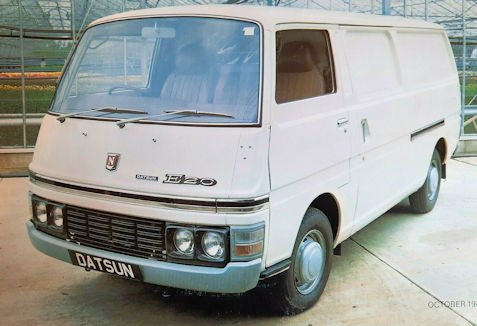
The Nissan E20 Caravan (Urvan) was a truck that Nissan had offered as a minivan or normal type box van since the 1970's .
History
The development of the caravan was based on a change in the road traffic regulations of Japan in 1970, according to which minibuses in the future only up to a passenger number of 11 people with the normal car normal driving license were allowed. Thus, Nissan needed a different model with a development of Nissan after acquired the Prince Motor Company and was designed for a passenger capacity of 15 people. So, this built on the truck chassis of the larger Prince Homer was based, the model was technically and visually revised and presented as a 1973 Nissan Caravan.
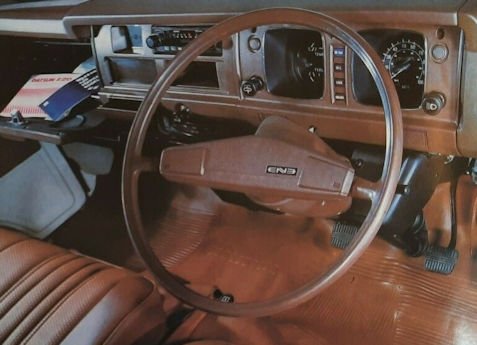
The Datsun Urvan E 20 was also built with 3, 5, 7 or 9 seats. This was especially popular in Europe, and as fire departments and ambulance versions in certain countries. Its handling is a bit difficult as it requires high steering power and these early versions did not come with power steering. The centre shift lever was slightly bent. It was almost 80 cm long, so there were long gearshifts, but the transmission in the petrol models had five gears, which was not common in Europe at the time. There were in-line four-cylinder gasoline engines with 1,596 cc, 1,798 cc and 1,998 cc and a 2,200 cc diesel engine. From 1976, the Homy was then also largely the revisions of the caravan almost identical. As Datsun Urvan, the caravan was offered outside of Asia for export.
After Nissan decided to discontinue the Datsun brand, the model became the Nissan Urvan. In Australia and other markets, this was sometimes offered as Nissan Kingvan.