
AC Royal Six
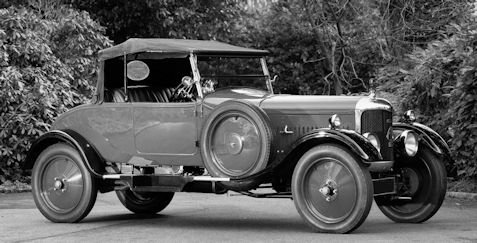 |
|
|
Manufacturer |
AC |
|
Production |
1926 to 1928 |
|
Class |
Sports Car |
|
Body style |
2 -door / 4-door saloon, drophead coupé, tourer |
|
Layout |
FR layout |
|
Engine |
1991cc straight six |
|
Curb weight |
2,912 lb (1,321 kg) |
The AC Royal was a British car from the 1920s, this came built like many cars from the time with ash-framed bodt structure covered with lightweight aluminium outer panels, but still the cheapest model in the range from the time.
The Famous AC cars after World War l. Four-cylinder engines were used at first, joined by a six in 1920. An advanced six Designed by John Weller, the 1.5 litre six-cylinder engine was an advanced unit,with aluminium alloy block and crankcase. wet cylinder liners and a cast-iron cylinder head. The slightly inclined Overhead valves were operated by a single over-head camshaft 1922 Capacity went up to 1991 cc and power to 40 bhp.
The cars in which the six-cylinder engine was fitted (there was also a 1.5 litre four until 1927) with rounded radiators and bodies often of polished aluminium,Front wheel brakes did not come until 1927, and apart from racing cars there was no four-speed AC until 1933. when the old the-speed box in unit with the rear axle gave way to a conventional. four speed. in 1928 the name Aceca appeared for the first time, as a drophead coupé; this was priced at £475, while the cheapest model in the range was the Royal open 2/3-seater at £350. Power output had been increased to 56 b.h.p. from 40 and the crankshaft line was stiffened by the addition of a fifth main bearing.
Related
Technical
-
Engine:
straight six; 65 x 100 mm
1991 cc;
single ohc
max power, 40 bhp at 3800 rpm.
Max speed according to coachwork, 70-80 mph/112-128 kmh.
Transmission:
three-speed manual gearbox.
Suspension
non-independent: rigid front axle and live rear axle; quarter-elliptic springs, front and rear.
Brakes
drum.
Dimensions
wheelbase, 111/117 in (282/297 cm),
track, front and rear, 45 in (114 cm).

