
Porsche 911 SC series
 |
|
|
Manufacturer |
Porsche AG |
|
Also called |
Porsche 911 Carrera |
|
Production |
1978 to 1983 |
|
Assembly |
Stuttgart-Zuffenhausen, West Germany |
|
Designer |
Ferdinand Alexander Porsche, Erwin Komenda |
|
Class |
Sports car |
|
Body style |
2-door coupe 2-door Targa top 2-door convertible |
|
Layout |
Rear-engine, rear-wheel drive |
|
Engine |
air-cooled flat-6 (H6) 3.0 L 180–204 PS |
|
Transmission |
5-speed manual 4-speed automatic |
|
Wheelbase |
2,211–2,268 mm (87.0–89.3 in) |
|
Length |
4,290 mm (168.9 in) |
|
Width |
1,700–1,780 mm (66.9–70.1 in) |
|
Height |
1,300–1,310 mm (51.2–51.6 in) |
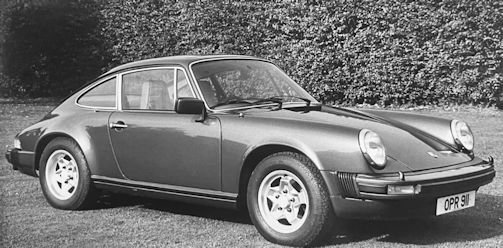
Starting in MY 1978, the new 3.0 L 911 SC (2994 cc) was now the basic 911 model. It was in effect a Carrera 3 (known as a 911S in the US) detuned to provide 180 PS (132 kW). The "SC" designation was reintroduced by Porsche for the first time since the 356 SC (as distinguished from the race-engined 356 Carrera). No Carrera versions were produced and the 930 Turbo remaining at the top of the range. Porsche’s engineers felt that the weight of the extra luxury, safety and emissions equipment on these cars was blunting performance compared to the earlier, lighter cars with the same power output, so in non-US cars, power was increased to 188 PS (138 kW) for 1980, then finally to 204 PS (150 kW). However, cars sold in the US market retained their lower-compression 180 PS engines throughout. This enabled them to be run on lower-octane fuel.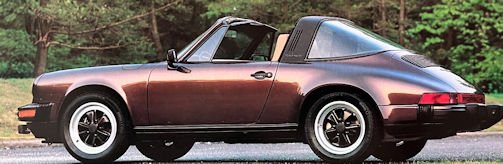
the SC was set up to maintain understeer through higher cornering speeds but tended to final over-steer. The bigger rear wheels and tires helped, and larger Pirelli P7 were available with 205/55VR16 at the front and 225/50VR16 fitted to the rear. But in wet weather,front-end aquaplaning under braking on wet roads, and under-steer on wet surfaces.
The SC for 1979 with standard power brakes and a new clutch-disc hub that minimized the known gear chatter at low speeds this was done by moving the engine back 30mm (1.2 inches). The Sportomatic option was finallv dropped for lack of interest.
In model year 1980, Porsche offered a Weissach special edition version of the 911 SC, named after the town in Germany where Porsche has their research center. Designated M439, it was offered in two colors with the turbo whale tail & front chin spoiler, body color-matched Fuchs alloy wheels and other convenience features as standard. 408 cars were built for North America.
Porsche 911 SC The Weissach cars were designed expressly for the U.S. market and represent 400 units over and above our established 911 SC production. " Available in two exterior colors—Black Metallic and a new shade, Platinum Metallic—the limited comes With a special beige leather interior finished in contrasting burgundy seat piping and burgundy carpeting. Forged-alloy wheels, one inch wider than standard With centers finished in Platinum Metallic. are unique to all Weissach Coupes. and front and rear spoilers also distinguish the model. the Weissach package also contains a number Of distinctive Options as standard equipment: sport shock absorbers. electric mirrors on both sides. rear speakers. and an electric antenna. Halogen sealed-beam headlights .
In 1982, a Ferry Porsche Edition was made and a total of 200 cars were sold with this cosmetic package.
Measurements:
Features front and rear anti-roll bars Final drive ratio: 3.875:1.
Curb weight (lbs): 2756.
Tire size: 185/70VR-15 front, 215/60VR-15 rear (205/55VR-16 front and 225/50VR-16 rear optional). Track: 53.9" front, 54.3" rear.
Wheelbase: 89.5".
Overall length: 168.9".
Overall height (unladen): 51.6".
SCs sold in the UK could be specified with the Sport Group Package (UK) which added stiffer suspension, the rear spoiler, front rubber lip and black Fuchs wheels. Standard features separate front seats. adjustable backrests. built-in headrests; heated rear window; light alloy wheels; automatic heating.
OPTIONAL
Sportomatic semi-automatic transmission with 3 ratios (I 2400. II 1.429, III 0.926. rev 2.534)
single dry plate clutch automatically operated by gear lever. hydraulic torque converter max ratio of converter at stall 2.18. 3.375 axle ratio; Sportomatic transmission clutch
ZF limited slip differential (only with mechanical gearbox)
air-conditioning
electric sunshine roof
electric windows
rear window wiper-washer
tinted glass
88 Ah battery
205/55 VR x 16 front tyres
25/50 VR x 16 rear tyres
metallic spray
fog lamps.
In 1981 a Cabriolet concept car was shown at the Frankfurt Motor Show. Not only was the car a true convertible, but it also featured four-wheel drive, although this was dropped in the production version. The first 911 Cabriolet debuted in late 1982, as a 1983 model. This was Porsche’s first cabriolet since the 356 of the mid-1960s. It proved very popular with 4,214 sold in its introductory year, despite its premium price relative to the open-top targa. Cabriolet versions of the 911 have been offered ever since.
Further SC upgrades appeared for 1981 such as halogen headlamps and rear seatbelts, plus an needed anti-rust warranty extended to seven years but Little else was changed.
PERFORMANCE
max speed: over 140 mph. 225 km/h
power- weight ratio: 14.2 lb/hp (19.3 lb/kW). 6.4 kg/hp (8.7 kg/kW):
speed in top at 1.000 rpm: 25 mph. 40 km/h
consumption: 25.7 m/imp gal, 21.4 m/US gal. 11 1 x 100 km.
max power (DIN): 180 hp (132.5 kW) at 5,500 rpm
max torque (DIN): 196 1b ft. 27 kg m (264.8 Nm) at 4.200 rpm;
max engine rpm: 7.000: 60.1 hp/l (42.3 kW/l)
It was during this time, that Porsche AG decided the long-term fate of the 911. In 1979 Porsche had made plans to replace the 911 with their new 928. Sales of the 911 remained so strong however, that Porsche revised its strategy and decided to inject new life into the 911 editions.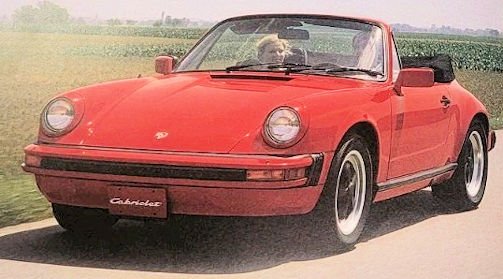
Related
Technical
-
ENGINE
rear. 4 stroke
6 cylinders, horizontally opposed
182.7 cu in, 2,994 cc (3.74 x 2.77 in, 95x 70.4 mm)
compression ratio: 8.5:1
light alloy block with cast iron liners
light alloy head; 8 crankshaft bearings; valves: overhead. Vee-
slanted. rockers camshafts: I per block. overhead, double cogged belt
lubrication: gear pump, full flow filter, dry sump.
thermostatically controlled oil cooler. 22.9 Imp pt. 27.5 US pt
Bosch K-Jetronic fuel Injection system;
fuel feed: electric pump
air-cooled.TRANSMISSION
driving wheels: rear
clutch: single dry plate
gearbox: mechanical: gears: 5. fully synchronized;
ratios: I 3.181. II 1.833. III 1.261. IV 1, V 0.821, rev 3.325
Gear lever: central
final drive: spiral bevel
axle ratio: 3.875:CHASSIS
integral type
front suspension: independent. by McPherson. coil springs telescopic damper struts, longitudinal torsion bars. lower wishbones. anti-roll bar rear: independent. semi-trailing arms. transverse torsion bars. anti-roll bar. telescopic dampers.STEERING
ZF rack-and-pinion
turns lock to lock: 3.10.
turning circle: 35.8 ft, 10.9 mBRAKES
disc (front diameter 9.25 in. 23.5 cm, rear 9.61 in. 24.4 cm)
internal radial fins: lining area: total 39.8 sq in. 257 sq cm.ELECTRICAL EOUIPMENT
12 V
66 Ah battery
980 W alternator
Bosch electronic ignition
2 iodine headlamps.DIMENSIONS AND WEIGHT
wheel base: 89.41 in. 227 cm;
tracks: 54.02 in. 137 cm front. 54.33 in, 138 cm
length: in. 429 cm: width: 64.96 in. 165 cm
height: 51.97 in.
ground clearance: 4.72 in. 12 cm
weight: 2,558 lb. kg
-Note: More Specifications and Repair Manuals available for registered users-
© Motor car History
Service
-
fuel: 91 oct petrol
oil: engine 17 S imp pt. 21.1 US pt. 10 1. SAE 30 (summer) 20 (winter) . change every 6.200 miles. 10,000 km
gearbox and final drive 5.3 imp pt. 6.3 US pt. 3 1. SAE 90. change every 6.200 miles. 10.000 km
greasing: none
tappet clearances: inlet 0.004 in. 0.10 mm. exhaust 0.004 ln. 0.10 mm
valve timing: 35° 50° 40° 20°
tyre pressure: front 29 psi. 2 atm. rear 34 psi. 2.4 atm.
width of rims: 6" front. 7" rear
tyres: 185/70 VR x 15 front. 215/60 VR x 15 rear.
fuel tank: 17.6 gal 21.1 US gal.
carrying capacity: 750 lb. 340 kg:
-Note: More Specifications and Repair Manuals available for registered users-
© Motor car History
