USA
Ahrens-Fox Fire Engine Company
Automotive manufacturer of Cincinnati , Ohio United States from 1910 to 1977.

Ahrens-Fox Fire Engine Company was an American manufacturer of motor vehicles and Fire Engines . The brand name was Ahrens-Fox .
History
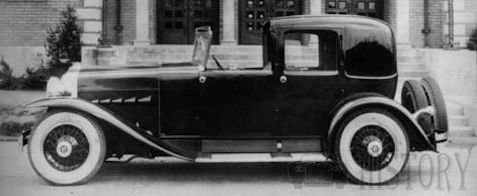
John P. Ahrens and Charles P. Fox founded the company in the early 1900s in Cincinnati , Ohio . They started with the production of fire department accessories. Initially, these were steam pumps that were pulled by horses. Later motor vehicles and fire engines were added. In 1913, passenger cars were also built . Planned group of buyers were the boards of fire departments. In the end, all six vehicles went to the Cincinnati Fire Department .
The company's first motor fire engine, with 80hp 6-cyl Herschell-Spillman engine and 2-cyl 750gpm pump, was supplied in 1912 connected to an electric front-wheel drive unit. In 1915 a new pumper with a distinctive 4-cyl double-acting pump surmounted by a spherical brass air chamber located ahead of the engine made identification of Ahrens-Fox appliances simple until 1951.
The only car model was the model EC Battalion Roadster as a roadster . A six-cylinder engine with 44 hp powered the rear axle via a four-speed gearbox. The maximum speed was specified at 80 km / h.
Models continuing until 1956 when a new design, with the cab mounted forward of the front axle, was announced.1977 ended production. Later all assets sold out to Mack Trucks Inc.The brand name is used by HME Incorporated .

Velie (Velie Motors Corporation)

The Velie was an American car, which by the Velie Motors Corporation in Moline (Illinois) was produced from 1908 to 1929. The company was founded by Willard Velie , a grandson of John Deere .
Velie advertising pamphlets emphasized that the company made every important part of its own and not just purchased parts, a lesson they learned from Ford .
The Veli 40 of 1911 had a side-drive four-cylinder in-line engine with 5473 cc, Splitdorf -Magnetzünder and a power of 40 bhp (29 kW) and a Brown-Lipe spur-three-speed transmission. It was a four-seater with 2921 mm wheelbase, 34 "wood spoke wheels and tires - depending on customer requirements of Hartford or Firestone . The car cost US $1800
Velie produced 9000 cars in 1920. During the 1920s, the Velie automobiles were powered by six-cylinder Continental engines, but there was also an inline eight-cylinder with a Lycoming engine. From 1924 Velie used battery ignitions from Westinghouse Electric instead of the magneto ignition . The Velie Royal Sedan was the first car whose A-pillars were tilted backwards, which also gave the windshield a significant tilt (shown below).
The company also manufactured airplanes for several years. The Velie Monocoupe was one of the first aircraft for private pilots. In addition, they also produced aircraft engines, such as the Monocoupe 70 .
Willard Velie died in 1928 and his family stopped producing the Velie automobiles in January 1929. Monocoupe was sold to Phil Ball , a businessman from St. Louis, Missouri, and supporter of Charles Lindbergh . Monocouple aircraft were then built in St. Louis for several years.
1927 Velie Model-60 Royal Sedan

Thoroughbred Motorcars
Automotive manufacturer of Mount Dora , Florida , USA United States from 1982 to 2009.
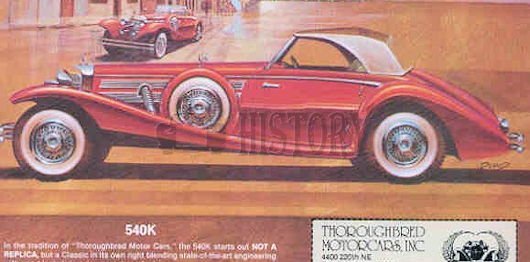
Thoroughbred Coach Builders Inc. , previously Thoroughbred Motorcars inc, was an American manufacturer of replica automobiles .
History
The company Thoroughbred Cars , later renamed Thoroughbred Motorcars , was founded in 1982 in Redmond , Washington . The production of automobiles began. The brand name was Thoroughbred . As of May 25, 1995, the company was named Thoroughbred Coach Builders Inc. , based in Mount Dora , Florida . Directors were Gil and Shirley Longnecker. The production was still held in Redmond. 15 employees were employed. 2009, the production ended.
The offer included replicas of Mercedes-Benz vehicles . Named are the models 540 K , 300 SL as a coupe with gullwing doors and 300 SLR . A ladder frame formed the base. Various engines from Chevrolet and Ford powered the vehicles. In addition, there was a pick-up in the style of 1936.
Tatonka Products

Tatonka Products was an American manufacturer of off road kit automobiles .
History
The company was based in Salt Lake City , Utah . Owner was Richard Tolbert. 1997 or 1998 began production of cars and kit cars . The brand name was Tatonka , possibly with the addition Products . In 2009 the production ended. In total, sold over 100 copies.
One model was a vehicle in the style of the Hummer . A chassis from General Motors formed the base. Several motors driven to the vehicles. The body was made of fiberglass .In addition, the models are called Grunt and Runt .
Stutz Motor Car Company history
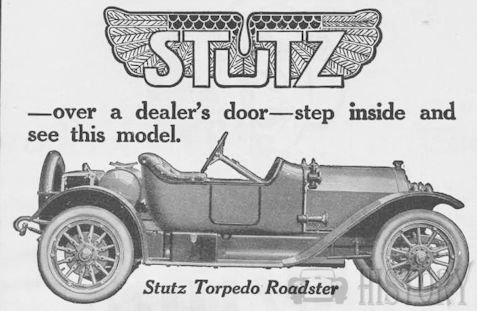
The Stutz Motor Car Company of America , was an American manufacturer of luxury class automobiles , of the "legendary American Thoroughbred brands before the war" . The Stutz models had the reputation of exceptional sportiness. In 1936, after economic difficulties, the company stopped producing automobiles.
History
Engineer Harry C. Stutz , born in Ohio in 1876 , has been involved in the construction of prototype motorized carriages since 1898 . He had become more involved in this subject over the years. In 1910 he founded the Stutz Auto Parts Company for parts production and 1911 the Ideal Motor Company for vehicle production. Both companies were in Indianapolis in the US state of Indiana. In 1911 began the automobile production. The brand name was Stutz .
In May 1913, Stutz joined the two companies together and chose the new name Stutz Motor Car Company of America .
In the following years, Stutz dealt with the development of his roadster, which he called Bearcat , and achieved further success. In order to meet the increasing capital requirements resulting from the construction of a new production facility and the expenses for research and development, Stutz converted his company into a public limited company in 1916 .
In 1919, the company was taken over by its major shareholder Allan Ryan. However, this had to file for bankruptcy two years later, and the company was taken over by a group of financial investors. The American engineer Frederick E. Moskowics has since led the company. In the mid-1920s, he initiated a change of course: the production of roadsters was discontinued in favor of luxury sedans, of which several models were presented in the following years. Nevertheless, the Stutz models still had sporty performance. 1929 was completed with the Blackhawk the last model under Moskowics' leadership, who gave the following year, the business of Edgar Gorrell. From 1929 to 1930 was a model under the brand Blackhawk distributed.
The global economic crisis drove society to the brink of financial ruin. The Stutz models, which were usually very expensive vehicles, no longer met the taste of the affluent clientele. The customers preferred quiet, comfortable automobiles, requirements that Stutz could not fulfill with his still sporty designed models. In the 1930s Stutz therefore sold far fewer vehicles than the competing brands annually Cadillac , Packard , Lincoln and Pierce-Arrow, In 1930, 649 vehicles were created, and in 1932 and 1933 there were less than 50 copies each. In 1932 Stutz made a loss of $ 315,000, in 1933 the loss was half a million US $ and in 1934 another $ 250,000. Regardless, the company offered its high-priced cars until 1936, but sold only a few copies annually. In 1936 Stutz made only six cars. This year, Stutz tried to mass-produce a small van called Pack-Age to increase revenue. However, the company was no longer able to get the car ready for mass production. Overall, only 28 pack-age.
On April 3, 1937, the Stutz Motor Car Company applied for the opening of bankruptcy proceedings. The company's debt had risen to $ 733,000 at this time. Since the creditors could not agree on a restructuring of the company, Stutz was in 1939 dissolved. The pack-age was taken over by the Diamond T Truck Company .
Brand name Stutz
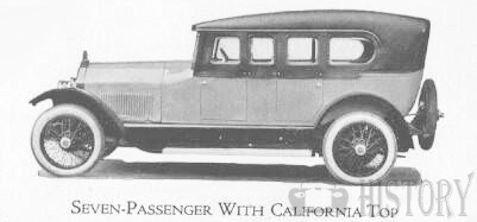
Stutz offered in the 1930s two series, which differed primarily by the motorization. The SV16 series was powered by an inline eight-cylinder engine with two valves per cylinder. The much more expensive DV32 had the same base engine but four valves per cylinder. Its maximum output was 161 hp at 3900 rpm. Both models were offered until 1936, but the plant could make only minor technical changes over the years due to limited financial resources. The development of a twelve-cylinder engine like Lincoln or a V16 like Cadillac or Marmon could not afford Stutz. Instead, the company experimented with a superchargerHowever, due to its volume was not compatible with the comfort requirements of the clientele and therefore was not produced in series. For both series Stutz offered in the 1930s various bodies, which were partly designed by independent body manufacturers and were delivered. Weymann , Fleetwood , LeBaron and Waterhouse made some superstructures on behalf of Stutz.
Brand Name Blackhawk
This brand name was introduced in 1929 for a few models that were less powerful and not so high-end, but cheaper. In 1929, 1310 vehicles were sold. In the following year, the number dropped to 280 vehicles. Then the brand was discontinued. The offer included two models that had the same wheelbase of 324 cm. The model L-6 , written the following year without a dash, had a six-cylinder engine with 85 hp . An eight-cylinder engine with 90 hp power drove the Model L-8 and 1930 Model L 8 at. There was a choice of two- and four-seater Speedster , two and five-seater coupes , convertible Coupé, five-seater sedan and four- to five-seat bodies with Weymann body called Chantilly , Deauville and Monaco .